

Lower Mystic Cool Communications
Building Regional Heat Resiliency
Of all weather-related hazards, extreme heat is responsible for the most deaths annually. 2024 was Massachusetts’ third hottest year on record, while it was the hottest year on record for the contiguous US.
The Lower Mystic communities of Chelsea, Everett, Malden, Revere, and Winthrop face increasing threats from extreme heat, made worse by urban heat islands that can be up to 10 degrees hotter than surrounding areas.
Current communication systems are not designed for extreme heat and aren’t reaching the communities most impacted by extreme heat.
That's where this initiative comes in. On this page, you will find resources such as social graphics (editable and general), flyers, and more to help communicate to your community when an extreme heat day is forecasted, and ways to stay safe. To learn more about this overall project - the four goals, project partners, and how it's funded, please go to the About the Project section on this page.
Questions? Please contact:
Sharon Ron, Assistant Director of Public Health, [email protected]
Heat Communications Materials
For General Use
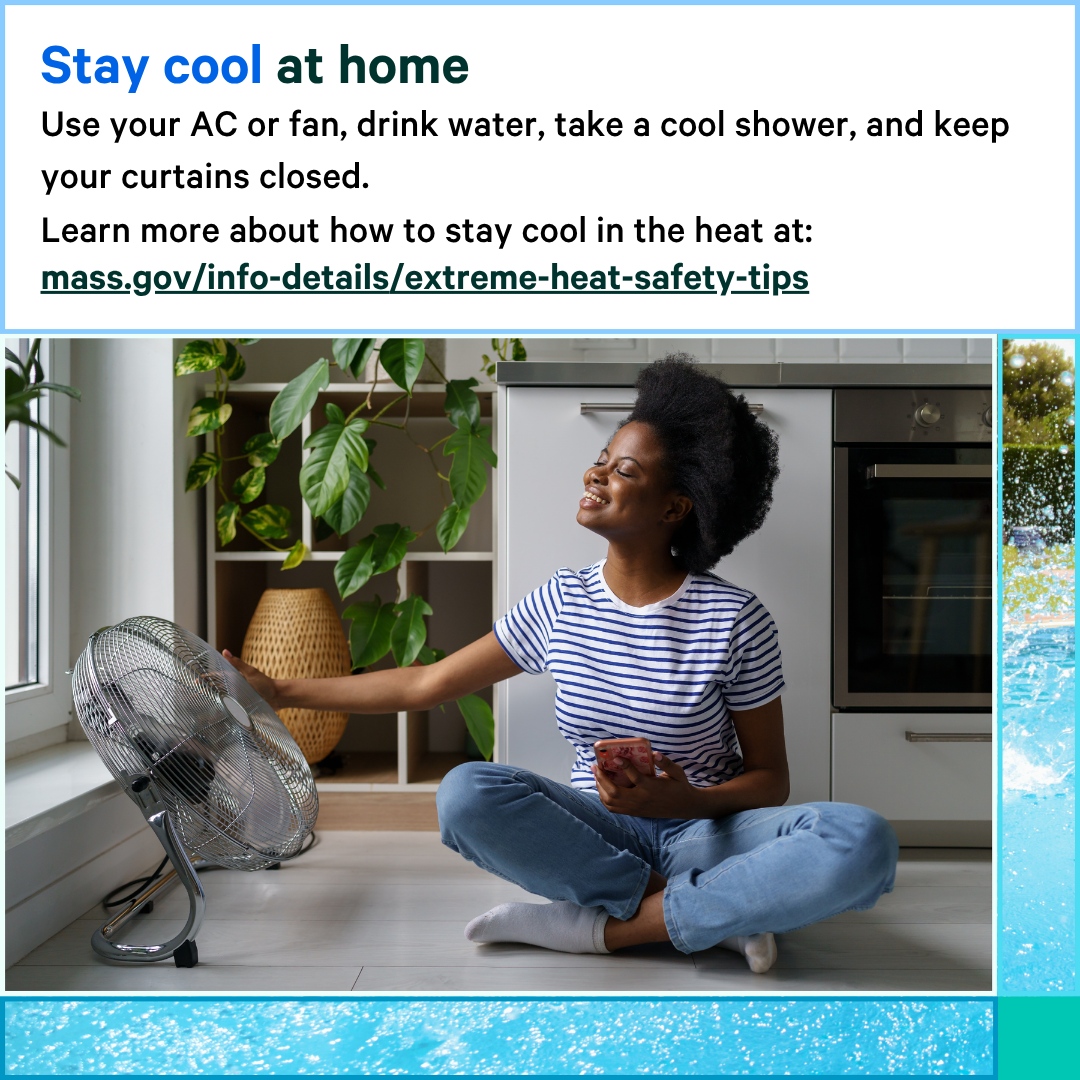
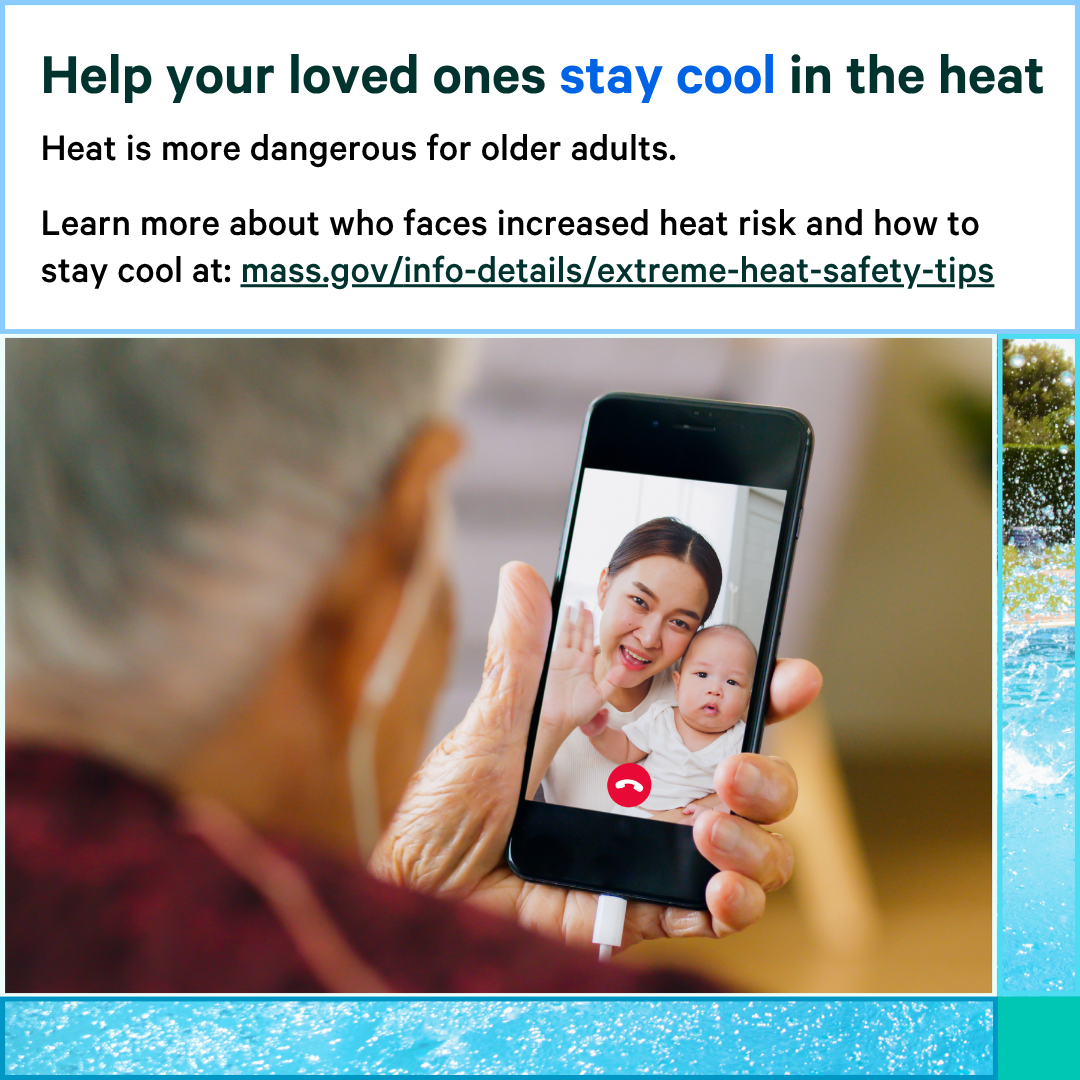
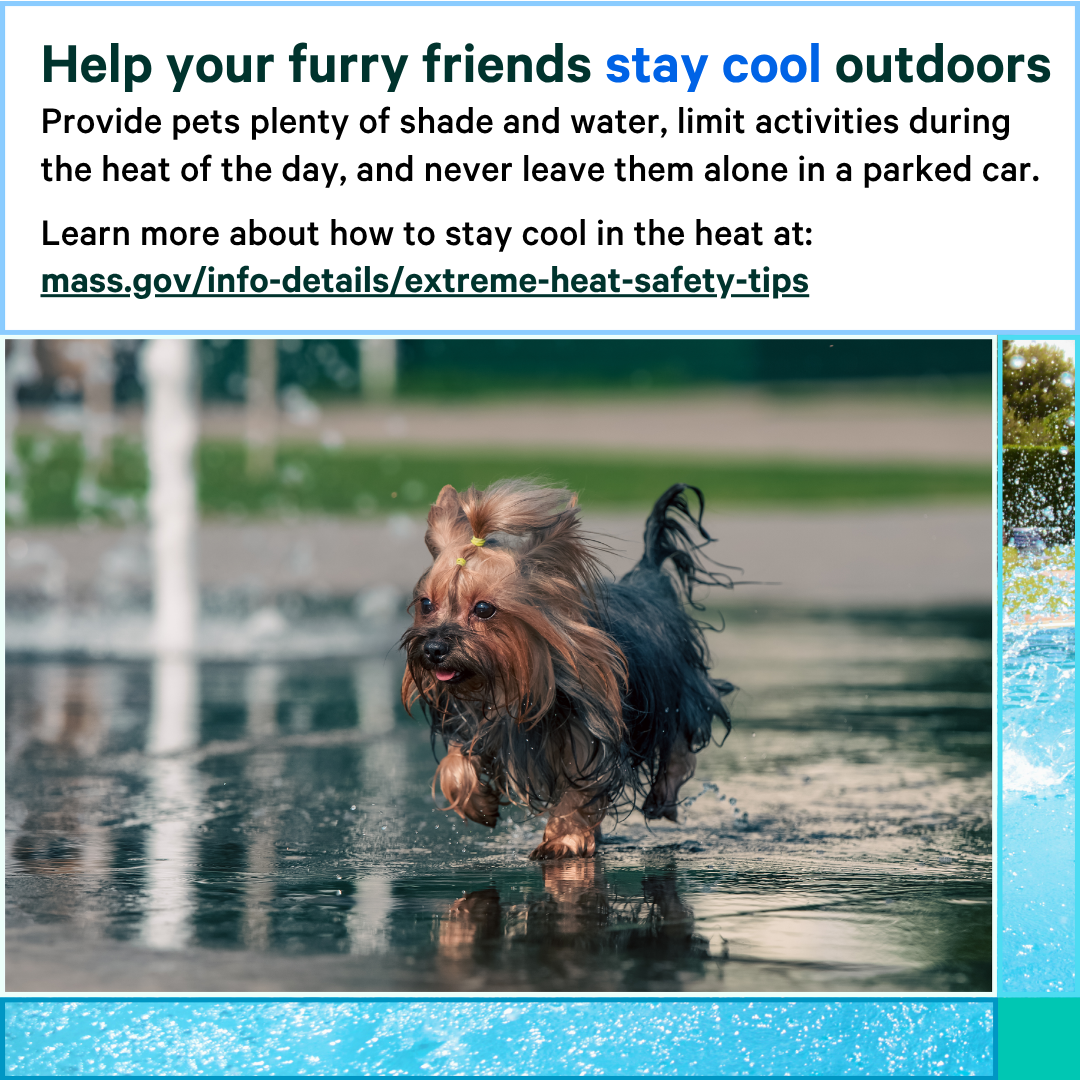
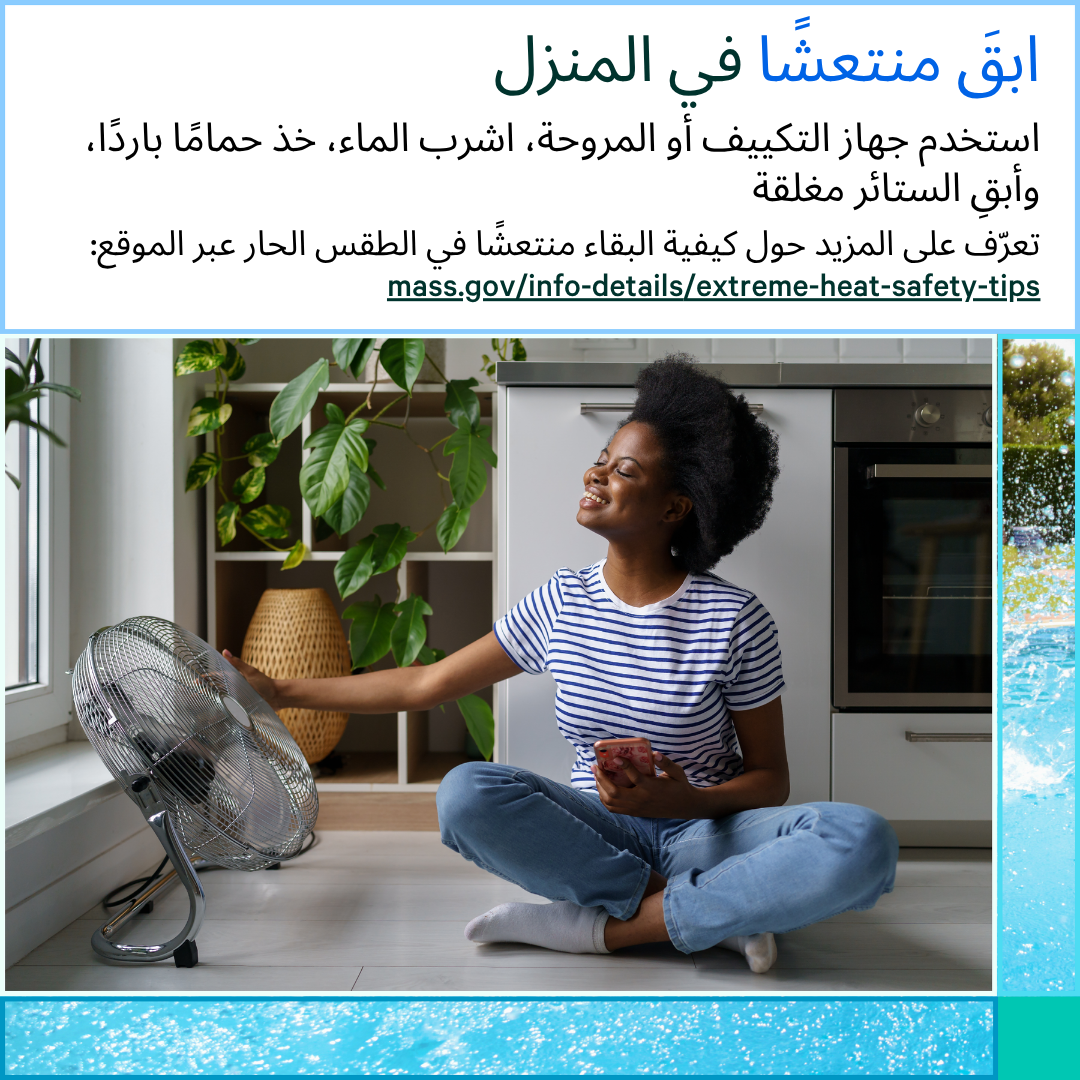
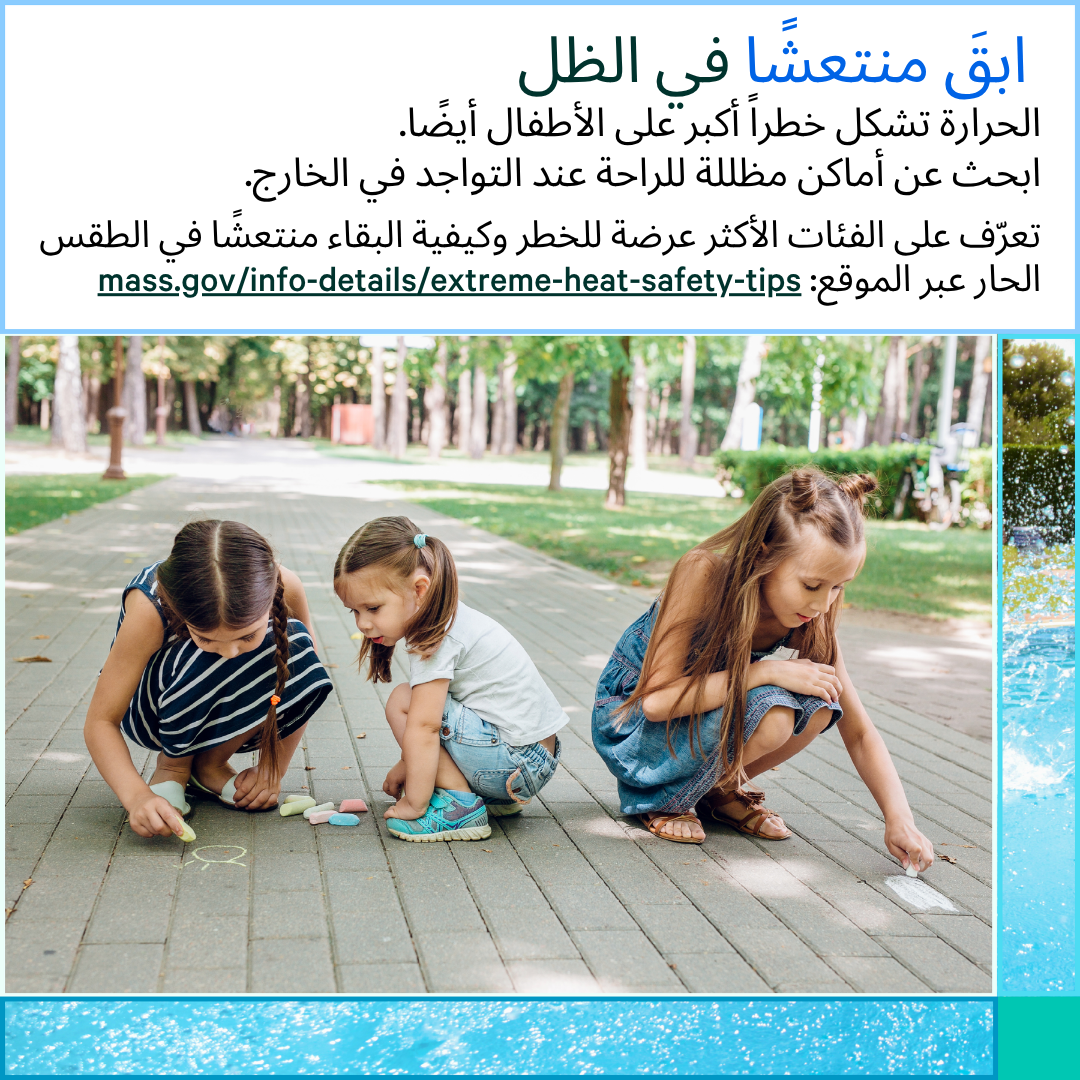
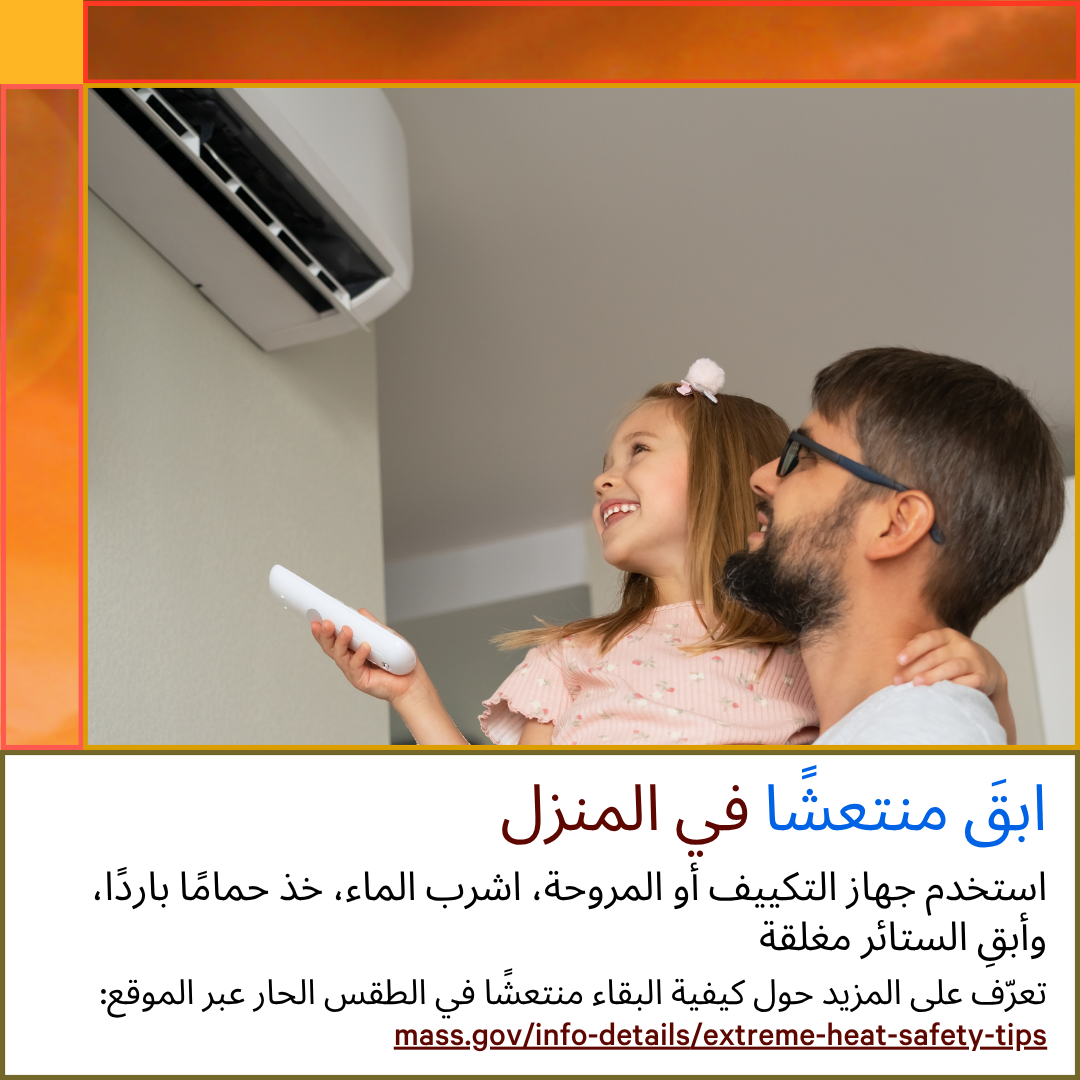
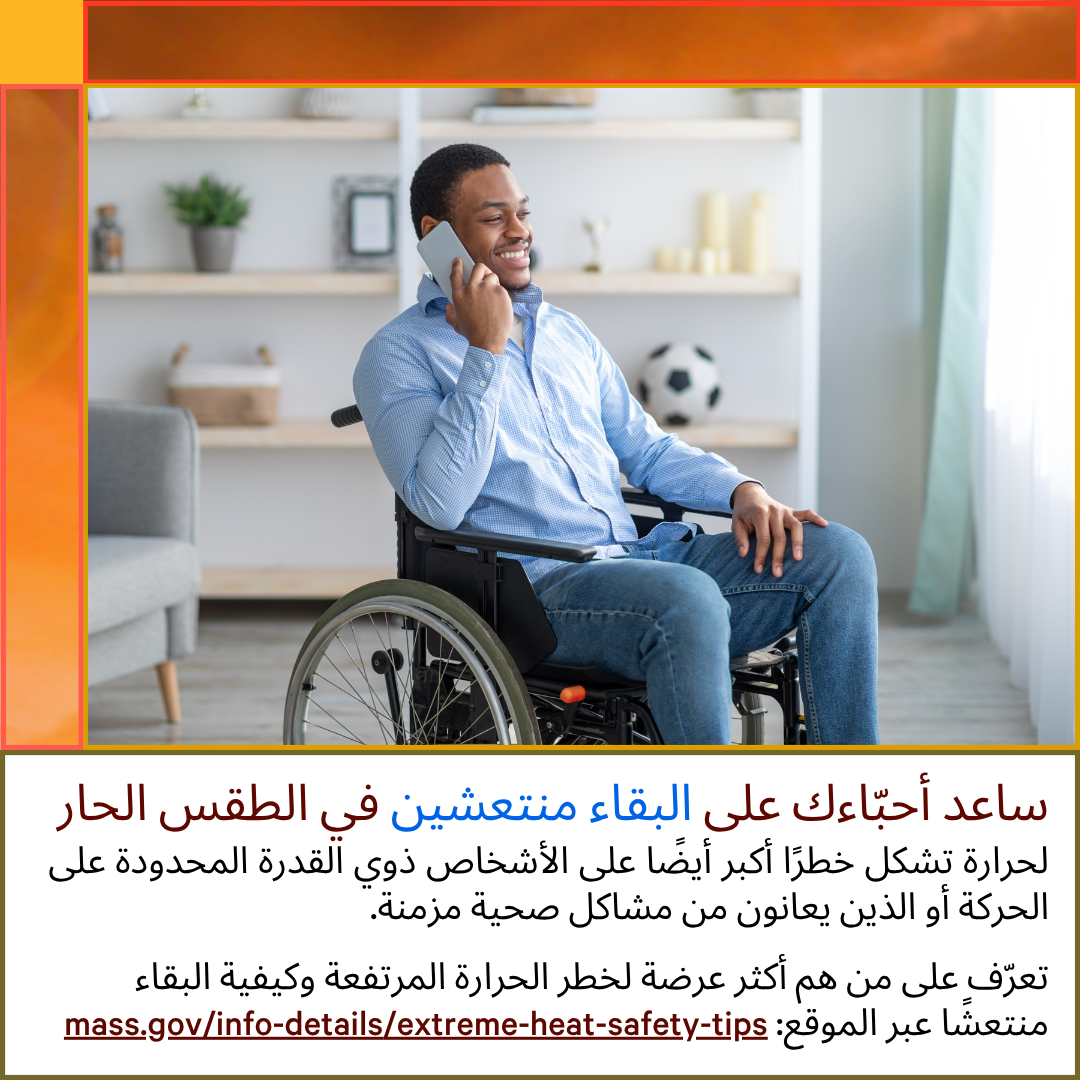
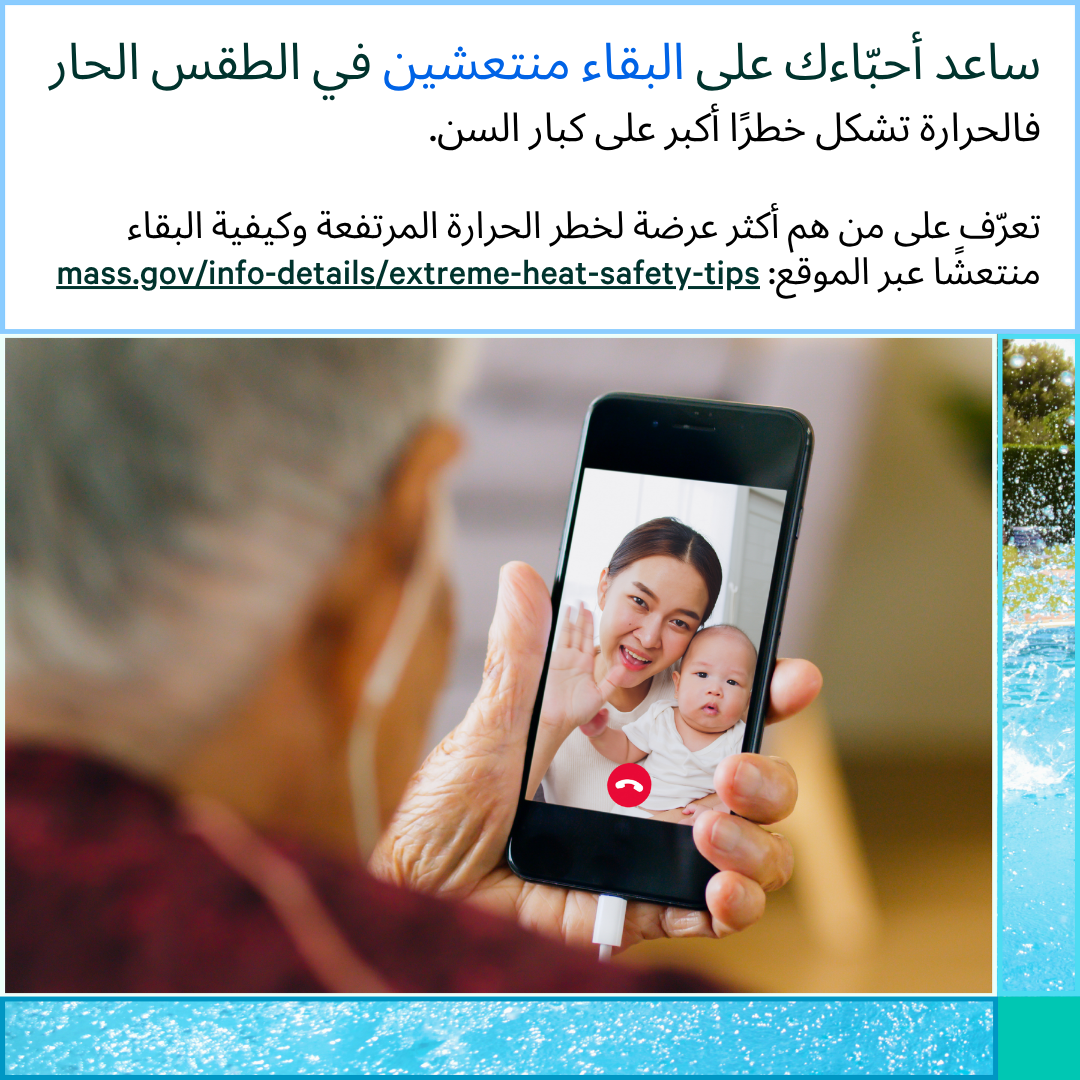
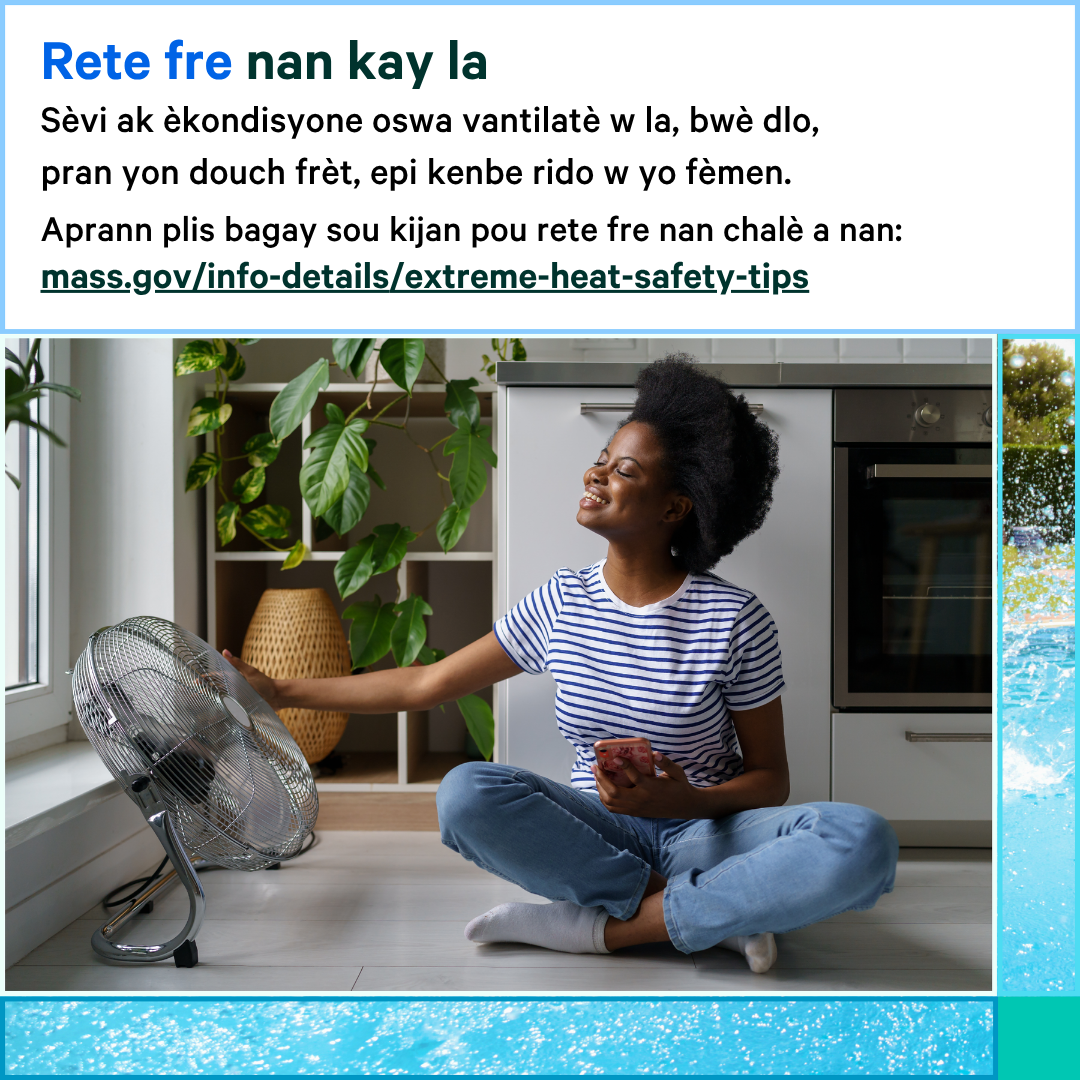
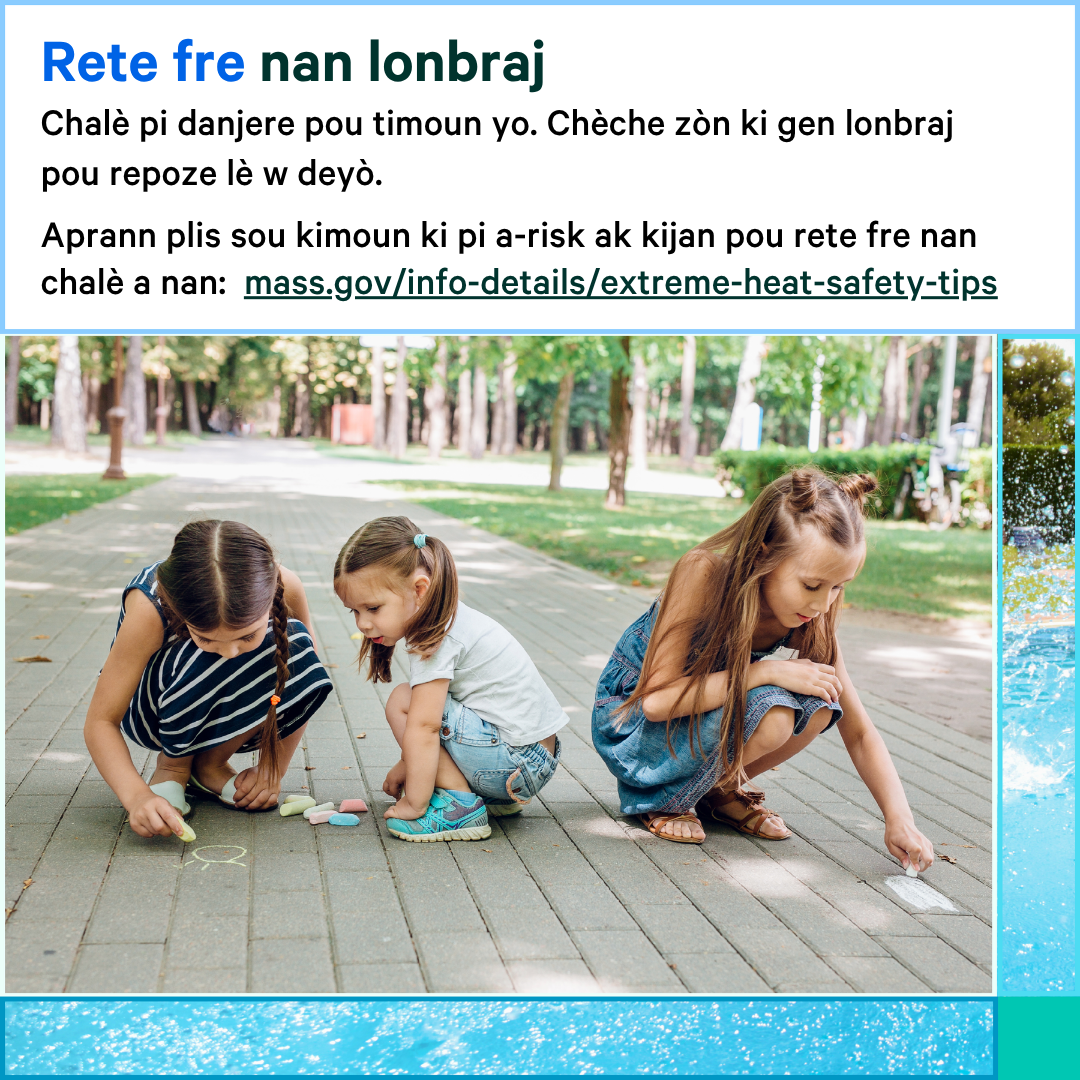
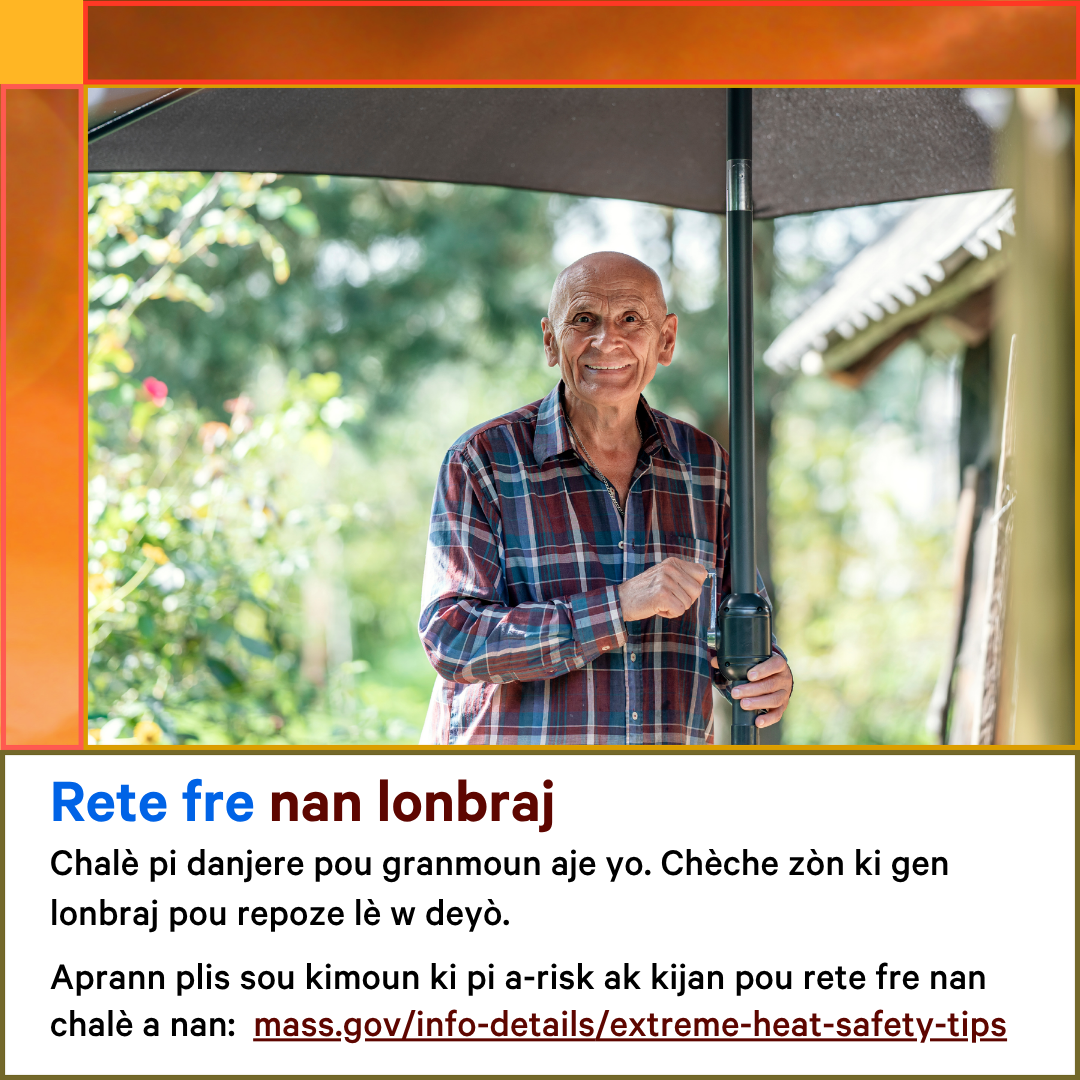
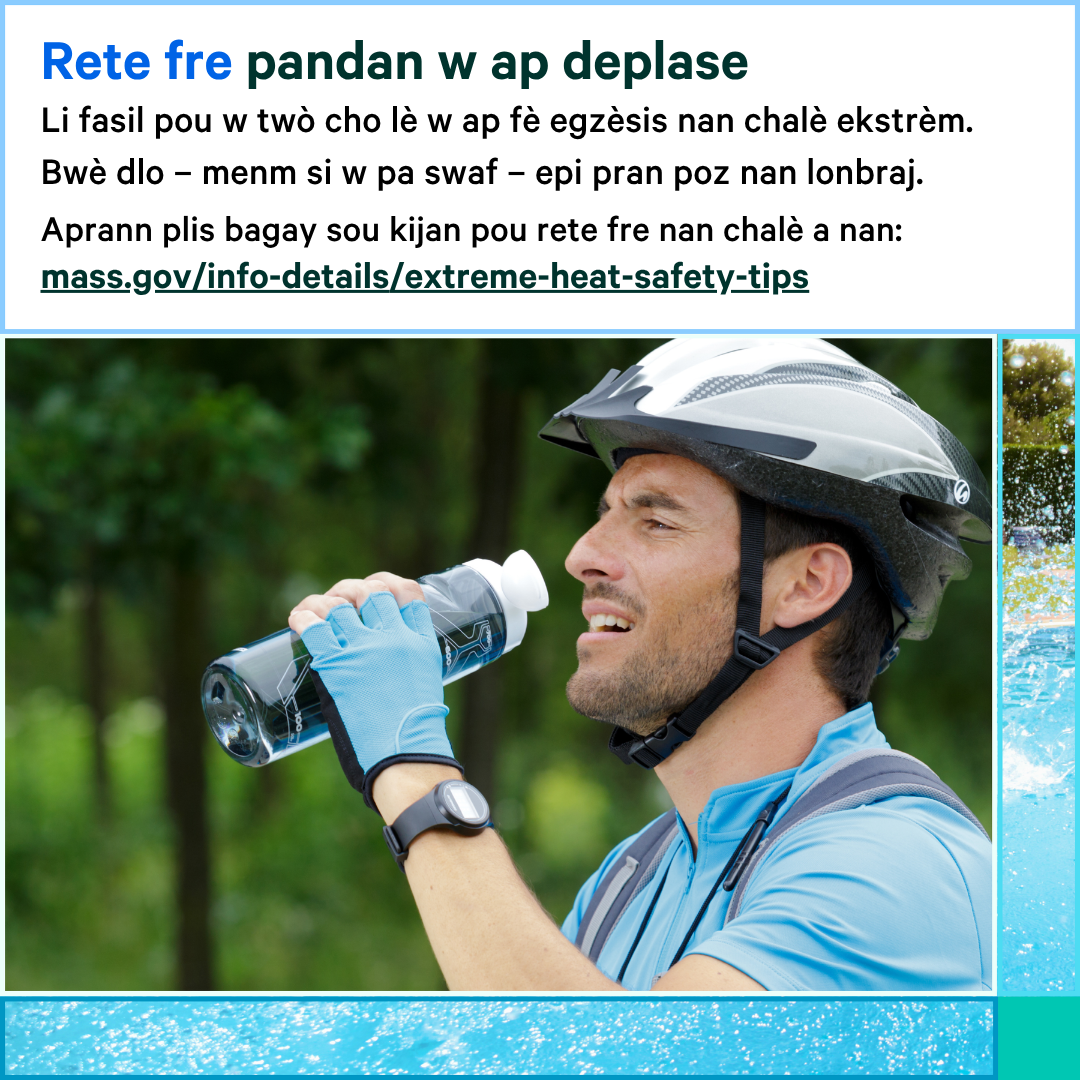
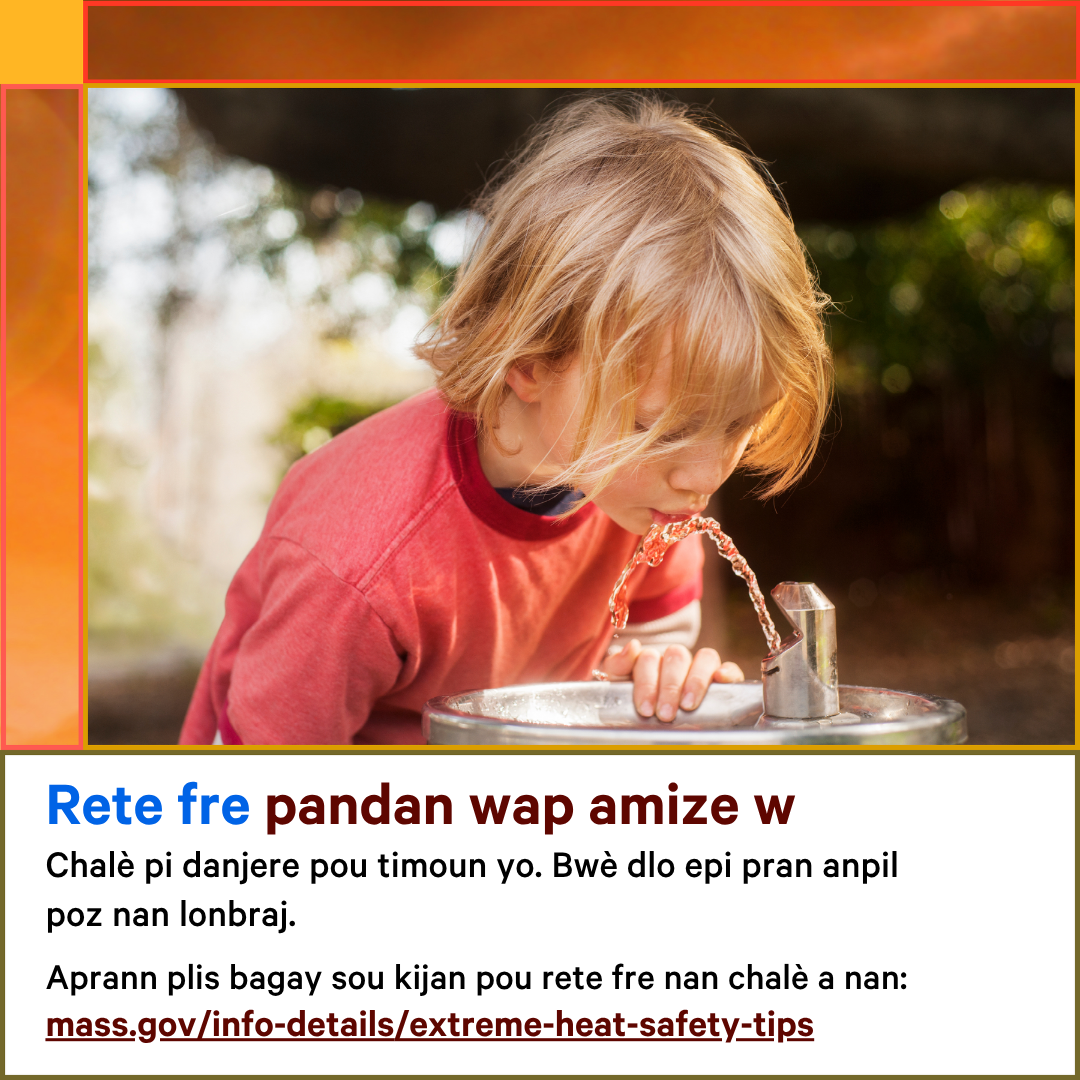
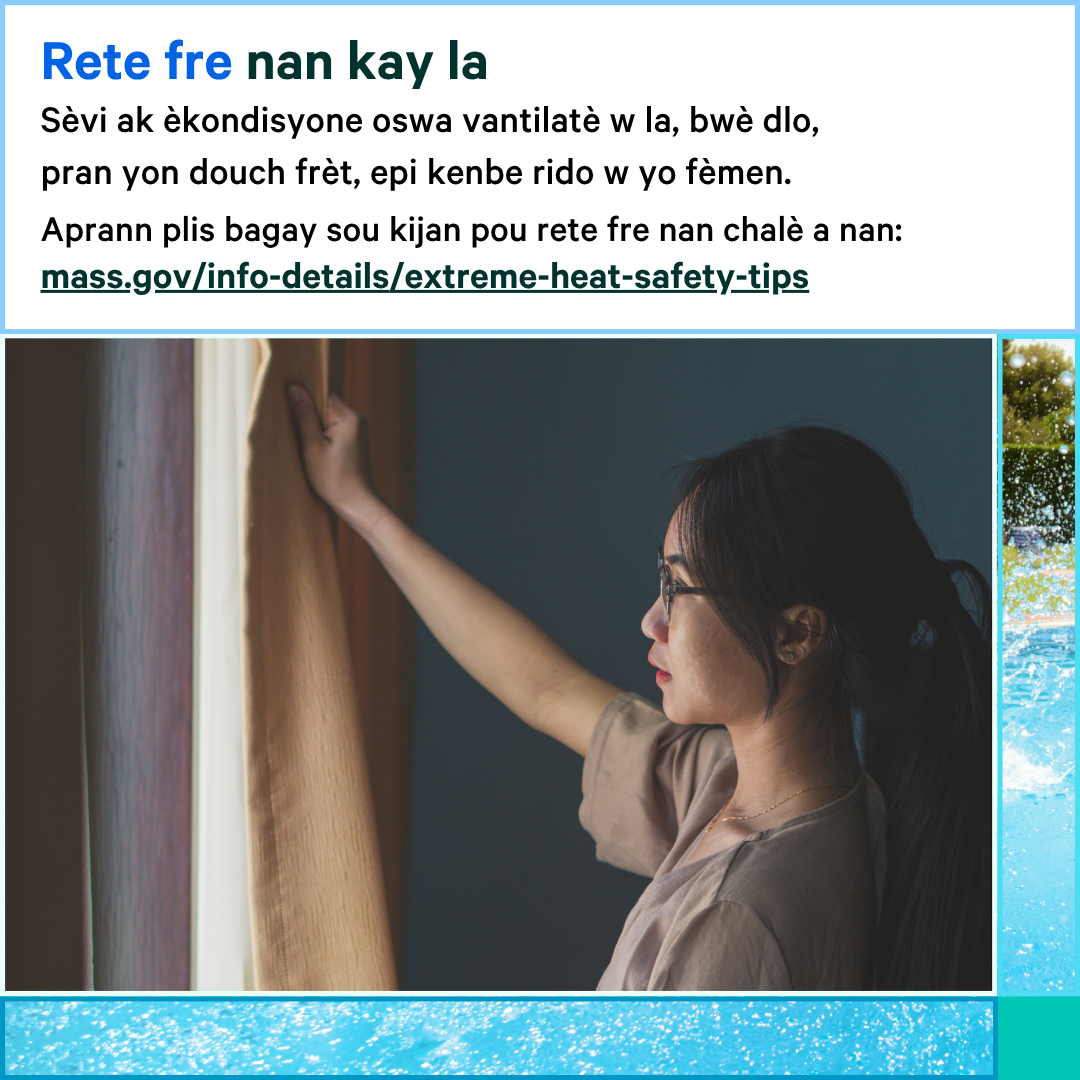
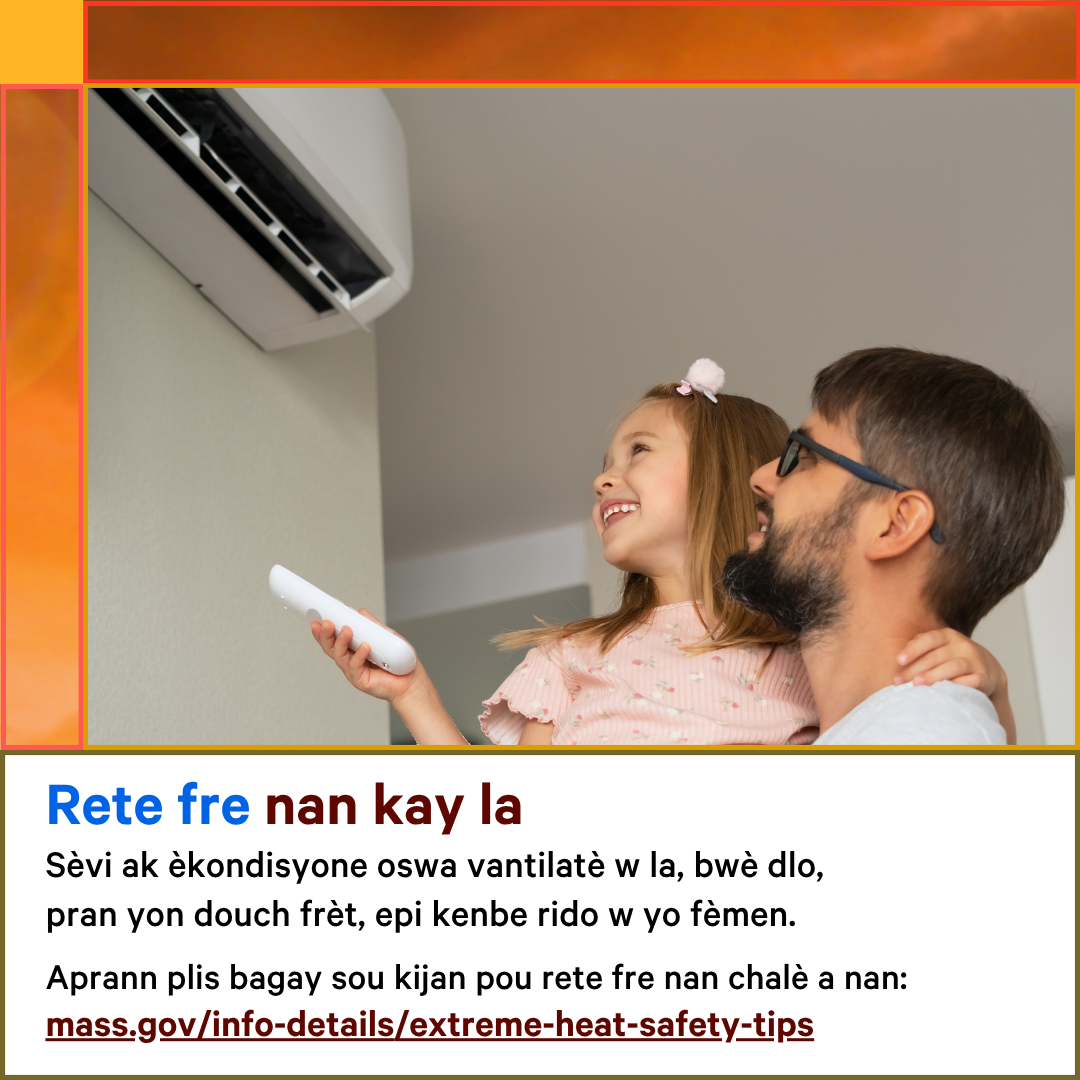
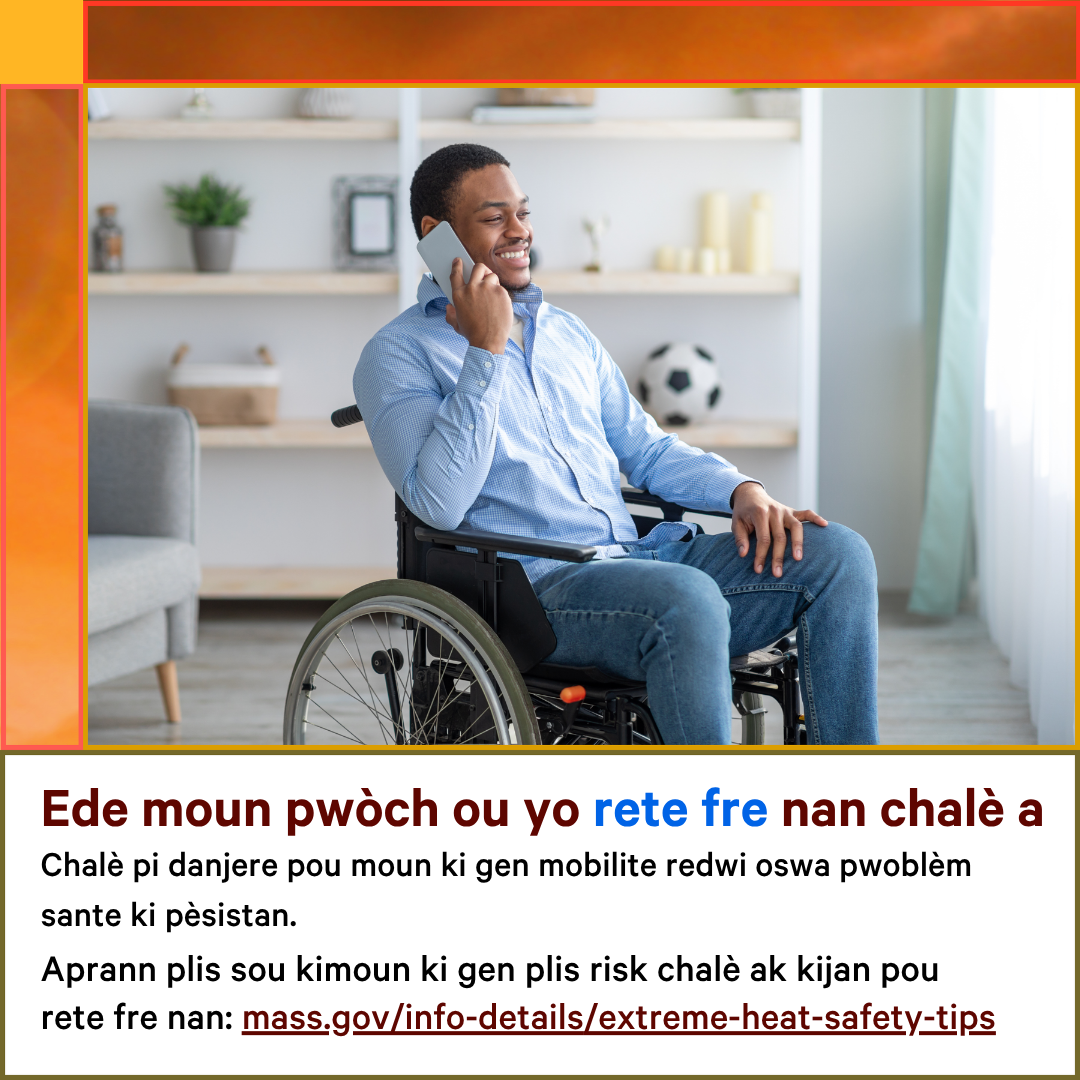
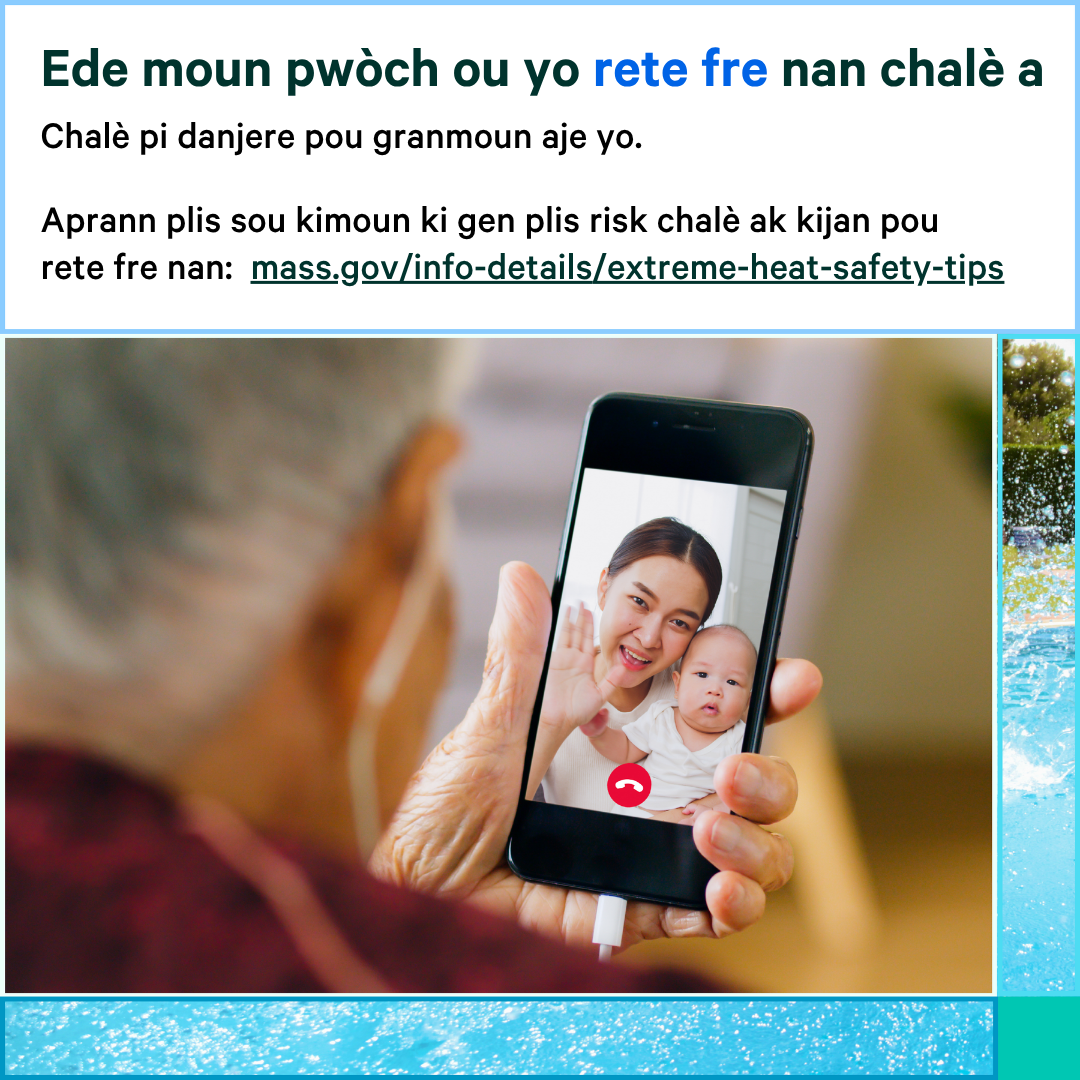
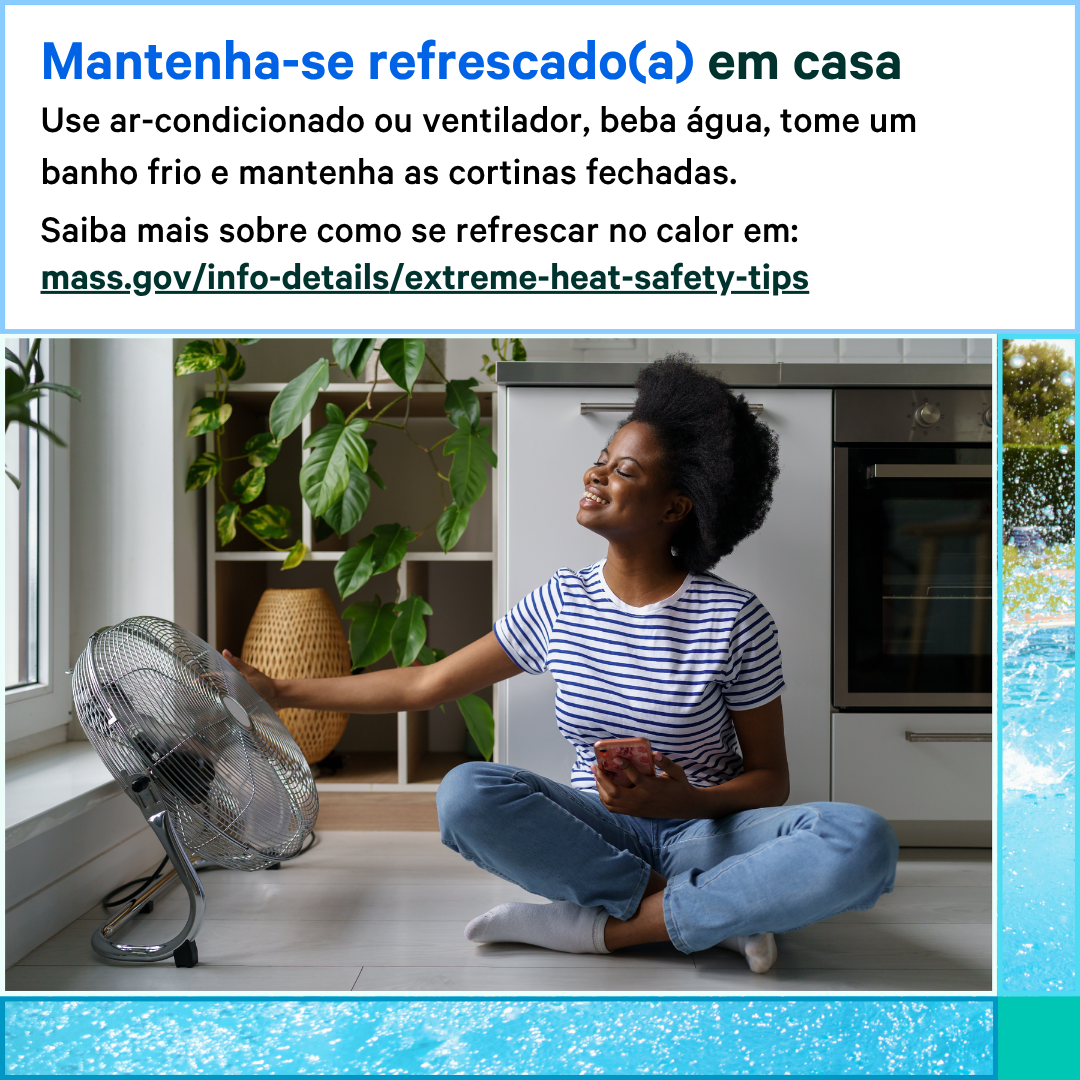
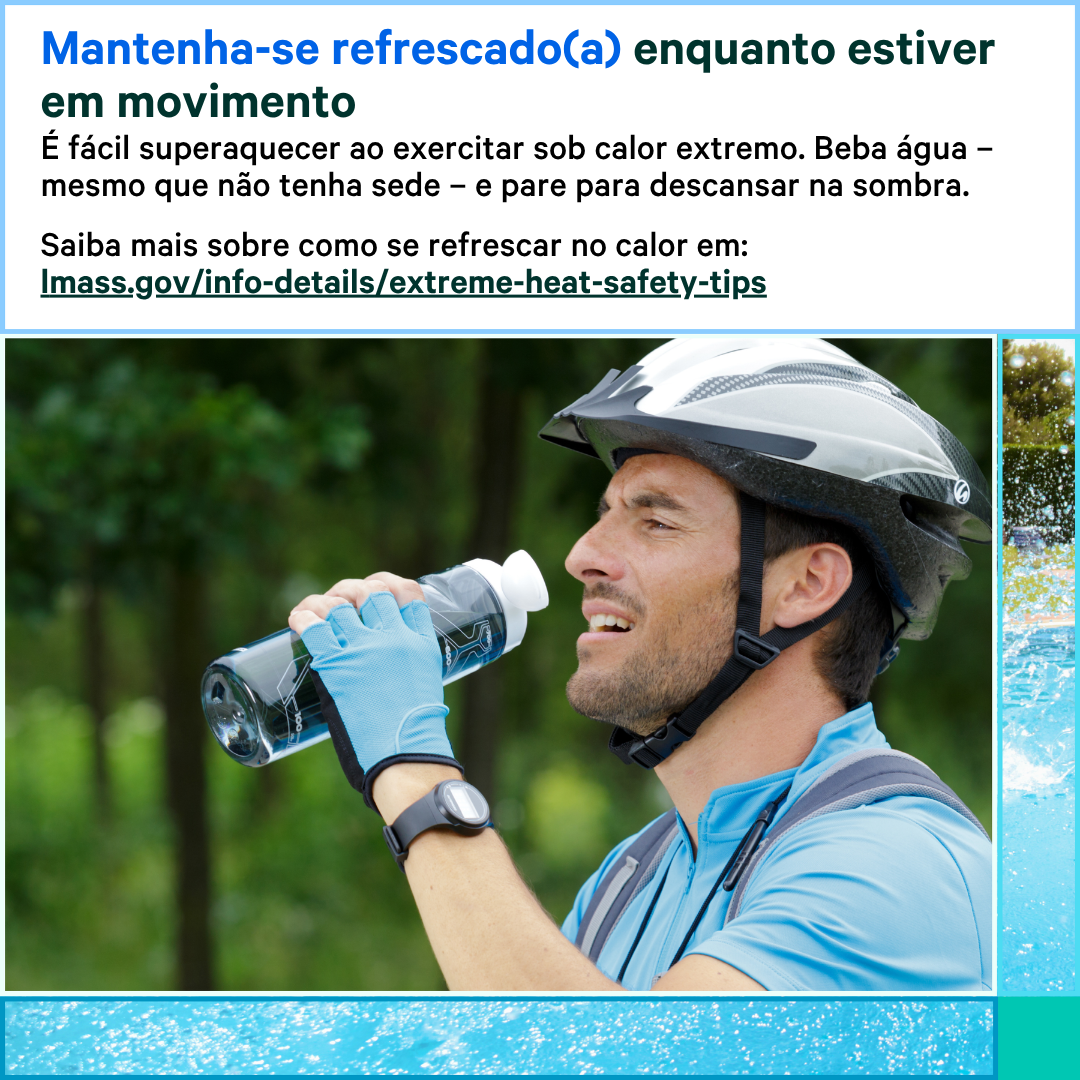
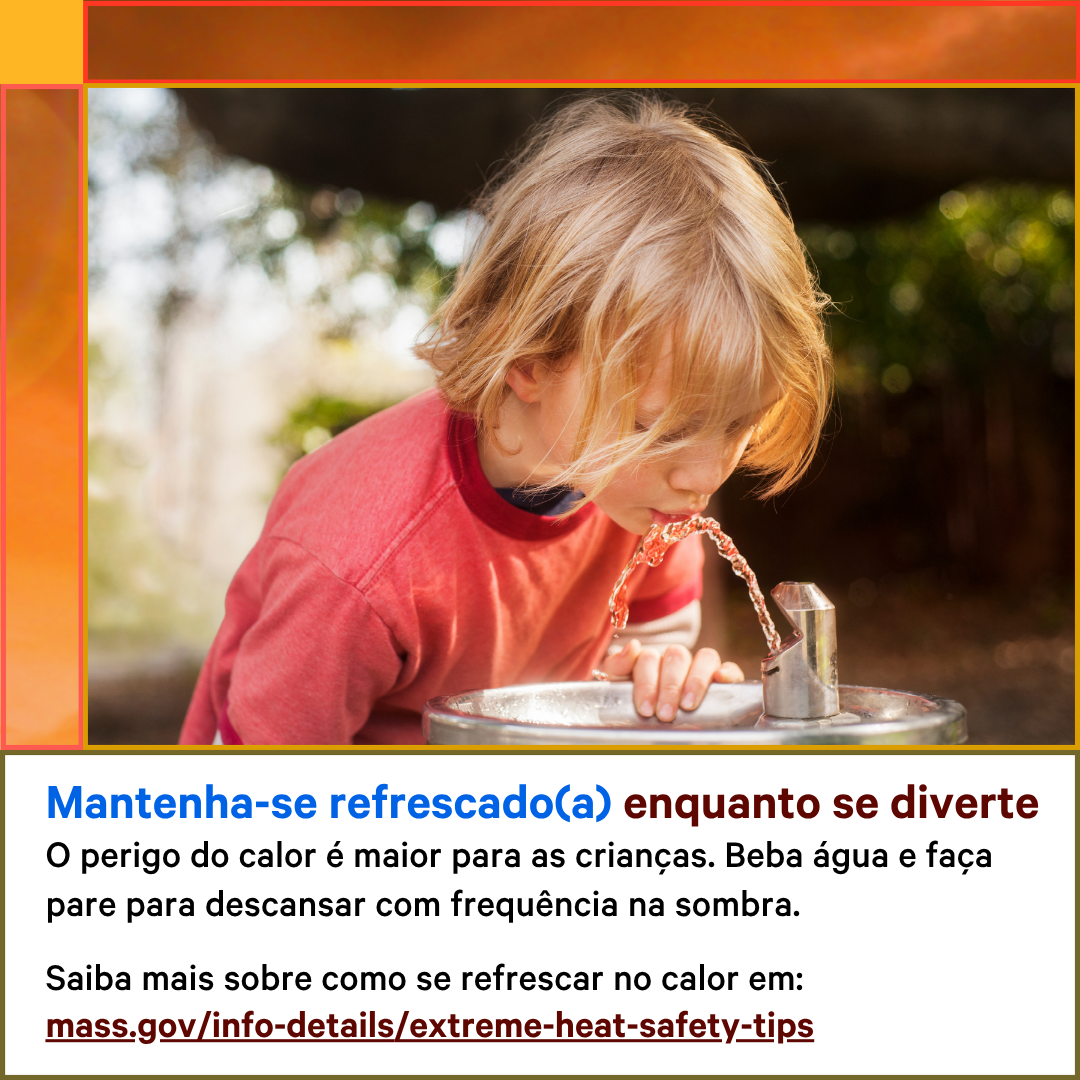
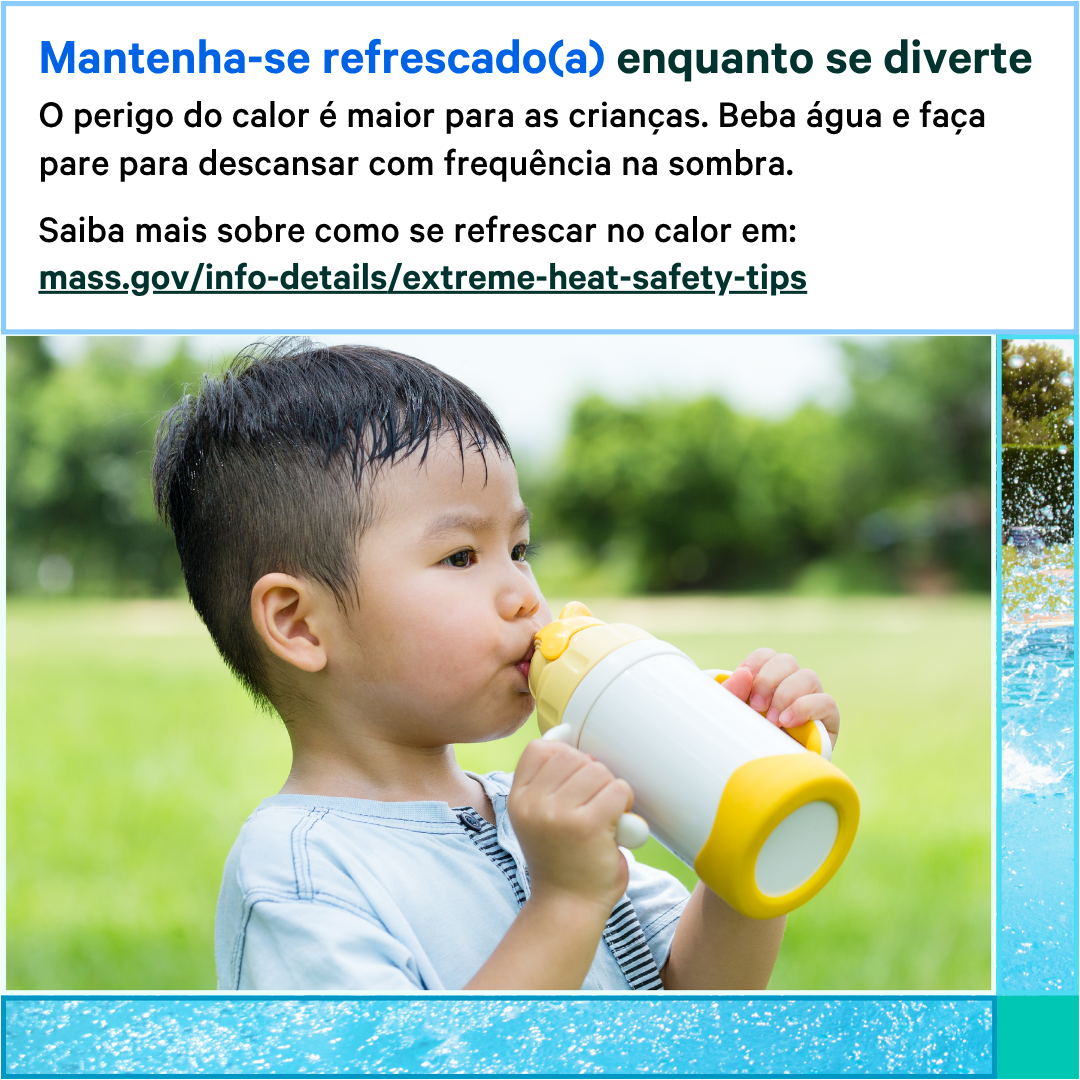
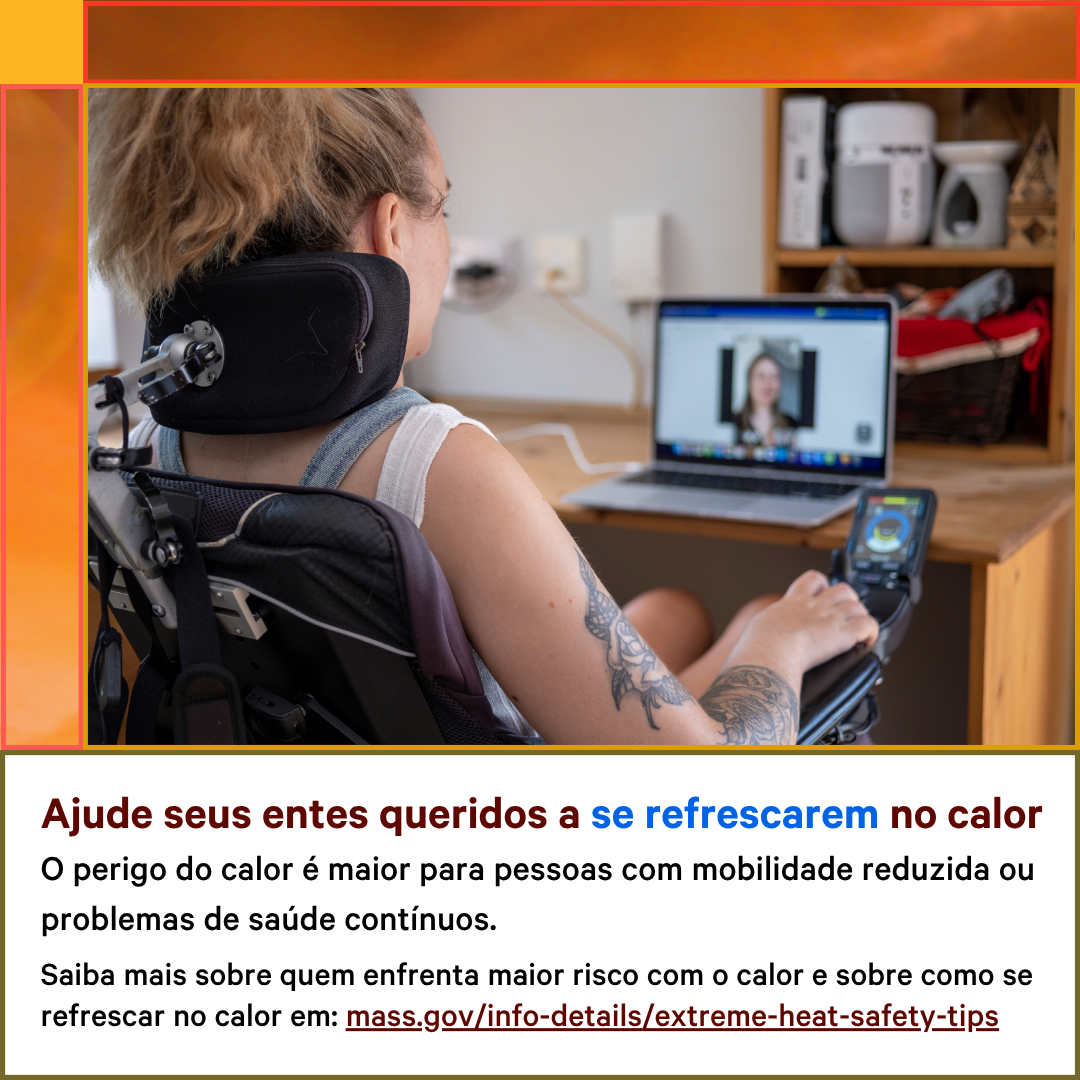
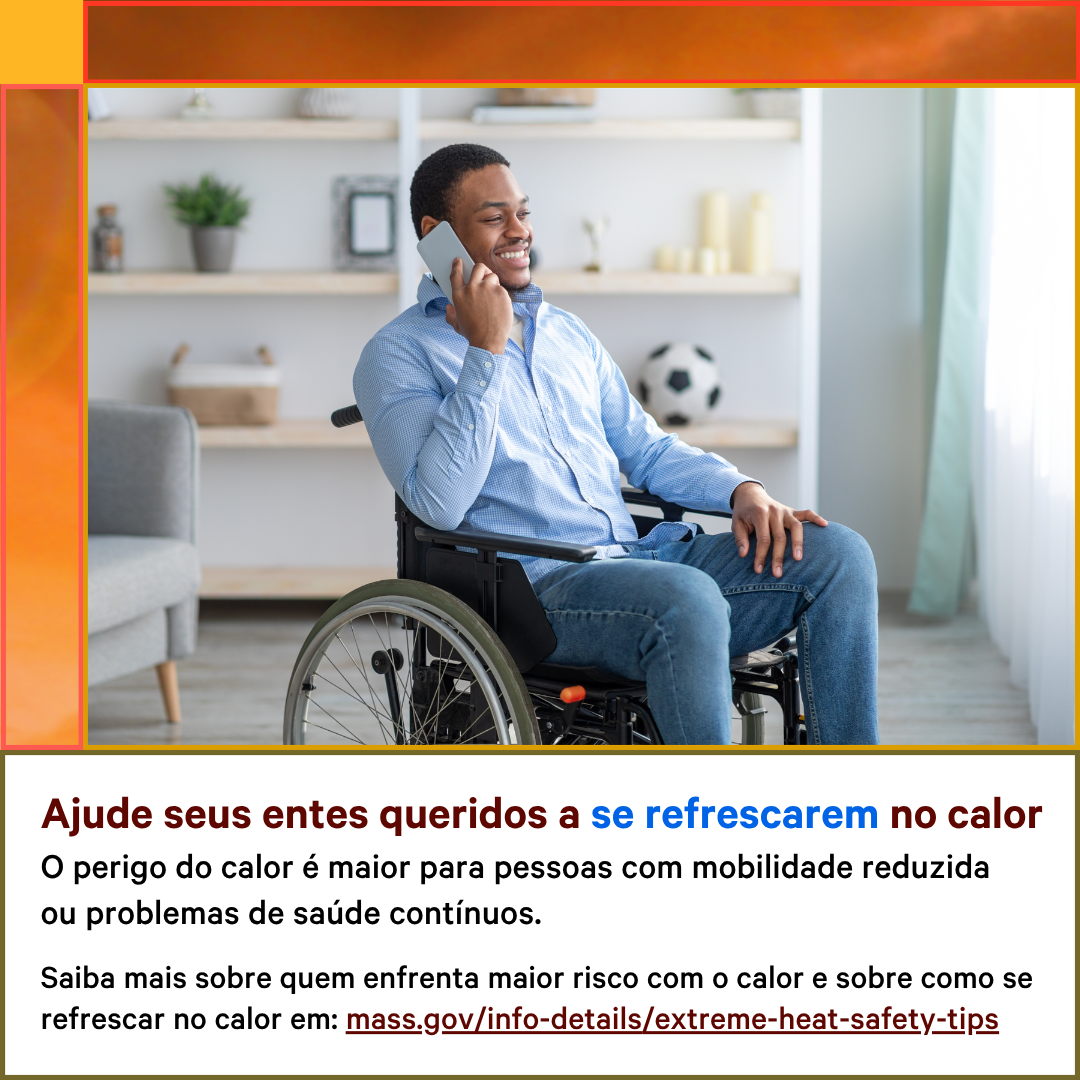
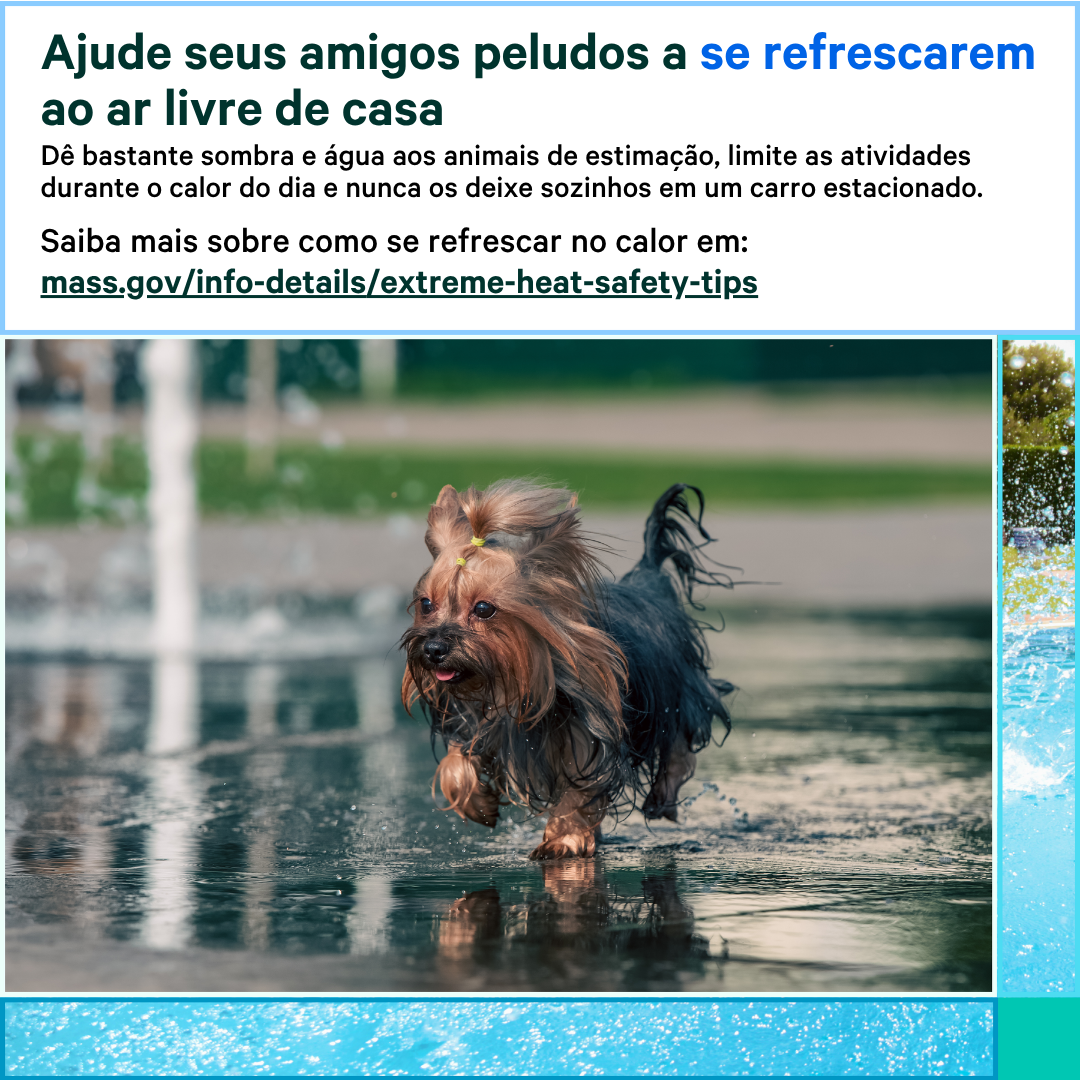
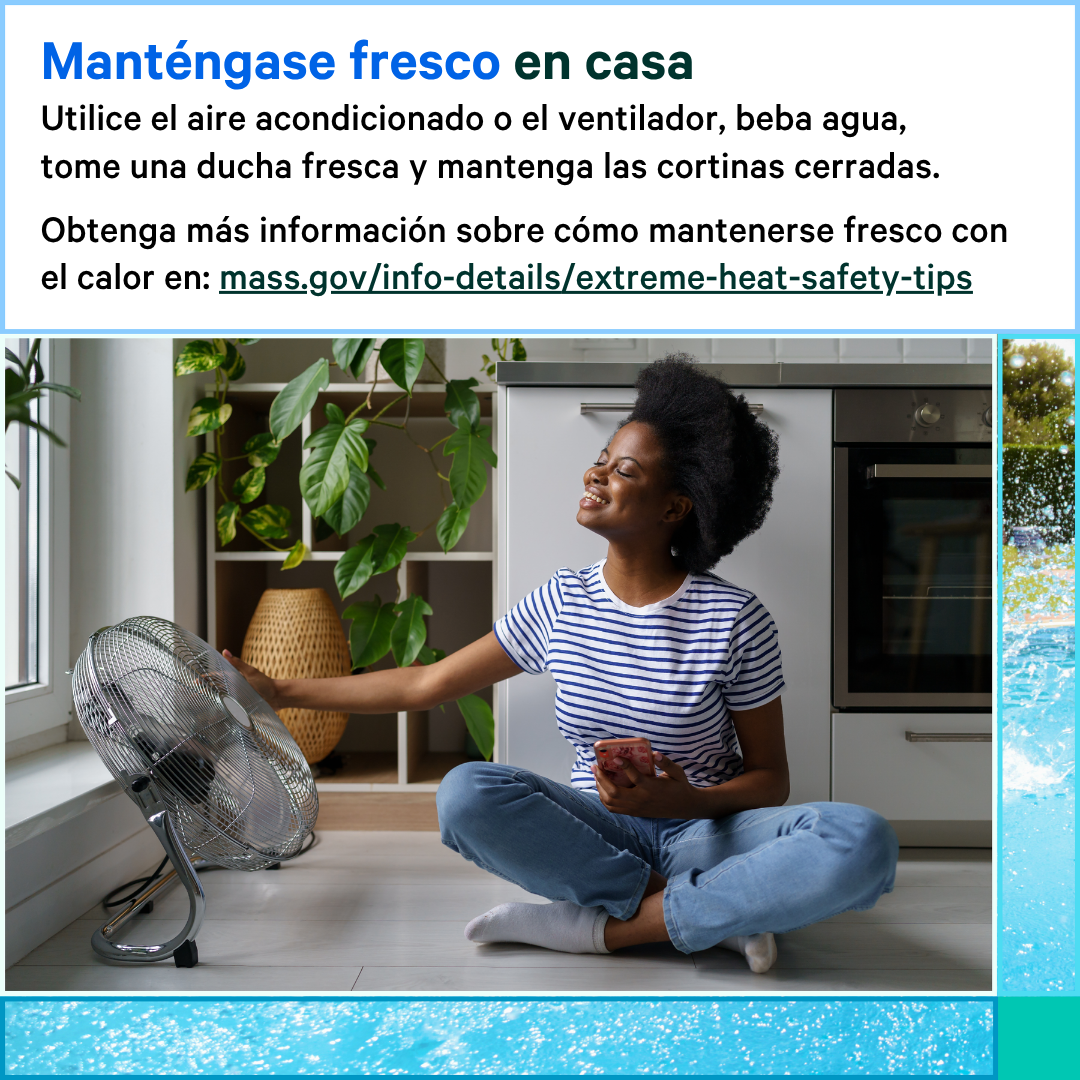
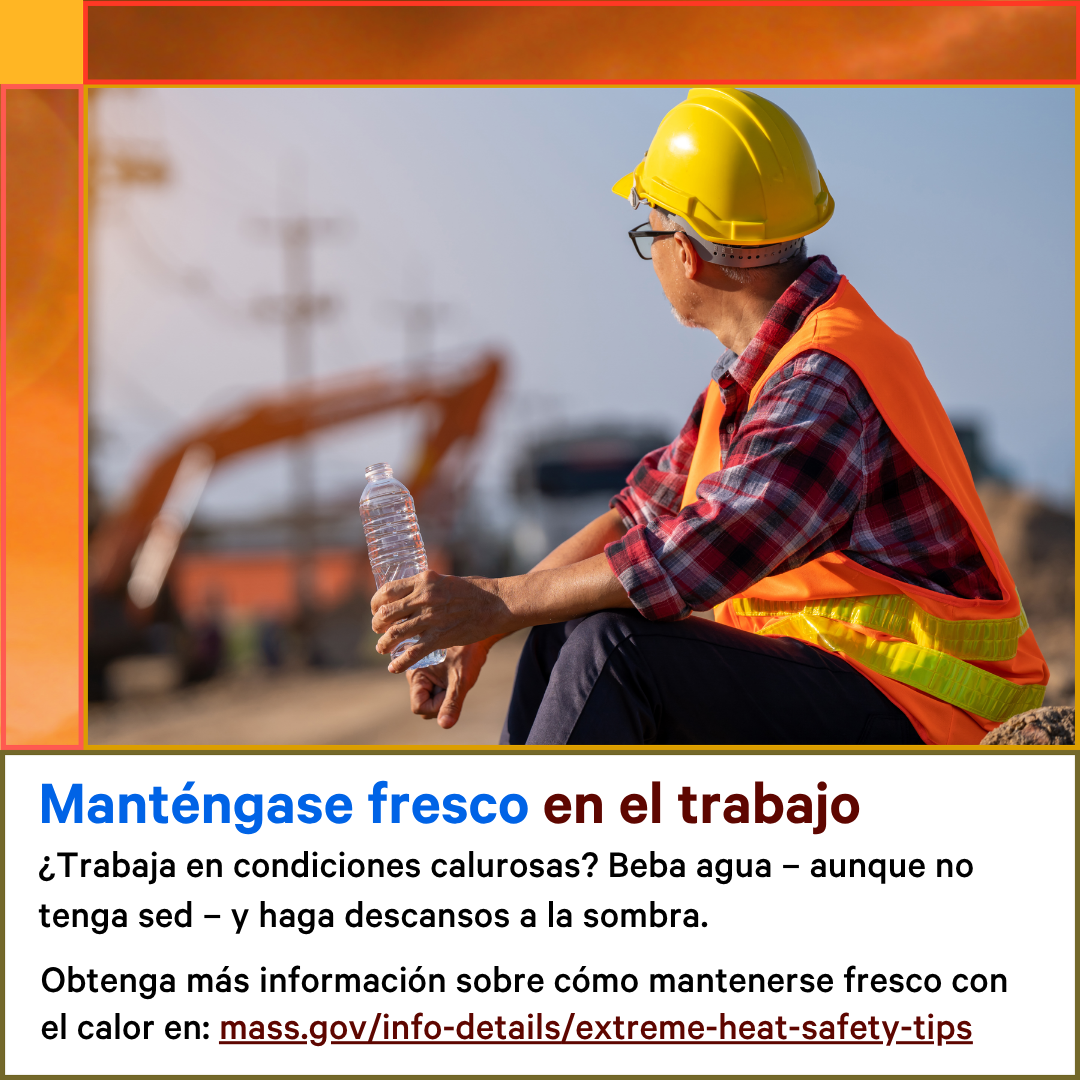
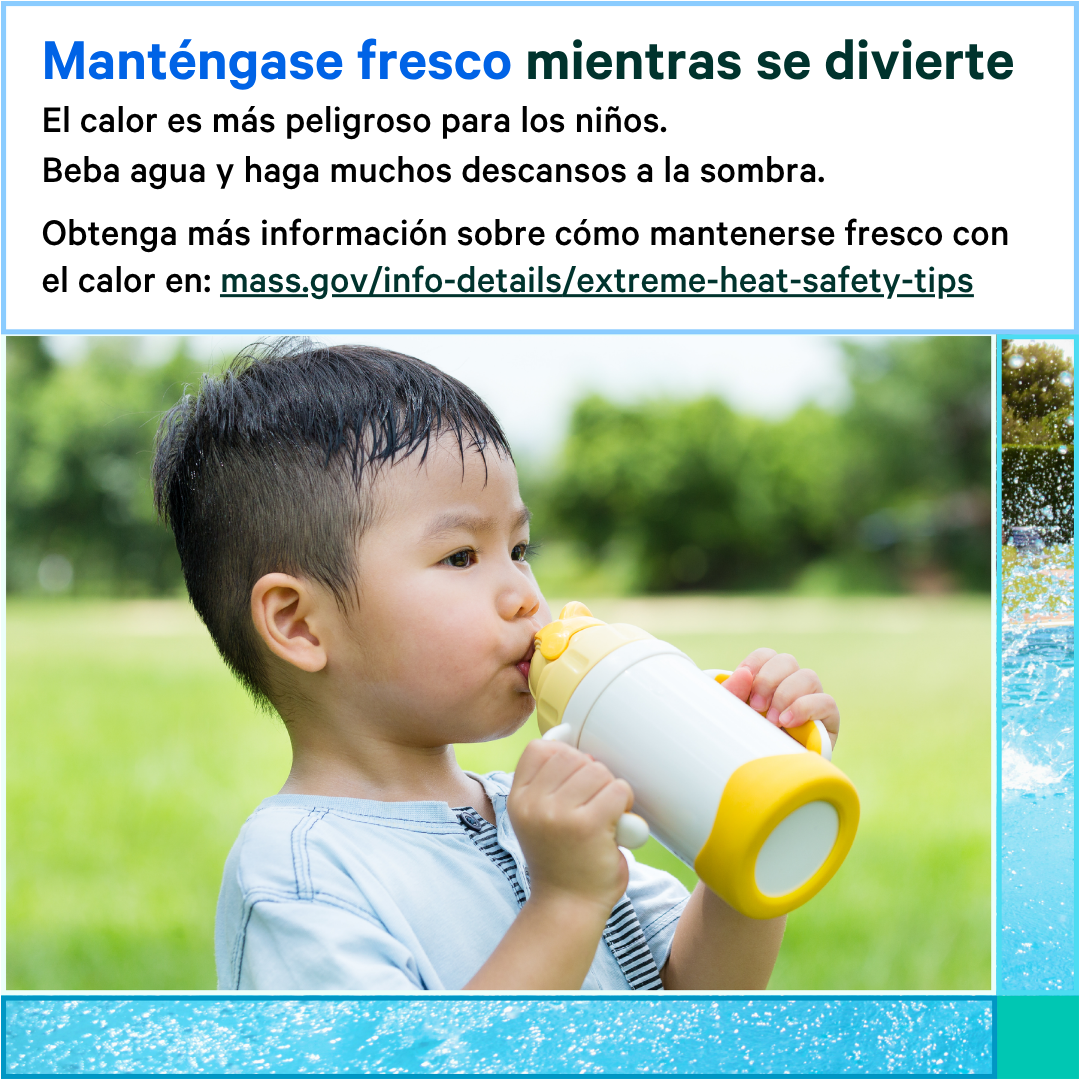
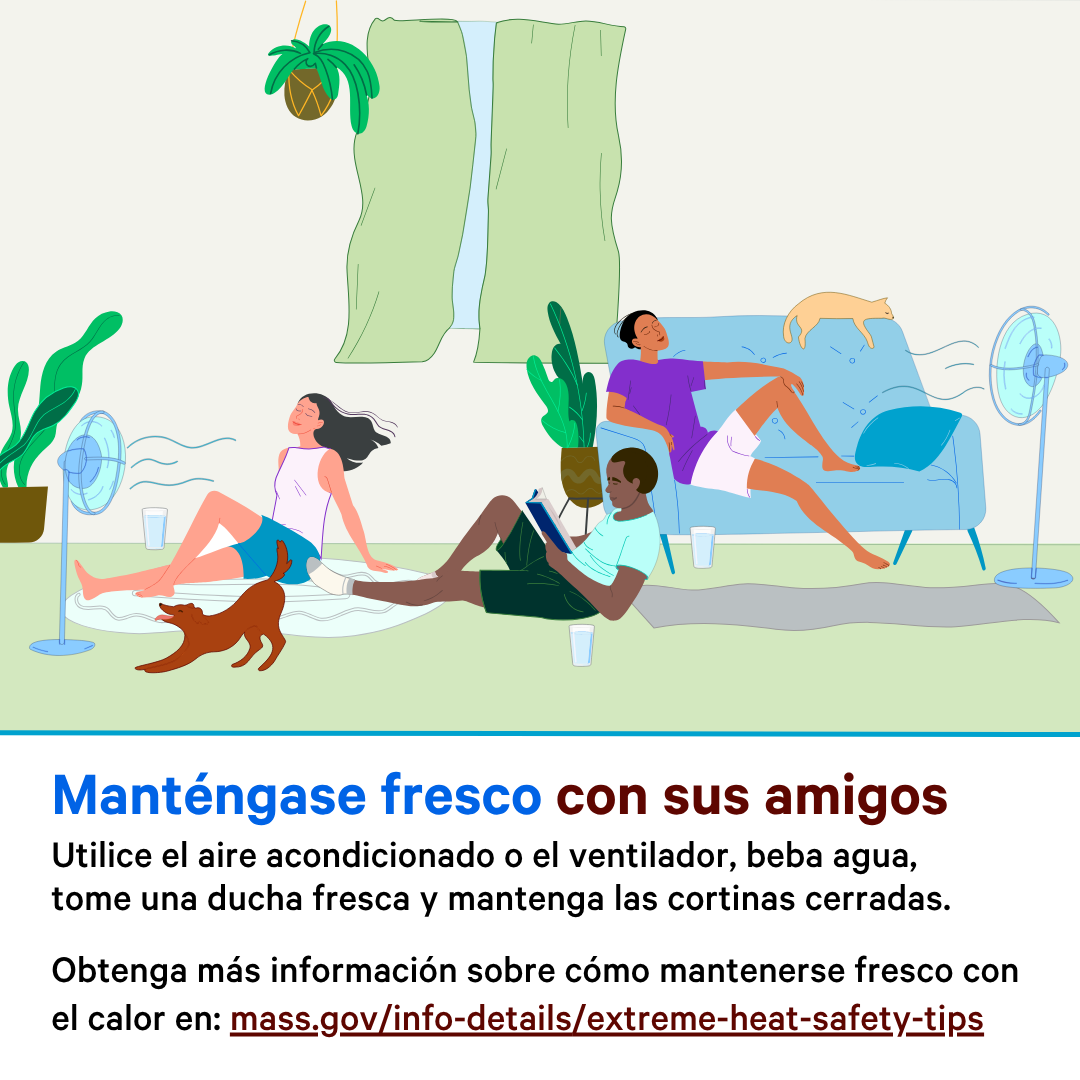
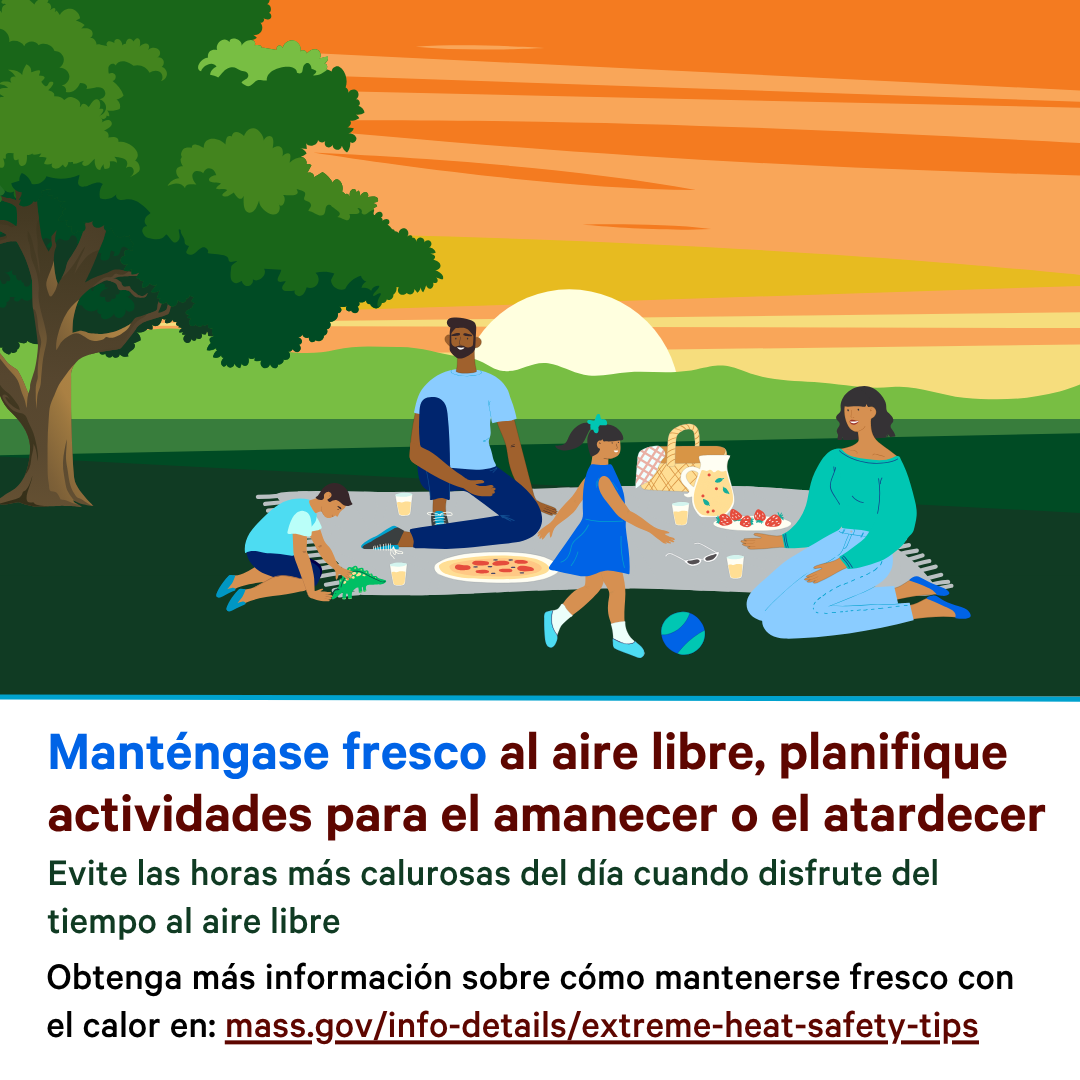
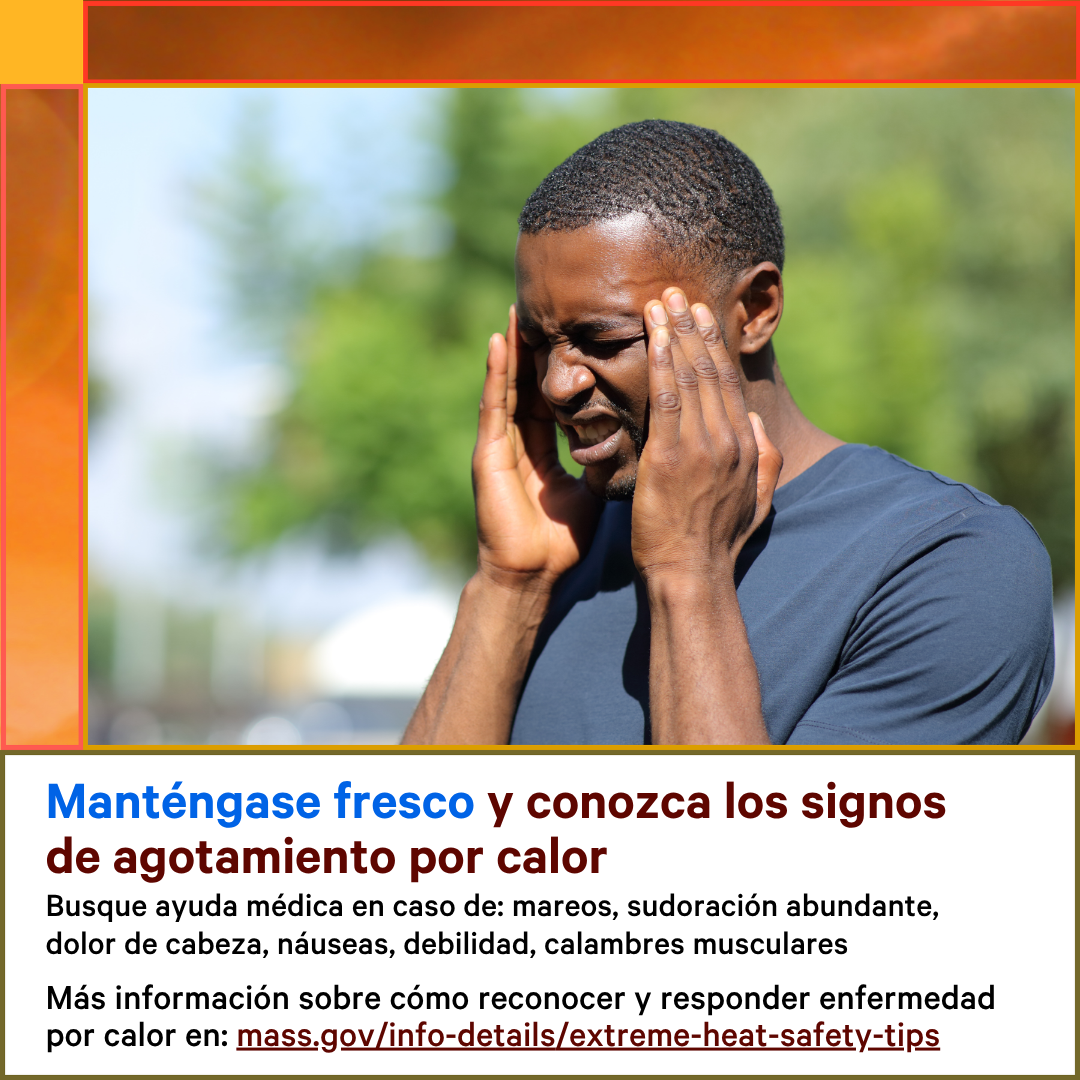
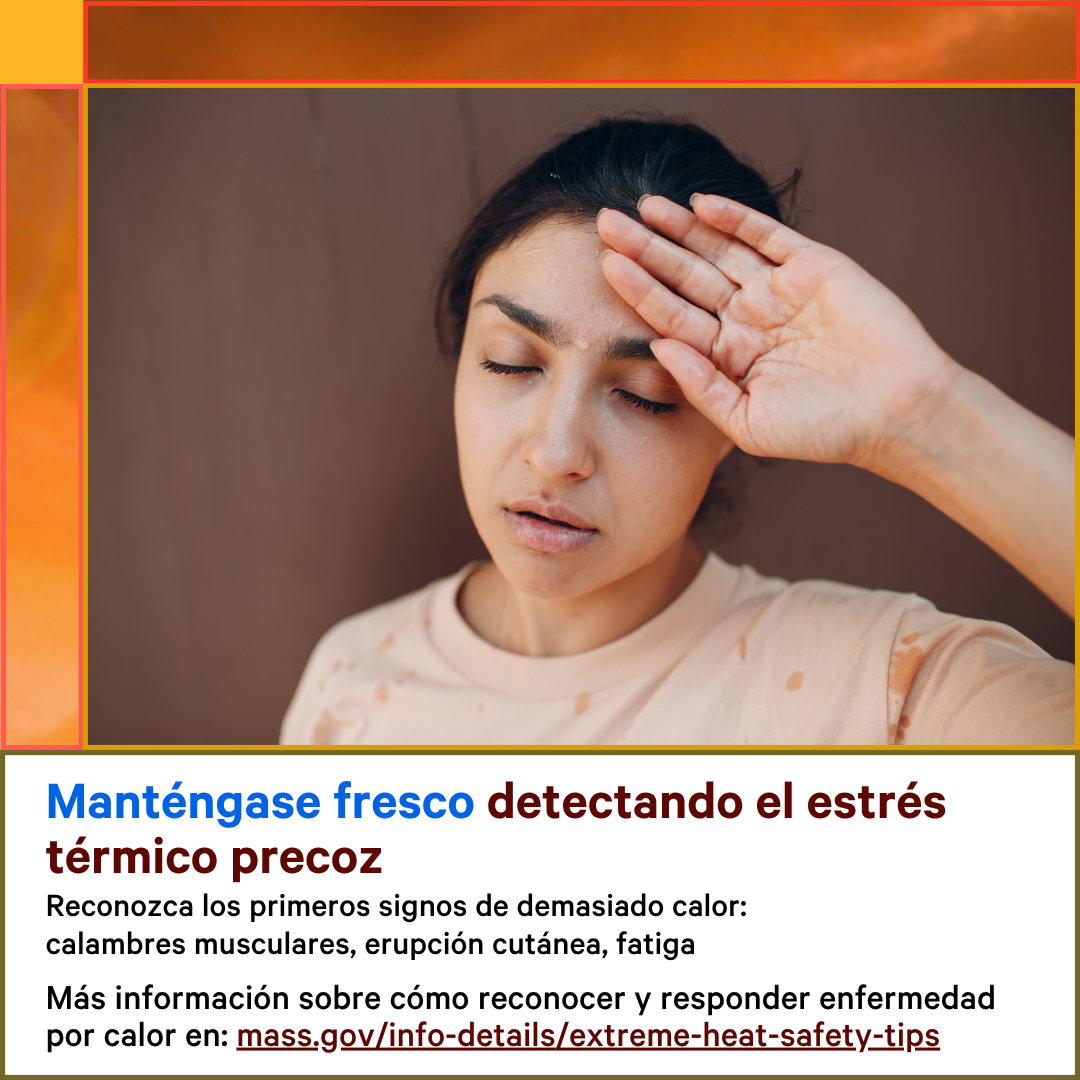
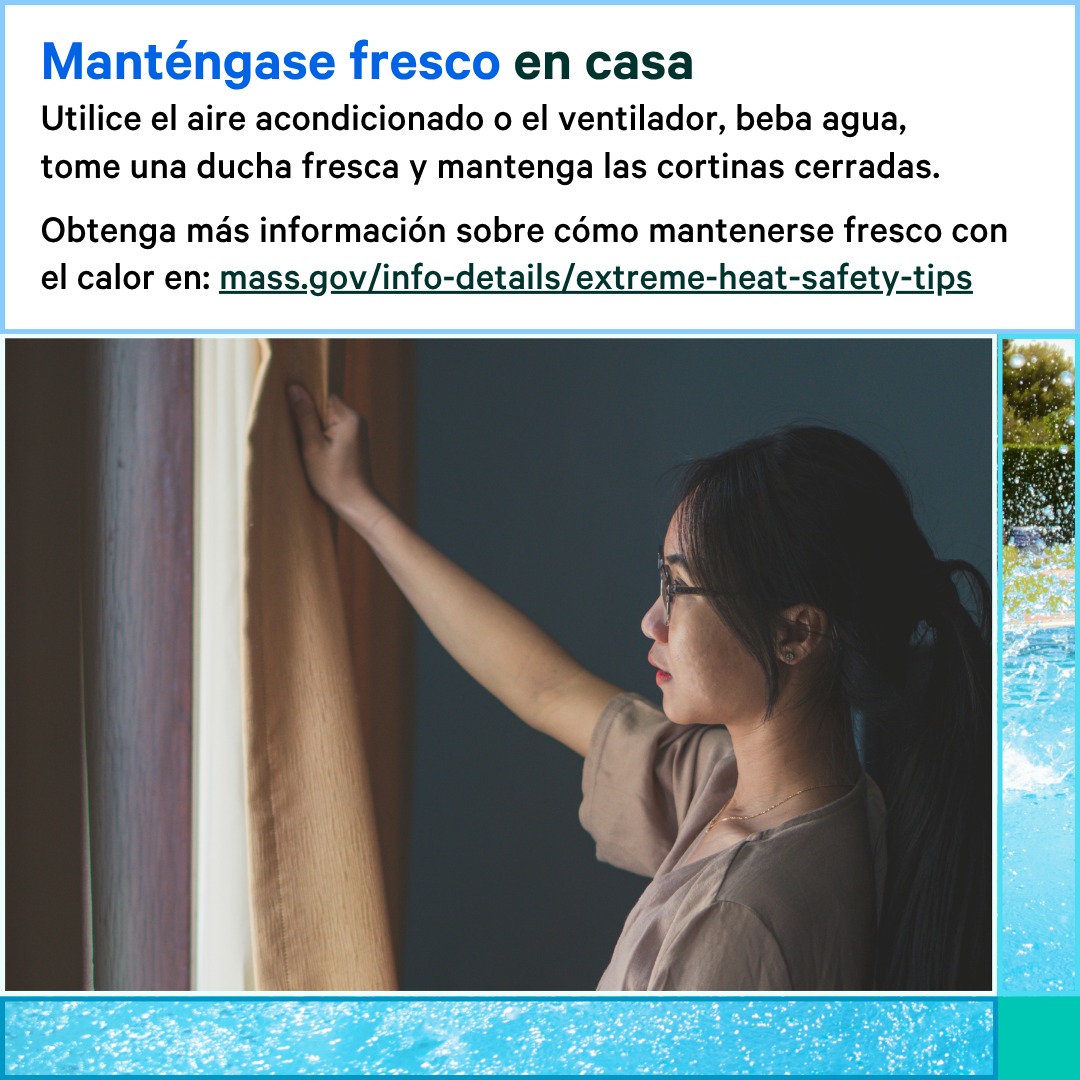
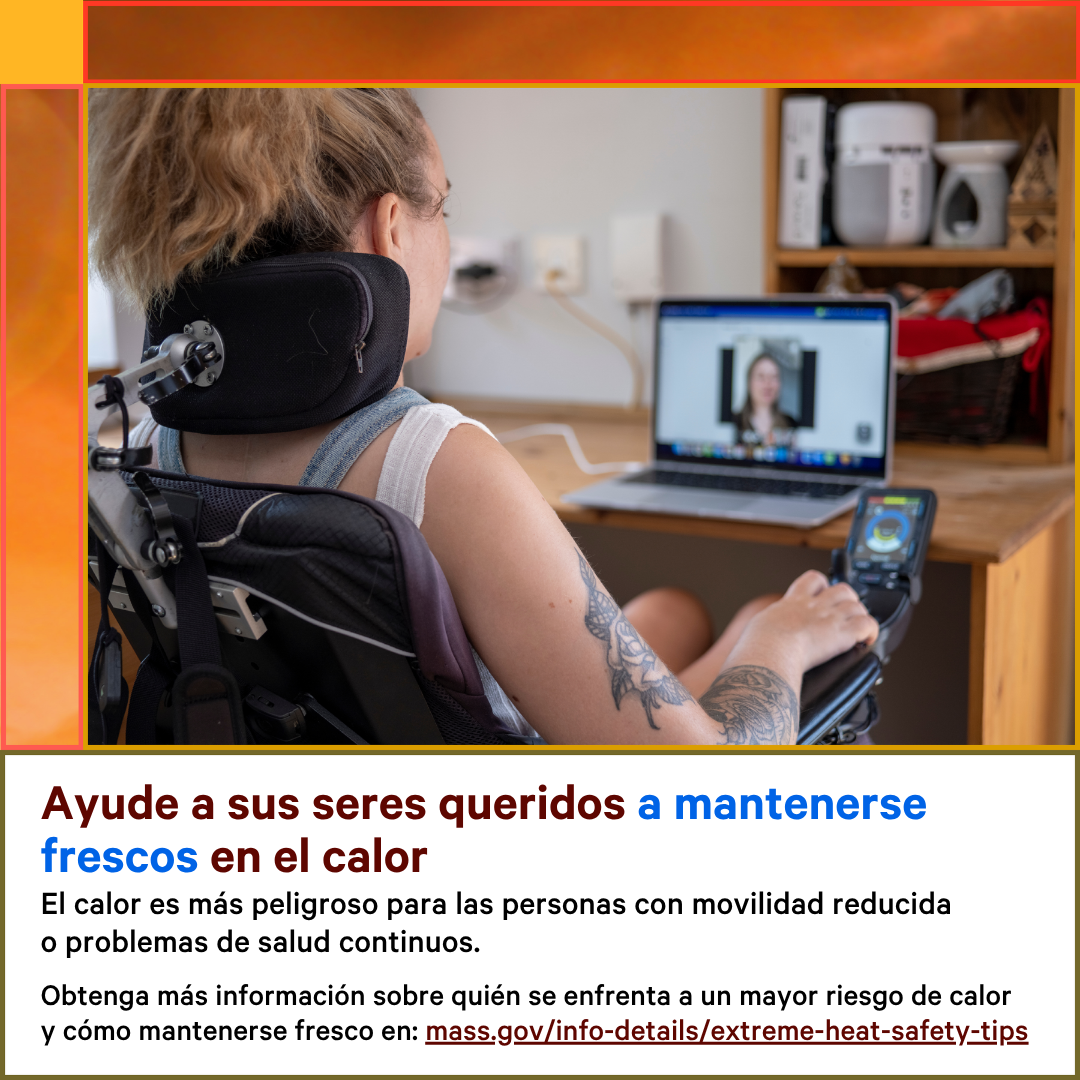
This section includes general use (non-editable) assets available for cities, towns, and local organizations to use to raise awareness about extreme heat. The materials focus on moving people from recognizing heat risks to taking protective actions before, during, and after heat events. Resources will continue to be added and updated throughout the project!
English Materials
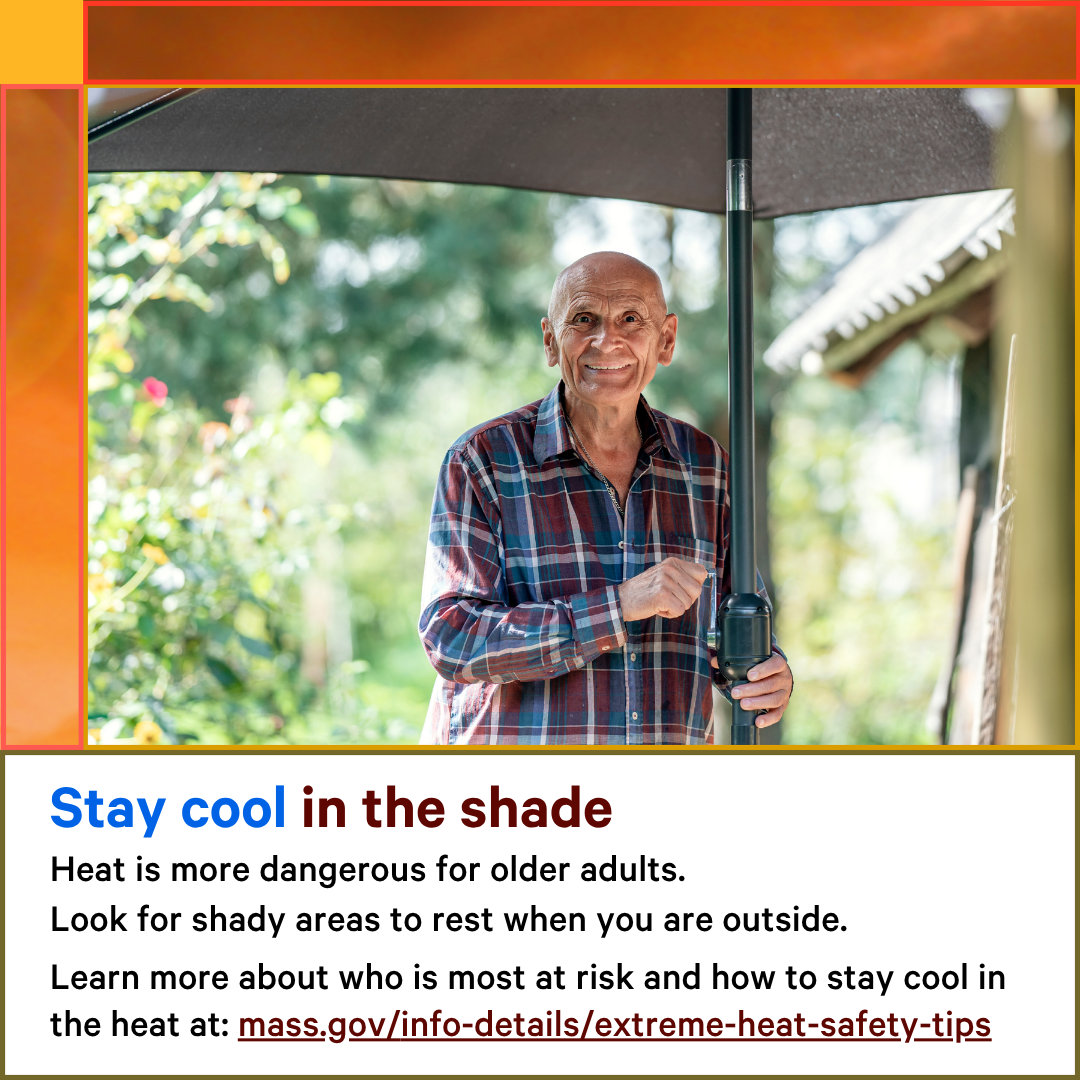

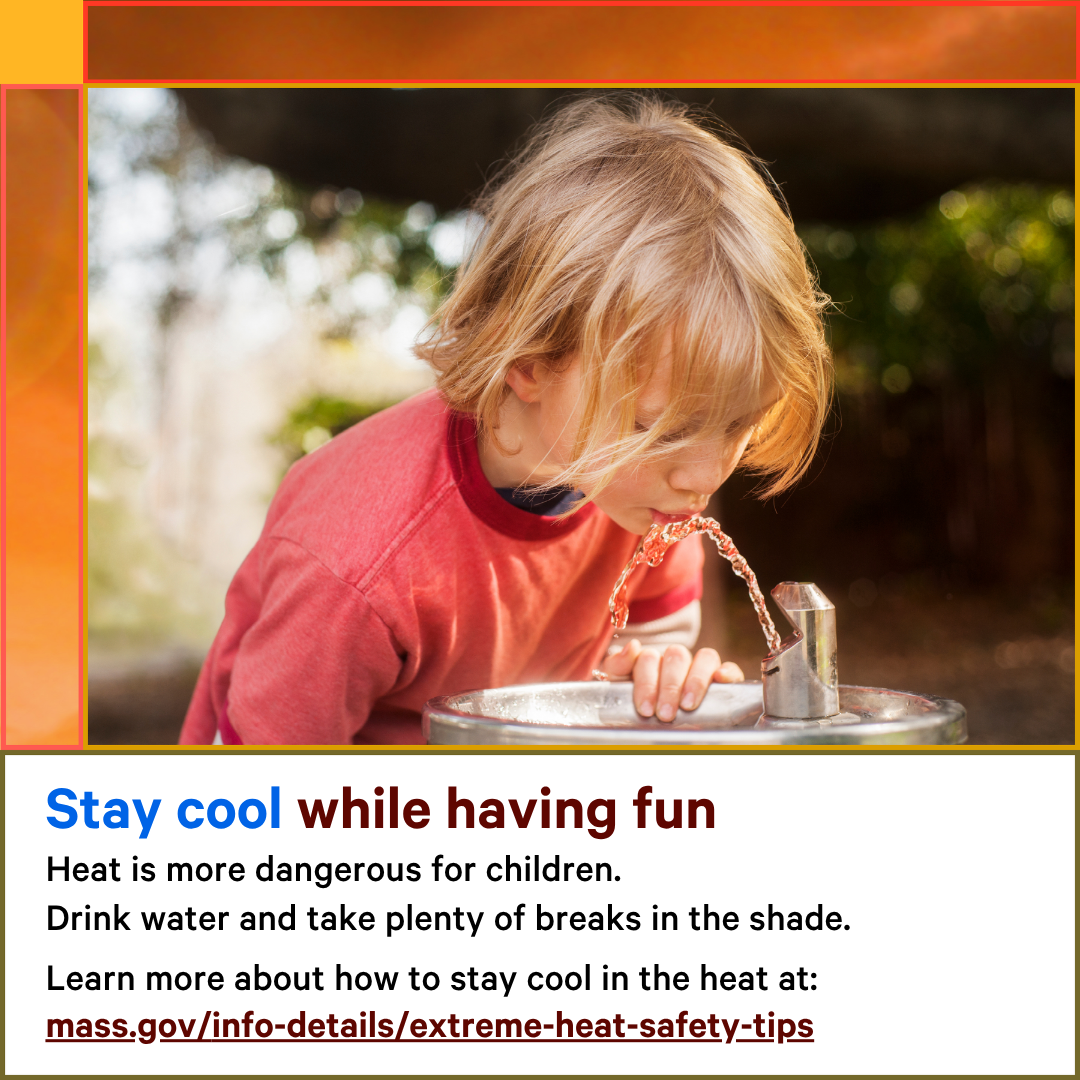


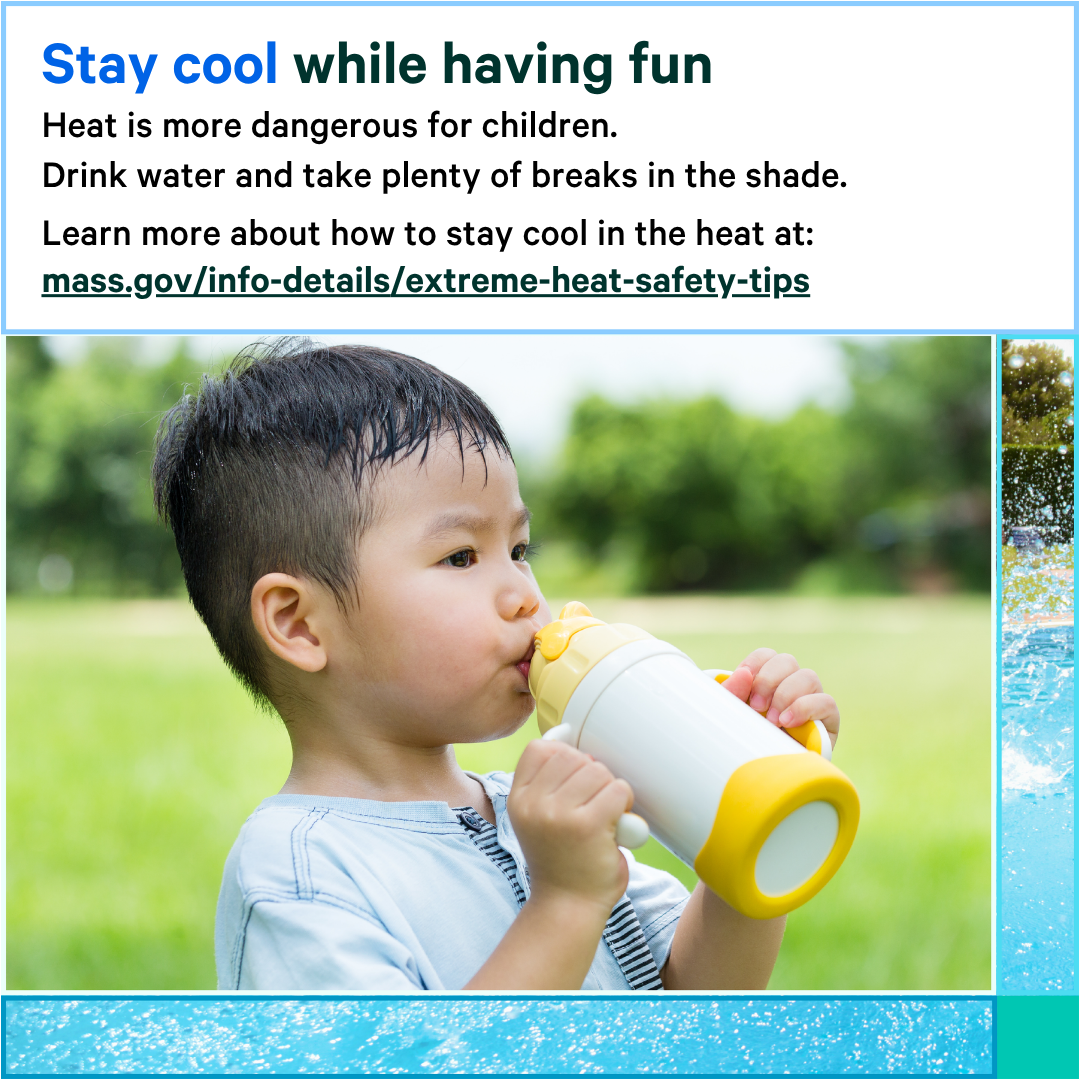
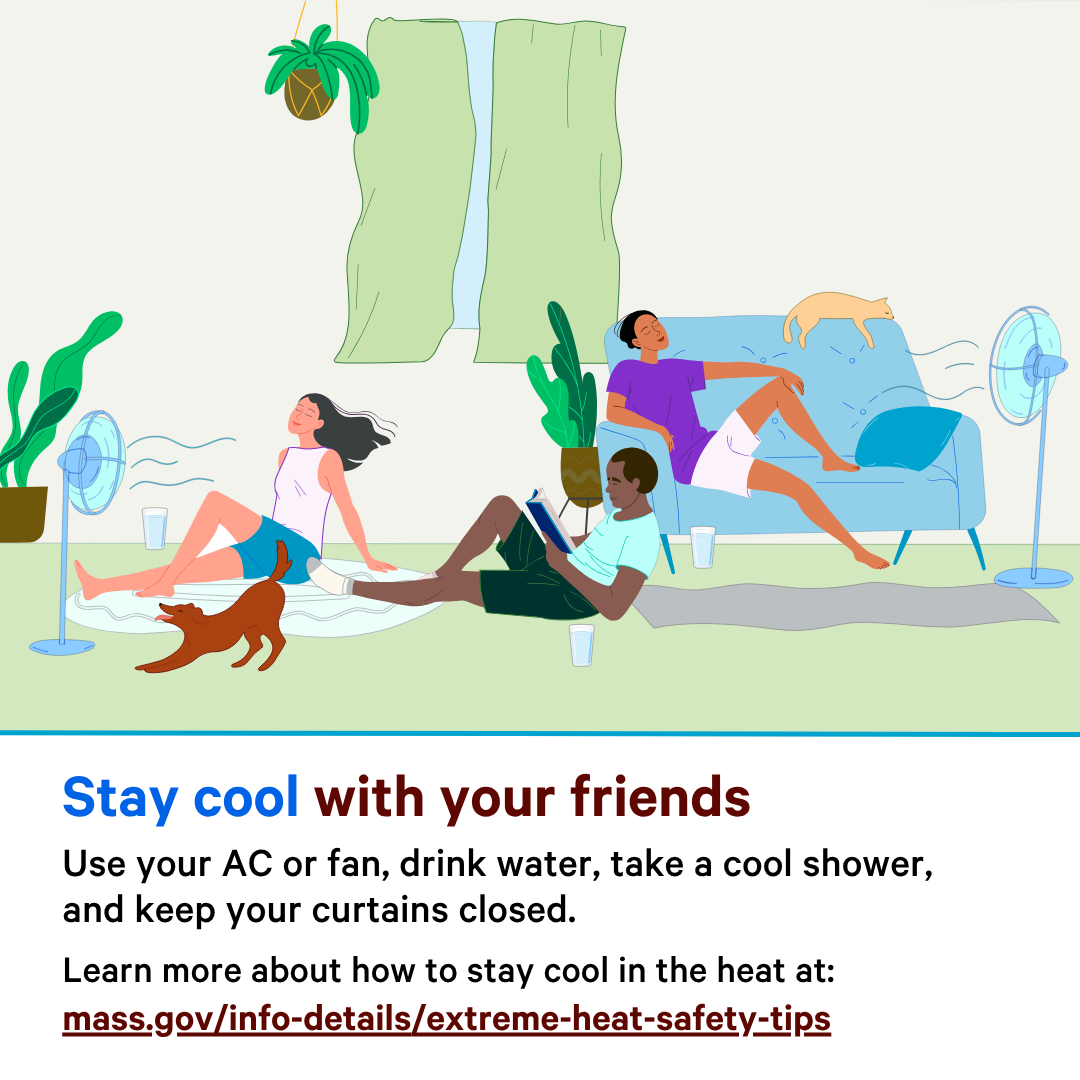
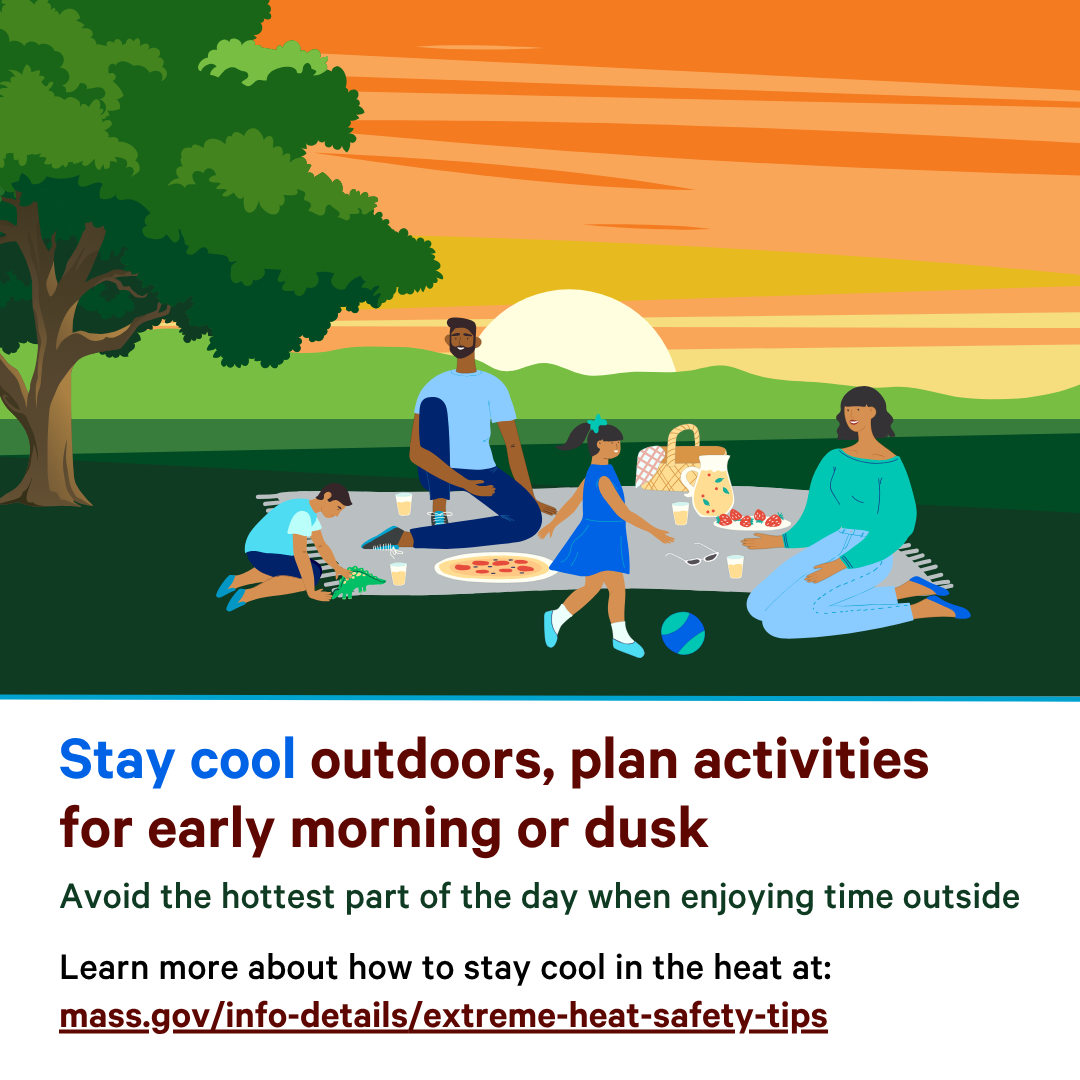
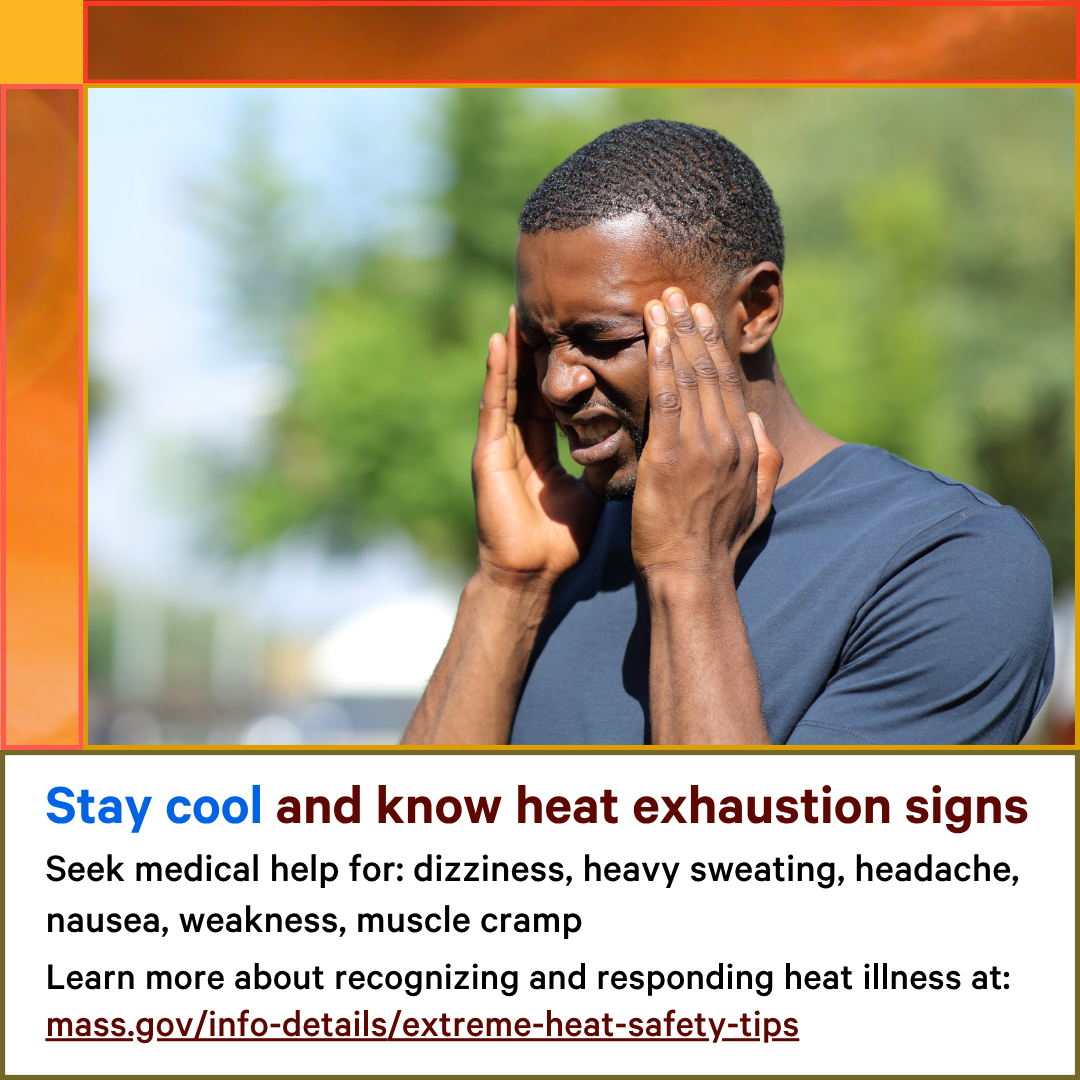
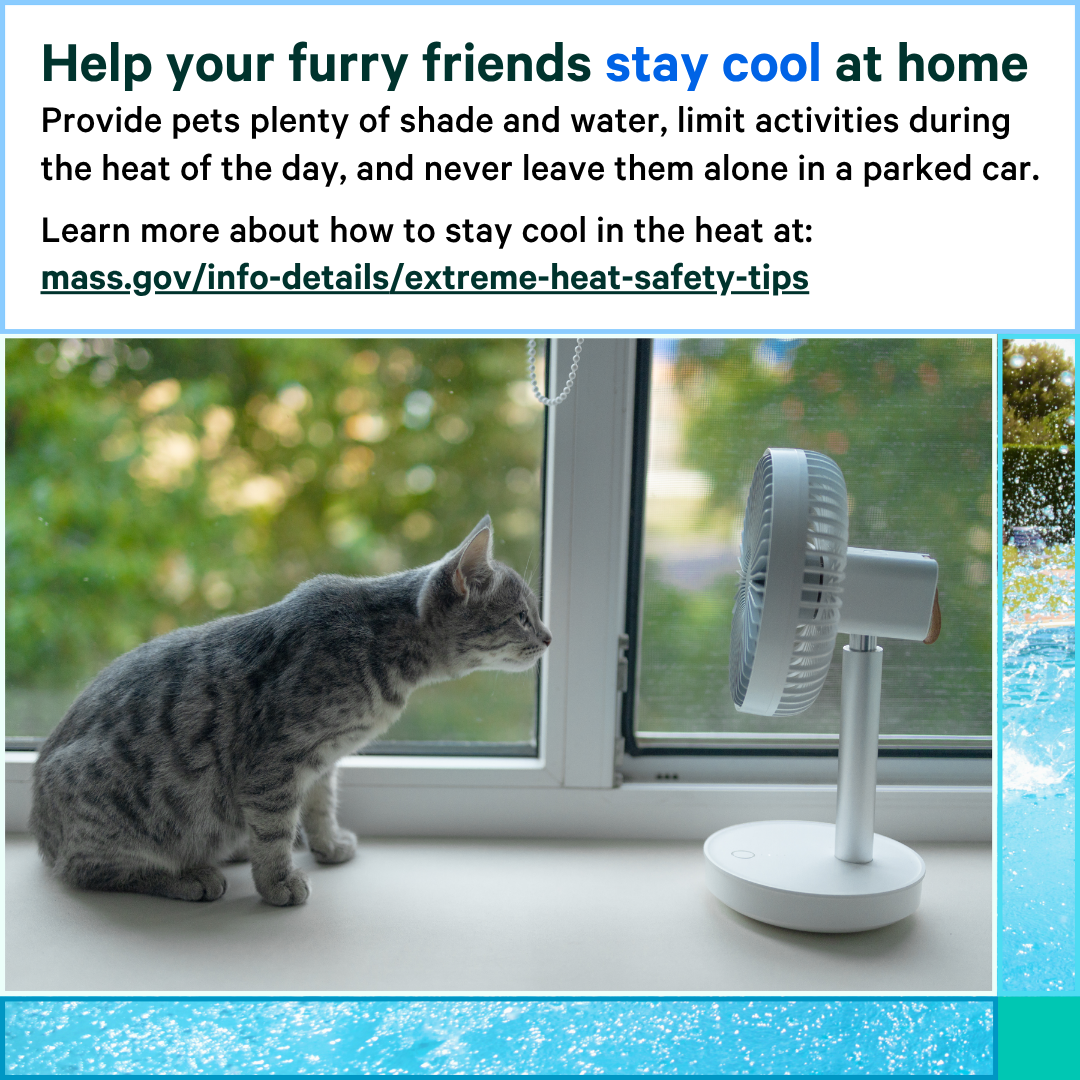
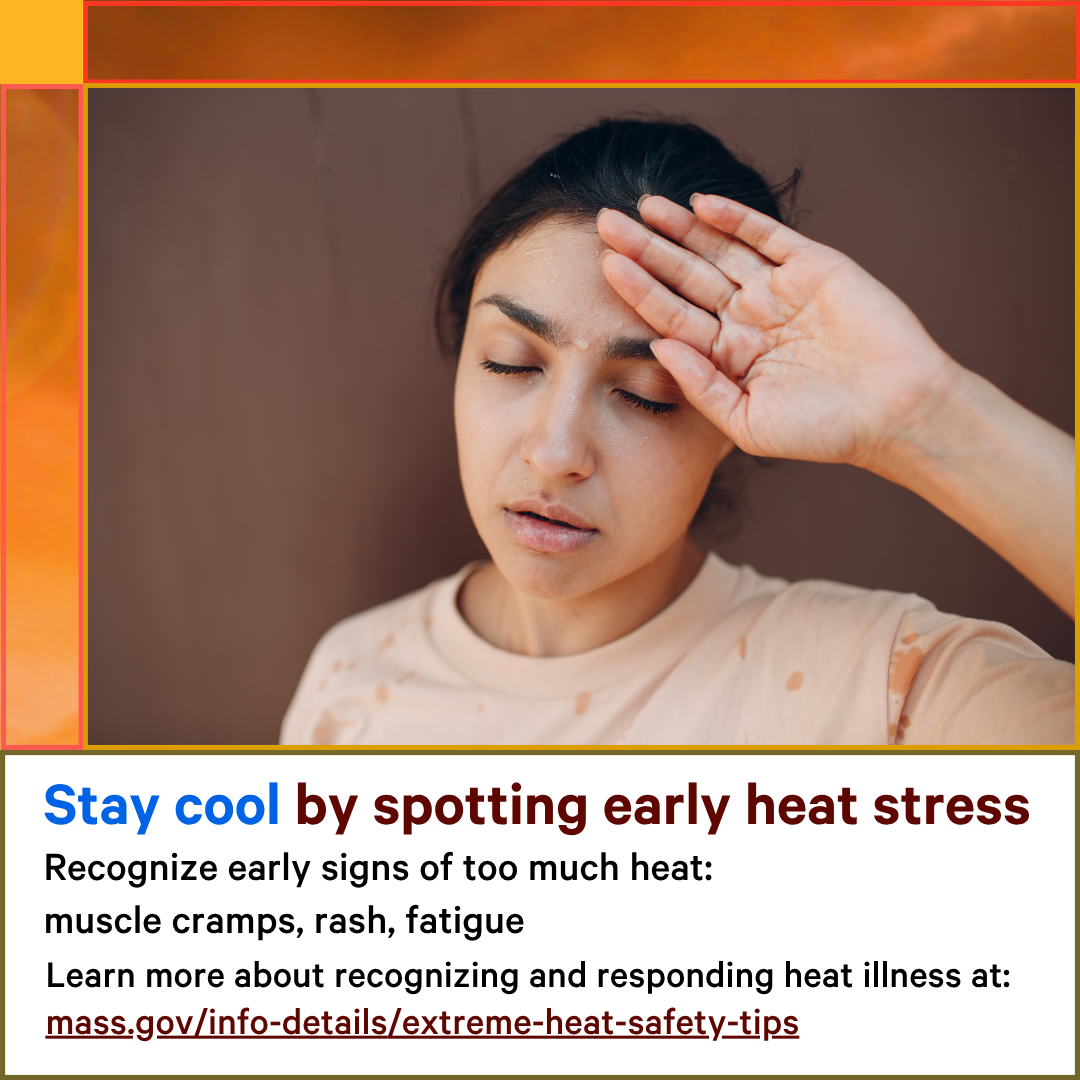
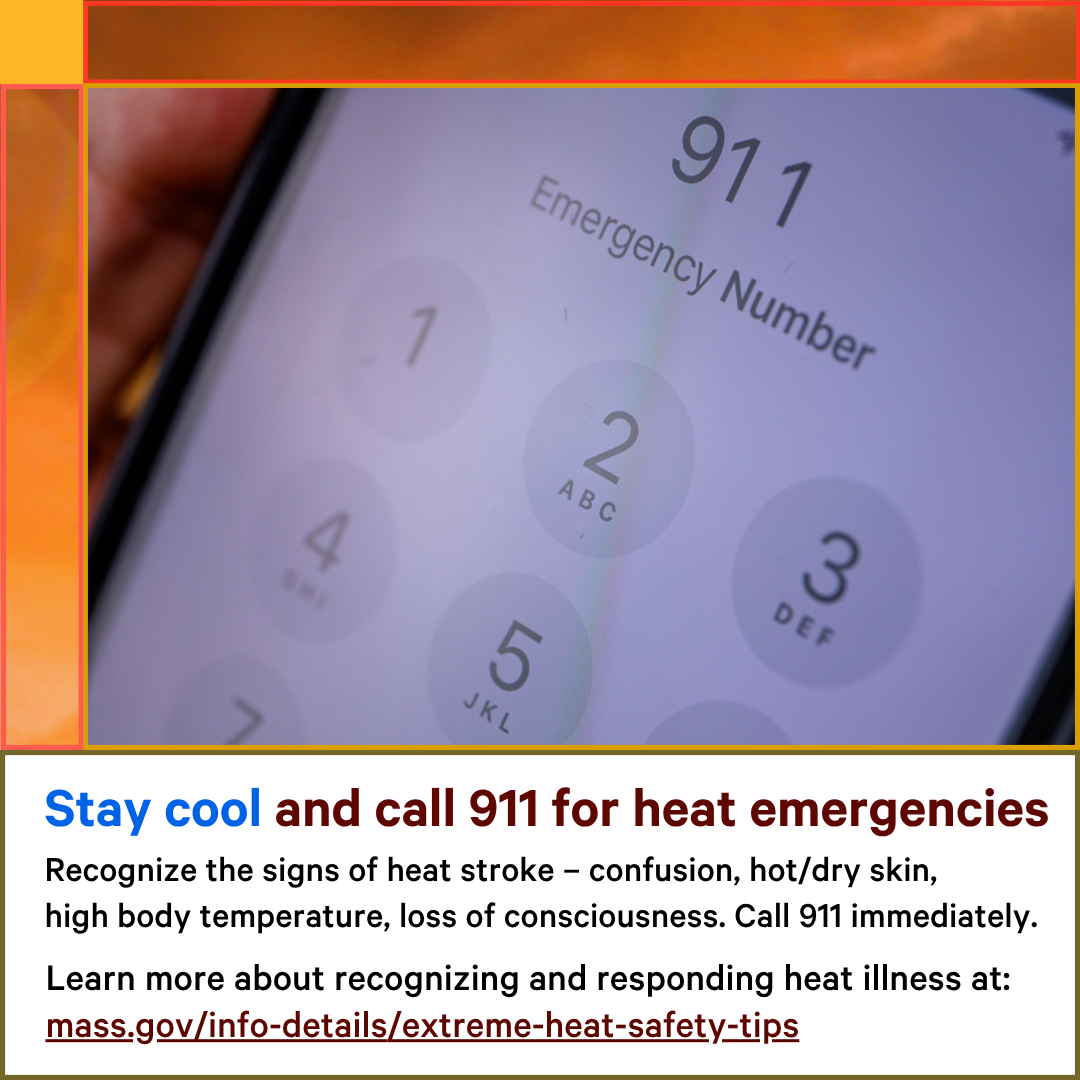
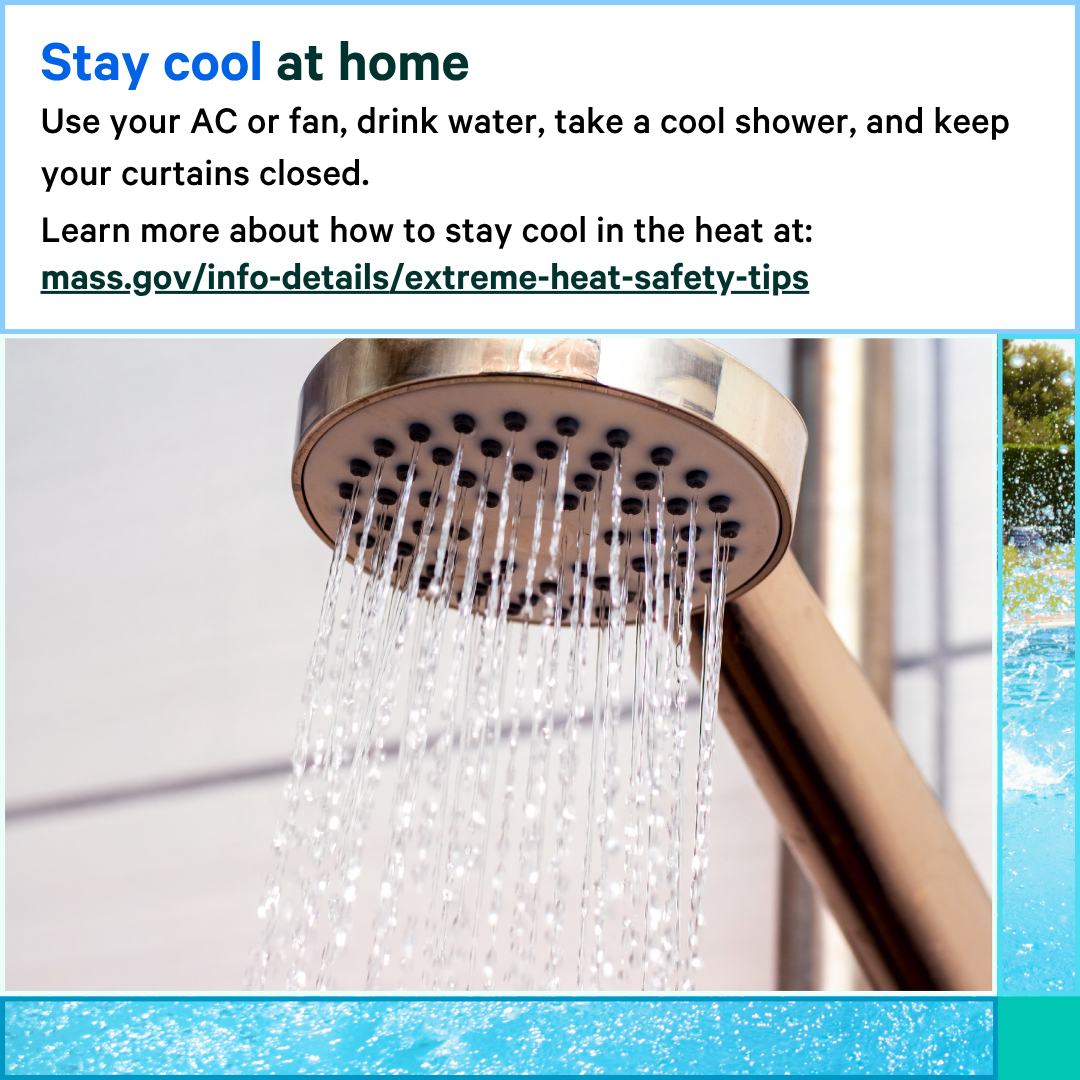
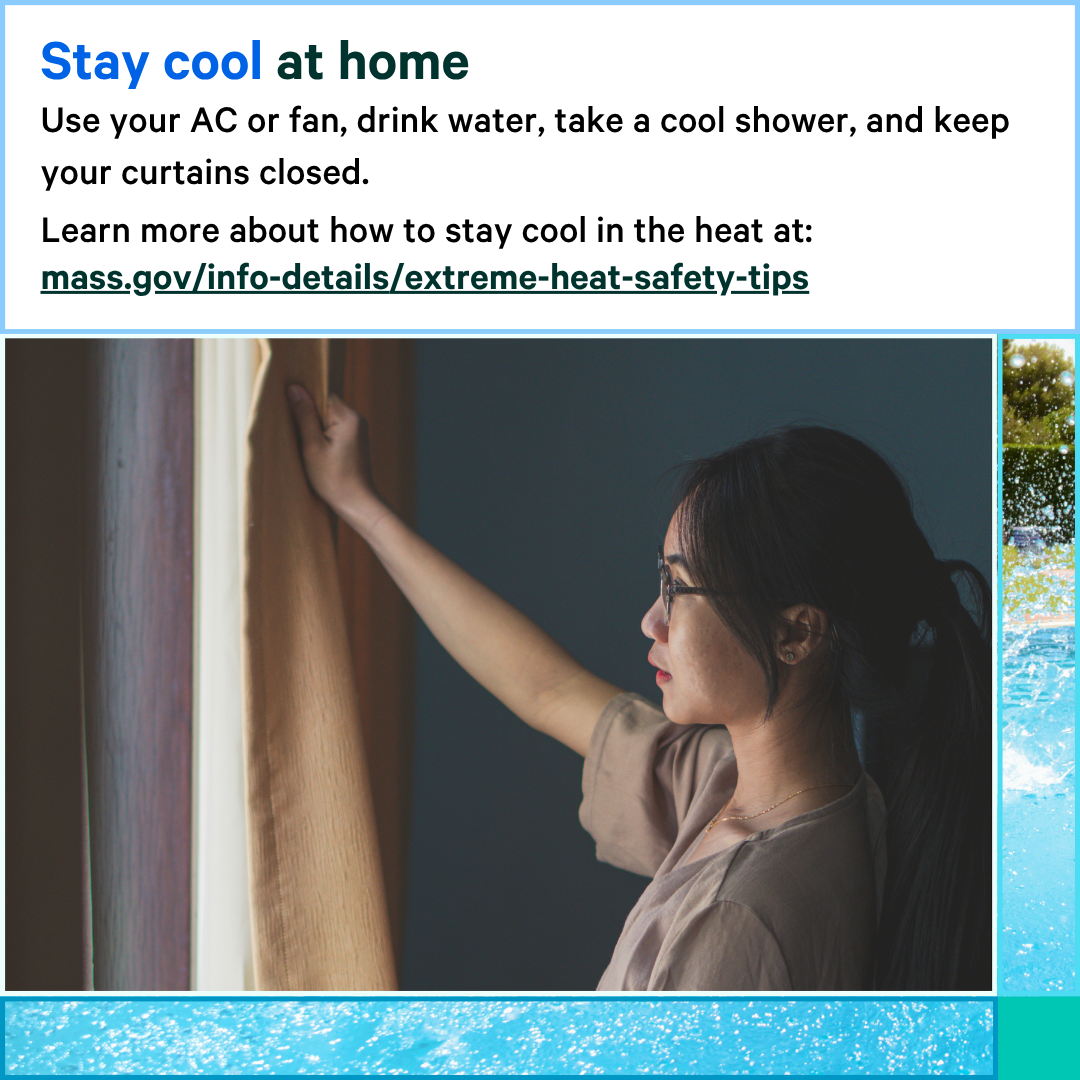
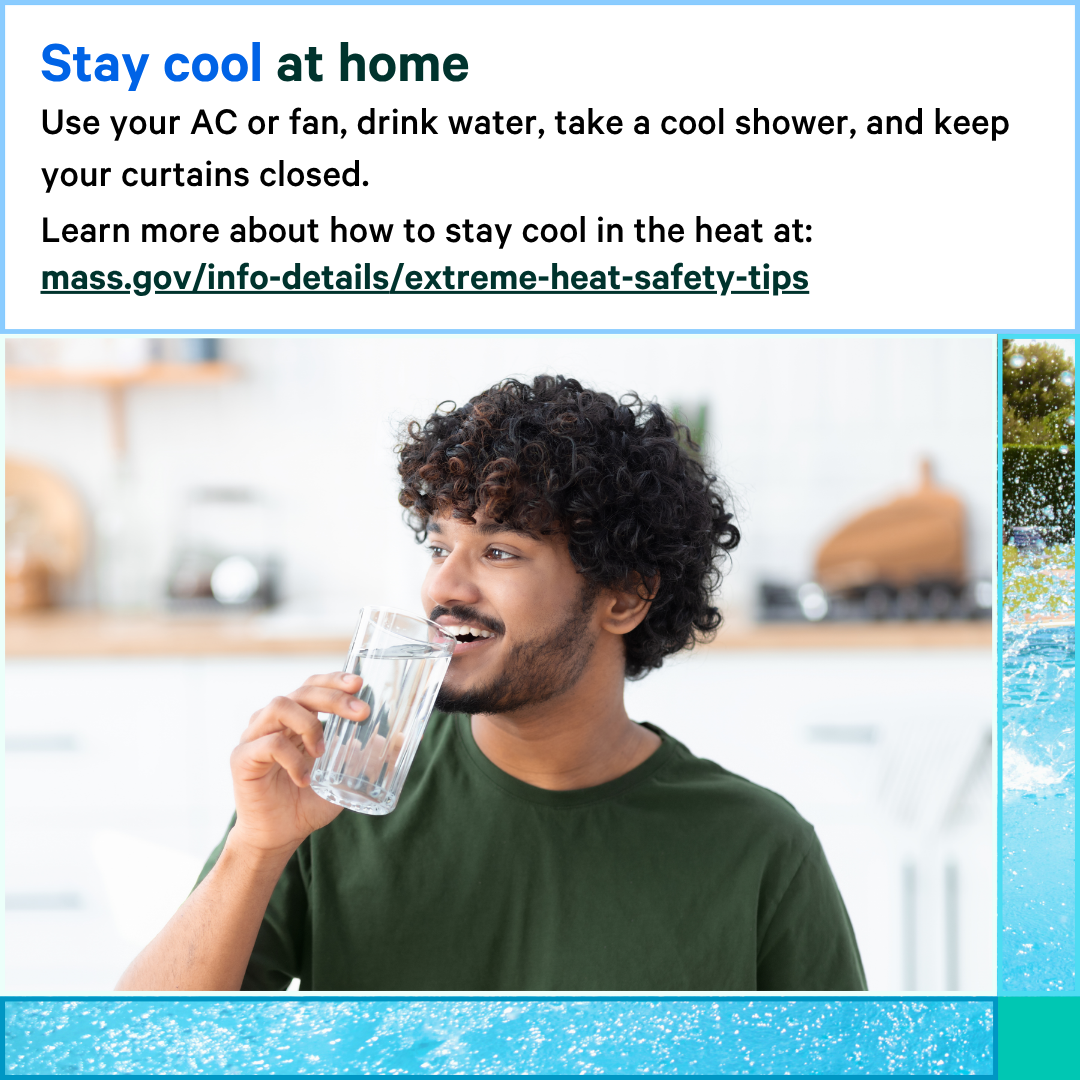


Arabic Materials
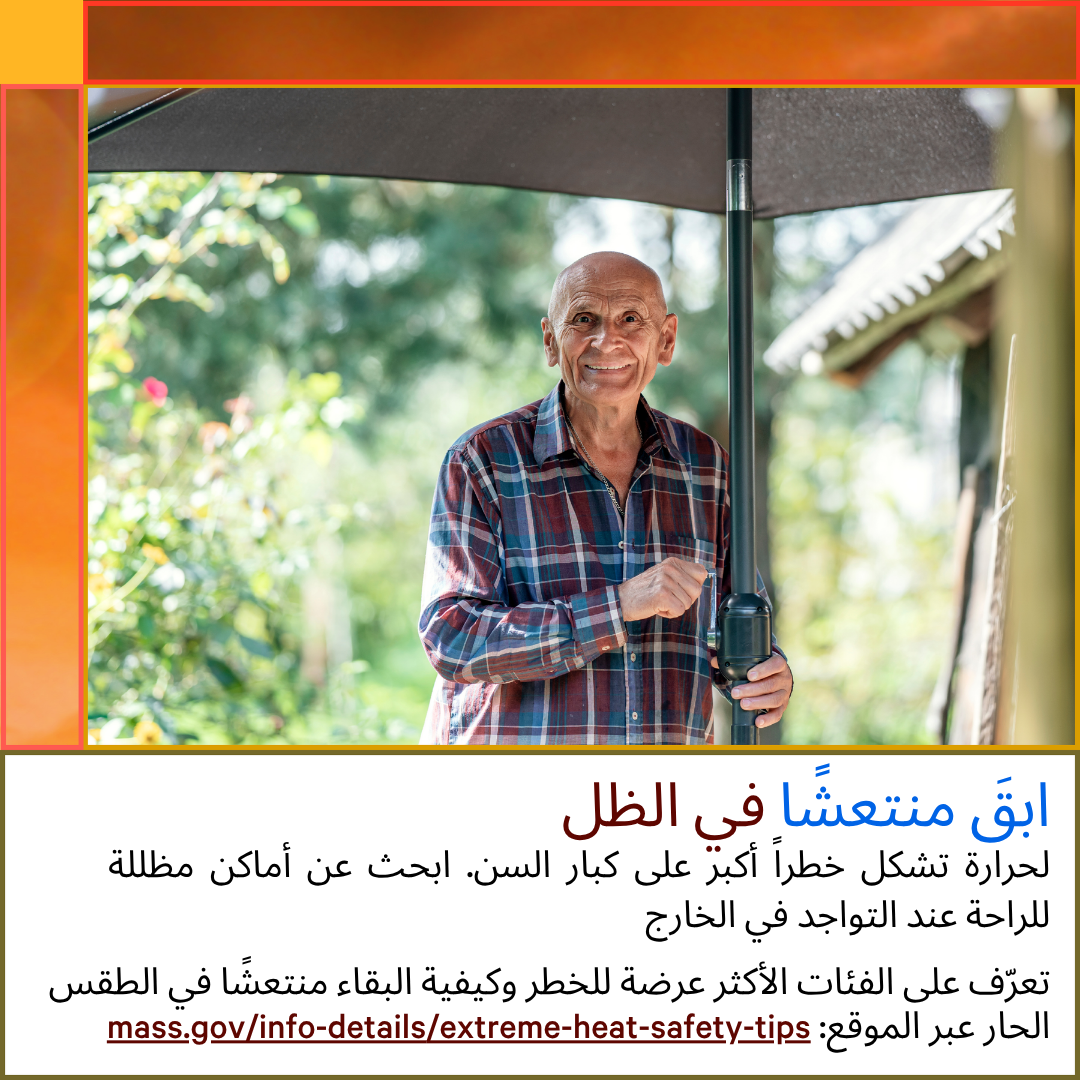

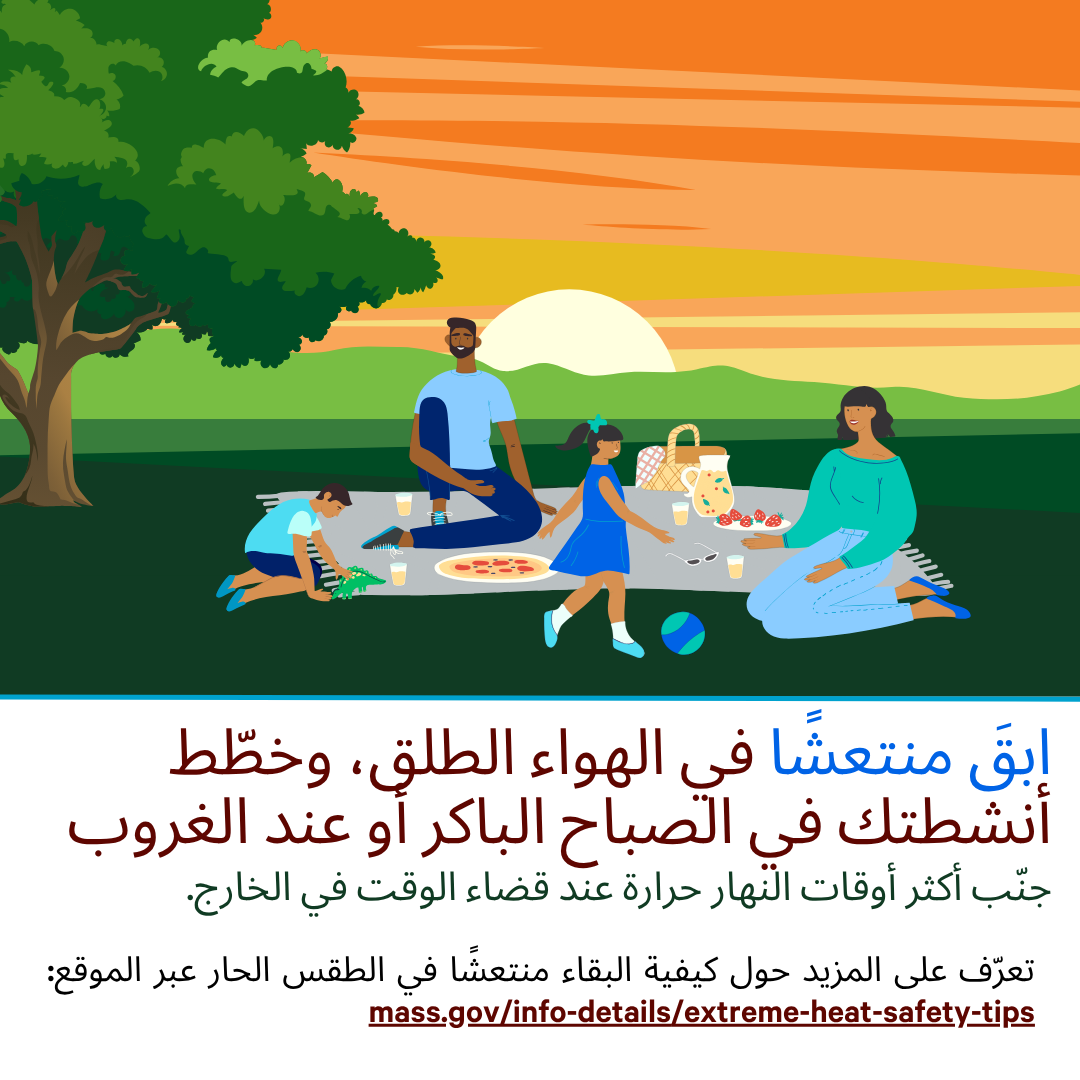
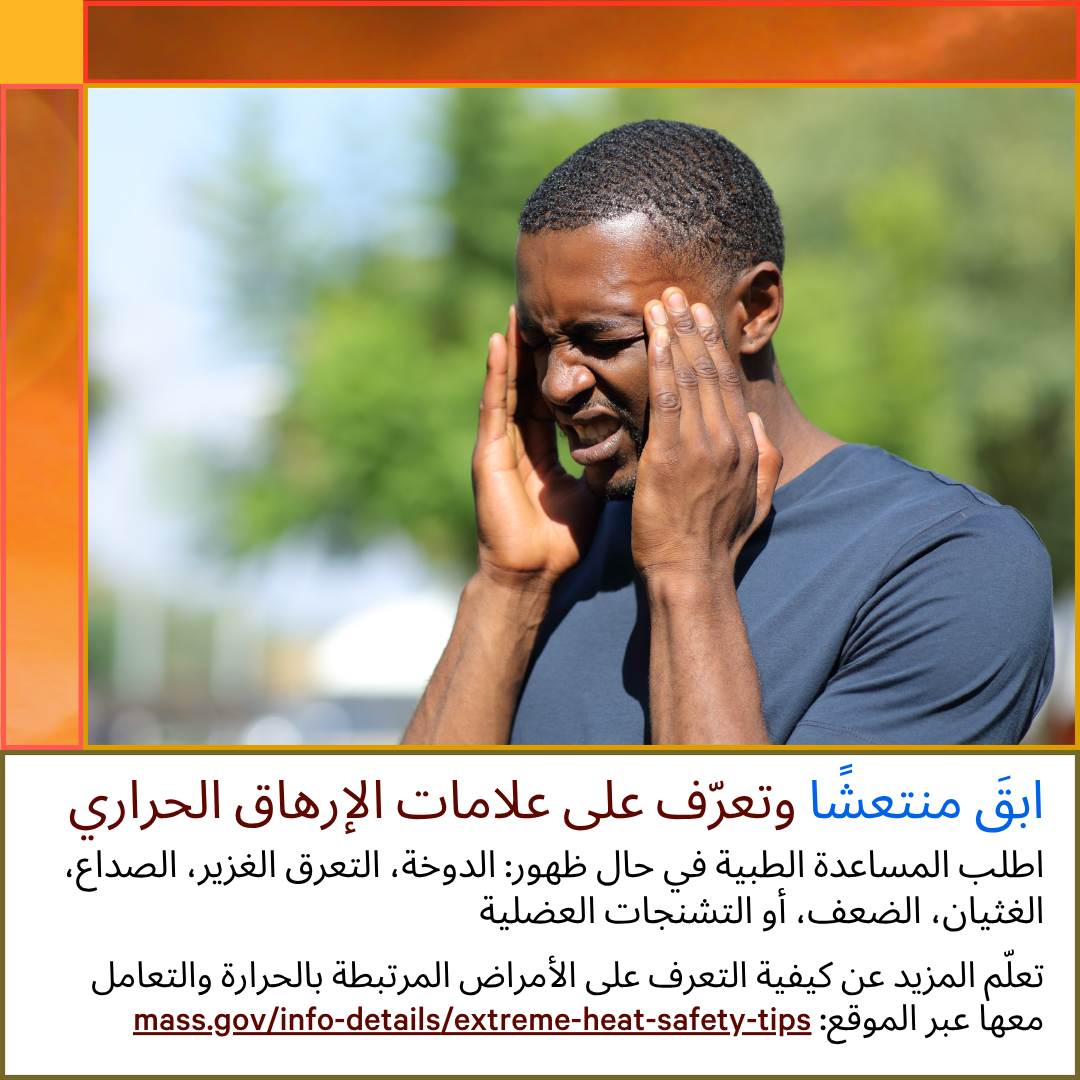


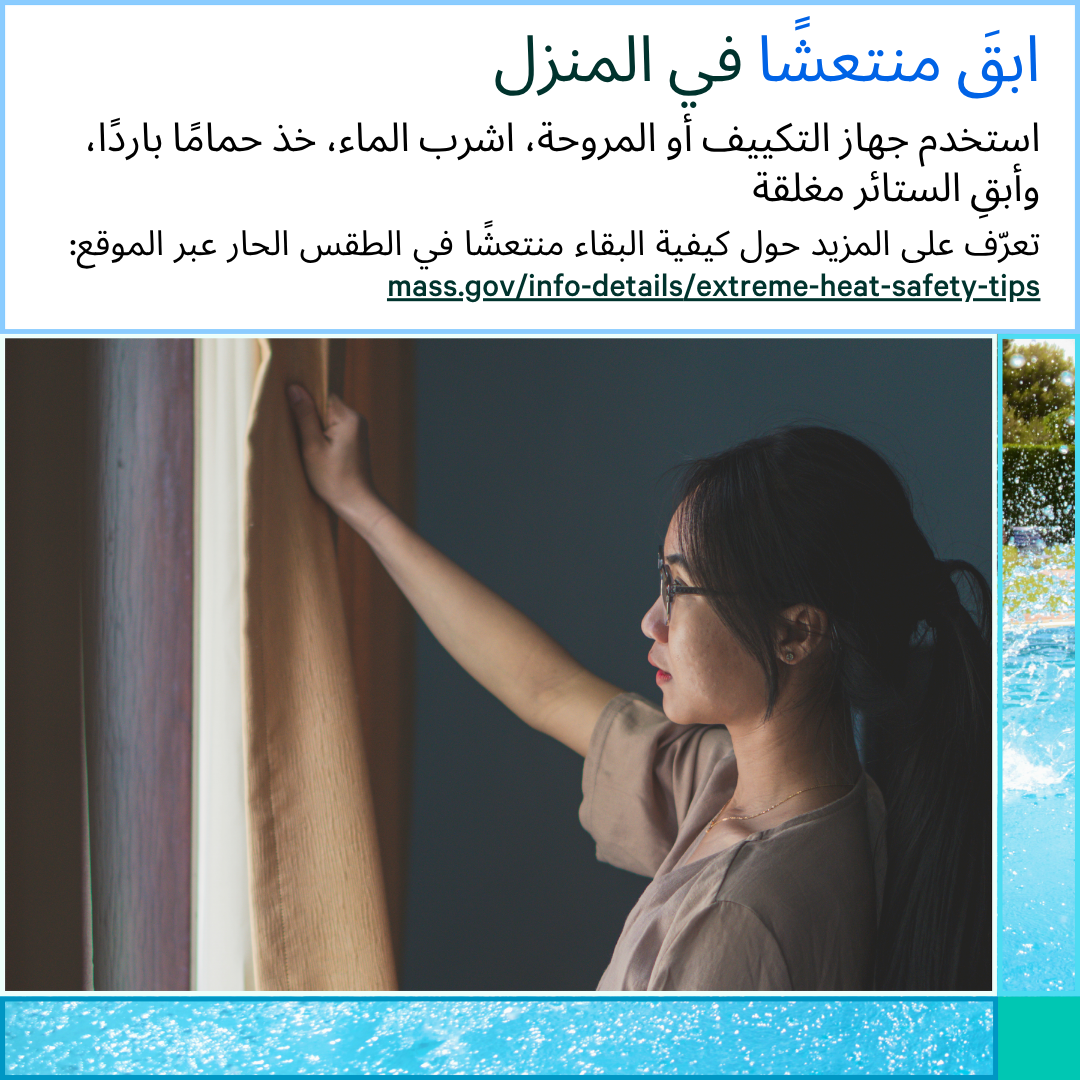


Haitian Creole Materials


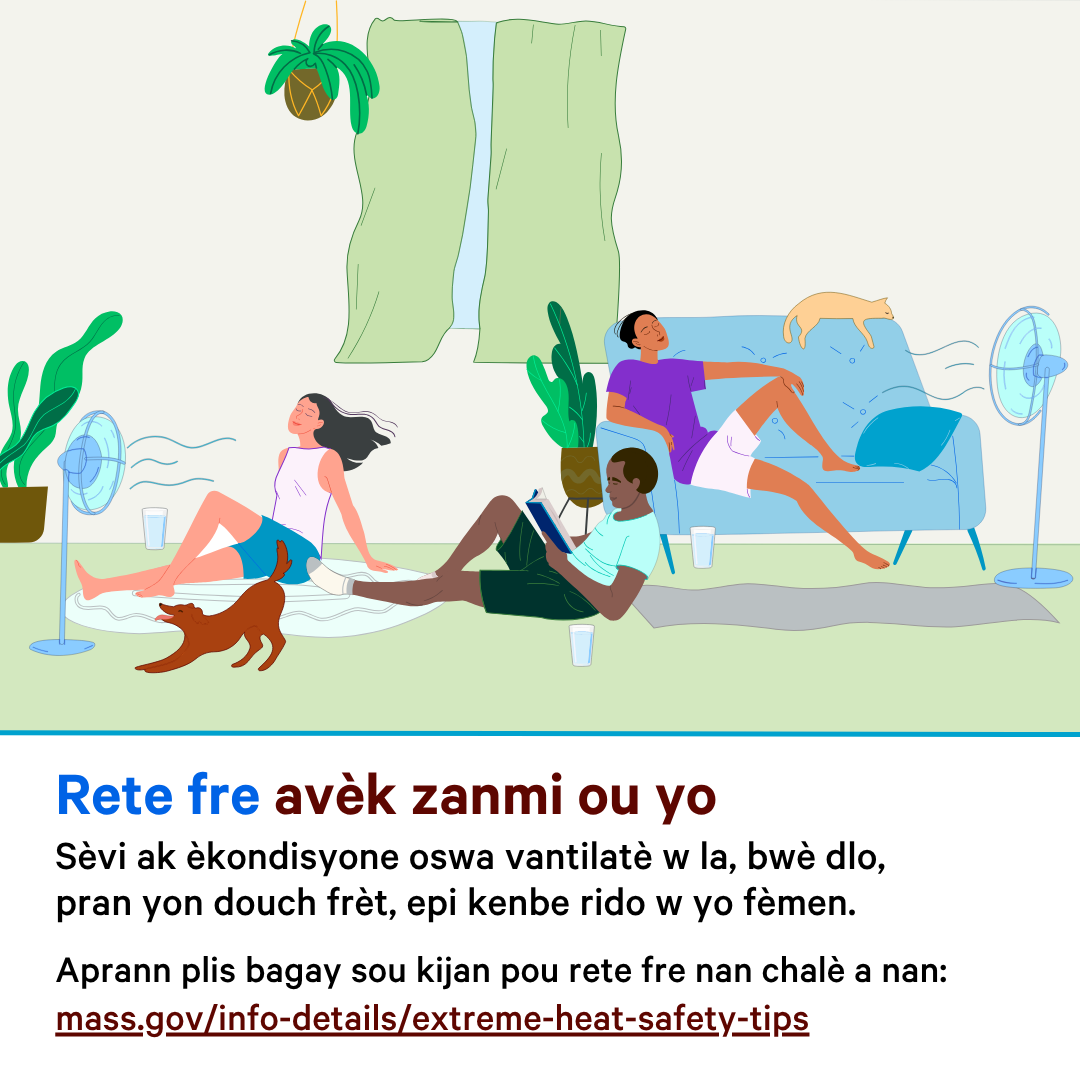
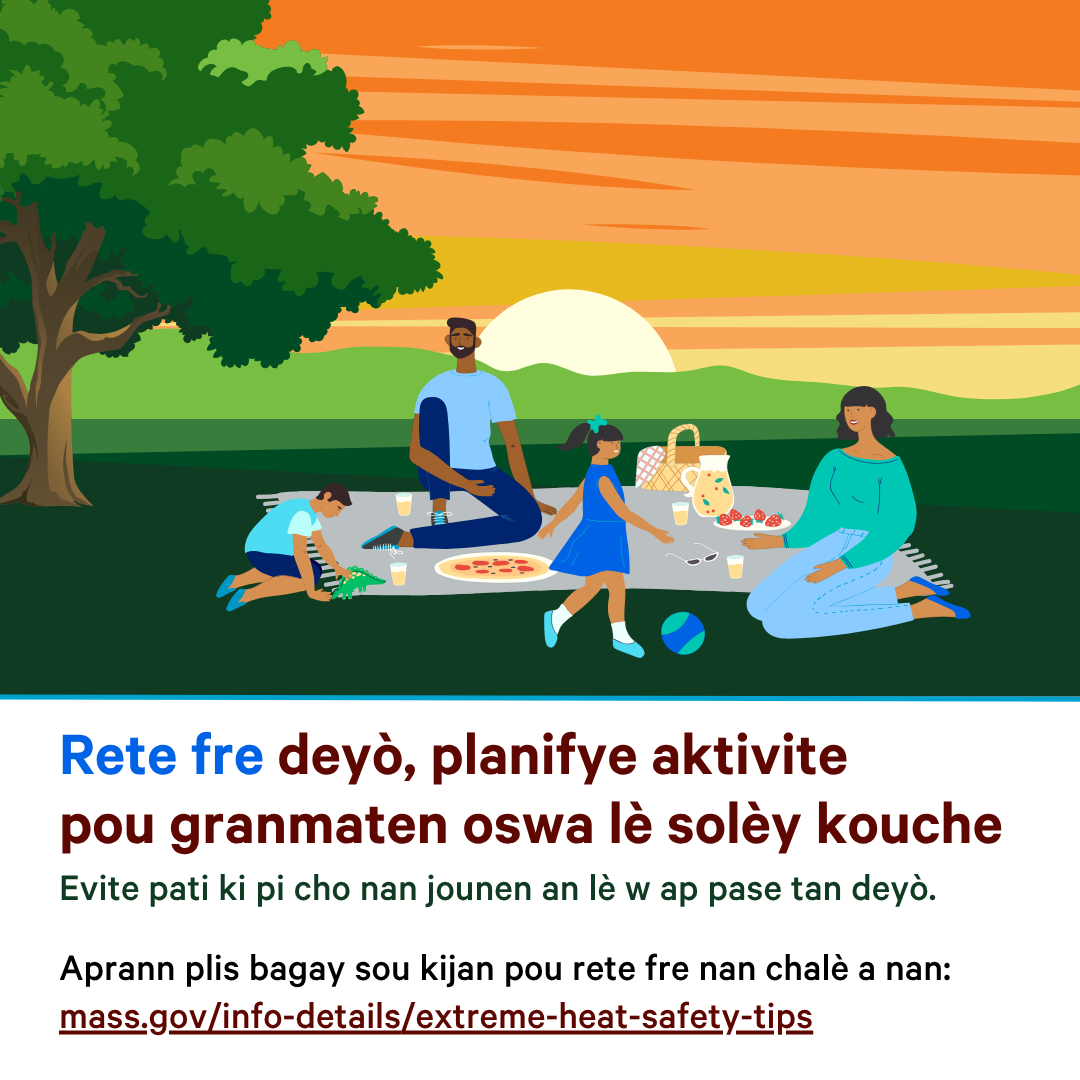

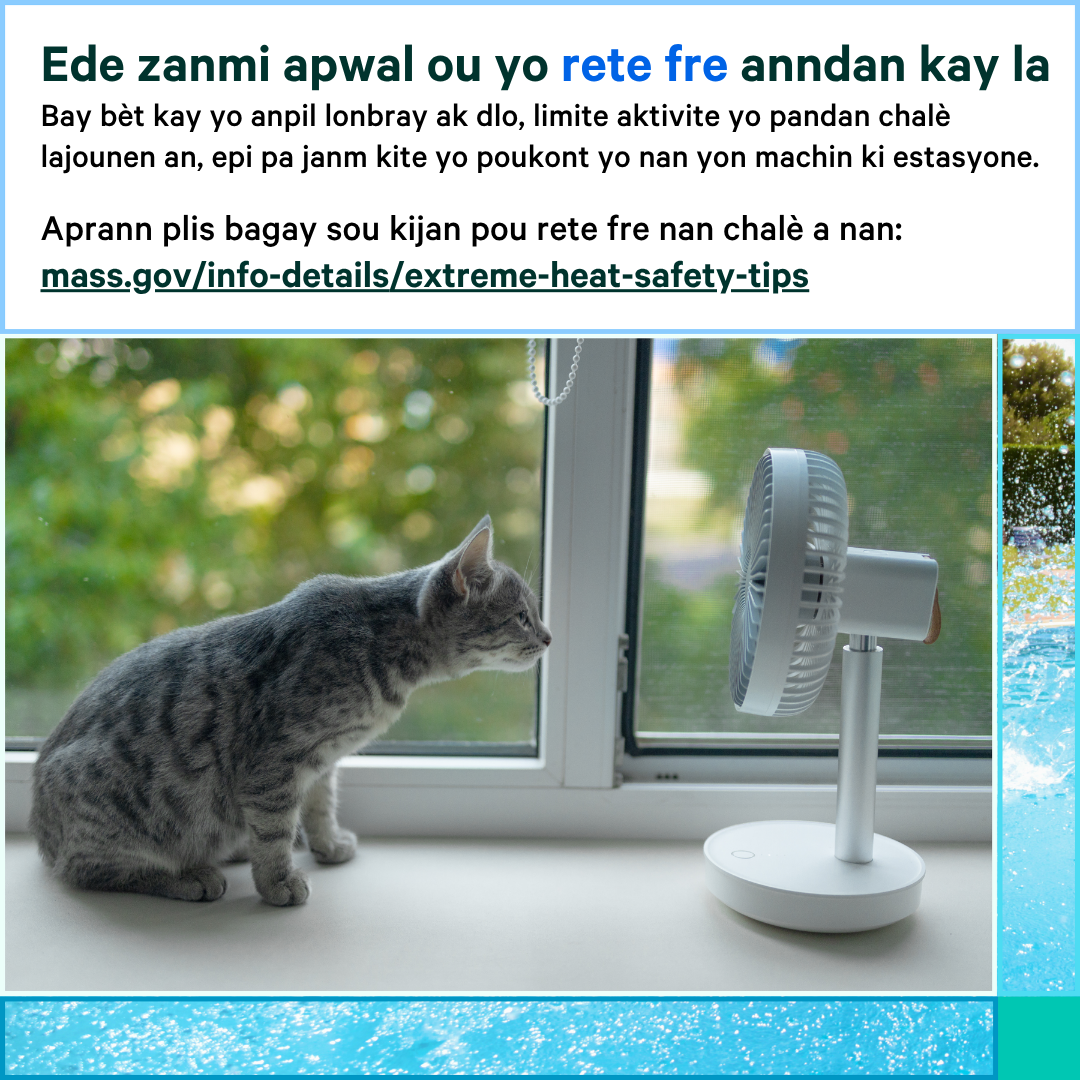


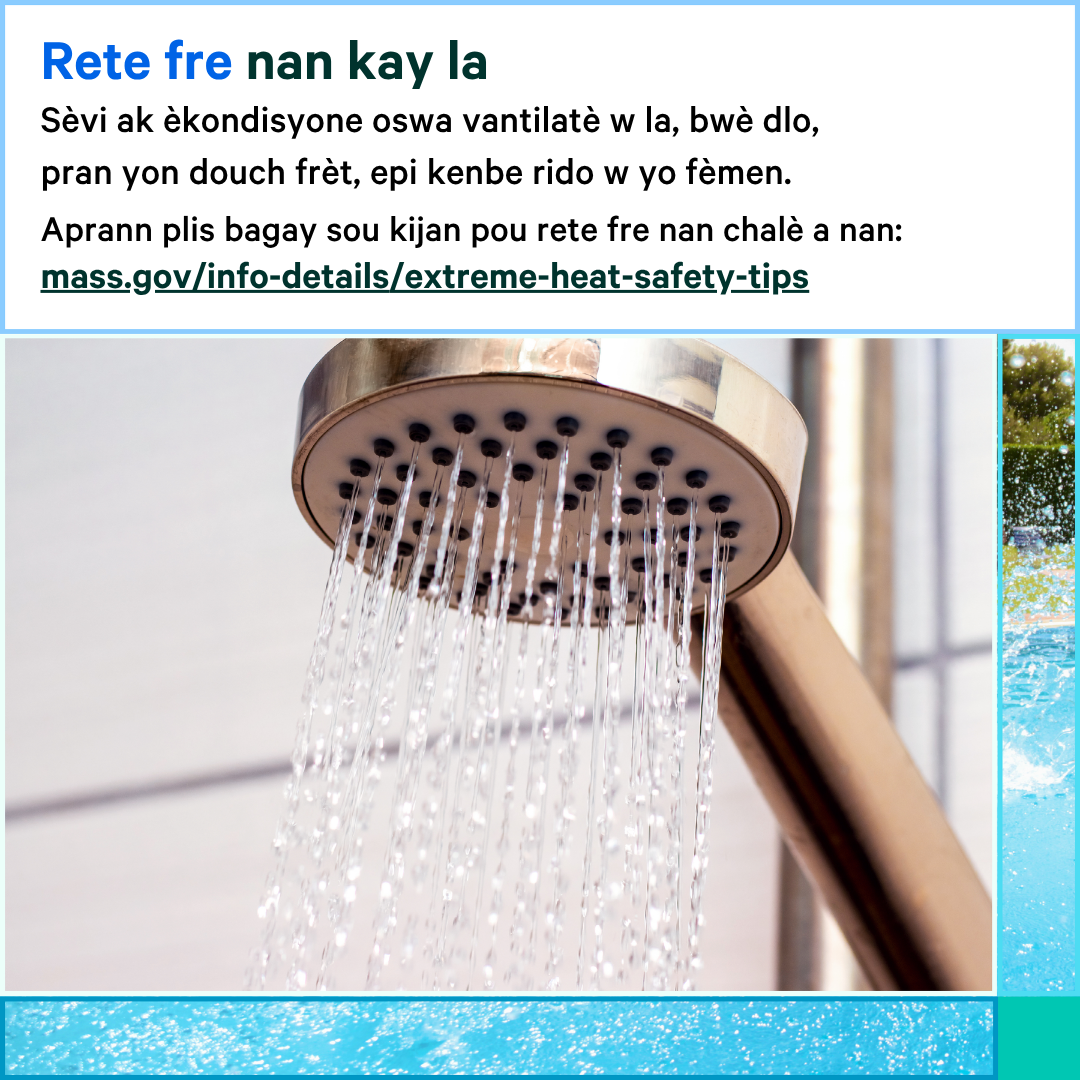



Portuguese Materials




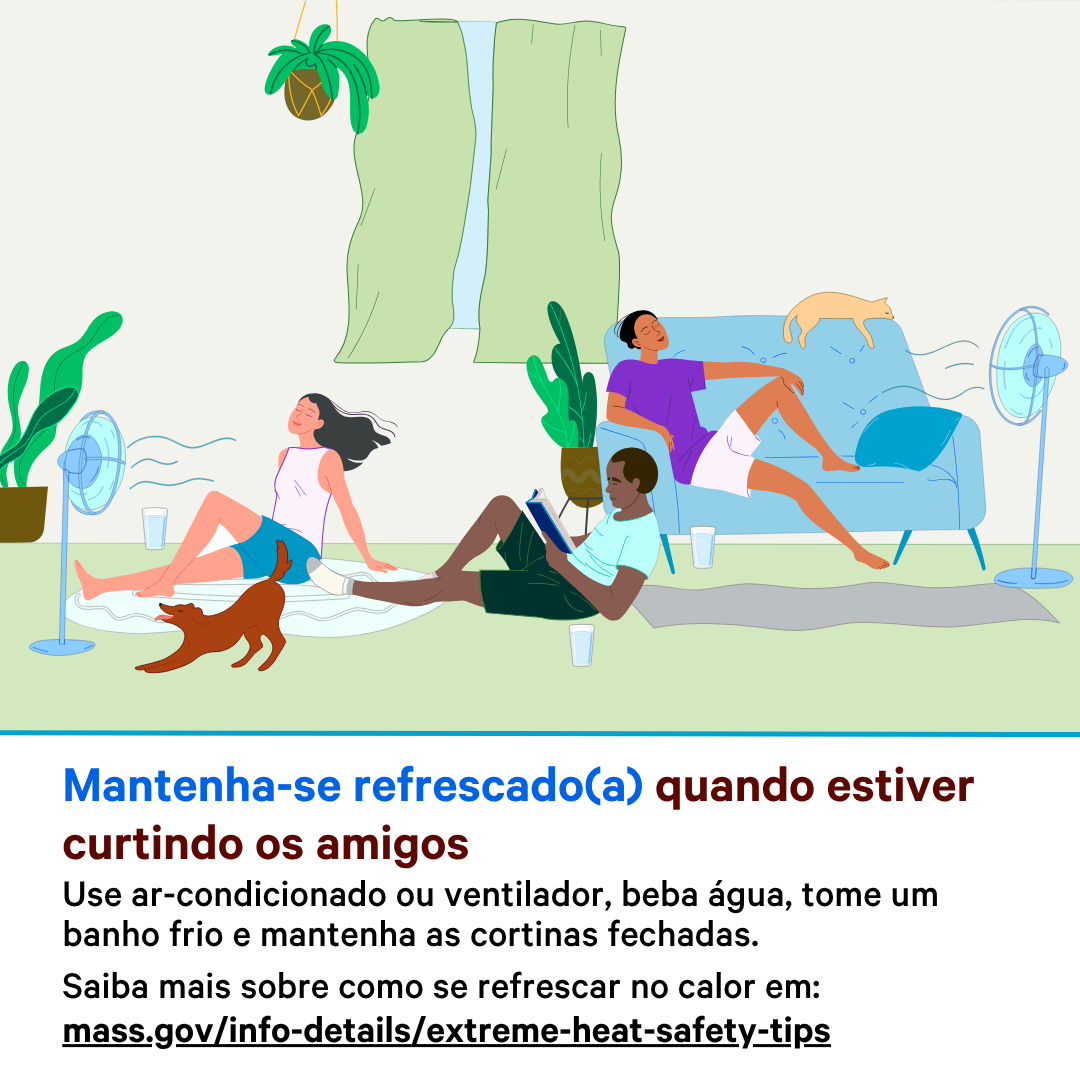


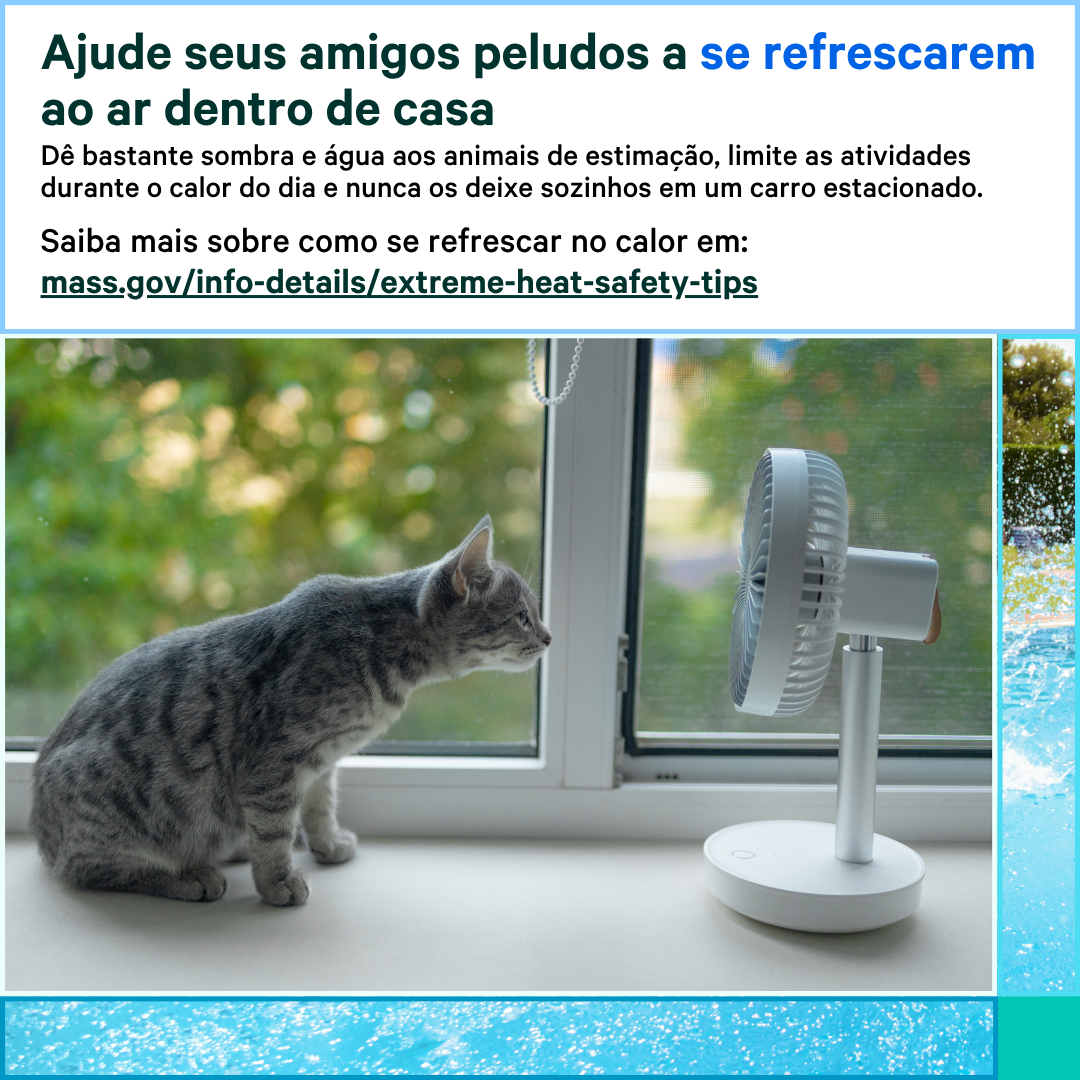
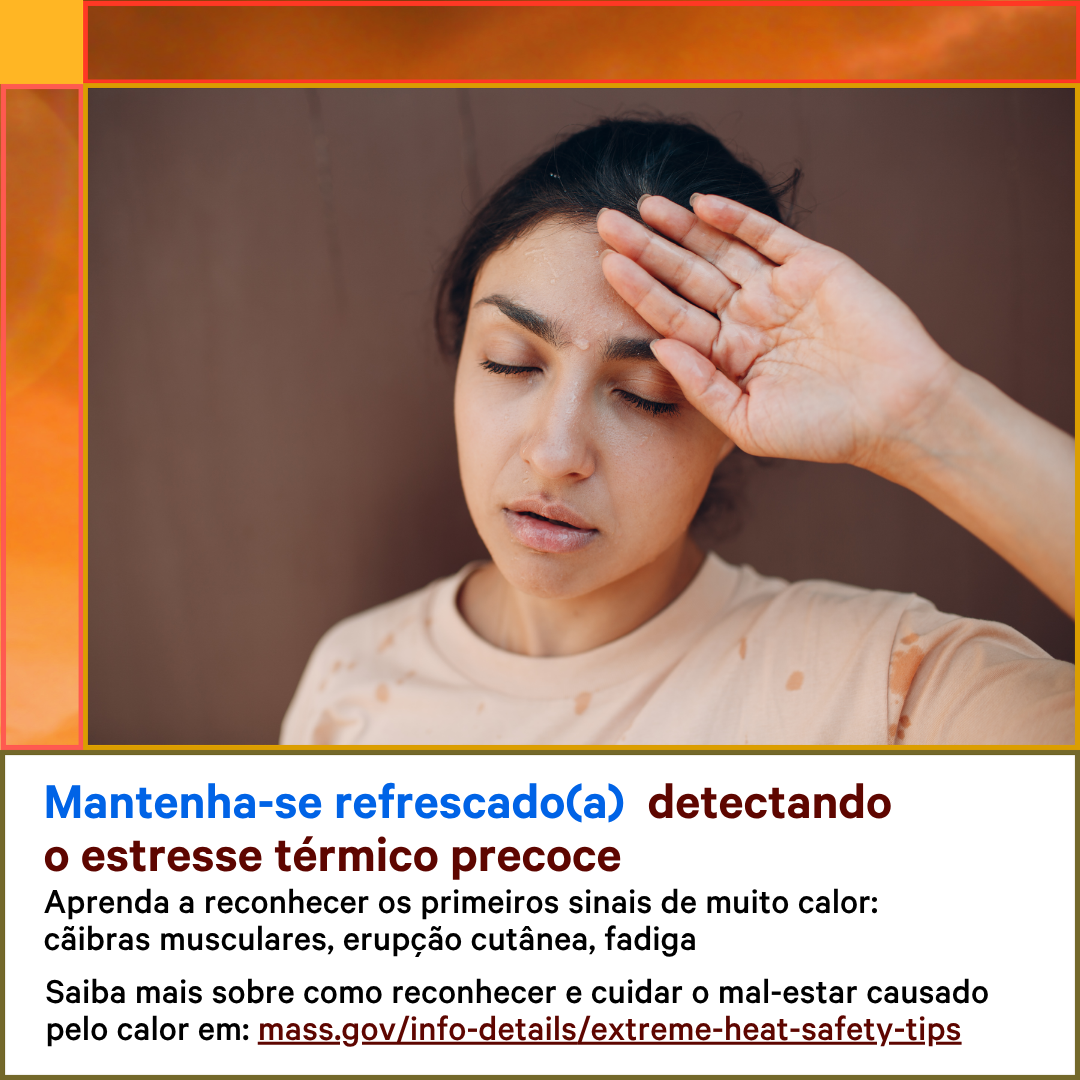

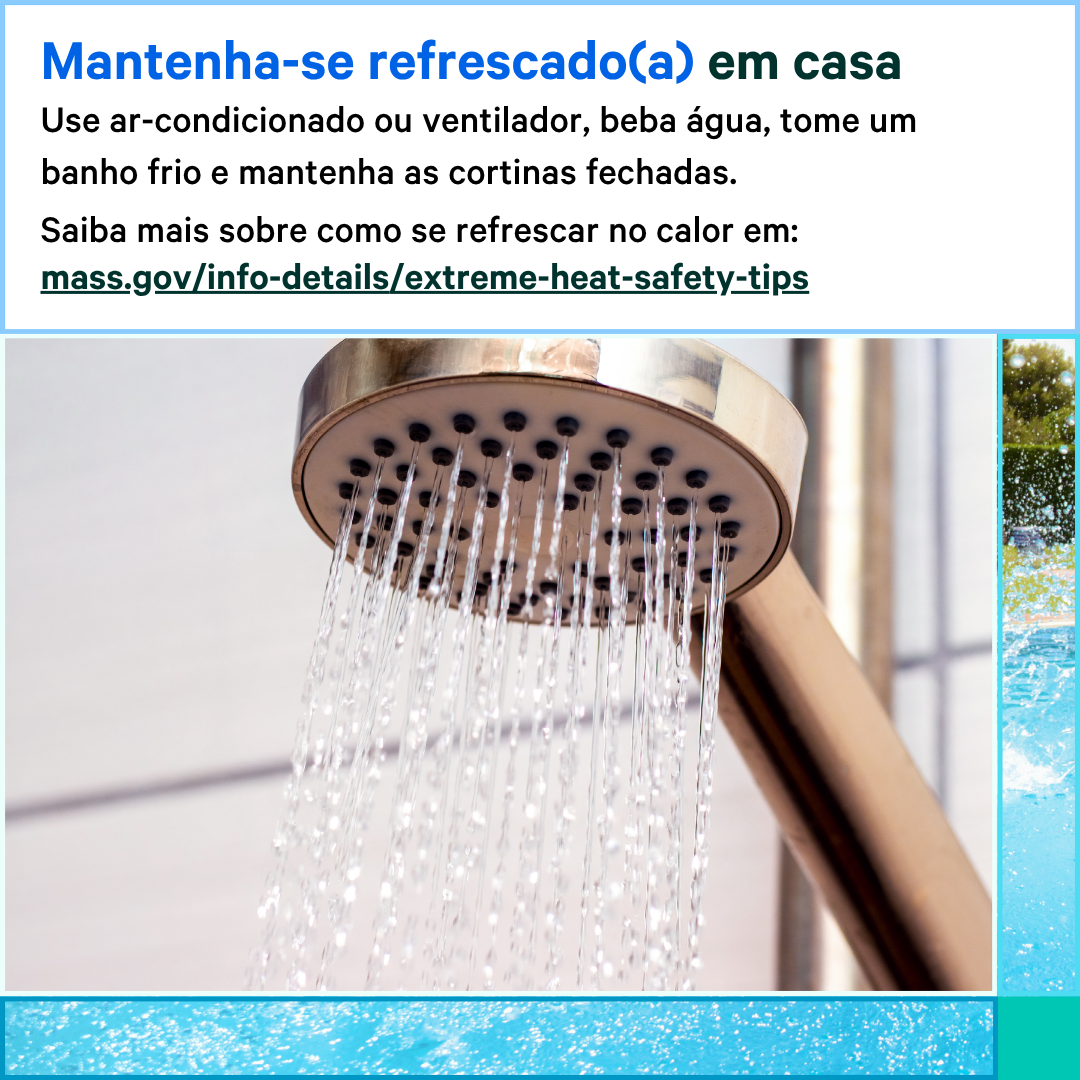



Spanish Materials






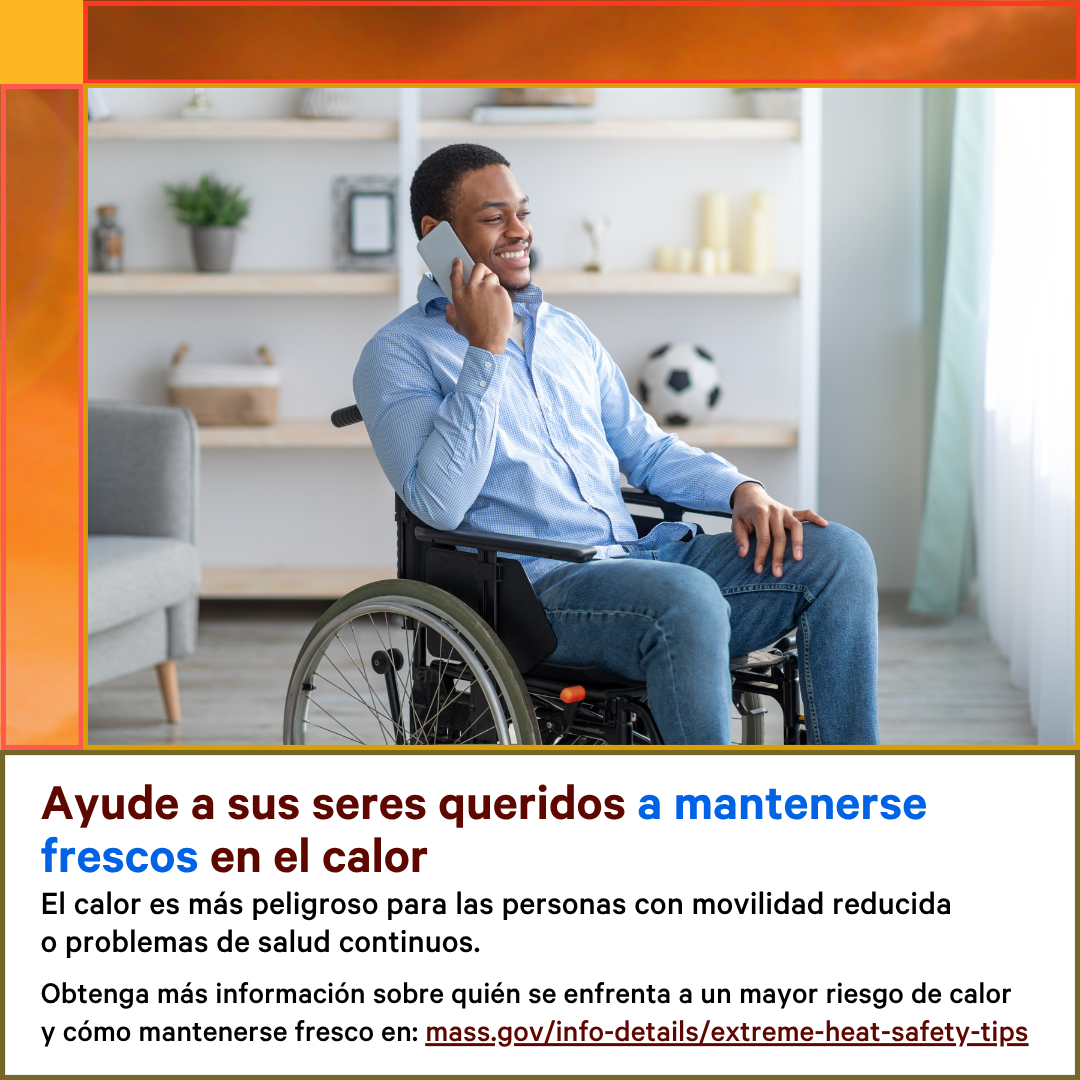

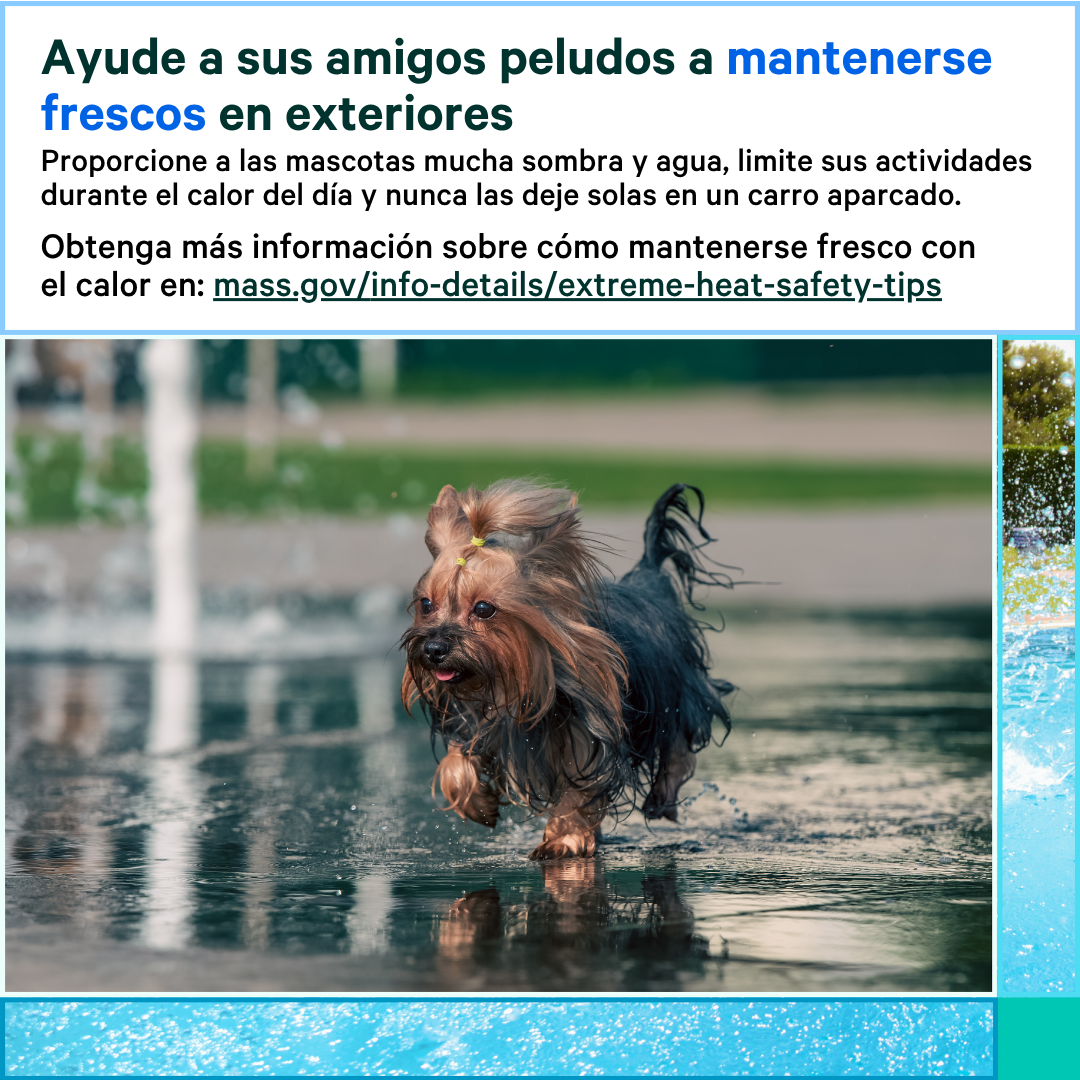
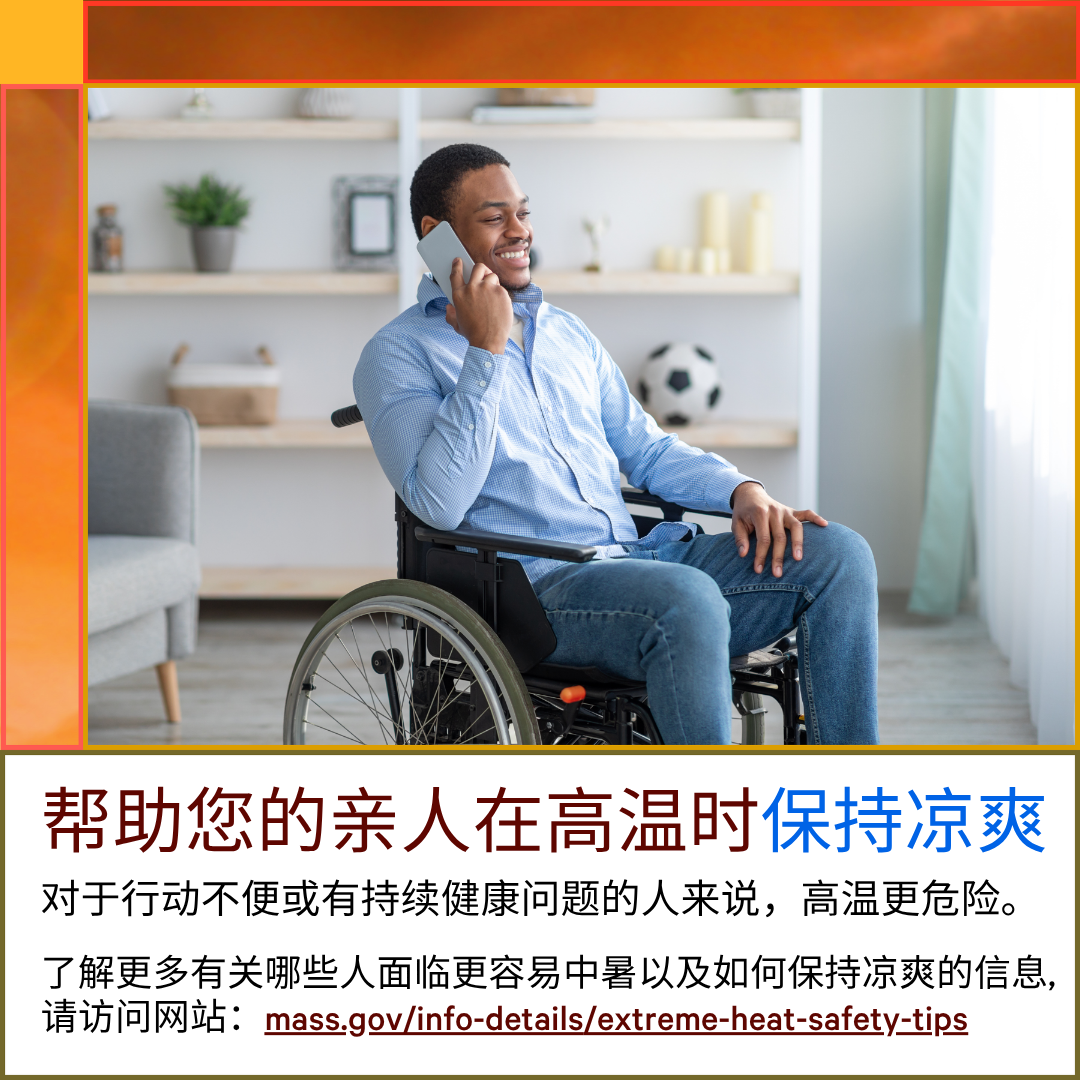
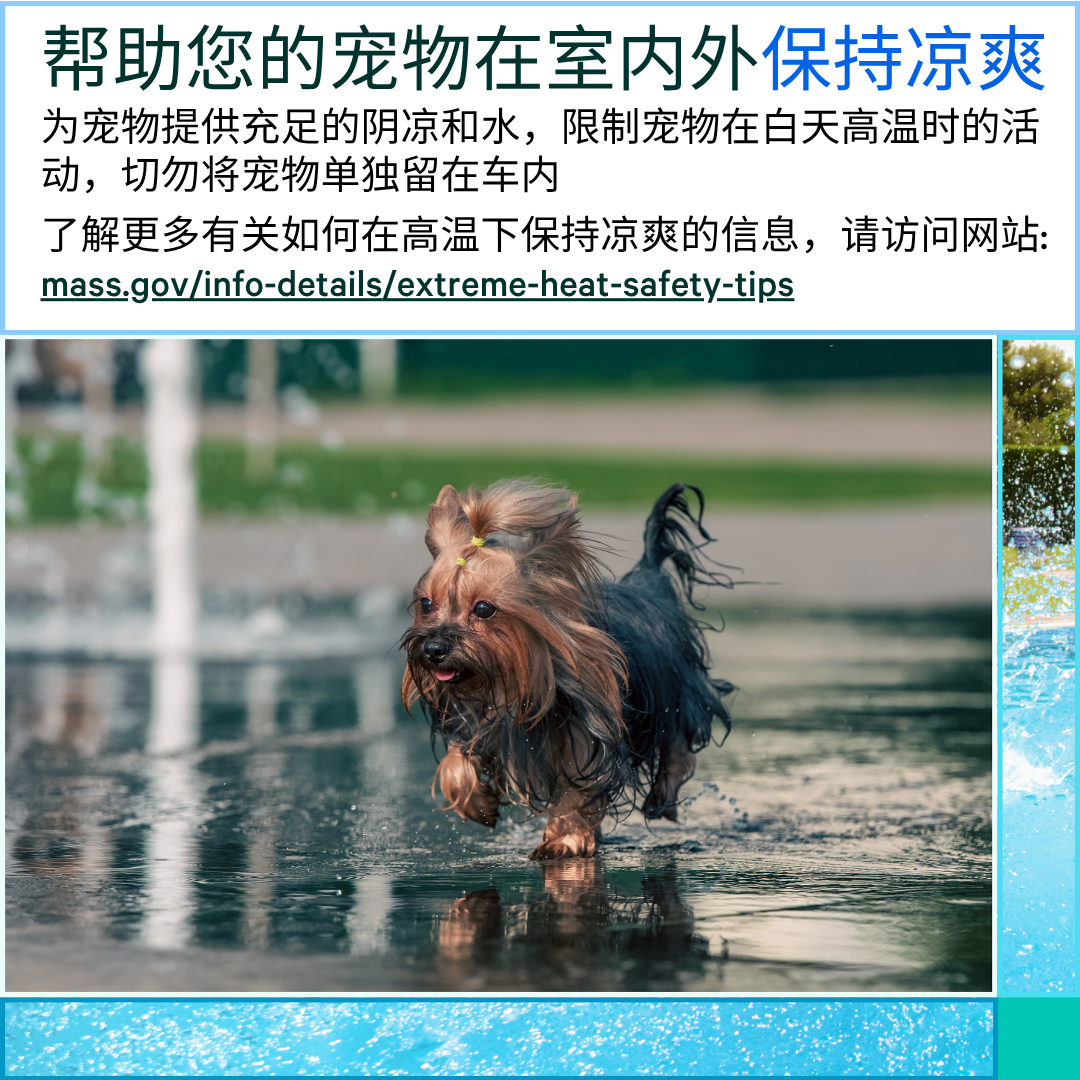
Simplified Chinese Materials
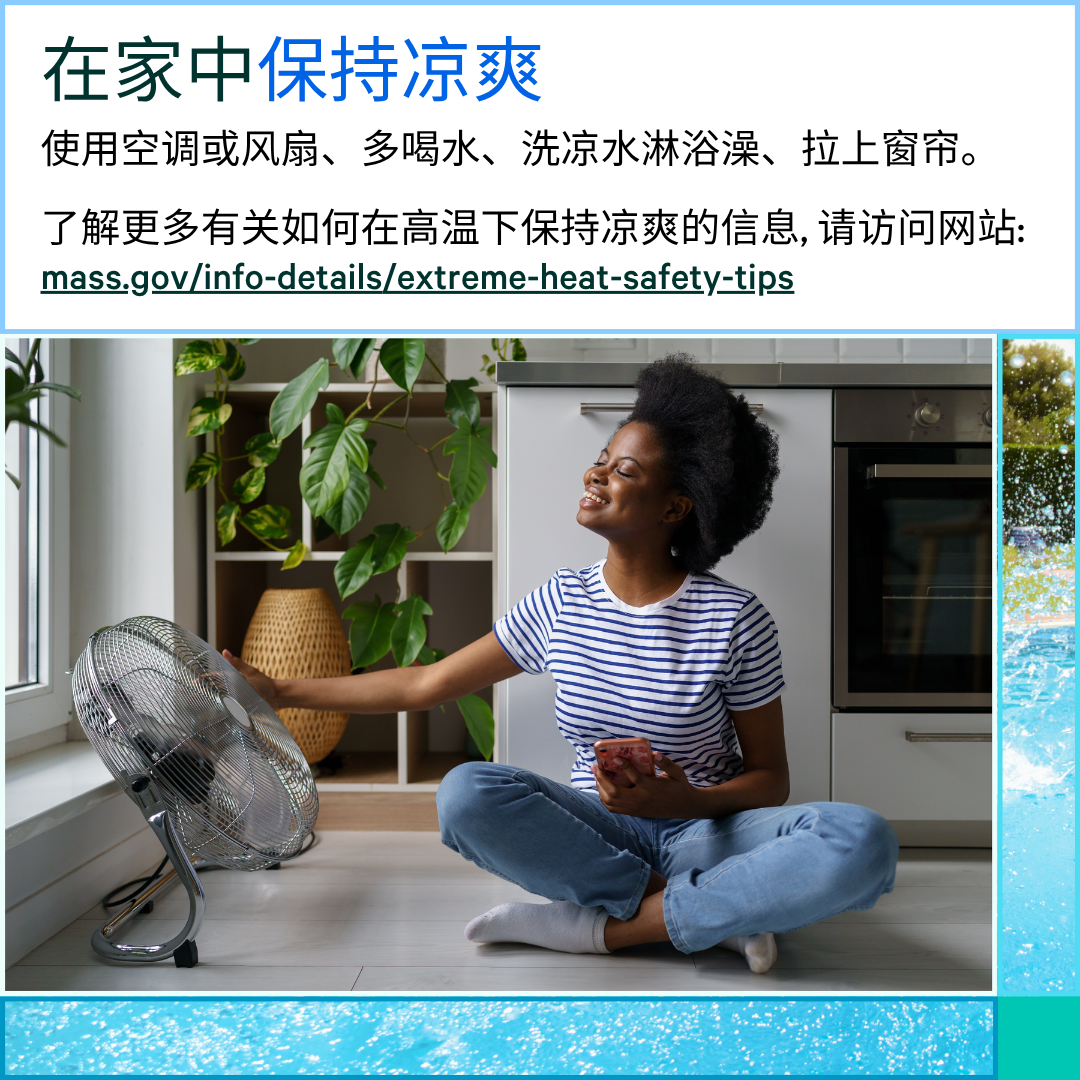
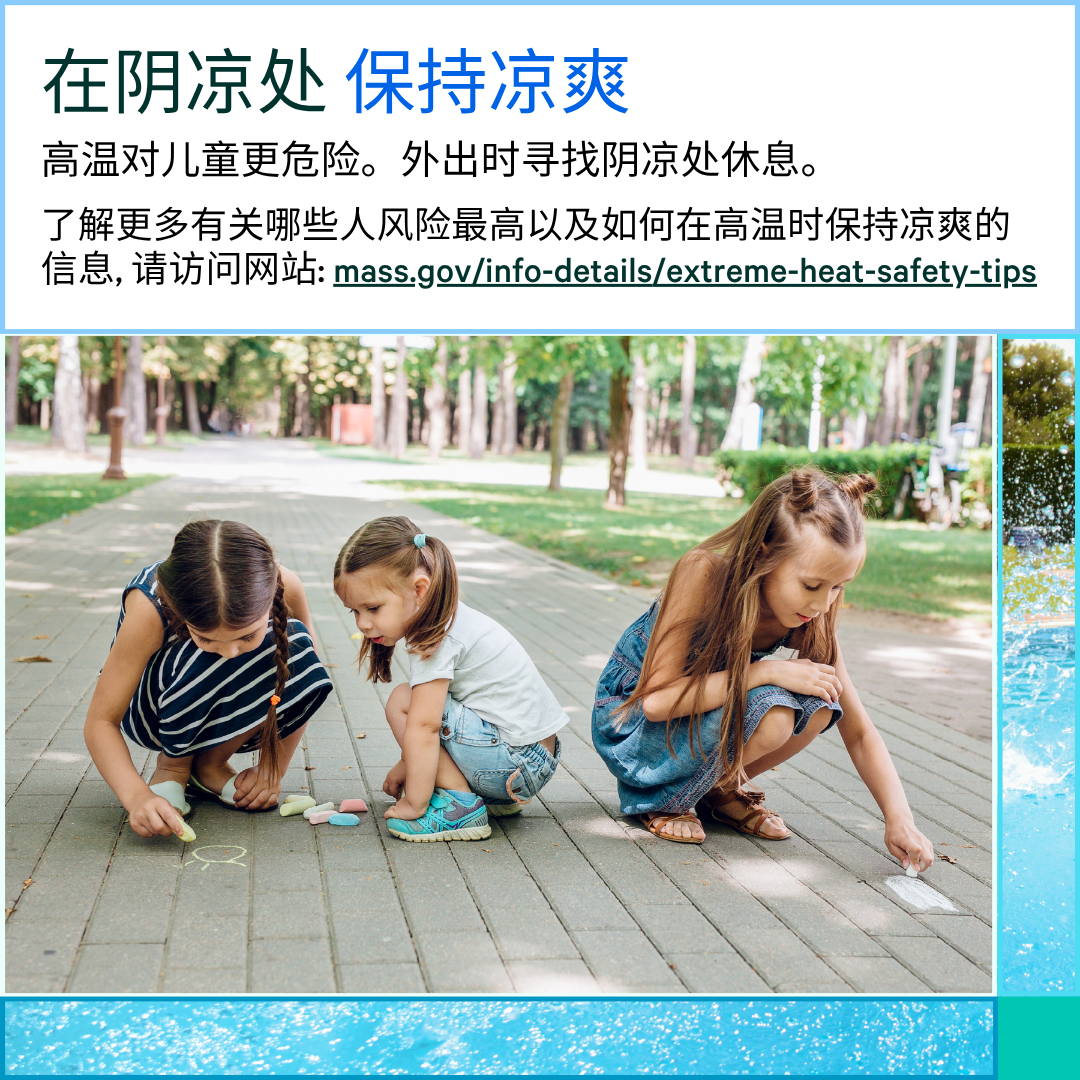

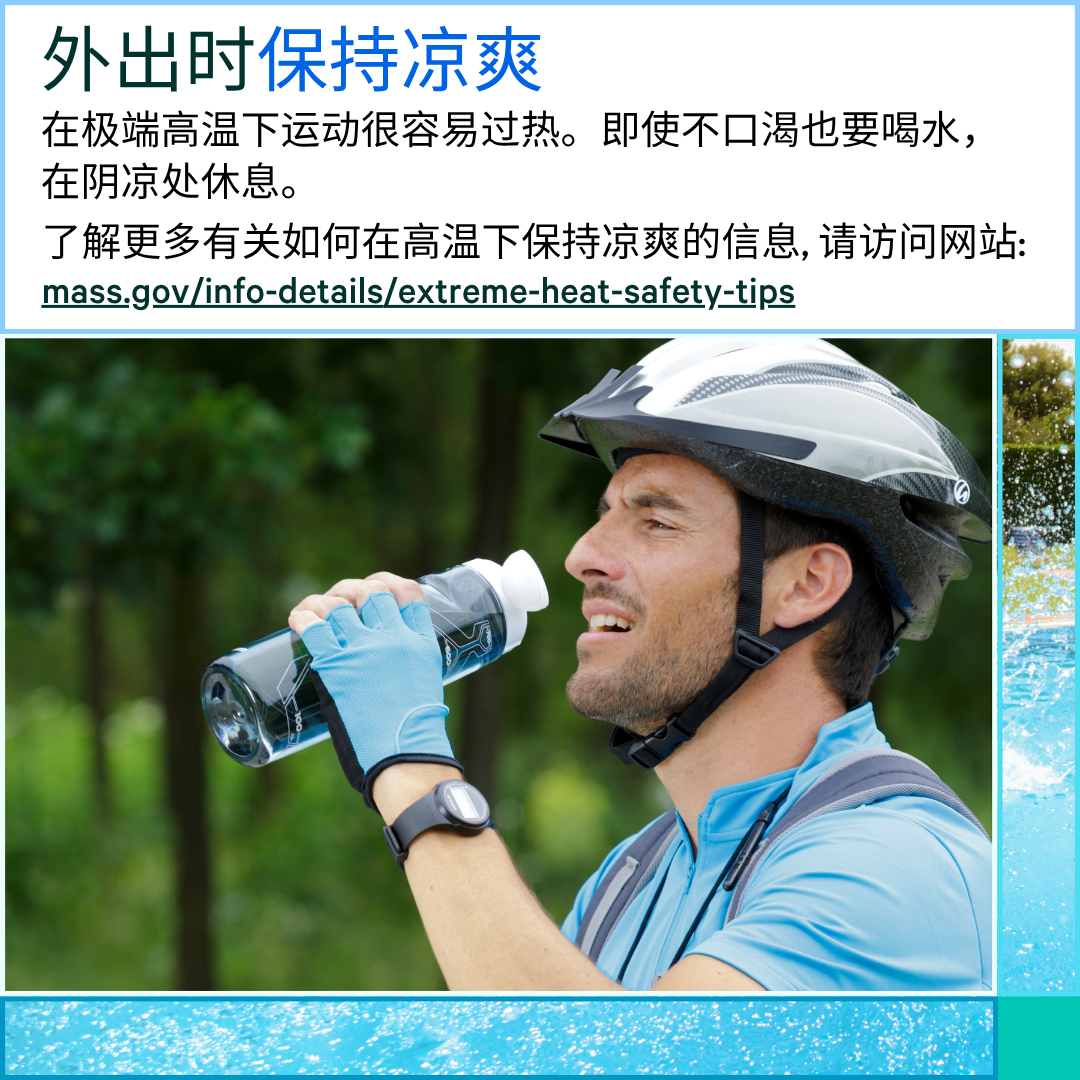
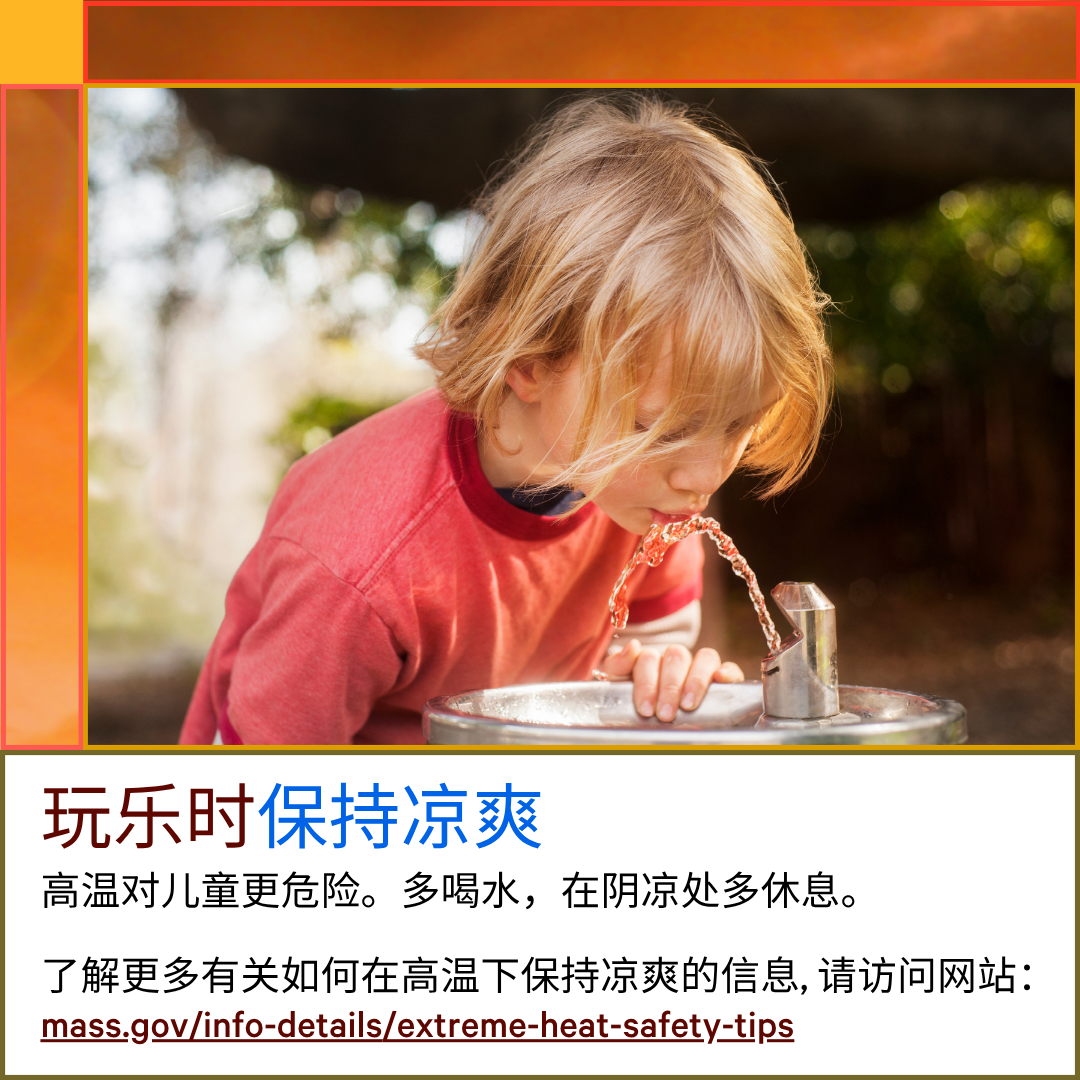
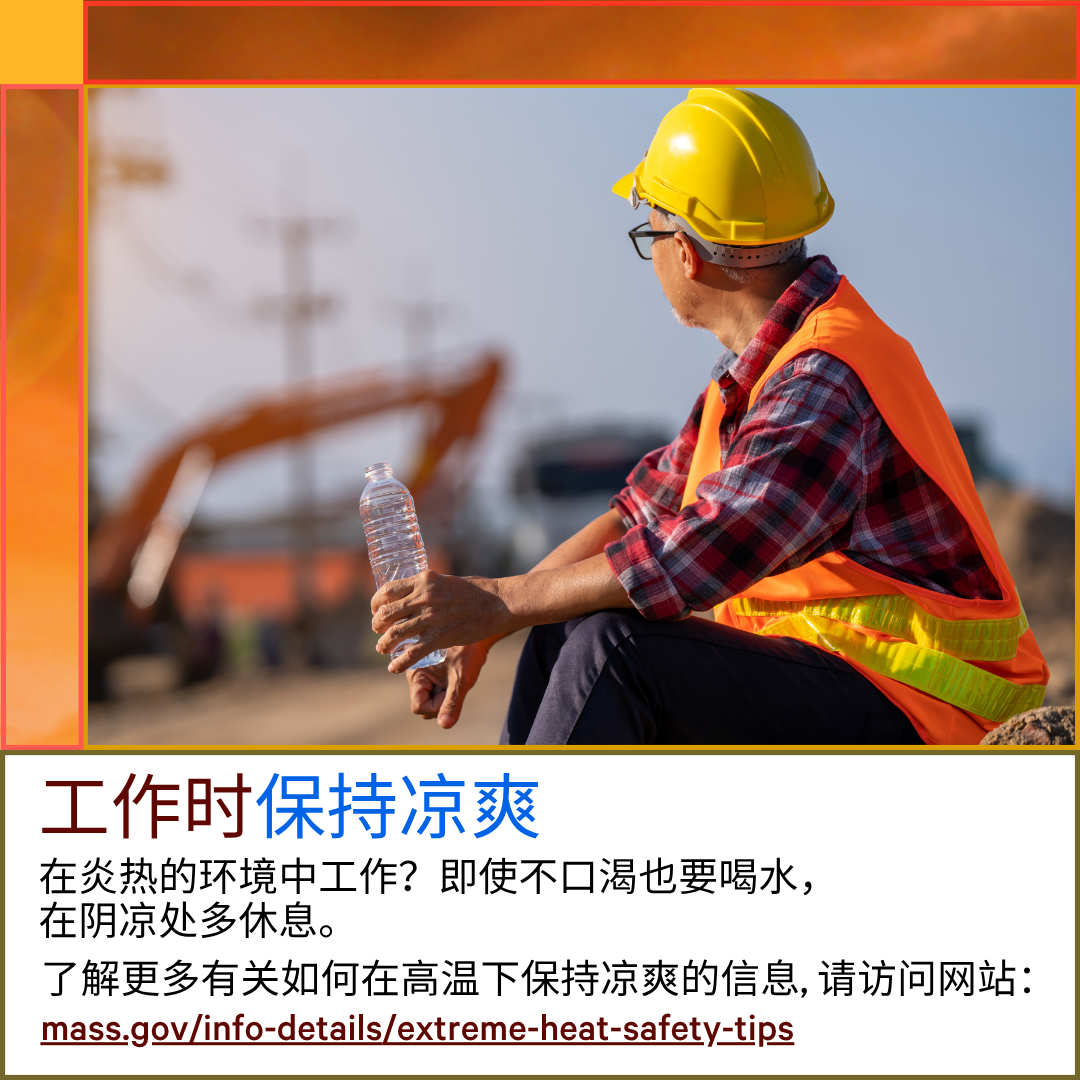

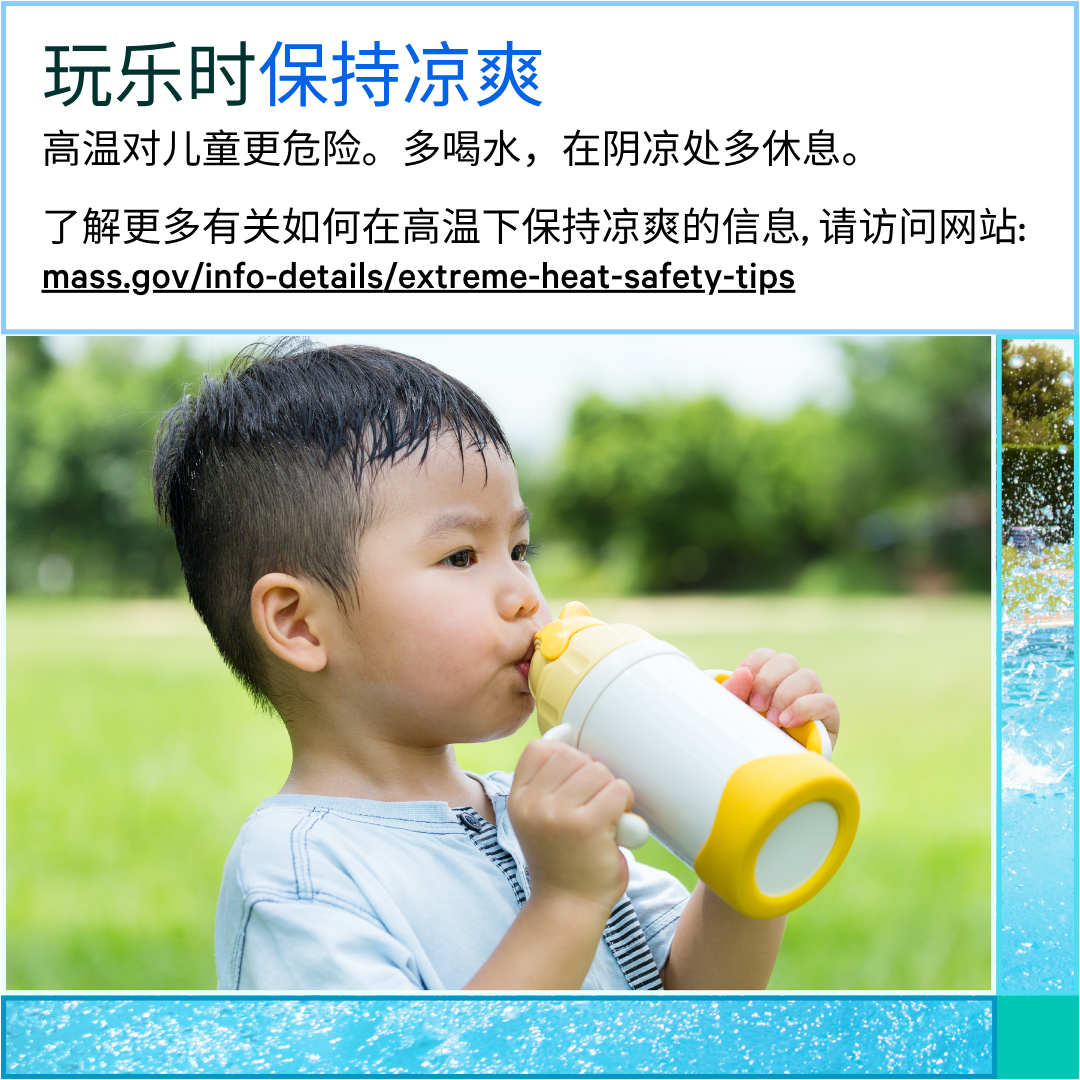
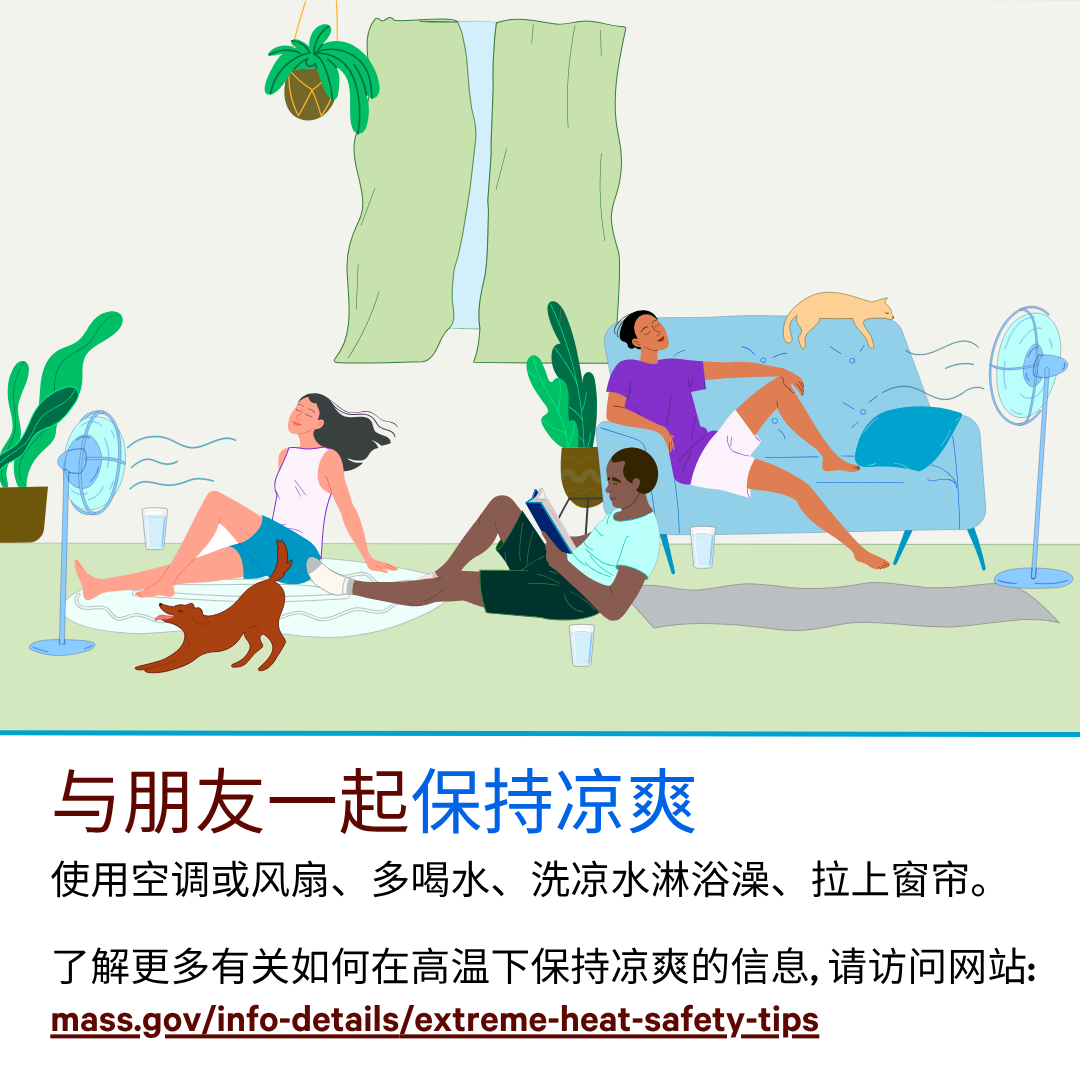
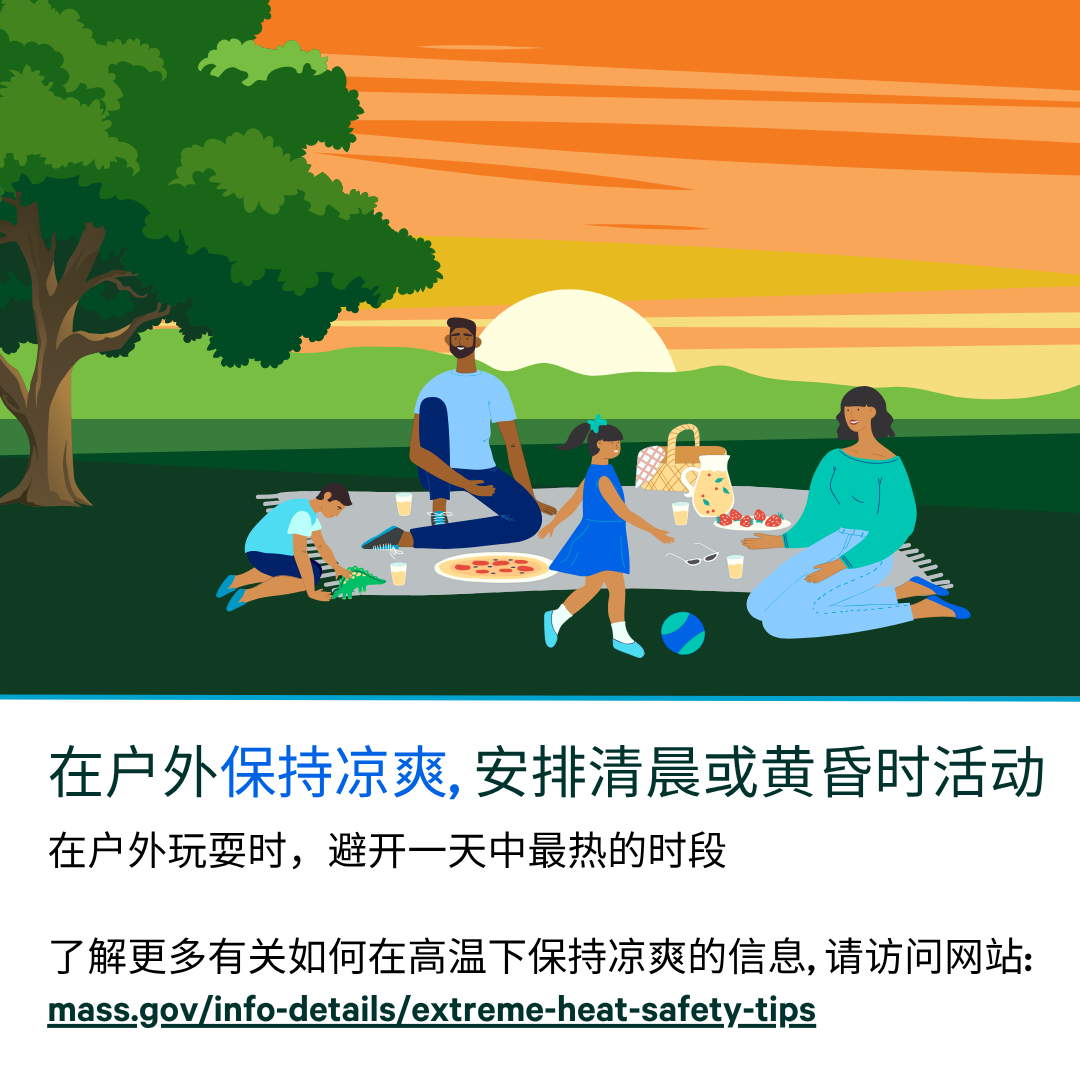


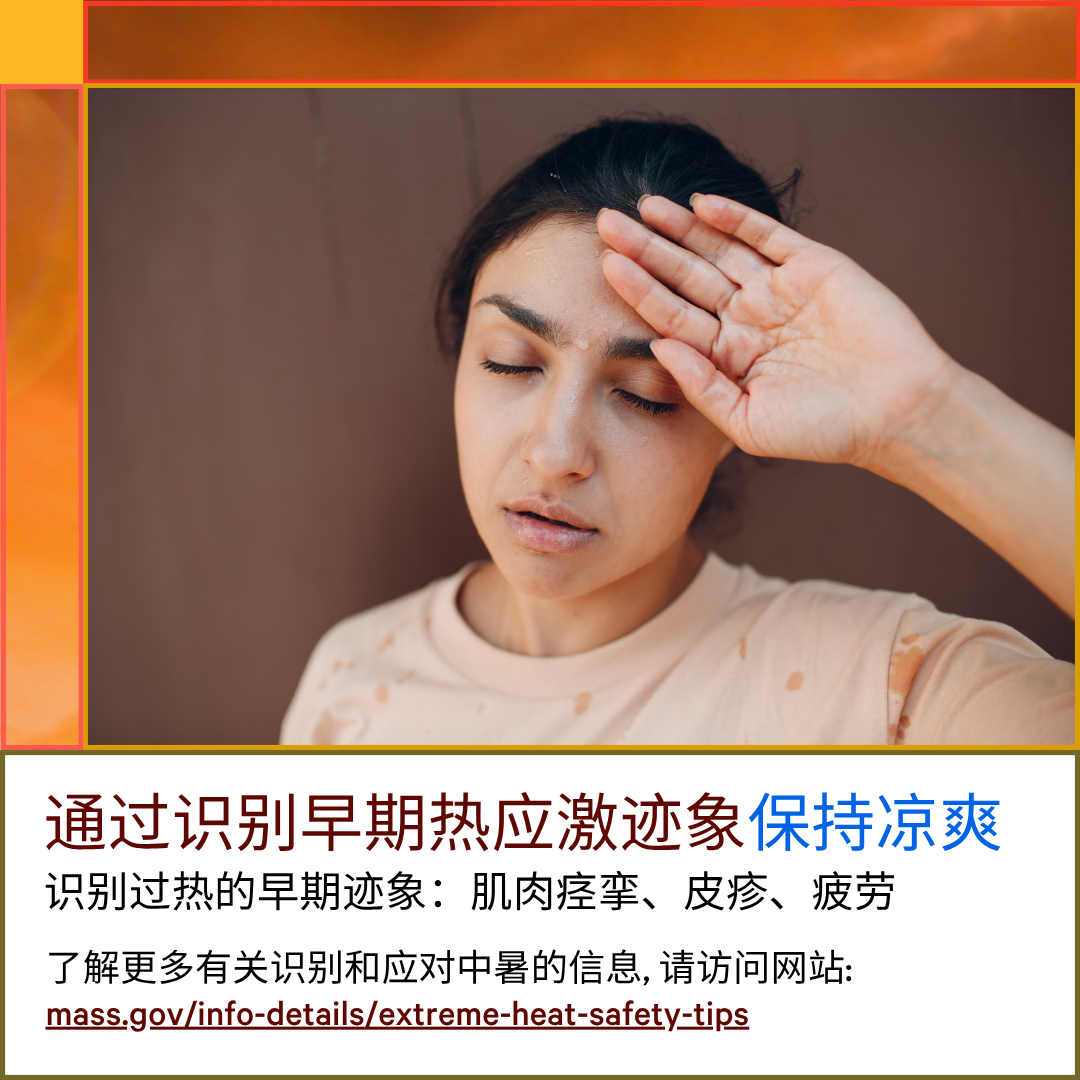
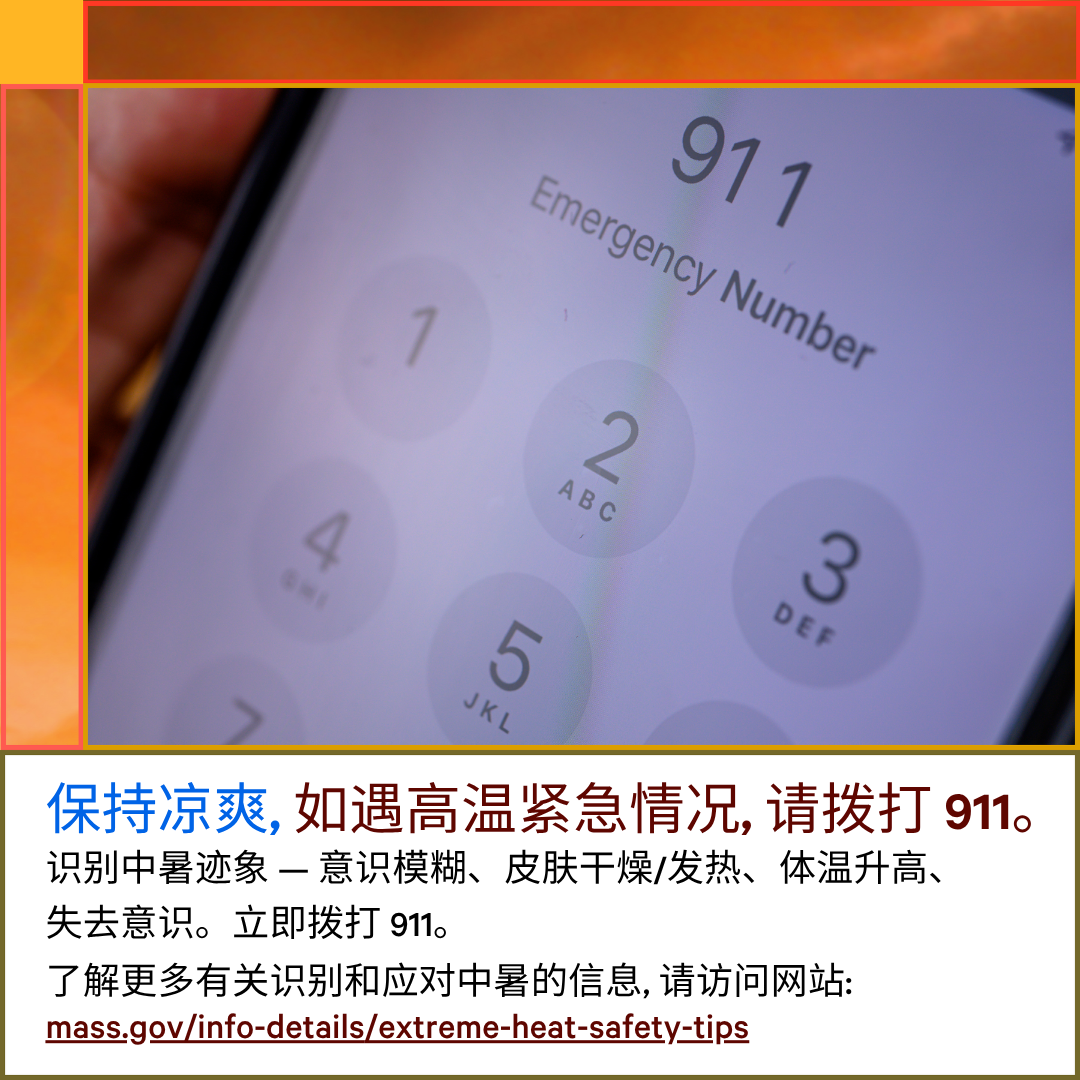

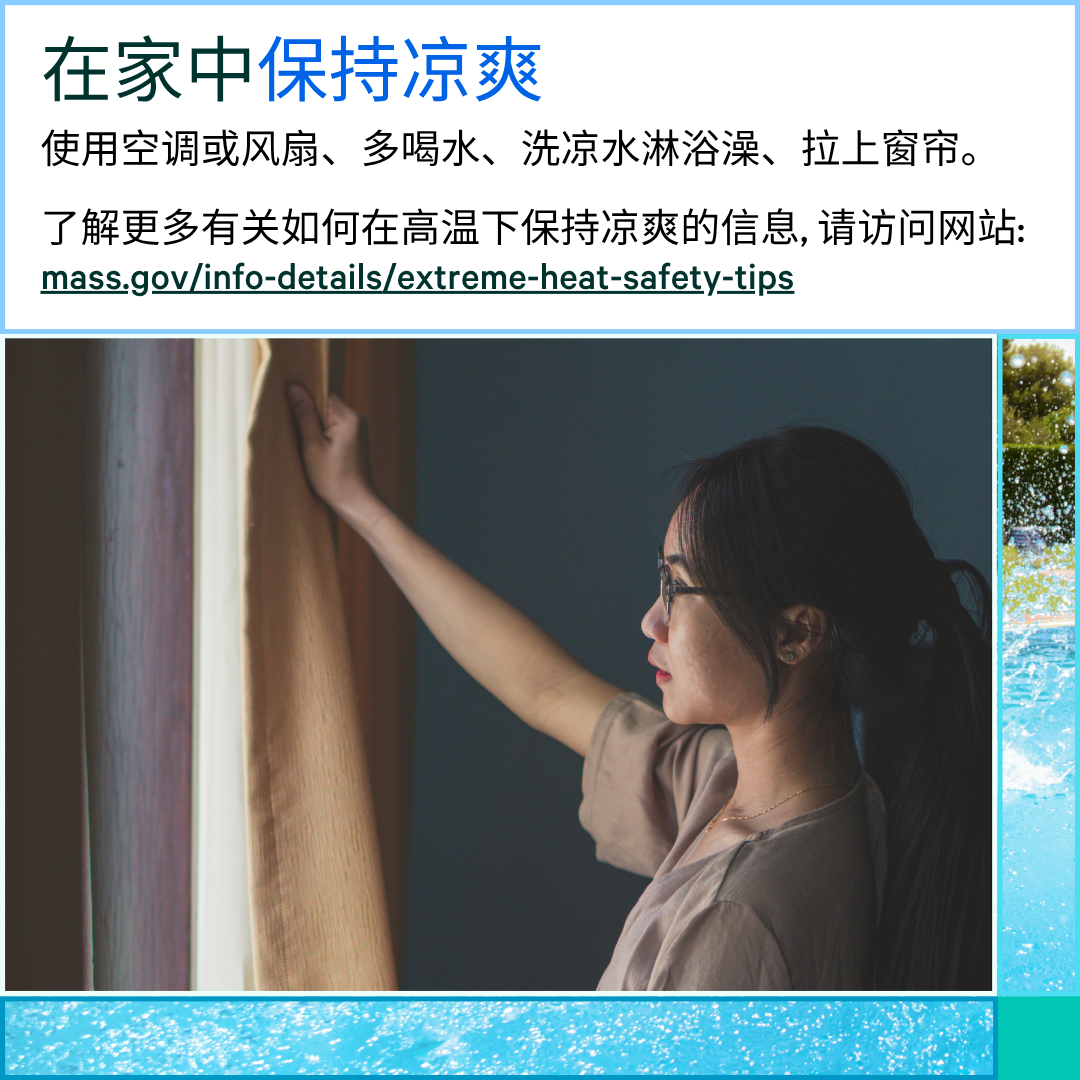
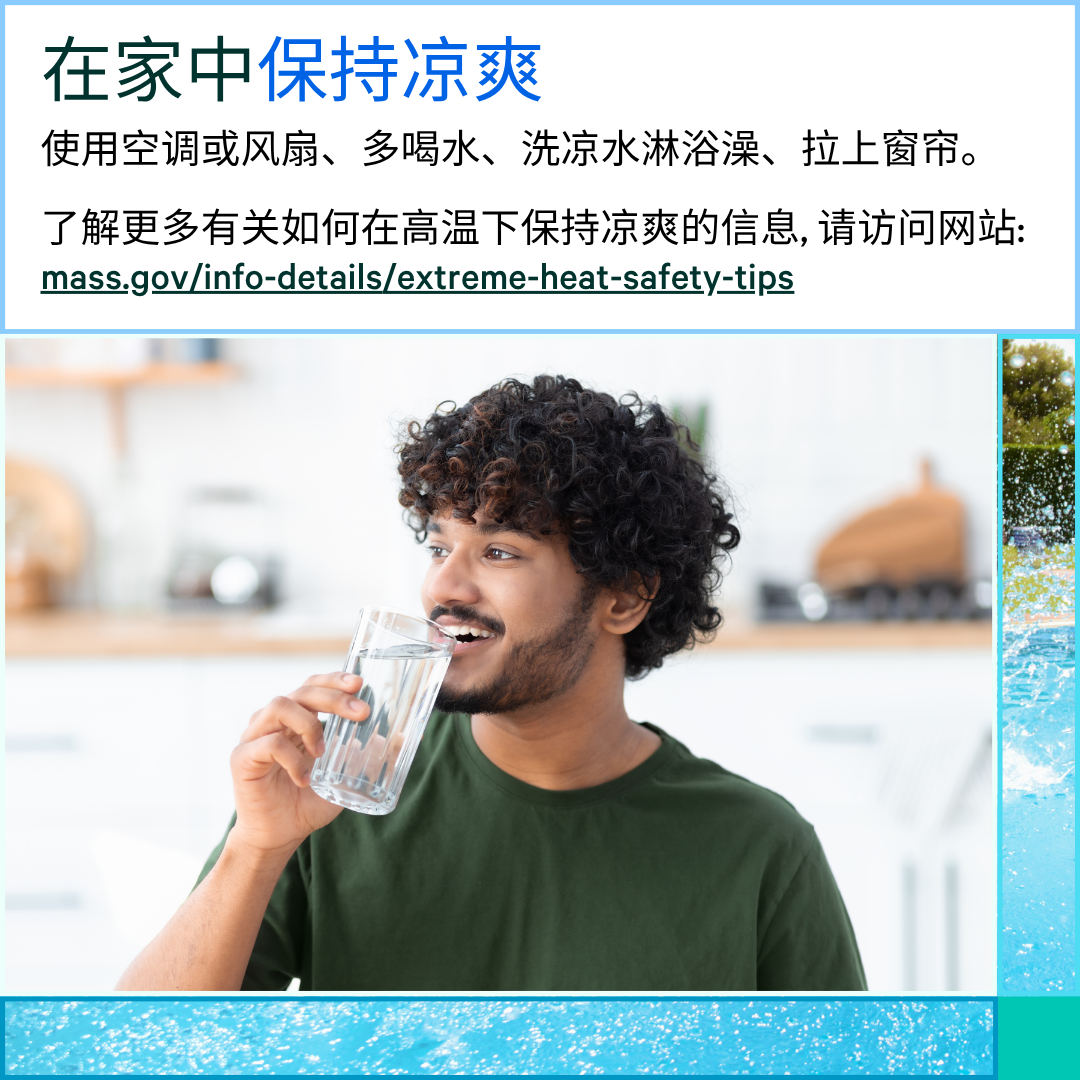
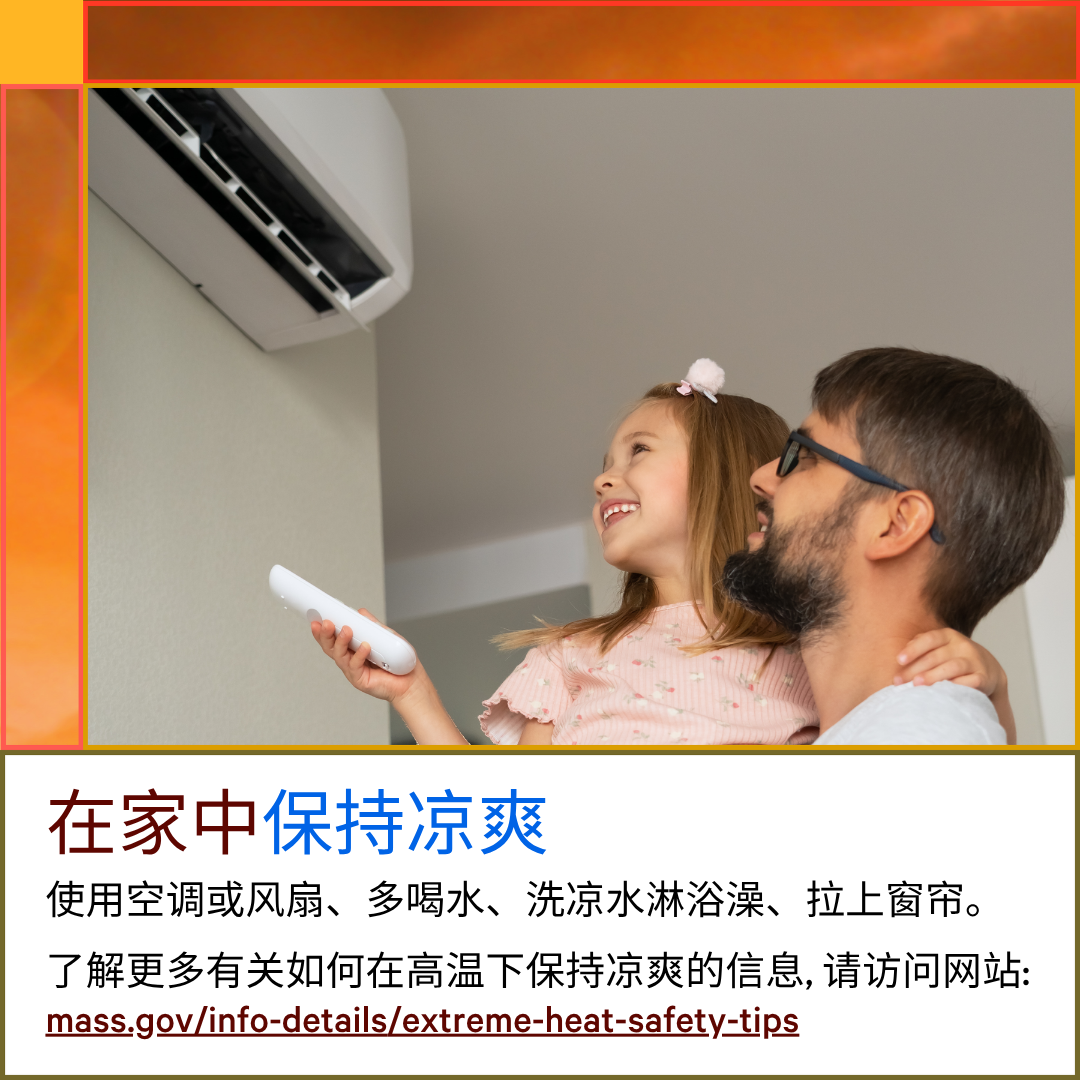
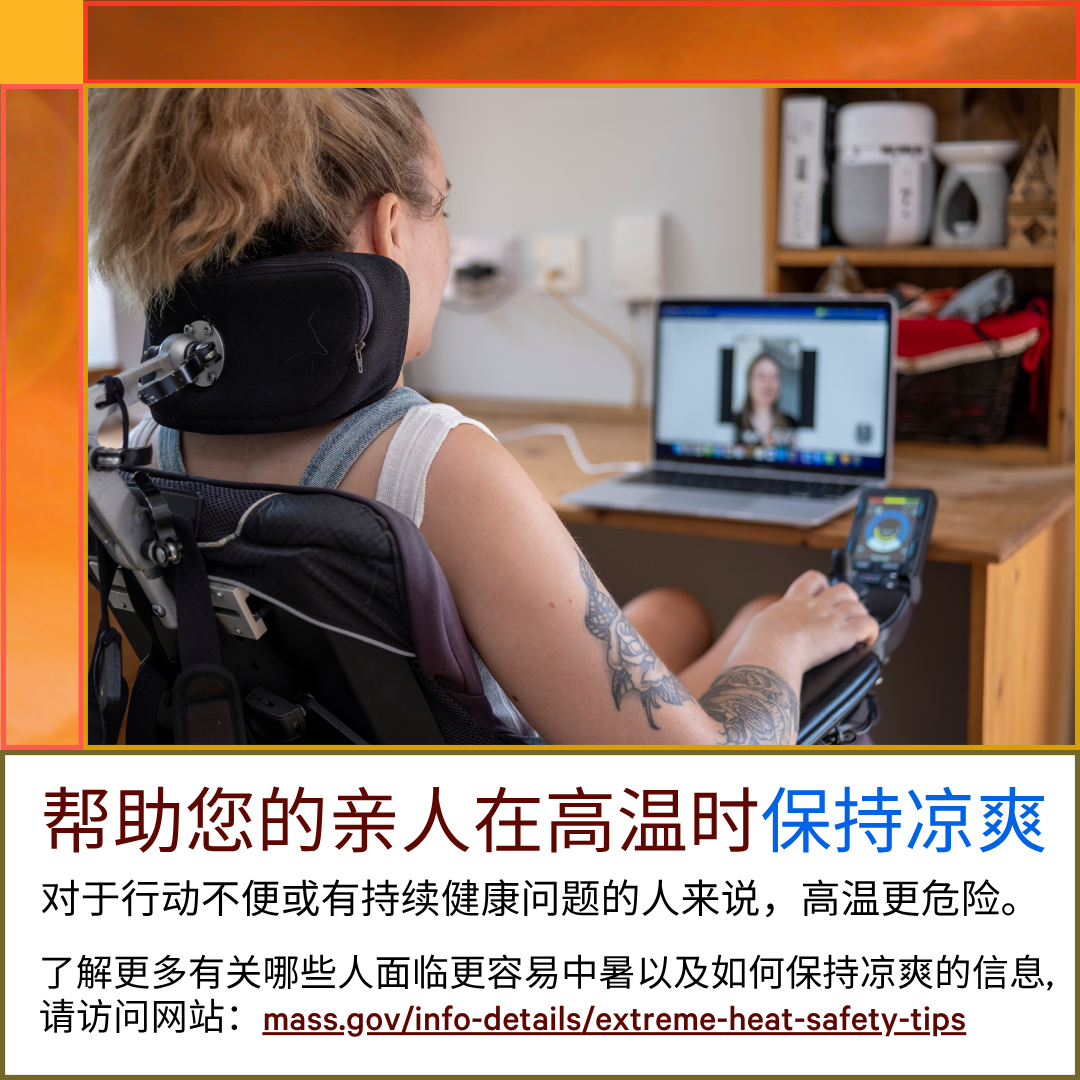

Heat Communications Materials
For Editable Use
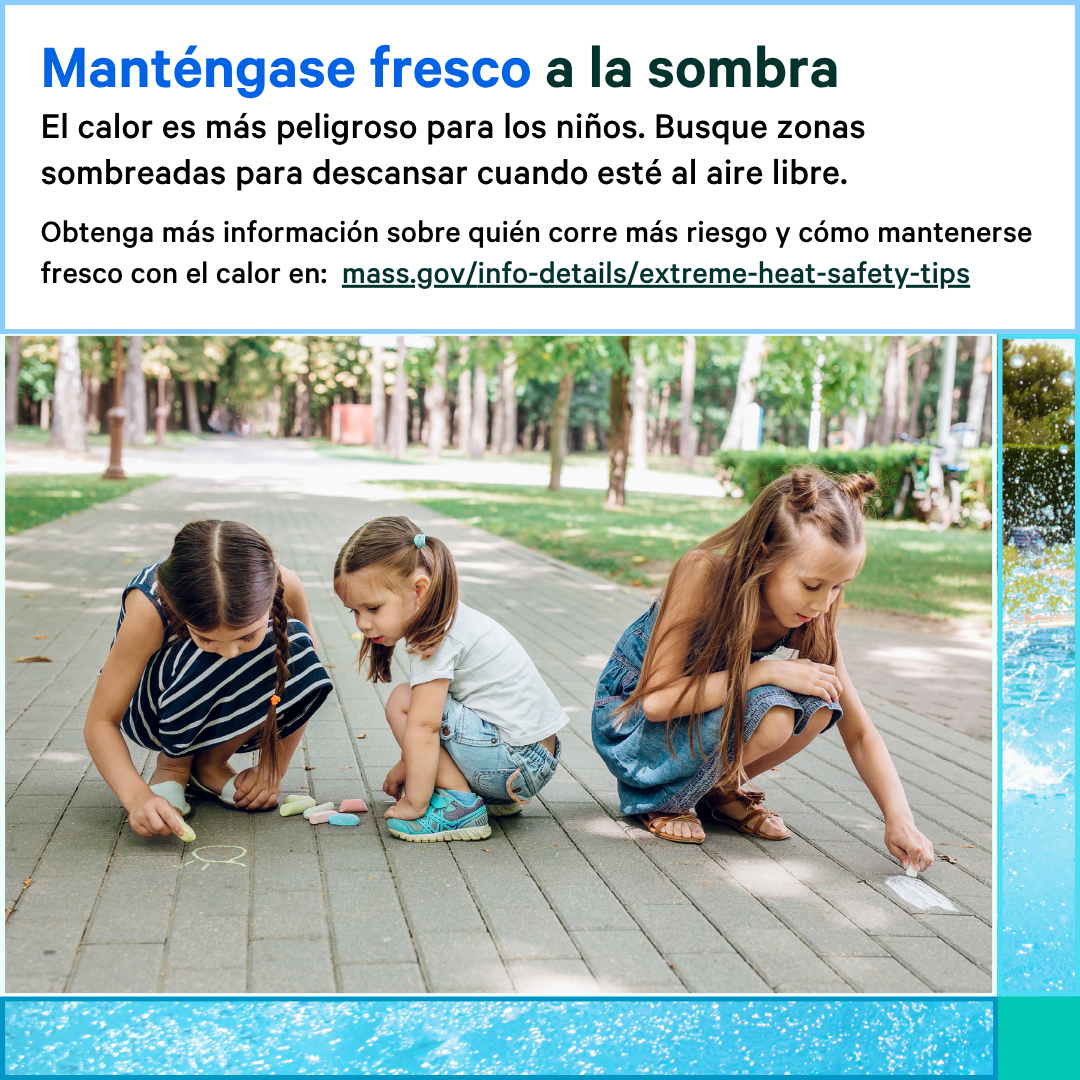
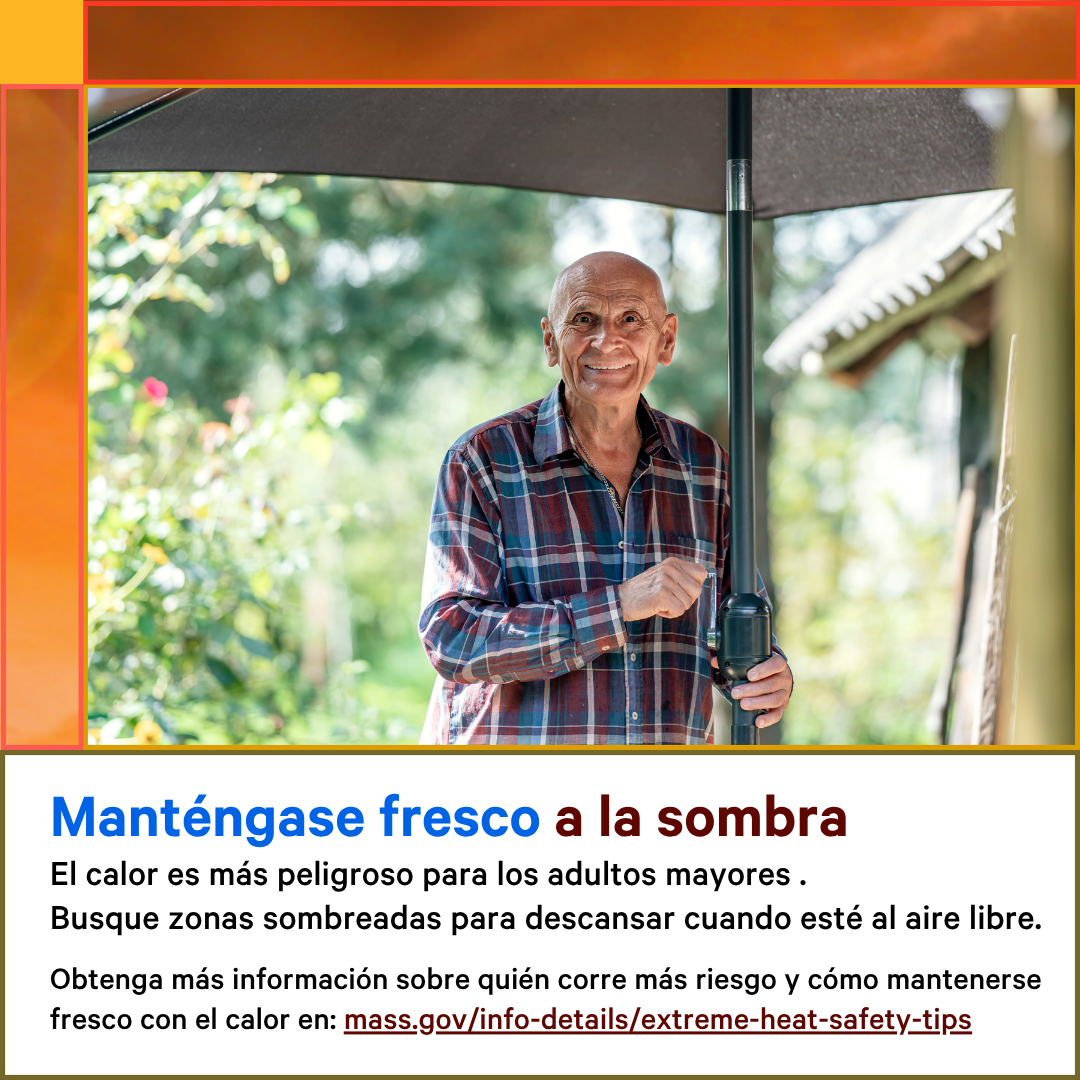
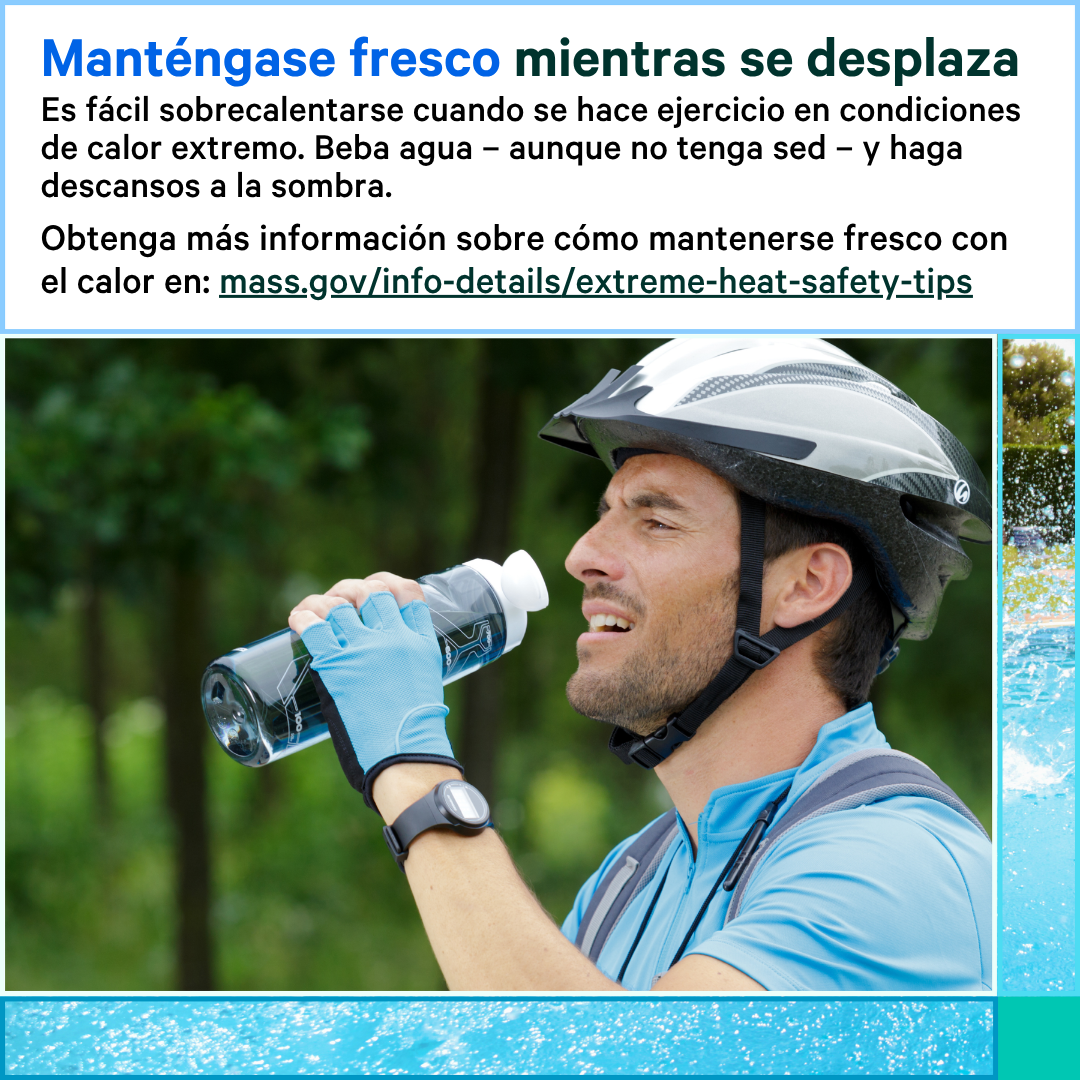
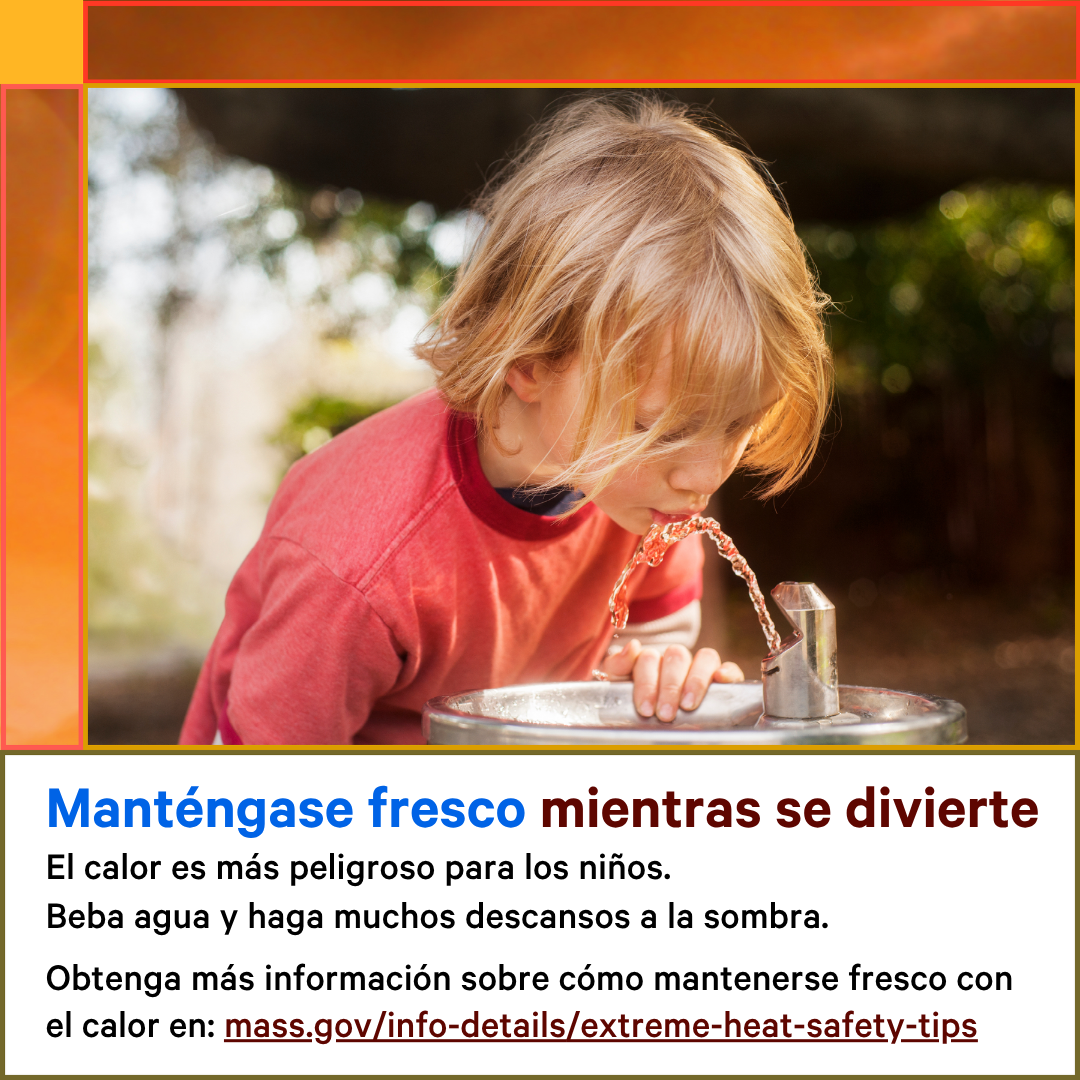
This section includes graphic assets (pdf flyer and png social media) that are editable to provide cities, towns, and local organizations the opportunity to make them more "local" for communicating with your community about upcoming extreme heat events. These files are available via Canva, and come in a set of 29 different editable graphics, in different languages.
Important: To receive access to the editable graphic sets in Canva, please email: [email protected] and provide what language(s) you would like the set(s) in, and if you want the pdf flyer and/or png social media graphic versions.
Available Languages: English, Arabic, Haitian Creole, Portuguese, Spanish, and Simplified Chinese
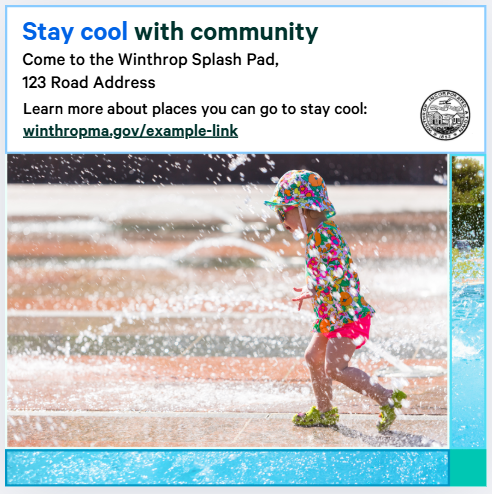
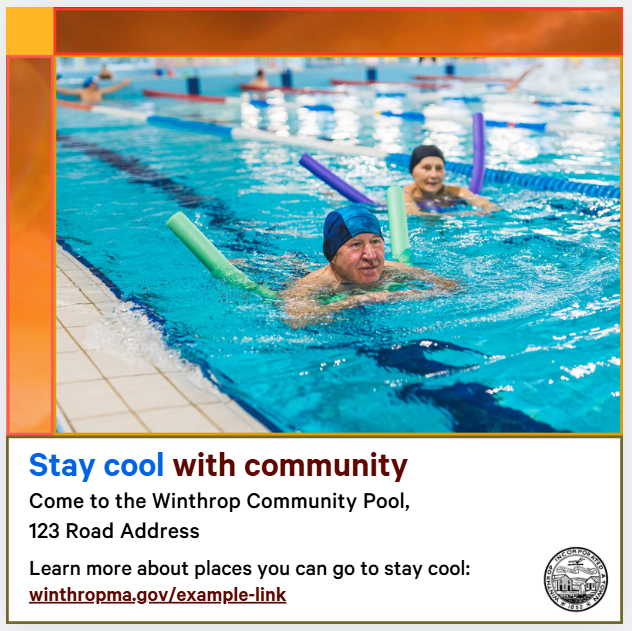
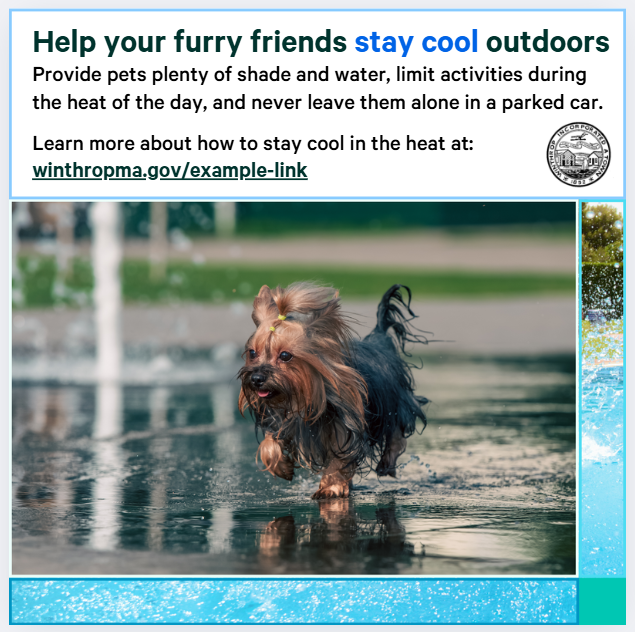
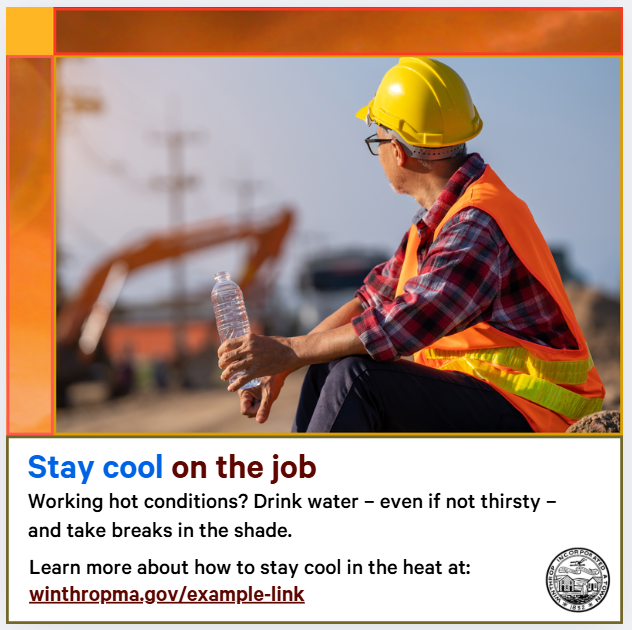
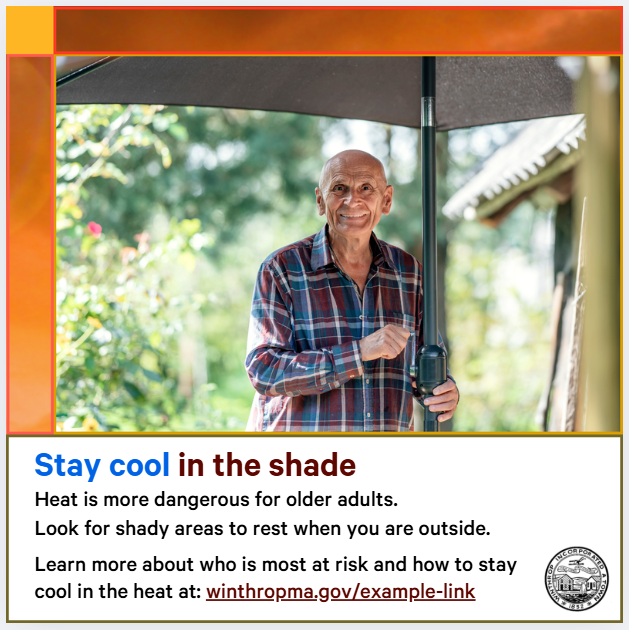
The following are examples of some of the available editable graphics you will find in the Canva sets.



About the Project
This project will take place from Fall 2024 to 2026 and has four main goals:
Exploring heat and health data to identify heat alert thresholds that make sense, locally.
Connecting with cities, community groups, and health care providers to understand communication practices and needs.
Creating heat communication materials that resonate with diverse audiences and motivate protective action before, during, and after extreme heat events.
Building municipal capacity to better understand and address climate-driven heat.
Support for this project comes from the Municipal Vulnerability Preparedness (MVP) program, supporting Massachusetts communities in planning for climate change resiliency and implementing priority projects.
This initiative is a partnership with the Mystic River Watershed Association (MyRWA) and the Boston University School of Public Health (BUSPH). It builds on regional collaboration through the Resilient Mystic Collaborative (RMC), North Suffolk Public Health Collaborative, and Metro Mayors Coalition (MMC) Climate Taskforce, while centering community knowledge and preferences to strengthen social connectedness and overall climate resilience.
Lower Mystic Cool Communications Call for Artists
The resources provided on this page, are traditional communications materials complemented by the Lower Mystic Cool Communications Call for Artists project.
The Call for Artists project aims to develop creative engagement methods to supplement traditional messaging on heat risk through art and creative storytelling. The goal is to reach residents disproportionately impacted by extreme heat.