
Happening Now
Now Open! Submit Your Proposal for FY27 Accelerating Climate Resilience Grants
Beginning now through May 29 at 5 pm, MAPC is accepting proposals for 12-month projects for up to $50,000, with preference for regional collaborations.
In addition to the 101 cities and towns in the MAPC region, eligible lead applicants also include entities and/or organizations that work in and serve the people of the MAPC region. The organizations are defined as local 501(c)(3) community-based organizations, tribes, and Indigenous communities. Community-based organizations without 501(c)(3) status are encouraged to partner with their municipality to submit an application.
Please complete and submit your Proposal by May 29, 2026 at 5 pm. Note: If you are unable to access or complete the online application, please contact Van Du ([email protected]) for a fillable PDF version of the application form.
Information Session Resources
On April 27, MAPC hosted a virtual information session to provide potential applicants with more information prior to submitting their proposals. Below you will find associated resources.
Watch the Informational Session Recording
View the Informational Session Presentation Slides
Access the Questions and Answers Document
Questions?
Please contact: Van Du, [email protected]
Accelerating Climate Resilience (ACR) Grant Program
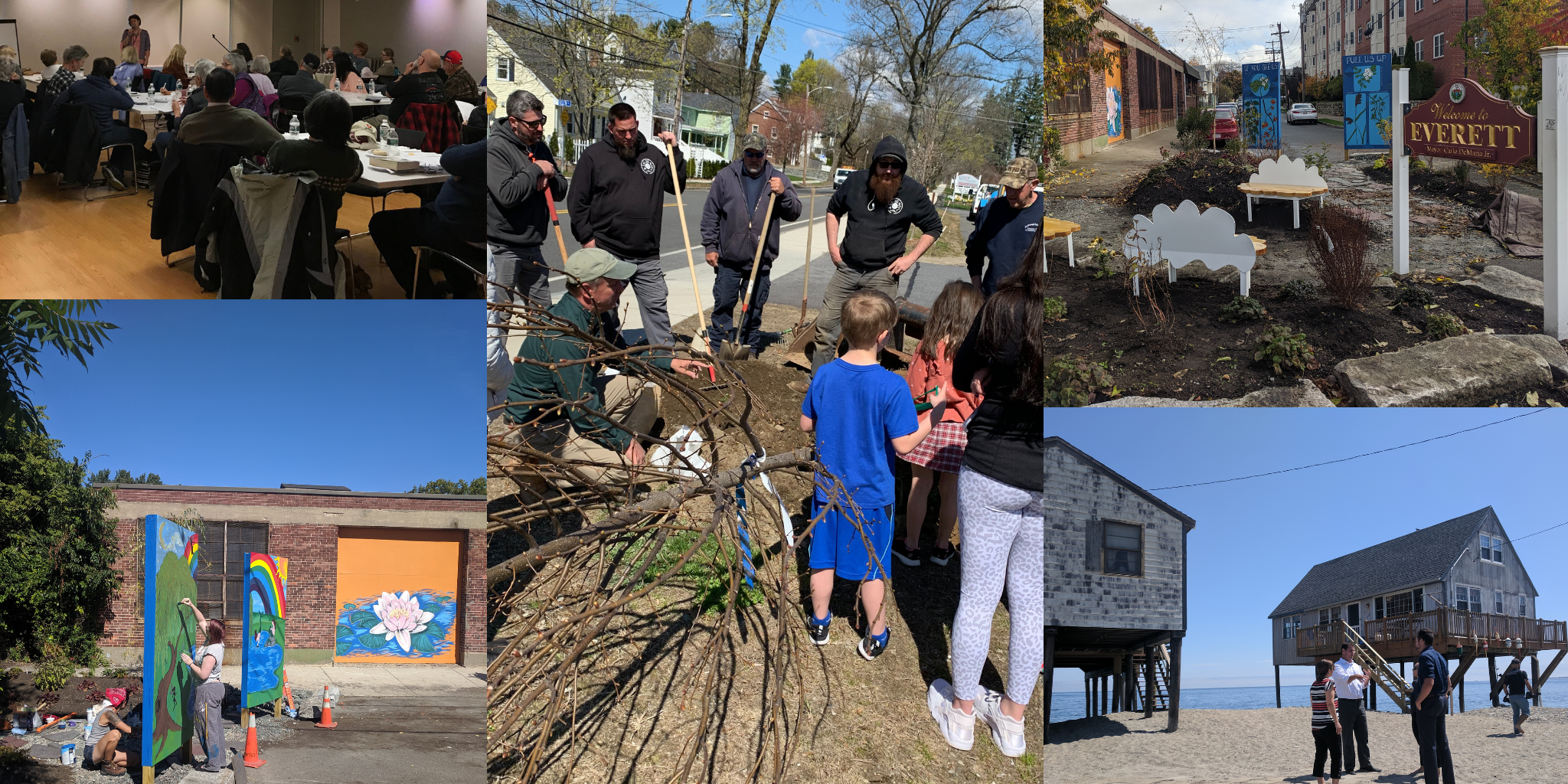
MAPC is working in partnership with the Barr Foundation to accelerate climate resilience in the region by helping municipalities advance strategies that protect people, places, and communities from the impacts of climate change.
The intent is to fund actionable resilience interventions that facilitate long-term, innovative changes leading to greater readiness for climate change. In particular, MAPC seeks to elevate projects that will advance climate equity, regional coordination, and social cohesion.
Accelerating Climate Resilience (ACR) Speaker Series
The Accelerating Climate Resilience (ACR) Speaker Series is open to the public and a space where experts and practitioners from across the country come together to discuss innovative ways to advance resilience strategies that protect people, places, and communities from the impacts of climate change.

Meet the Team

Van Du
Assistant Director, Environmental Planning
[email protected]

Francelis Morillo Suarez
Clean Energy and Climate
Planner II
[email protected]

Kat Kobylt
Senior Environmental
Planner
[email protected]
Program Priorities

Nature-based solutions for climate resilience, such as green infrastructure, climate-smart parks, urban forestry, floodplain protection, and restoration of natural systems.

Contributions to social resilience or cohesion, such as public space improvements, dialogues, gatherings, training programs, and public health improvements, particularly for populations or neighborhoods vulnerable to climate change.

Innovative financing or infrastructure investment program models.

Municipal climate resilience policy; including regulations, zoning, permitting, and inspectional services.

Projects that combine climate adaptation with climate mitigation.

Capacity building through municipal staffing or climate coalitions/convenings, such as stormwater partnerships, regional climate networks, or watershed-based climate resilience initiatives.

Innovative public outreach, engagement, and education efforts; including artistic, cultural, or creative projects that advance climate change knowledge or action.
Local food systems or community agriculture resilience measures.

District-scale climate resilience pilots that are scalable and replicable.