
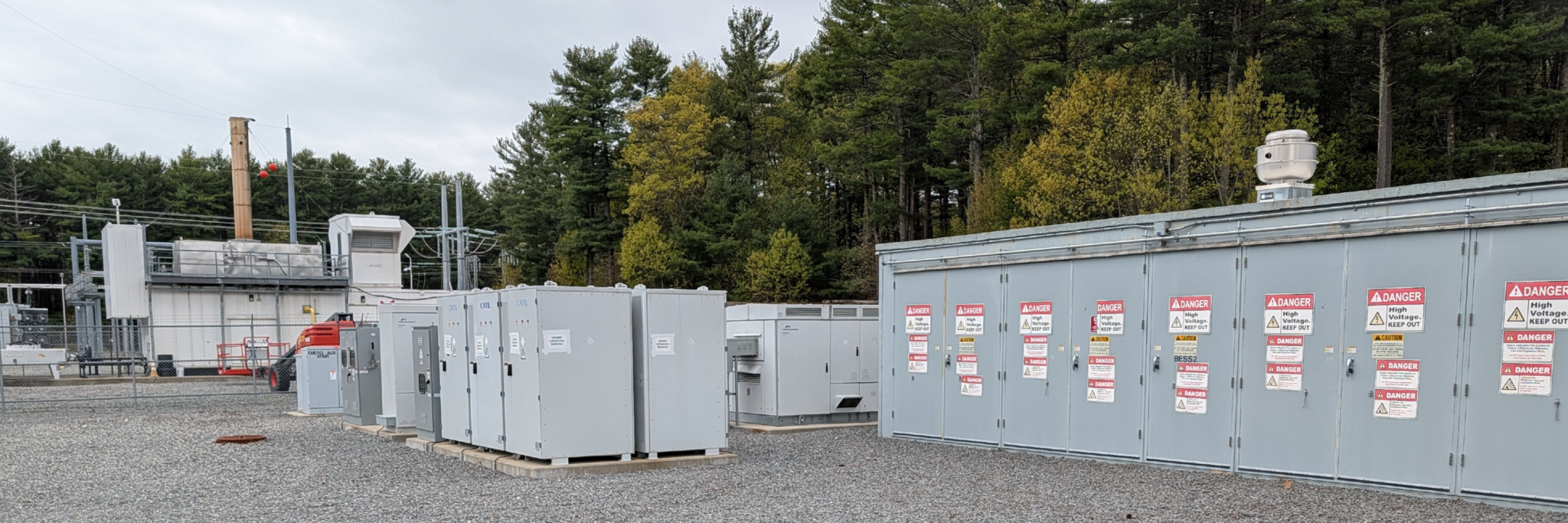
All 351 cities and towns must be able to accept consolidated local permits for clean energy infrastructure projects. Is your community ready for its first application?
In 2024, the legislature established requirements for municipalities to offer a new consolidated local permitting option for applicants seeking to build solar, battery energy storage, utility infrastructure, and other clean energy projects. Under the regulations developed by the Department of Energy Resources (225 CMR 29.00), all municipalities must be ready to accept consolidated local permits by October 1, 2026.
If you aren’t sure whether your municipality is ready to offer a consolidated local permit, need support with reviewing the process you have adopted, have already received inquiries about a consolidated local permit application, or need to review your zoning for clean energy infrastructure, MAPC is available to support you through our Clean Energy Infrastructure Siting and Zoning Technical Assistance Program.
What does this mean for my town? What do we have to have in place today?
There is no affirmative compliance step as there was in MBTA Communities. Municipalities are in compliance with the requirements of 225 CMR 29.00 if they are ready to offer the consolidated local permitting process outlined by the regulations to an applicant who requests consolidated permitting. This process, summarized in the diagram below, begins with several pre-filing steps that the Applicant must complete in coordination with your municipality.
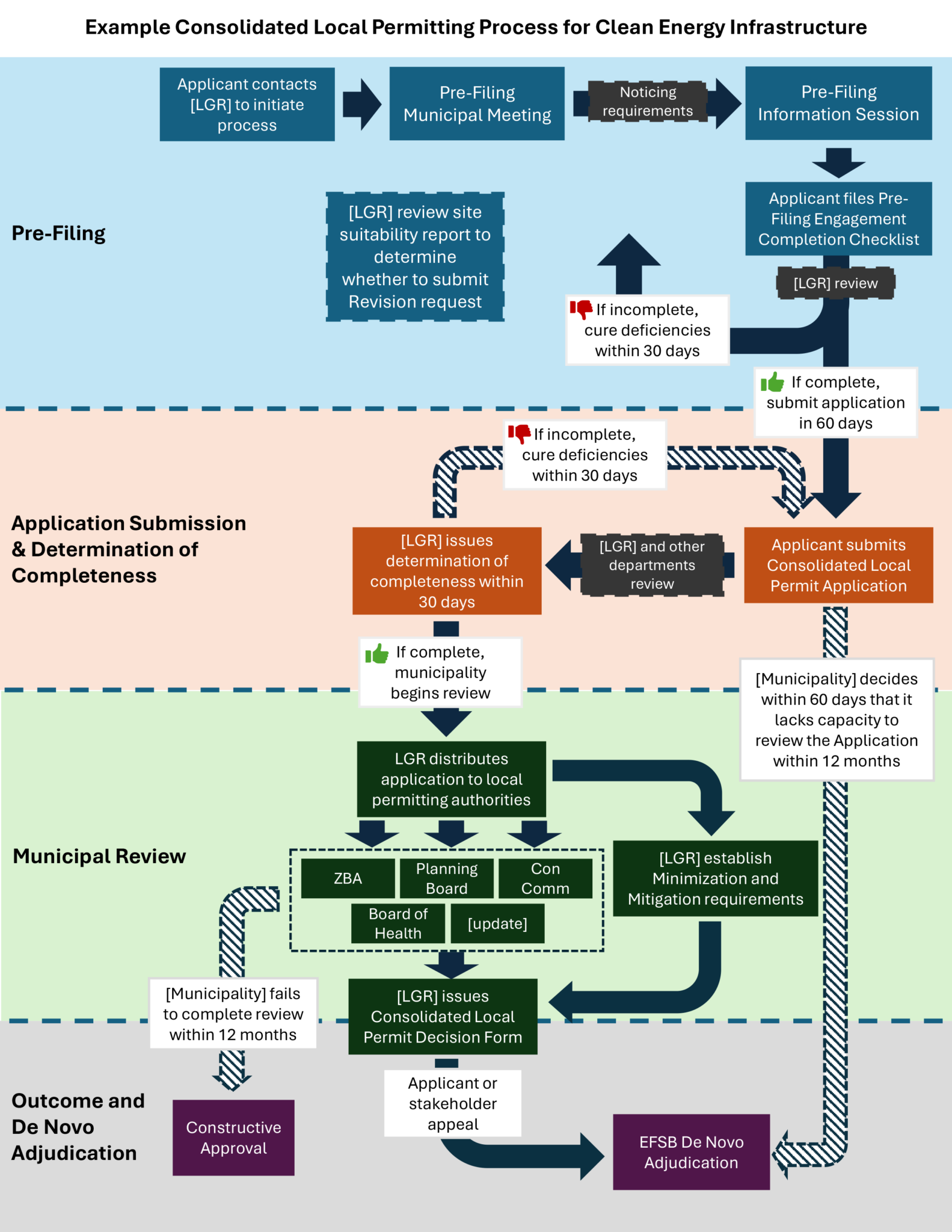
The most important action that your municipality must take is to identify a Local Government Representative (LGR) to coordinate key steps of the consolidated permitting process. The primary responsibilities of the LGR include:
- Certifying that the applicant has fulfilled their pre-filing outreach activities
- Determining that the consolidated local permit application is complete
- Considering whether any proposed mitigation and minimization efforts sufficiently offset any project impacts, as determined by the site suitability score
- Issue a final decision on the consolidated local permit application
By default, your municipality’s Chief Administrative Officer is the LGR, but they can designate these LGR responsibilities to another individual or department for local implementation.
If you have not fully determined how each step of the consolidated permitting process will be implemented locally, the most important thing to have in place today is clear information on your municipal website about who an Applicant should reach out to in order to begin the consolidated permitting process.
Do we need to have bylaws or ordinances in place to offer consolidated local permitting? How will we do this before town meeting?
The Attorney General’s Office has determined that the law “does not require a Town to adopt any new by-laws regarding the consolidated permit application process.” However, municipalities that choose to may use DOER’s model permitting bylaw as long as the bylaw is consistent with the regulations and guidelines.
MAPC is working with many of our communities to develop rules and regulations (to be adopted by a municipal entity like the Planning Board or Select Board) to detail the procedures for local implementation of the consolidated permitting process. Providing transparent public information about this process can also help facilitate a more efficient review process. Reach out if we can assist you with this step.
My town doesn’t permit battery energy storage systems through zoning or lacks regulations for battery storage. How can we offer consolidated permitting while protecting local resources?
The Attorney General has held that lack of zoning regulations for battery energy storage systems (BESS) are not grounds for prohibitions/moratoria or not accepting consolidated local permits, given that BESS projects are considered to be protected uses under the M.G.L. Ch. 40A § 3 protections for solar. Any local reviews of BESS projects must be conducted in accordance with protections afforded by Ch. 40A § 3.
MAPC is providing technical assistance to many municipalities seeking to adopt zoning amendments for BESS and solar PV through Spring Town Meeting, using the new model bylaws developed by the Department of Energy Resources. Reach out if you are interested in pursuing zoning updates for clean energy infrastructure.
Additionally, MAPC was recently awarded a grant through the Advancing Massachusetts Power program to develop comprehensive training and resources for fire professionals and other municipal staff on best practices for mitigating risks and impacts of battery energy storage systems. Stay tuned for more information on these trainings and resources.
MAPC can help!
Through the end of this fiscal year, MAPC is offering technical assistance upon request to all of the municipalities in our region to comply with the consolidated permitting process and adopt zoning amendments for clean energy infrastructure. Additionally, if you are one of the first communities to receive a consolidated local permit application in our region, MAPC is available to advise in the process.
Sign up for technical assistance here or email [email protected] with any questions.