Top

Everett आवास उत्पादन योजना (HPP) (नेपाली)

Everett आवास उत्पादन योजना (HPP) (नेपाली)
Everett HPP Style-02

CHANGE LANGUAGE:

संक्षिप्त विवरण

Everett आवास उत्पादन योजना (HPP) एभरेटमा आवासको भविष्यका लागि योजना बनाउने समुदाय र डाटा-सञ्चालित प्रक्रिया हो। योजनाले एभरेटमा आवश्यक पर्ने घरहरूको प्रकार, बासिन्दाहरूलाई उनीहरूको आवास लक्ष्य र चुनौती र स्थानीय नीतिहरू विचार गर्नका लागि कसरी सहायता गर्ने भन्ने बारेमा जानकारी उपलब्ध गराउने छ। यस योजनामा विशेष ध्यान दिनुको उद्देश्य एभरेटका निवासीहरूको आवश्यतकताहरू पूरा भएको सुनिश्चित गरेर विस्थापन रोक्नु हो जसकारण उनीहरूले आवसका लागि अर्को ठाउँ खोज्नुपर्दैन। सहरले HPP पूरा गर्नका लागि प्राविधिक सहायता उपलब्ध गराउन महानगरीय क्षेत्र योजना परिषद् ( Metropolitan Area Planning Council, MAPC) लाई नियुक्त गरेको छ। यसका साथै, सहर, MAPC, सल्लाहकार समिति र सामुदायिक साझेदारहरूले आगामी पाँच वर्षका लागि एभरेटमा आवास नीतिको दृष्टिकोण र दिशा सेट गर्न काम गर्ने छन्।

एभरेट HPP ले आवास उत्पादन योजनाका सबै आवश्यकता पूरा गर्ने छ। यस प्रक्रियामार्फत, हामी Everett को आवास स्टक विस्तार र विविधीकरण गर्न साथै आम्दानीहरूको दायरामा मानिसका लागि किफायती वृद्धिका लागि काम गर्ने छौँ। शहरले समुदायमा आवासको आवश्यकताका बारेमा सचेतना जगाउन, ऐतिहासिक रूपमा सीमान्तकृत जनसंख्यासँग जोड्न र सिक्न, क्षेत्र निर्धारणको अग्रिम संशोधन र आवासको आवश्यकता र माग पूरा गर्न अन्य रणनीतिहरू लागू गर्न यो योजना प्रयोग गर्ने छ। रणनीतिहरू लागू भएपछि, Everett मा आवास अवसर दुवै विस्तार हुने छ र विस्थापनको जोखिम कम हुने छ भन्ने कुराको अपेक्षा गरिन्छ। योजनाले यी लक्ष्यहरू पूरा गर्न स्रोतहरूलाई कहाँ निर्देशित गर्ने भनेर शहरलाई मार्गदर्शन गर्ने छ।

प्रश्नहरू छन्? संलग्न हुन चाहनुहुन्छ? MAPC ([email protected]) मा Alex Koppelman, क्षेत्रीय-आवास-र-भूमि-उपयोग-योजनाकार, [email protected] मा Matthew S. Lattanzi, Esq., Everett योजना र विकासका निर्देशक र [email protected] मा Cathy Draine, Everett विविधता, समानता र समावेशीका निर्देशकलाई सम्पर्क गर्नुहोस्।

संलग्न हुनुहोस्

योजना अद्यावधिकका लागि साइन अप गर्नुहोस्:

योजना र कार्यक्रमका बारेमा अपडेटहरू प्राप्त गर्न आफ्नो नाम र इमेल ठेगाना प्रविष्ट गर्नुहोस्।

आगामी कार्यक्रमहरूः 

हामी Everett का बासिन्दाहरूका विचार र योजनाहरू सङ्कलन गर्न अवस्थित सामुदायिक कार्यक्रम र शहर-व्यापी फोरमहरूमा जानकारी र स्रोतहरू साझेदारी गर्ने छौँ। हामीले अहिलेसम्म भ्रमण गरेका केही कार्यक्रमहरू तल सूचीबद्ध छन्:

सल्लाहकार समिति

योजना प्रक्रियाको नेतृत्व नगर र समुदायका प्रतिनिधिहरूको समितिले गरिरहेका छन्। थप समिति सदस्य पछि सामेल हुन सक्छन् तर हालका सदस्यहरू तल सूचीबद्ध छन्:

  • Eleanor Gayhart, Program Manager, Eliot Family Resource Center
  • Jay Monty, Director of Transportation and Mobility, City of Everett
  • Alexander Naumann, Principal, Keverian School
  • Jim Tarr, Planning Board Member, City of Everett
  • Laura Rosi, Chief Executive Officer, Housing Families
  • Dipendra Subedi, Board Member, Greater Boston Nepali Community (GBNC)

टाइमलाइन

योजना प्रक्रिया समर 2023 मा सुरु भयो र एक वर्ष लाग्ने अनुमान लगाइएको छ। 

समर 2023 
परियोजना सुरु हुन्छ

फल 2023 
व्यापक आवास आवश्यकता मूल्याङ्कन र लक्ष्य सेटिङ 

शिशिर ऋतु 2023
विकास अवरोध र अवसर विश्लेषण र विस्थापन जोखिम मूल्याङ्कन 

स्प्रिङ 2024 
रणनीति विकास र वितरणयोग्य उत्पादन 

समर 2024
योजनालाई निष्कर्षमा ल्याइयो र म्यासाचुसेट्स एक्जिक्युटिभ अफिस अफ हाउसिङ एण्ड लिभेबल कम्युनिटीज (EOHLC) मा पेश गरियो

Continue reading...

Le plan de production de logements d’Everett (Français)

Le plan de production de logements d’Everett (HPP) (Français)

Everett HPP Style-02

CHANGE LANGUAGE:

VUE D’ENSEMBLE

Le plan de production de logements d’Everett (HPP) est un processus communautaire et fondé sur des données qui vise à planifier l’avenir du logement à Everett. Le plan fournira des informations sur les types de logements nécessaires à Everett, sur la manière d’aider les habitants à atteindre leurs objectifs et à relever leurs défis en matière de logement, ainsi que sur les politiques locales à prendre en compte par la ville. L’une des priorités de ce plan est de prévenir les déplacements de population en veillant à ce que les besoins des habitants d’Everett soient satisfaits afin qu’ils n’aient pas à chercher un logement ailleurs. La ville a engagé le Metropolitan Area Planning Council (MAPC) pour fournir l’assistance technique nécessaire à la réalisation du HPP. Ensemble, la ville, le MAPC, un comité consultatif et des partenaires communautaires travailleront à définir la vision et l’orientation de la politique du logement à Everett pour les cinq prochaines années.

Le HPP d’Everett répondra à toutes les exigences d’un plan de production de logements. Grâce à ce processus, nous nous efforcerons d’élargir et de diversifier le parc de logements d’Everett tout en améliorant l’accessibilité pour les personnes aux revenus les plus divers. La ville utilisera ce plan pour sensibiliser la communauté aux besoins en matière de logement, se rapprocher des populations historiquement marginalisées et apprendre d’elles, proposer des modifications de zonage et mettre en œuvre d’autres stratégies pour répondre aux besoins et à la demande en matière de logement. La mise en œuvre de ces stratégies devrait permettre d’élargir les possibilités de logement à Everett et de réduire le risque de déplacement. Le plan guidera également la ville dans l’affectation des ressources nécessaires à la réalisation de ces objectifs.

Vous avez des questions ? Vous souhaitez vous impliquer ? Contactez Alex Koppelman, Senior Regional Housing and Land Use Planner at MAPC ([email protected]), Matthew S. Lattanzi, Esq. at [email protected], Everett Director of Planning and Development, et Cathy Draine, Everett Director of Diversity, Equity, and Inclusion at [email protected].

S’IMPLIQUER

Inscrivez-vous pour recevoir les mises à jour du plan:

Saisissez votre nom et votre adresse électronique pour recevoir des informations sur le plan et les événements.

Événements à venir: 

Nous partagerons des informations et des ressources lors des événements communautaires existants et des forums à l’échelle de la ville afin de recueillir les réflexions et les idées des habitants d’Everett. Vous trouverez ci-dessous quelques-uns des événements auxquels nous nous rendrons jusqu’à présent:

  • Event: Everett Youth Workers Network monthly meeting
    When: December 13, 2023

ÉVÉNEMENTS PASSÉS

  • Focus Group at La Comunidad Inc
    December 2, 2023 at La Comunidad

  • Everett Tree Lighting
    December 1, 2023, Everett Square

  • Everett Community Growers – Engagement Team Meeting
    Oct 10, 2023, virtual meeting

  • Eliot Family Resource Center’s Community Baby Shower
    Oct 3, 2023 at Eliot Family Resource Center

COMITÉ CONSULTATIF

Le processus de planification est mené par un comité composé de représentants de la ville et de la communauté. D’autres membres du comité pourront s’y joindre ultérieurement, mais les membres actuels sont énumérés ci-dessous :

  • Eleanor Gayhart, Program Manager, Eliot Family Resource Center
  • Jay Monty, Director of Transportation and Mobility, City of Everett
  • Alexander Naumann, Principal, Keverian School
  • Jim Tarr, Planning Board Member, City of Everett
  • Laura Rosi, Chief Executive Officer, Housing Families
  • Dipendra Subedi, Board Member, Greater Boston Nepali Community (GBNC)

CALENDRIER

Le processus de planification a débuté à l’été 2023 et devrait durer un an.

Été 2023
Démarrage du projet

Automne 2023 
Évaluation globale des besoins en matière de logement et définition des objectifs 

Hiver 2023
Analyse des contraintes et des opportunités de développement et évaluation des risques de déplacement

Printemps 2024
Élaboration de la stratégie et production des documents à fournir

Été 2024
Plan finalisé et soumis au Massachusetts Executive Office of Housing and Livable Communities (EOHLC)

Continue reading...

Everett Housing Production Plan (العربية)

معلومات حول أنواع المنازل اللازمة في إيفريت، وكيفية دعم السكان في أهدافهم (Arabic)

Everett HPP Style-02

CHANGE LANGUAGE:

نظرة عامة

خطة إنتاج الإسكان إيفرت (HPP) هي عملية مجتمعية تعتمد على البيانات للتخطيط لمستقبل الإسكان في إيفريت. ستوفر الخطة معلومات حول أنواع المنازل اللازمة في إيفريت، وكيفية دعم السكان في أهدافهم وتحدياتهم السكنية، والسياسات المحلية لمدينة إيفريت للنظر فيها. وتركز هذه الخطة بشكل خاص على منع نزوح السكن من خلال ضمان تلبية احتياجات سكان إيفريت حتى لا يحتاجوا إلى البحث عن سكن في مكان آخر. وقد تعاقدت مدينة إيفريت مع مجلس تخطيط المناطق الحضرية (MAPC) لتقديم المساعدة التقنية لاستكمال HPP. معا، ستعمل مدينة إيفريت، MAPC، لجنة استشارية، وشركاء المجتمع المحلي على تحديد رؤية واتجاه سياسة الإسكان في إيفريت للسنوات الخمس المقبلة.

سوف تلبي إيفريت HPP جميع متطلبات خطة إنتاج الإسكان. من خلال هذه العملية، سنعمل على توسيع وتنويع مخزون المساكن في إيفريت مع زيادة القدرة على تحمل التكاليف للأشخاص في نطاق من الدخل. ستستخدم مدينة إيفريت هذه الخطة لزيادة الوعي بالحاجة إلى المساكن في المجتمع المحلي، والتواصل مع السكان المهمشين تاريخيا والتعلم منهم، ودفع تعديلات تقسيم المناطق، وتنفيذ استراتيجيات أخرى لتلبية الحاجة إلى السكن والطلب عليه. ومع تنفيذ الاستراتيجيات، من المتوقع أن يتم توسيع فرص الإسكان في إيفريت، وأن يتم تقليل خطر نزوح السكن. وستوجه الخطة مدينة إيفريت أيضا إلى أين توجه الموارد لتحقيق هذه الأهداف.

هل لديك أسئلة؟ هل تريد أن تشارك؟ اتصل بـألكس كوبلمان، مخطط الإسكان الإقليمي الأول واستخدام الأراضي MAPC ([email protected]). ماتيو لاتانزي، محام، عند [email protected]، مدير إيفريت للتخطيط والتنمية، وكاتي دراين، مديرة للتنوع والإنصاف والإدماج في إيفريت [email protected].

شارك

قم بالتسجيل للحصول على تحديثات الخطة:

أدخل اسمك وعنوان بريدك الإلكتروني لتلقي التحديثات حول الخطة والفعاليات.

الأحداث القادمة:

سنقوم بمشاركة المعلومات والموارد في الأحداث المجتمعية الحالية والمنتديات على مستوى المدينة لجمع الآراء والأفكار من سكان إيفريت. بعض الفعاليات التي سنزورها حتى الآن مدرجة أدناه:

  • Event: Everett Youth Workers Network monthly meeting
    When: December 13, 2023

الأحداث الماضية

  • Focus Group at La Comunidad Inc
    December 2, 2023 at La Comunidad

  • Everett Tree Lighting
    December 1, 2023, Everett Square

  • Everett Community Growers – Engagement Team Meeting
    Oct 10, 2023, virtual meeting

  • Eliot Family Resource Center’s Community Baby Shower
    Oct 3, 2023 at Eliot Family Resource Center

اللجنة الاستشارية

وتتولى قيادة عملية التخطيط لجنة من ممثلي المدينة والمجتمعات المحلية. قد ينضم المزيد من أعضاء اللجنة في وقت لاحق، ولكن الأعضاء الحاليين مدرجون أدناه:

  • Eleanor Gayhart, Program Manager, Eliot Family Resource Center
  • Jay Monty, Director of Transportation and Mobility, City of Everett
  • Alexander Naumann, Principal, Keverian School
  • Jim Tarr, Planning Board Member, City of Everett
  • Laura Rosi, Chief Executive Officer, Housing Families
  • Dipendra Subedi, Board Member, Greater Boston Nepali Community (GBNC)

الجدول الزمني

بدأت عملية التخطيط في صيف عام 2023 ومن المتوقع أن تستغرق سنة واحدة.

صيف 2023 
يبدأ المشروع 

خريف 2023
تقييم شامل لاحتياجات الإسكان وتحديد الأهداف

شتاء 2023 
قيود التنمية وتحليل الفرص وتقييم مخاطر نزوح السكن 

ربيع 2024
تطوير الاستراتيجية والإنتاج القابل للتسليم 

صيف 2024
تم وضع اللمسات الأخيرة على الخطة وتقديمها إلى المكتب التنفيذي للإسكان والمجتمعات الصالحة للعيش في ماساتشوستس (EOHLC) 

Continue reading...

Everett Housing Production Plan (Haitian Creole)

Everett Housing Production Plan (Kreyòl Ayisyen)

Everett HPP Style-02

CHANGE LANGUAGE:

APÈSI

Everett Housing Production Plan (HPP) se yon kominote ak pwosesis ki baze sou done pou planifye avni lojman nan Everett. Plan an pral bay enfòmasyon sou kalite kay ki nesesè nan Everett, kòman pou sipòte rezidan yo ak objektif lojman ak defi yo, ak règleman lokal yo pou Vil la konsidere. Yon konsantre espesyal nan plan sa a se anpeche deplasman nan asire bezwen rezidan Everett yo satisfè pou yo pa bezwen chèche yon lòt kote pou lojman. Vil la te anboche Konsèy Planifikasyon Zòn Metwopoliten (MAPC) pou bay asistans teknik pou konplete HPP. Ansanm, Vil la, MAPC, yon Komite Konsiltatif, ak patnè kominotè yo pral travay pou fikse vizyon ak direksyon politik lojman nan Everett pou senk ane kap vini yo.

Everett HPP a pral satisfè tout egzijans yon Plan Pwodiksyon Lojman. Atravè pwosesis sa a, nou pral travay pou elaji epi divèsifye estòk lojman Everett pandan y ap ogmante abòdabilite pou moun ki gen yon seri revni. Vil la pral sèvi ak plan sa a pou sansibilize bezwen lojman nan kominote a, konekte epi aprann nan men popilasyon istorikman majinalize yo, amannman dekoupaj an zòn avanse, epi aplike lòt estrateji pou satisfè bezwen ak demann lojman. Pandan estrateji yo ap aplike, nou prevwa ke opòtinite lojman nan Everett pral elaji, epi risk deplasman yo pral redui. Plan an pral gide vil la tou sou ki kote pou dirije resous pou akonpli objektif sa yo.

Ou gen kesyon? Ou vle patisipe? Kontakte Alex Koppelman, Senior Regional Housing and Land Use Planner nan MAPC ([email protected]), Matthew S. Lattanzi, Esq. nan [email protected], Direktè Planifikasyon ak Devlopman Everett, ak Cathy Draine, Direktè Divèsite, Ekite, ak Enklizyon Everett nan [email protected].

PATISIPE

Enskri pou Mizajou Plan an: 

Antre non w ak adrès imel ou pou resevwa mizajou sou plan an ak evènman yo.

Evènman k ap vini yo:

Nou pral pataje enfòmasyon ak resous nan evènman kominote ki egziste deja yo ak fowòm nan tout vil la pou kolekte panse ak lide nan men rezidan Everett yo. Kèk nan evènman yo nou pral vizite byen lwen tèlman a:

  • Event: Everett Youth Workers Network monthly meeting
    When: December 13, 2023

EVÈNMAN PASE

  • Focus Group at La Comunidad Inc
    December 2, 2023 at La Comunidad

  • Everett Tree Lighting
    December 1, 2023, Everett Square

  • Everett Community Growers – Engagement Team Meeting
    Oct 10, 2023, virtual meeting

  • Eliot Family Resource Center’s Community Baby Shower
    Oct 3, 2023 at Eliot Family Resource Center

KOMITE KONSILTATIF

Pwosesis planifikasyon an ap dirije pa yon komite reprezantan vil ak kominote a. Plis manm komite yo ka rantre pita, men manm aktyèl yo nan lis anba a:

  • Eleanor Gayhart, Program Manager, Eliot Family Resource Center
  • Jay Monty, Director of Transportation and Mobility, City of Everett
  • Alexander Naumann, Principal, Keverian School
  • Jim Tarr, Planning Board Member, City of Everett
  • Laura Rosi, Chief Executive Officer, Housing Families
  • Dipendra Subedi, Board Member, Greater Boston Nepali Community (GBNC)

KALANDRIYE

Pwosesis planifikasyon an te kòmanse nan sezon ete 2023 epi li espere dire yon lane.

Ete 2023
Pwojè a kòmanse

Otòn 2023
Evalyasyon Konplè Bezwen Lojman ak Fikse Objektif 

Ivè 2023
Kontrent Devlopman ak Analiz Opòtinite, ak Evalyasyon Risk Deplasman

Prentan 2024
Devlopman Estrateji ak Pwodiksyon Delivrab

Ete 2024 
Plan an ap finalize epi soumèt bay Biwo Egzekitif Massachusetts pou Lojman ak Kominote Abitab (EOHLC)

Continue reading...

O Plano de Produção de Moradia de Everett (HPP por sua sigla em inglês)

O Plano de Produção de Moradia de Everett (HPP por sua sigla em inglês)

Everett HPP Style-02

CHANGE LANGUAGE:

RESUMO

O Plano de Produção de Moradia de Everett (HPP por sua sigla em inglês) é um processo baseado na comunidade e em dados, visando o planejamento do futuro da questão habitacional em Everett. O plano fornecerá informações sobre os tipos de residências necessárias em Everett, como apoiar residentes no que diz respeito aos seus objetivos e desafios habitacionais, além de políticas locais a serem consideradas pela Cidade. A ênfase especial do plano é prevenir o deslocamento, assegurando que as necessidades dos residentes de Everett sejam supridas para que não precisem procurar por moradia em outro lugar. A Cidade contratou a Comissão de Planejamento da Área Metropolitana (MAPC por sua sigla em inglês) para fornecer assistência técnica para completar o HPP. Assim, a Cidade, a MAPC, uma Comissão de Consultoria e os colaboradores da comunidade trabalharão juntos para estabelecer a visão e rumo das políticas de habitação em Everett para os próximos cinco anos.

O HPP Everett cumprirá todos os requerimentos de um Plano de Produção de Moradia. Através deste processo, trabalharemos na expansão e na diversificação das opções de moradia de Everett ao mesmo tempo em que também melhoraremos a acessibilidade para pessoas de rendas variadas. A Cidade usará este plano para aumentar a conscientização sobre a necessidade de habitações na comunidade, fazer conexões com populações historicamente marginalizadas e aprender sobre as mesmas, avançar emendas de zoneamento, e implementar outras estratégias para suprir necessidades e demandas habitacionais. À medida que estratégias são implementadas, espera-se que oportunidades habitacionais em Everett sejam expandidas e o risco de despejo seja reduzido. O plano também direcionará a Cidade, guiando seus recursos para alcançar esses objetivos.

Você tem perguntas? Quer se envolver? Entre em contato com Alex Koppelman, Planejador Sênior Regional de Moradia e de Uso Geográfico da MAPC ([email protected]), Matthew S. Lattanzi, Esq. pelo e-mail [email protected], Diretor de Planejamento e Desenvolvimento de Everett, e Cathy Draine, Diretora de Diversidade, Equidade e Inclusão de Everett, pelo e-mail [email protected].

SE ENVOLVA

Inscreva-se para receber atualizações do plano: 

Insira seu nome e e-mail para receber atualizações sobre planos e eventos. 

Próximos Eventos: 

Compartilharemos informações e recursos nos eventos comunitários já existentes e forums acessíveis a toda a população a fim de coletar ideias e sugestões dos residentes de Everett. Alguns desses eventos os quais visitaremos estão listados abaixo:

  • Event: Everett Youth Workers Network monthly meeting
    When: December 13, 2023

EVENTOS PASSADOS

  • Focus Group at La Comunidad Inc
    December 2, 2023 at La Comunidad

  • Everett Tree Lighting
    December 1, 2023, Everett Square

  • Everett Community Growers – Engagement Team Meeting
    Oct 10, 2023, virtual meeting

  • Eliot Family Resource Center’s Community Baby Shower
    Oct 3, 2023 at Eliot Family Resource Center

COMISSÃO DE CONSULTORIA

O processo de planejamento está sendo dirigido por uma comissão de representantes da cidade e da comunidade. Membros adicionais da comissão se unirão a este grupo futuramente, mas os membros atuais estão listados abaixo:

  • Eleanor Gayhart, Program Manager, Eliot Family Resource Center
  • Jay Monty, Director of Transportation and Mobility, City of Everett
  • Alexander Naumann, Principal, Keverian School
  • Jim Tarr, Planning Board Member, City of Everett
  • Laura Rosi, Chief Executive Officer, Housing Families
  • Dipendra Subedi, Board Member, Greater Boston Nepali Community (GBNC)

CRONOGRAMA

O processo de planejamento foi iniciado no verão de 2023 e espera-se que sua duração seja de um ano.

Verão de 2023
O projeto foi iniciado

Outono de 2023
Avaliação Abrangente das Necessidades Habitacionais e Estabelecimento de Objetivos

Inverno de 2023
Análise de Oportunidades e Restrições de Desenvolvimento, e Avaliação do Risco de Despejo 

Primavera de 2024
Desenvolvimento de Estratégias e da Possível Produção 

Verão de 2024
Plano finalizado e proposto à Secretaria Executiva de Moradia e Comunidades Habitáveis de Massachusetts (EOHLC por sua sigla em inglês)

Continue reading...

El Plan de Producción de Viviendas de Everett (HPP) (Español)

El Plan de Producción de Viviendas de Everett (HPP) (Español)

Everett HPP Style-02

CHANGE LANGUAGE:

VISIÓN GENERAL

El Plan de Producción de Viviendas de Everett (HPP) es un proceso basado en datos y en la comunidad para planificar el futuro de la vivienda en Everett. El plan proporcionará información sobre los tipos de viviendas que se necesitan en Everett, cómo apoyar a los residentes con sus metas y desafíos de vivienda y políticas locales a ser consideradas por la Ciudad. Un enfoque especial de este plan es prevenir el desplazamiento asegurando que las necesidades de los residentes de Everett sean satisfechas para que no necesiten buscar vivienda en otro lugar. La Ciudad ha contratado al Consejo de Planificación del Área Metropolitana (MAPC) para proporcionar asistencia técnica para completar el HPP. Juntos, la Ciudad, MAPC, un Comité Asesor y socios comunitarios trabajarán para establecer la visión y la dirección de la política de vivienda en Everett durante los próximos cinco años.

Everett HPP cumplirá con todos los requisitos de un Plan de Producción de Vivienda. A través de este proceso, trabajaremos para expandir y diversificar el stock de viviendas de Everett, al tiempo que aumentaremos la asequibilidad para las personas con una variedad de ingresos. La Ciudad utilizará este plan para crear conciencia sobre la necesidad de vivienda en la comunidad, conectarse y aprender de las poblaciones históricamente marginadas, avanzar enmiendas de zonificación e implementar otras estrategias para satisfacer la necesidad y la demanda de vivienda. A medida que se implementan las estrategias, se espera que las oportunidades de vivienda en Everett se amplíen y se reduzca el riesgo de desplazamiento. El plan también guiará a la Ciudad en cuanto a dónde dirigir los recursos para lograr estas metas.

¿Tiene alguna pregunta? ¿Quieres involucrarte? Comunícate con Alex Koppelman, Superior Regional de Vivienda y Planificador del Uso de Tierras en MAPC ([email protected]), Matthew S. Lattanzi, Esq. en [email protected], Director de Planificación y Desarrollo de Everett, y Cathy Draine, Directora de Diversidad, Equidad e Inclusión de Everett en [email protected].

PARTICIPA

Regístrese para recibir actualizaciones del plan 

Anote su nombre y dirección de correo electrónico para recibir actualizaciones sobre el plan y los eventos.

Upcoming Events

Compartiremos información y recursos en los eventos comunitarios existentes y foros de toda la ciudad para recopilar ideas y pensamientos de los residentes de Everett. Algunos de los eventos que visitaremos hasta ahora se enumeran a continuación:

  • Event: Everett Youth Workers Network monthly meeting
    When: December 13, 2023

EVENTOS PASADOS

  • Focus Group at La Comunidad Inc
    December 2, 2023 at
    La Comunidad

  • Everett Tree Lighting
    December 1, 2023, Everett Square

  • Everett Community Growers – Engagement Team Meeting
    Oct 10, 2023, virtual meeting

  • Eliot Family Resource Center’s Community Baby Shower
    Oct 3, 2023 at Eliot Family Resource Center

COMITÉ ASESOR

El proceso de planificación está siendo dirigido por un comité de representantes de la ciudad y la comunidad. Más miembros del comité pueden unirse más tarde, pero los miembros actuales se enumeran a continuación:

  • Eleanor Gayhart, Program Manager, Eliot Family Resource Center
  • Jay Monty, Director of Transportation and Mobility, City of Everett
  • Alexander Naumann, Principal, Keverian School
  • Jim Tarr, Planning Board Member, City of Everett
  • Laura Rosi, Chief Executive Officer, Housing Families
  • Dipendra Subedi, Board Member, Greater Boston Nepali Community (GBNC)

CRONOLOGÍA

El proceso de planificación comenzó en el verano de 2023 y se espera que dure un año.

Verano 2023
Se inicia el proyecto

Otoño de 2023
Evaluación integral de las necesidades de vivienda y establecimiento de metas

Invierno 2023
Análisis de Restricciones de Desarrollo y Oportunidades y Evaluación de Riesgos de Desplazamiento

Primavera 2024
Desarrollo de estrategias y producción entregable

Verano 2024
Plan finalizado y presentado a la Oficina Ejecutiva de Vivienda y Comunidades Habitables de Massachusetts (EOHLC)

Continue reading...

Greater Boston Climate Action Plan

Greater Boston Climate Action Plan

An Effort Funded by the EPA’s Climate Pollution Reduction Grant (CPRG)

The Metropolitan Area Planning Council (MAPC) and partners are developing a region-wide Climate Action Plan (CAP) under the U.S. Environmental Protection Agency (EPA)’s Climate Pollution Reduction Grant (CPRG) program. Additional support for the plan is provided by the Massachusetts Department of Energy Resources (DOER) and the Barr Foundation. 

The regional plan encompasses 167 communities within Metro Boston, including parts of southern New Hampshire, and centers the priorities and ideas of Massachusetts’ Environmental Justice communities and federally designated Justice40 communities. 

MAPC received financial support from the EPA for this project under an Assistance Agreement. 

Latest Updates and Upcoming Events

Updates

Coming soon – information on the public comment period following the release of the current GBCAP on August 14!

Upcoming Events

Greater Boston Climate Action Plan (GBCAP) Virtual Meeting
Thursday, August 14 | 11:00 a.m., Zoom
Register for the GCAP Virtual Meeting

Please join the Metropolitan Area Planning Council (MAPC) and regional partners for the release of the Greater Boston Climate Action Plan (GBCAP)!

During the webinar, an overview of the GBCAP will be presented. Additionally, how to provide feedback on this version of the GBCAP being released will be shared (there will be a public comment period until Friday, September 5).

About the Greater Boston Climate Action Plan (GBCAP)

Partners across the Metro Boston region are working together to develop a regional roadmap to rapidly drive down greenhouse gas (GHG) emissions, slow the impacts of climate change, and realize near-term community benefits. Benefits of reducing carbon pollution across multiple sectors include: 

  • Improvements to air quality and public health; 
  • Increase of local, clean energy jobs;  
  • Reduction and stabilization of energy costs; and 
  • Improvements to public transportation and walkability. 

This multi-year planning process includes three phases of work 1) Priority Climate Action Plan (PCAP) that establishes a near-term plan for action by 2030, 2) Comprehensive Climate Action Plan (CCAP) that covers a broader range of sectors, and 3) a Status Report in 2027 on progress made towards implementation  

In March 2024, MAPC submitted the Priority Climate Action Plan (PCAP) to the EPA. The PCAP is Greater Boston’s near-term plan to address the urgent challenge of climate change by rapidly driving down greenhouse gas (GHG) emissions. The PCAP includes: 

  • A region-wide GHG Inventory.  
  • Eleven Priority GHG Reduction Measures across the Buildings, Transportation, Electricity Generation, and Waste sectors. 
  • An analysis of benefits to low-income and disadvantaged communities (LIDAC).

Read the blog post overview of the near-term Climate Action Plan.

We are currently working on the comprehensive Greater Boston Climate Action Plan (GBCAP) which will be completed by December 2025. This plan will include: 

  • An updated regional GHG inventory for 2022 and reduction targets for 2030 and 2050 
  • Additional GHG emissions reduction measures including those in the Agriculture and Natural Lands and the Industry and Manufacturing sectors. 
  • A regional workforce development analysis  

Over the year, MAPC and partners will host a variety of opportunities for stakeholders to provide meaningful input and feedback on measures and analysis included in the plan.  

The EPA is also providing funding to the State of Massachusetts and State of New Hampshire to develop state-wide climate action plans on similar timelines. We will coordinate closely with state entities and neighboring metro-regions on these efforts. 

What is a Metropolitan Statistical Area?

A Metropolitan Statistical Area, or MSA, is a federal government designation of a regional geography with a dense population center and characterized by strong social and economic ties throughout the region.

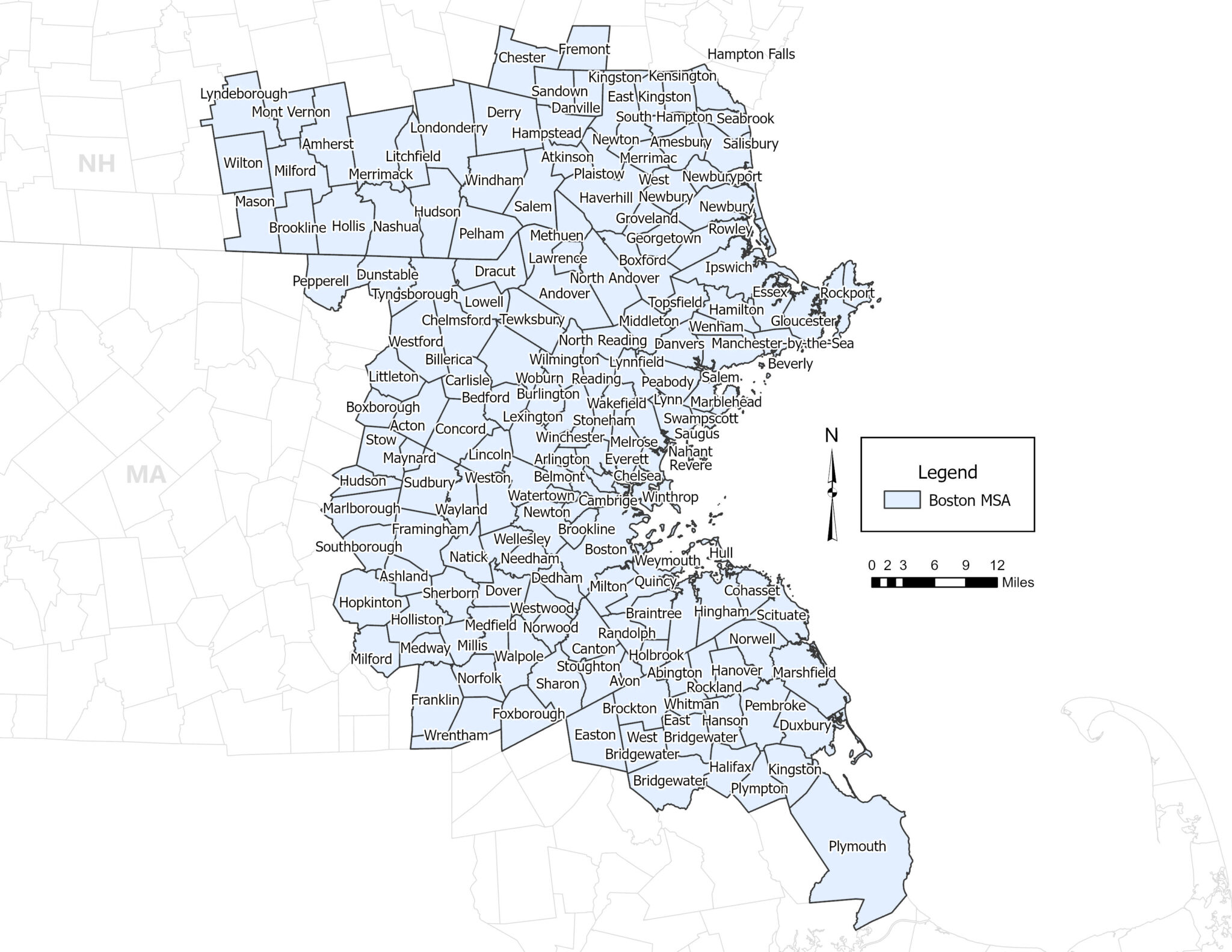
The Boston MSA is comprised of 168 municipalities and represents 4.7 million residents across Eastern Massachusetts and parts of Southern New Hampshire.

Regional climate planning enables collaborative problem solving to address shared challenges and improve regional infrastructure.  

A blue map of the Metropolitan Statistical Area (MSA) in the Greater Boston area. All of the communities are written in black text on the blue map.
Map of the Boston Metropolitan Statistical Area. Map created by Weston & Sampson.

Justice40 and Environmental Justice

The Commonwealth of Massachusetts defines Environmental Justice as “the principle that all people have a right to be protected from environmental hazards and to live in and enjoy a clean and healthful environment. Environmental justice is the equal protection and meaningful involvement of all people with respect to development, implementation, and enforcement of environmental laws, regulations, and policies and the equitable distribution of environmental benefits”. In Massachusetts, Environmental Justice Communities are designated based on a neighborhood’s 1) household median income, 2) percentage of residents who are racial minorities, and 3) percentage of households who experience English language isolation.  

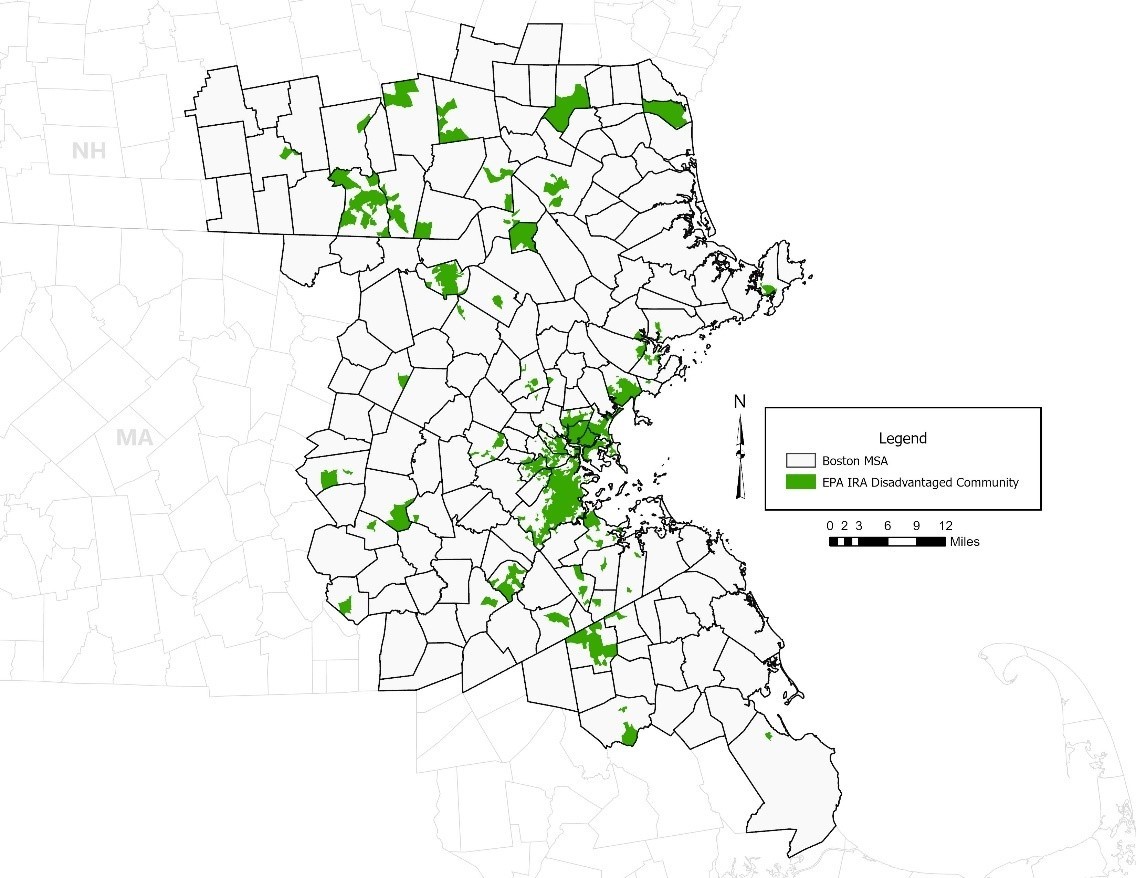
In 2021, the federal government made a commitment that 40% of the overall benefits of federal investment flow to socio-economically disadvantaged communities that are also overburdened by environmental pollution. These federally designated communities are known as “Justice40” and have some overlap with Massachusetts’s EJ Community designation. As a Federally funded project, our regional Climate Action Plan aims to center and prioritize Justice40 and EJ communities within the planning process, development of GHG reduction strategies, and future implementation of the plan.  

In addition to establishing a Justice40 Advisory group to help guide the development of the PCAP and CCAP, the project team will assess each proposed GHG reduction strategy based on the benefits to low-income and disadvantaged communities (LIDAC).  

Federally Designated Disadvantaged Communities

A black outlined map of greater Boston with areas in green showing federally designated disadvantaged communities.

Ways to Get Involved

  • We need your input on the priorities within the plan to ensure they reflect community needs and ideas from across the region. Complete our survey! 
  • MAPC is currently working with partners across the region including community-based organizations and regional planning agencies to hold opportunities for engagement. Stay tuned for more information! To get updates on these events and our newsletter, subscribe to the project’s email list.

Contact us at [email protected] for more information, if you have questions, and/or to get involved in the region’s Climate Action Plan. 


Committees and Advisory Groups  

MAPC is collaborating closely with partners across the region to develop the plan.  

Regional Planning Agency (RPA) Steering Committee: Comprised of the regional planning agencies/commissions within the MSA, this committee will help guide the planning process and lead stakeholder engagement activities within each RPA region. Members include: Old Colony Planning Council (OCPC), Merrimack Valley Planning Commission (MVPC), Northern Middlesex Council of Governments (NMCOG), Southern New Hampshire Planning Commission (SNPC), Rockingham Planning Commission (RPC), and Nashua Regional Planning Commission (NRPC).  

Municipal Advisory Group: Comprised of 29 municipal staff and representatives, this group provides key input and feedback during key milestones of the PCAP and CCAP. Members include: Acton, Arlington, Ashland, Boston*, Bridgewater, Brockton*, Cambridge, Chelsea*, Concord, Framingham, Gloucester*, Hudson, Lexington, Lawrence*, Lowell*, Melrose, Methuen*, Natick, Newbury, North Andover, Norwood, Plymouth, Reading, Revere*, Salem*, Weston, Winchester, MA, Derry and Nashua*, NH.

* Denotes designated Justice40 community.   

Justice40 Advisory Group: Comprised of 25 community-based organizations and non-profits, this group provides key input and feedback during key milestones of the PCAP and CCAP. Members include: Action for Boston Community Development, Inc., Action, Inc., All In Energy, Asian Community Development Corporation, Authentic Caribbean Foundation, Cambodian Mutual Assistance Association, Citizens Inn, Conservation Law Foundation, Boston Climate Action Network, Emerald Cities Collaborative, Granite State Organizing Project, Groundwork Somerville, Grow Nashua, Healthcare without Harm, Massachusetts Immigrant and Refugee Advocacy Coalition, Merrimack River Watershed Council, Neighborhood of Affordable Housing, Inc., New England United 4 Justice, Quincy Asian Resources, Roxbury Community College Foundation, The Latino Support Network, Town Green, Transit Matters, and Voices of the Community, and one Indigenous Land and Water Conservationist and Environmental Activist.

Past Events

Waste and Materials Management Workshop | November 18, 2024
MAPC hosted an interactive, virtual workshop to talk with stakeholders about reducing GHG emissions from Waste and Materials Management sector.

This event included remarks from State Representative Michelle Ciccolo and Department of Environmental Protection (MA DEP) Kathi Mirza. 

Presentation Slides

Waste and Materials Workshop | October 24, 2024
MAPC hosted an interactive, in-person workshop to talk with stakeholders about reducing GHG emissions from Waste and Materials Management sector.

This event included remarks from State Representative Michelle Ciccolo, Lexington’s Sustainability Committee Chair Cindy Arens, and Department of Environmental Protection (MA DEP) Kathi Mirza.  

Presentation Slides
Planning for a Circular Economy Presentation Slides – Representative Ciccolo
Lexington’s Zero Waste Journey Presentation Slides – Cindy Arens
Reducing Waste in MA: MassDEP Programs, Policies, and Initiatives Presentation Slides – Kathi Mirza

Agriculture and Natural Lands Workshop | October 23, 2024
MAPC hosted an interactive, virtual workshop to talk with stakeholders about reducing GHG emissions from Agricultural and Natural Lands sector.

Presentation Slides

Greater Boston Climate Action Plan Listening Session |  January 24 and 25, 2024 
MAPC hosted two virtual listening sessions on the Priority Climate Action Plan. During these meetings participants provided input on the top GHG reduction measures included in the plan.  

Presentation Slides

Greater Boston Climate Action Plan Listening Session | November 14, 2023
MAPC hosted the first listening session on the Greater Boston Climate Action Plan, funded by EPA Climate Pollution Reduction Grant. The session included an overview of the planning process and small break-out rooms for discussion.

Presentation Slides

Continue reading...

Racial Equity Advancement & Collaborative Hub


Racial Equity Advancement & Collaborative Hub (REACH) 

Racial Equity Advancement & Collaborative Hub

The murder of George Floyd in 2020 and the summer of unrest put racial inequity at the forefront of American discourse. But in the three years since those events, racial inequity still exists, and yet, as a society, we are paying less and less attention to it. However, the urgency to address racial inequity remains undiminished.

It is in this reality that MAPC introduced the Racial Equity Advancement & Collaborative Hub (REACH). REACH was a 2024 training and peer learning initiative that supported municipal government efforts to create inclusive and equitable municipal environments and actions.

MAPC led the administration and oversight of the program. The Government Alliance on Race and Equity (GARE), a nationally recognized expert in racial equity strategies and solutions, designed the curriculum and managed the trainings. Participants had access to training, peer learning, and tools to better prepare municipal teams to address racial disparities within their communities effectively and respectfully.

For more information about the REACH program, please contact Raúl González at RGonzá[email protected]. 

Program Overview

The REACH program was an initiative designed to promote racial equity within municipal operations through a series of eight in-person, participatory workshops.

These workshops were scheduled on the second Wednesday of each month, from February 14, 2024 to December 11, 2024, and were held at the Federal Reserve Bank of Boston, from 9 AM to 3 PM. GARE led six of these workshops, complemented by two additional sessions facilitated by MAPC.

The program’s objectives included fostering enhanced dialogue on equity, informing policy reform, and supporting professional development to dismantle systemic racial disparities within Massachusetts municipalities. 

REACH Communities

The REACH program was proud to collaborate with a cohort of eleven municipalities committed to the program:


Acton  •  Arlington  •  Framingham  •  Hamilton •  Hudson  •  Lowell •  Lynn 

Malden  •  Milton  •  Natick  •  Salem 

The REACH program is committed to creating inclusive and equitable communities through sustained collaboration, support, and shared purpose among participating municipalities. 

Monthly Sessions Outline

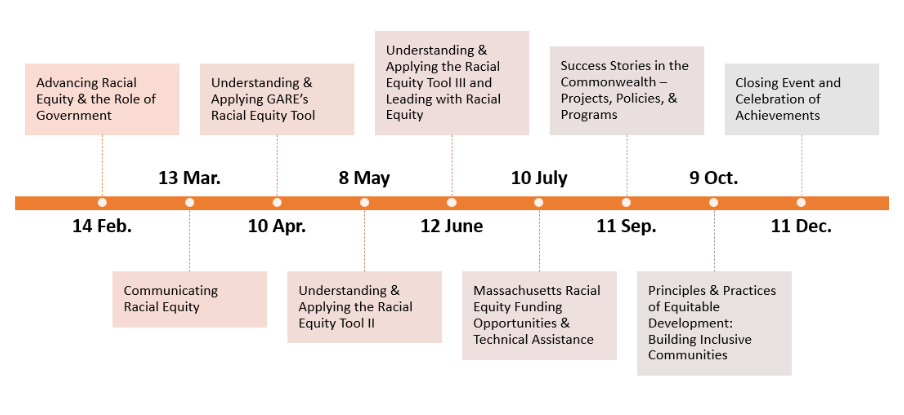
February 14, 2024: Advancing Racial Equity and the Role of Government. March 13, 2024: Communicating Racial Equity. April 10, 2024: Understanding and Applying GARE's Racial Equity Tool. May 8, 2024: Understanding and Applying the Racial Equity Tool II June 12, 2024: Applying the Racial Equity Tool III & Leading with Racial Equity. July 10, 2024: Massachusetts Racial Equity Funding Opportunities and Technical Assistance. September 11, 2024: Success Stories in the Commonwealth - Projects, Policies, and Programs. October 9, 2024: Principles and Practices of Equitable Development in Building Inclusive Communities. December 11, 2024: Closing Event and Celebration of Achievements.

Timeline Image Description: February 14, 2024: Advancing Racial Equity and the Role of Government. March 13, 2024: Communicating Racial Equity. April 10, 2024: Understanding and Applying GARE’s Racial Equity Tool. May 8, 2024: Understanding and Applying the Racial Equity Tool II June 12, 2024: Applying the Racial Equity Tool III & Leading with Racial Equity. July 10, 2024: Massachusetts Racial Equity Funding Opportunities and Technical Assistance. September 11, 2024: Success Stories in the Commonwealth – Projects, Policies, and Programs. October 9, 2024: Principles and Practices of Equitable Development in Building Inclusive Communities. December 11, 2024: Closing Event and Celebration of Achievements. 

Session Details

Post-Session Summaries

February 14, 2024

MAPC kicked off the Racial Equity Advancement & Collaborative Hub (REACH) program on February 14 at the Federal Reserve Bank of Boston (FRBB) with a blend of foundational training, collaborative discussions, and a special focus on the historical context of racial inequities.
The day began with a warm welcome and introductions from FRBB and MAPC leadership. Participants met with the team from the Government Alliance on Race and Equity (GARE), who introduced their framework and provided a historical perspective on the role of government in perpetuating racial disparities.
Jennifer Raitt, Executive Director of the Northern Middlesex Council of Government, discussed “Moving from Understanding the Legacy of Planning and Race to Taking Municipal Action,” where she highlighted the historical intersection of urban planning and racial segregation.
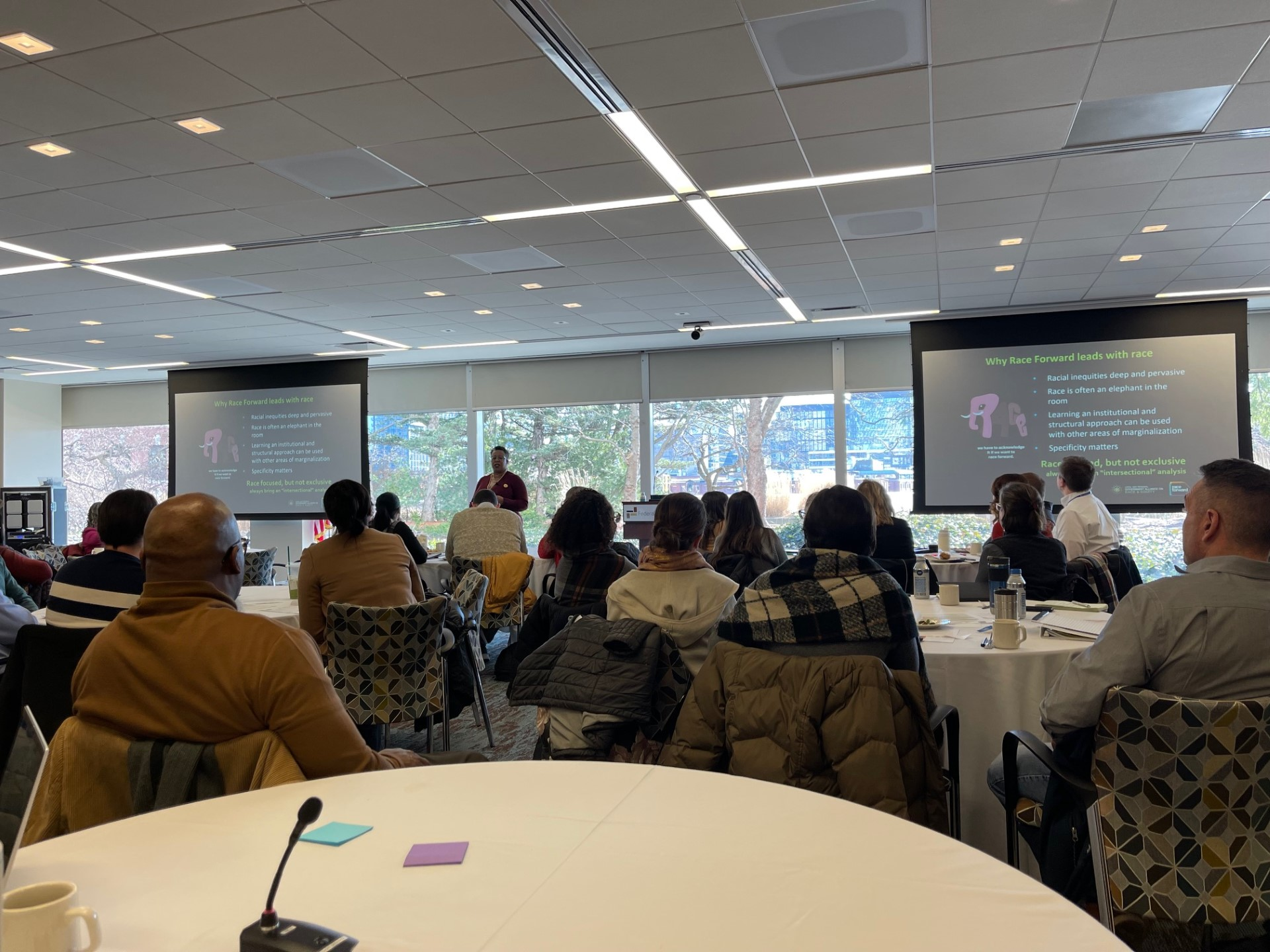
A room with people sitting in chairs at tables, facing the front of the room where someone is speaking behind a podium.

REACH February 14, 2024 session
Photo Credit: Raúl González, MAPC

March 13, 2024

Elevating Racial Equity Conversations: Insights from Our Recent Training Session 

This training session, led by the Government Alliance on Race and Equity (GARE), focused on enhancing our communication skills around racial equity. Key discussions included the deeper meaning and actions behind Land Acknowledgements, introducing the transformative Affirm, Counter, Transform (ACT) Principle for impactful racial equity conversations, and sharing municipal challenges and successes in integrating racial equity principles. 

Participants also had the chance to share their own experiences and challenges related to integrating racial equity into their municipal communications strategies. This exchange of stories and strategies underscored the value of a community of practice. 

March 13, 2024 REACH session. Three individuals stand at the front of the room holding a banner and to their left is a powerpoint presentation on a large screen.

REACH March 13, 2024 session
Photo Credit: Raúl González, MAPC

April 10, 2024

Utilizing the Racial Equity Tool I: Key Takeaways from This Training Session 

The REACH teams participated in a workshop led by expert trainers from the Government Alliance on Race and Equity (GARE) that provided a critical tool for participants to hone their narrative-building capabilities that emphasize the importance of racial equity in our municipalities. This session focused on the initial steps of utilizing the Racial Equity Toolkit (RET), an essential framework for applying a racial equity lens to municipal decision-making processes. 

During this session participants engaged deeply with the first three steps of the RET, which are important in setting the groundwork for creating equitable municipal policies and practices. 

Key Aspects Covered in the Session: 

  • Desired Results: We discussed how to clearly define community-level conditions of well-being that our policies aim to achieve. This step is crucial as it sets the direction for the specific outcomes we hope to realize through our efforts. 
  • Community Indicators: Participants learned how to identify measurable indicators that help quantify the achievement of these desired results. Emphasis was placed on choosing indicators that can be disaggregated by race or proxies for race, such as geographical data, ensuring that the impacts of policies are understood across different racial groups. 
  • Data Collection and Analysis: We explored effective methods for gathering and analyzing data to uncover existing racial inequities and understand the root causes behind them. This step is foundational in ensuring that our actions are informed by solid evidence and can effectively address the specific needs of communities of color. 

The training also highlighted the importance of setting clear goals and engaging in decision-making processes that maximize benefits and minimize burdens for people and communities of color. Additionally, we discussed mechanisms for successful implementation, evaluation, and accountability of impact, which are essential for the sustainability of racial equity efforts. 

A room full of people seated in chairs facing the front of the room where someone is speaking. On a projector screen behind the speaker is black text that says "Racial Equity Tool (RET)" on a neon green background.

REACH April 10, 2024 session
Photo Credit: Kimberlee Archie, GARE 

May 8, 2024

Utilizing the Racial Equity Tool II: Perspectives from This Session 

The REACH program held a significant training session on May 8th, aimed at enhancing our proficiency in discussing racial equity effectively. This workshop provided a platform for participants to sharpen their narrative-building skills, which are crucial in highlighting the importance of racial equity within our municipalities. 

During the session, we focused on Steps 4 to 6 of the Racial Equity Toolkit (RET), which is pivotal in identifying and addressing the root causes of racial inequities. Here’s a brief overview of what we covered: 

  • Root Cause Analysis: Participants engaged in identifying the underlying causes of observed racial disparities within their municipalities. This involved examining various levels of influence, from individual and institutional behaviors to structural barriers that perpetuate inequality. 
  • Strategies for Racial Equity: We discussed comprehensive strategies to advance racial equity and mitigate any potential unintended consequences of new policies or programs. Participants brainstormed actions that could be implemented to alleviate the root causes of racial disparities, ensuring that their interventions are both impactful and feasible. 
  • Organizational Outcomes: The session also helped clarify expected outcomes within participants’ organizations, focusing on the changes they aim to bring about through their equity-focused initiatives. 
  • Unintended Consequences: A significant part of the discussion revolved around anticipating and planning for unintended consequences of proposed changes. This ensures that strategies not only address current issues but also prevent new problems from arising. 
  • Performance Measures: We explored effective measures to assess the success of implemented strategies. These performance indicators are designed to communicate the effectiveness of actions clearly and compellingly, ensuring they resonate with a broad audience and provide meaningful data to guide future efforts. 

We discussed how to develop implementation plans that are realistic, well-resourced, and supported by both internal stakeholders and the broader community. This includes setting up accountability mechanisms to track progress and adjust strategies as needed. 

As we reflect on the valuable insights gained from this training, we are reminded of the critical role that effective communication and strategic planning play in advancing racial equity. The skills and knowledge imparted during the session are not just tools for immediate application but are essential for catalyzing long-term change within our municipalities. 

We are inspired by the commitment shown by all participants and look forward to seeing the positive impacts of their continued efforts. Together, we are moving closer to realizing our shared goal of a more just and equitable society. 

A room of people standing around tables and chairs, facing someone speaking into a microphone.

REACH May 8, 2024 session 
Photo Credit: Raúl González, MAPC 

June 12, 2024

Applying the Racial Equity Tool III & Leading with Racial Equity 

This session built upon prior discussions of the Racial Equity Toolkit (RET), emphasizing leadership roles in fostering racial equity within municipalities. Participants engaged in case studies, with municipal leaders showcasing equity strategies and their implementation processes. The session aimed to sharpen leadership competencies such as racial self-awareness and building supportive organizational cultures for racial equity. Participants also reviewed key leadership competencies for driving systemic change, including accountability mechanisms and sustaining a racial equity lens in decision-making. 

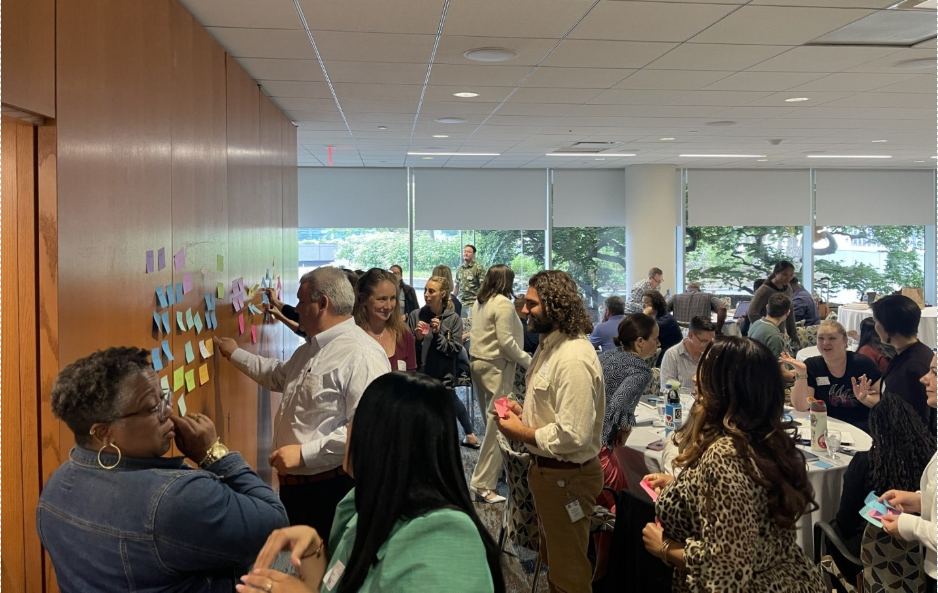
REACH June 2024 session. A room full of people standing and interacting with each other.

REACH June 12, 2024 session 
Photo Credit: Raúl González, MAPC 

July 10, 2024

Massachusetts Racial Equity Funding Opportunities and Technical Assistance 

In July, the session highlighted key funding sources available for racial equity initiatives across municipalities, ranging from state grants to philanthropic opportunities. Attendees explored strategies for securing and sustaining funding for equity-driven projects, such as staffing, community engagement, and data analysis. Through panel discussions, municipalities shared successful models of restructuring funding processes to integrate racial equity principles. A hands-on workshop provided steps for securing funding to support long-term equity initiatives. 

REACH July 2024 session. A room full of people sitting in chairs at tables facing the front of the room where three panelists sit behind a long table speaking.

REACH July 10, 2024 session 
Photo Credit: Raúl González, MAPC 

September 11, 2024

Success Stories in the Commonwealth – Projects, Policies, and Programs 

The September session brought forward inspiring case studies of successful racial equity projects across Massachusetts. Presenters highlighted challenges and best practices for implementing policies aimed at reducing racial disparities. Attendees participated in interactive discussions, sharing their own experiences and examining how lessons learned could advance racial equity goals in their communities. Breakout sessions facilitated deeper dives into leadership engagement, community collaboration, and resource generation. 

REACH September 11, 2024 session 
No photos

October 9, 2024

Principles and Practices of Equitable Development in Building Inclusive Communities 

October’s session centered on equitable development, focusing on creating inclusive communities through urban planning and policy-making that prioritizes marginalized groups. The session provided actionable strategies for incorporating equity into municipal projects, such as affordable housing and transportation access. Discussions included how to operationalize racial equity by building leadership accountability, fostering cultural transformation, and using racial equity tools to guide development initiatives. 

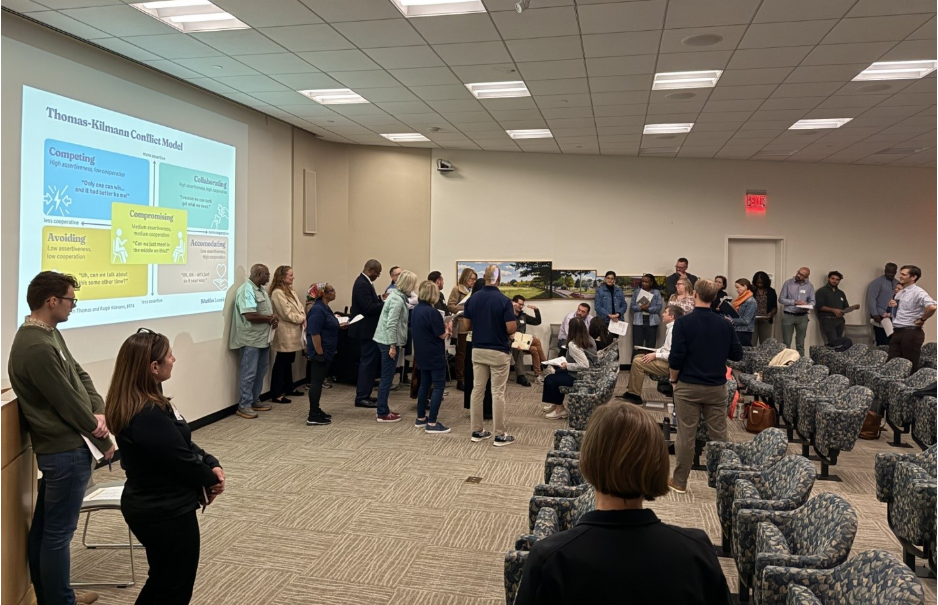
REACH October 2024 session. A room full of people standing in the back area of the room talking to each other. Some others are milling about towards the front of the room where there is a large screen with information projected on it.

REACH October 9, 2024 session 
Photo Credit: Raúl González, MAPC 

December 11, 2024

Reflecting, Celebrating, and Sustaining Racial Equity Work 

The final REACH session brought participants together to reflect on their journey, celebrate achievements, and plan for sustaining racial equity efforts in their communities. The session recapped key insights from previous workshops and highlighted success stories shared by municipalities. Participants engaged in group discussions and activities to identify next steps for applying the Racial Equity Toolkit (RET), fostering accountability, and embedding equity principles into their organizational cultures. A collaborative exercise helped teams outline strategies for maintaining momentum and addressing potential challenges in advancing racial equity beyond the program. 

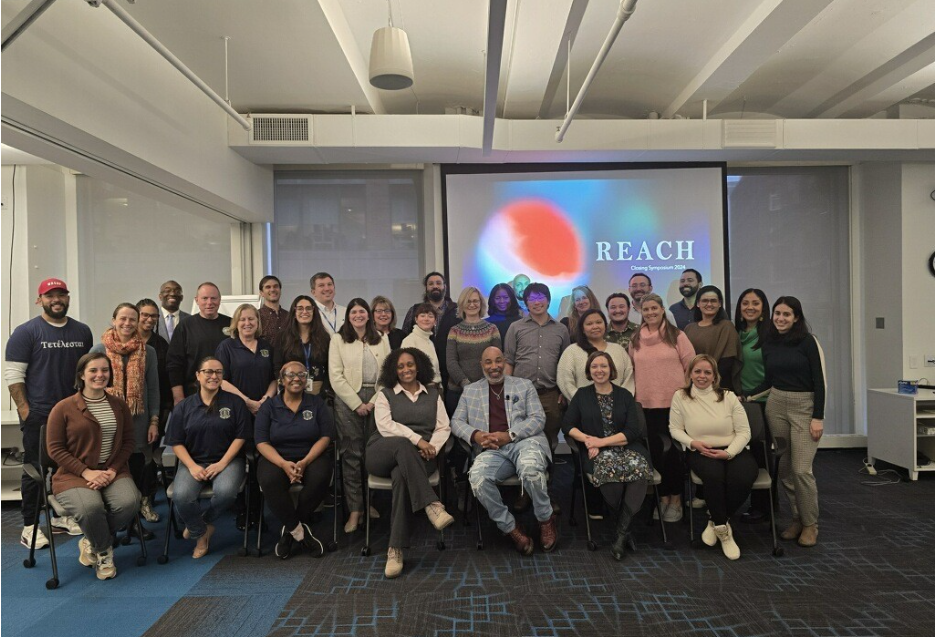
REACH December 2024 session. Many people siting and standing together for a group photo, facing the front of the room smiling. Behind them is a large screen with an abstract design on it, and the word, "REACH".

REACH December 11, 2024 session 
Photo Credit: GARE

Continue reading...

Everett Housing Production Plan

Everett Housing Production Plan

Everett HPP Style-02

CHANGE LANGUAGE:

Sign Up for Plan Updates

Enter your name and email address to receive updates about the plan and events.

Overview

The Everett Housing Production Plan (HPP) is a community and data-driven process to plan for the future of housing in Everett. The plan will provide information about the types of homes needed in Everett, how to support residents with their housing goals and challenges, and local policies for the City to consider. A special focus of this plan is to prevent displacement by ensuring Everett residents’ needs are met so they do not need to look elsewhere for housing. The City has hired the Metropolitan Area Planning Council (MAPC) to provide technical assistance to complete the HPP. Together, the City, MAPC, an Advisory Committee, and community partners will work to set the vision and direction of housing policy in Everett for the next five years.

The Everett HPP will meet all the requirements of a Housing Production Plan. Through this process, we will work to expand and diversify Everett’s housing stock while also increasing affordability for people at a range of incomes. The City will use this plan to raise awareness of housing need in the community, connect with and learn from historically marginalized populations, advance zoning amendments, and implement other strategies to meet housing need and demand. As strategies are implemented, it is expected that housing opportunity in Everett will be both expanded, and the risk of displacement will be reduced. The plan will also guide the City as to where to direct resources to accomplish these goals.

Have questions? Want to get involved? Contact Gloria Huangpu, Community Engagement Planner II / Coordinator, Technical Assistance Program (TAP) at MAPC ([email protected]), Matthew S. Lattanzi, Esq. at [email protected], Everett Director of Planning and Development, and Cathy Draine, Everett Director of Diversity, Equity, and Inclusion at [email protected].

Everett Housing Production Plan

Although the public comment period has concluded, you can still access and read the draft plan documents below.

Past events

2024

CHA Community Health Advisory Council Meeting | CHA Malden Care Center May 2, 2024 


Canciones y Comida | Everett Parks Department
May 4, 2024


Advisory Committee meeting #5
April 23, 2024


 Advisory Committee meeting #4
March 11, 2024


Focus Group | Everett Haitian Community Center
February 24, 2024


Focus Group | St Therese
February 9, 2024


Advisory Committee meeting #3
January 29, 2024
 

2023

Bread of Life Tabling | Lafayette School
December 14, 2023


 Everett Youth Workers Network | Eliot Family Resource Center
December 13, 2023


Focus Group | La Comunidad Inc
December 2, 2023


Everett Tree Lighting | Everett Square
December 1, 2023


Advisory Committee meeting #2
November 13, 2023


Advisory Committee meeting #1
October 11, 2023


Everett Community Growers – Engagement Team Meeting | Virtual Meeting
October 10, 2023


Community Baby Shower | Eliot Family Resource Center
October 3, 2023


Community Baber Shower | Eliot Family Resource Center)
April 17, 2023

Advisory Committee

The planning process is being led by a committee of city and community representatives. More committee members may join later, but the current members are listed below:

  • Eleanor Gayhart, Program Manager, Eliot Family Resource Center
  • Jay Monty, Director of Transportation and Mobility, City of Everett
  • Alexander Naumann, Principal, Keverian School
  • Jim Tarr, Planning Board Member, City of Everett
  • Laura Rosi, Chief Executive Officer, Housing Families
  • Dipendra Subedi, Board Member, Greater Boston Nepali Community (GBNC)
  • Myrlande DesRosiers, Founder and Chief Executive Officer, Everett Haitian Community Center (EHCC)  
  • Nicole Fina, Civic Engagement and Advocacy Manager, Everett Community Growers 

Timeline

The planning process began in the summer of 2023 and is expected to take one year.

Summer 2023
Project starts up

Fall 2023
Comprehensive Housing Needs Assessment and Goal Setting

Winter 2023
Development Constraints and Opportunity Analysis, and Displacement Risk Assessment

Spring 2024
Strategy Development and Deliverable Production

Summer 2024
Plan finalized and submitted to the Massachusetts Executive Office of Housing and Livable Communities (EOHLC)

Resources

Housing Needs Assessment
Below you will find the initial findings of the project Housing Need and Demand Assessment.

Continue reading...

Green Stormwater Infrastructure Siting Tool 


Green Stormwater Infrastructure

Siting Tool 

A GIF of the Green Stormwater Infrastructure Siting Tool
Green Stormwater Infrastructure Siting Tool 

The Green Stormwater Infrastructure Siting Tool is on an online, interactive spatial tool developed by MAPC to support Greater Boston municipalities in equity-centered siting of Green Stormwater Infrastructure. The online tool aims to help communities meet MS4 (municipal separate storm sewer system) requirements and reduce stormwater pollution while also considering the environmental, economic, and social benefits of green stormwater infrastructure and other climate resilience solutions.   

The tool enables users to select a set of unique criteria for prioritizing where to best site green infrastructure in their municipality to improve water quality, reduce stormwater flooding, and/or provide additional benefits to communities. Users can filter potential sites based on criteria related to the following categories: land use and ownership, land cover characteristics, equity considerations, proximity to the drainage network, and overlap with sensitive land.  Based on those criteria, the tool identifies potential sites for implementing Green Infrastructure. Users can add their own local data to better contextualize results. 

Accompanying the tool is a field survey that allows municipal staff to take the data exported from the tool to conduct in-depth, on-site analysis about siting a Green Infrastructure project.  The questions collect information about existing infrastructure and visible conditions of the site. 

The project was developed in close partnership with a working group of municipal staff from the towns of Winchester, Reading, Natick, Norwood, and Franklin, with advisory groups from local watershed organizations as well as the Stormwater Innovation Center in Rhode Island.  

Questions? Contact [email protected] 

Continue reading...