Top

Request for Proposal (RFP)

Request for Proposal (RFP)

Active Facilitation, Intervention, and Safety Trainings for The Metropolitan Area Planning Council

RFP Title: Active Facilitation, Intervention, and Safety Trainings

Description of Purpose of Procurement Need Summary: This Request for Proposal (RFP) is for the procurement of a vendor to assist the Metropolitan Area Planning Council (MAPC) in building staff learning and capacity to respond to and de-escalate racist and insensitive remarks in public meetings. We seek proposals from qualified training providers that meet the training needs described below.

Estimated Duration of Project: not to exceed 6 months

Estimated Value of Procurement: not to exceed $25,000

Commonwealth Eligible Entity Engaging a Vendor

Eligible Entity Name:                           Metropolitan Area Planning Council

Type of Eligible Entity:                         Political Subdivision per MGL c. 40B. §§24 – 29

Eligible Entity Mailing Address:          60 Temple Place, Boston, MA

Contact Name:                                     Ben Faust

E-Mail Address:                                    [email protected]

This Request for Proposal (RFP) does not commit the Metropolitan Area Planning Council to approve a Statement of Work, pay any costs incurred in the preparation of a bidder’s response to this RFP, or to engage for products or services. The issuers of this RFP reserve the right to accept or reject any and all proposals received as a result of this RFP and to contract for some, all, or none of the responding vendors as a result of this RFP. The issuers further reserve the right to negotiate with any or all vendors who respond or cancel this RFP, in part or in its entirety, if it is in the agency’s best interest to do so.

The Metropolitan Area Planning Council uses a standard Professional Services Agreement (included as Attachment A to this scope). The consultant is expected to enter into the Professional Services Agreement “as is” and without material alteration.

Procurement Step Due Date
RFP Posted   03/20/2026
Bidders’ Conference   04/09/2026
Bidder Questions Due  04/17/2026
MAPC Responses Submitted  04/22/2026
RFP Responses Due  04/30/2026
Interviews upon invitation with some, any, or none of the vendors  05/26/2026
Vendor selection/Notice of apparent successful bidder if awarded  06/05/2026
Contract Start Date  July 2026


Who we are:

Training Goals

Scope

Responding to this Request

Bidders’ Conference 

Evaluation Criteria

Continue reading...

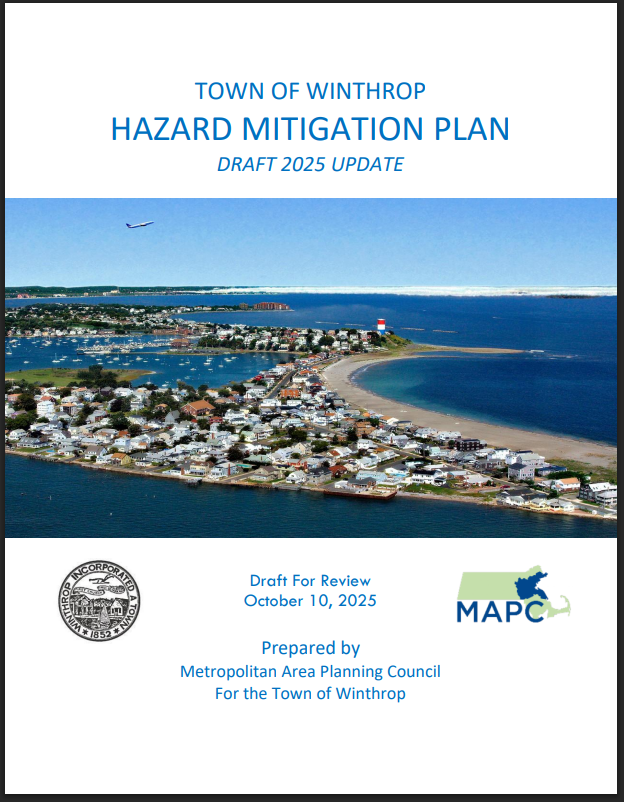
Winthrop Hazard Mitigation Plan

The Town of Winthrop has prepared a draft updated Hazard Mitigation Plan to help the Town reduce its vulnerability to natural hazards such as flooding, coastal damage, hurricanes, and winter storms. The plan also addresses the impacts of climate change and features recommended mitigation actions the Town can take to become more resilient to natural hazards.

The Town of Winthrop Hazard Mitigation Team was assisted by the Metropolitan Area Planning Council (MAPC) in preparing this draft plan. The project was funded by the Massachusetts Emergency Management Agency (MEMA) through a Federal Emergency Management Agency (FEMA) grant.

2025 Draft Plan – Comments Welcome

The draft Winthrop Hazard Mitigation Plan 2025 Updateis available for downloading below. 

The Town wants to hear from you! If you have any questions or would like to send a comment, please send an email to [email protected]g by November 10, 2025. 

Continue reading...

Lynnfield Hazard Mitigation Plan

Town of Lynnfield Hazard Mitigation Plan (HMP)

The Town of Lynnfield has prepared a draft updated Hazard Mitigation Plan to help the Town reduce its vulnerability to natural hazards such as flooding, hurricanes, and winter storms. The plan also addresses the impacts of climate change and features recommended mitigation actions the Town can take to become more resilient to natural hazards.

The Town Lynnfield Hazard Mitigation Team was assisted by the Metropolitan Area Planning Council (MAPC) in preparing this draft plan. The project was funded by the Massachusetts Emergency Management Agency (MEMA) through a Federal Emergency Management Agency (FEMA) grant.

2025 Draft Plan – Comments Welcome

The draft Lynnfield Hazard Mitigation Plan 2025 Updateis available for downloading below.     

The Town wants to hear from you! If you have any questions or would like to send a comment, please send an email to [email protected]
by October 24, 2025.

Continue reading...

Swampscott Hazard Mitigation Plan

Town of Swampscott Hazard Mitigation Plan (HMP)

The Town of Swampscott has prepared a draft updated Hazard Mitigation Plan to help the Town reduce its vulnerability to natural hazards such as flooding, hurricanes, and winter storms. The plan also addresses the impacts of climate change and features recommended mitigation actions the Town can take to become more resilient to natural hazards.

The Town of Swampscott Hazard Mitigation Team was assisted by the Metropolitan Area Planning Council (MAPC) in preparing this draft plan. The project was funded by the Massachusetts Emergency Management Agency (MEMA) through a Federal Emergency Management Agency (FEMA) grant.

2025 Draft Plan

The draft Swampscott Hazard Mitigation Plan 2025 Updateis available for downloading below.     

The Town wants to hear from you! If you have any questions or would like to send a comment, please send an email to [email protected] by October 17, 2025.  

Continue reading...

Ashland Hazard Mitigation Plan

The Town of Ashland has prepared an updated Hazard Mitigation Plan to help the Town reduce its vulnerability to natural hazards such as flooding, hurricanes, and winter storms. The plan also addresses the impacts of climate change and features recommended mitigation actions the Town can take to become more resilient to natural hazards.  

The Town of Ashland Hazard Mitigation Team was assisted by the Metropolitan Area Planning Council (MAPC) in preparing this draft plan. The project was funded by the Massachusetts Emergency Management Agency (MEMA) through a Federal Emergency Management Agency (FEMA) grant. 

2025 Draft Plan

The draft Ashland Hazard Mitigation Plan 2025 Update is available for downloading below.    

The Town wants to hear from you! If you have any questions or would like to send a comment, please send an email to [email protected]g by September 5, 2025. 

Continue reading...

Medfield Economic Development Vision

Medfield Economic Development Vision

Aerial view of Medfield historic town center and Main Street in summer, Medfield, Boston Metro West area, Massachusetts, USA.
Photo Credit: AdobeStock_300516790
Medfield Economic Development Vision

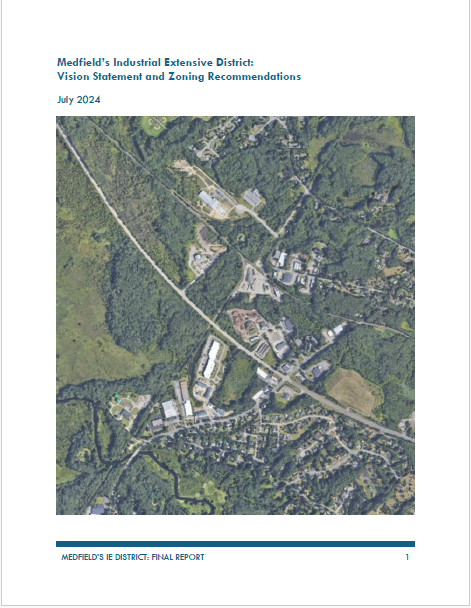
MAPC is proud to announce the completion of the Industrial Extensive District Vision in partnership with the Town of Medfield.

This project led to the creation of a shared vision to enhance economic development, expand the commercial tax base, and diversify business opportunities in an industrial and commercial district poised for economic growth. Through a year-long process of community visioning sessions, stakeholder interviews, and zoning analysis, MAPC and the Town gathered insights to develop recommendations for zoning changes that support a dynamic mix of uses, greater business variety, and improved district accessibility and aesthetics.

We extend our gratitude to the Town Staff, officials, community members, and the Massachusetts Executive Office of Housing and Livable Communities (EOHLC) for supporting this effort through the Community One Stop for Growth program.

Questions?

If you have questions or would like to work with MAPC on an economic development engagement, please contact:
Angela Brown, Chief of Economic Development
[email protected] 

Continue reading...

Millis Hazard Mitigation Plan

The Town of Millis has prepared an updated Hazard Mitigation Plan to help the Town reduce its vulnerability to natural hazards such as flooding, hurricanes, and winter storms. The plan also addresses the impacts of climate change and features recommended mitigation actions the Town can take to become more resilient to natural hazards.  

The Town of Millis Hazard Mitigation Team was assisted by the Metropolitan Area Planning Council (MAPC) in preparing this draft plan. The project was funded by the Massachusetts Emergency Management Agency (MEMA) through a Federal Emergency Management Agency (FEMA) grant. 

2024 Draft Plan

The draftMillis Hazard Mitigation Plan 2024 Updateis available for downloading below.   

The Town wants to hear from you! If you have any questions or would like to send a comment, please send an email to MillisResilience@mapc.orgby July 26, 2024.  

Continue reading...

Sharon Hazard Mitigation Plan

The Town of Sharon has prepared an updated Hazard Mitigation Plan to help the Town reduce its vulnerability to natural hazards such as flooding, hurricanes, and winter storms. The plan also addresses the impacts of climate change and features recommended mitigation actions the Town can take to become more resilient to natural hazards.  

The Town of Sharon Hazard Mitigation Team was assisted by the Metropolitan Area Planning Council (MAPC) in preparing this draft plan. The project was funded by the Massachusetts Emergency Management Agency (MEMA) through a Federal Emergency Management Agency (FEMA) grant. 

2025 Final Plan

The Sharon Hazard Mitigation Plan 2025 Update was approved by FEMA on June 13, 2025. You can download the approved plan below.

Continue reading...

Transportation Funding Opportunities

Purely decorative. Many arrows of all sizes in different shades of green scattered across a white background. A green version of the MAPC logo is in the top left.
Transportation Funding Opportunities

Transportation Funding Opportunities

The time has come for a comprehensive solution to fund the transportation system we have, and build the transportation system we need.

Transportation is crucial to every aspect of life in Massachusetts. It connects workers to jobs, businesses to markets, students to schools, and residents and visitors to the state’s cultural and recreational resources.

Decades of overborrowing and underinvestment have left the Commonwealth’s transportation system buried in debt and facing an overwhelming maintenance backlog. Despite the continued challenges, transportation in Massachusetts is crucial to the backbone of our thriving economy and quality of life.

On this page, you will find policy briefs and white papers written by MAPC’s Transportation team, focused on the issues at hand, and recommendations on how to fix them.

Questions? Please Contact:
Eric Bourassa, Transportation Director
[email protected]

Leah Robins, Government Affairs Director
[email protected]

Transportation Funding
Background

In 2019, MAPC released “Transportation Finance Recommendations” which identified 14 opportunities to increase funding for transportation infrastructure and public transit.

In the five years since the release of those recommendations, there have been changes in the transportation sector that necessitate a shift in some transportation finance recommendations.

MAPC’s 2024 Transportation Finance Recommendations

MAPC’s 2024 Transportation Policy Briefs

Image is a photo of a public transportation bus, and a person standing waiting to get on.

Climate and Public Health

The transportation sector remains the largest source of greenhouse gas emissions in Massachusetts.

Staggering levels of congestion and unreliability of public transit services have taken a toll on commuters in the Commonwealth. The intersection of climate ready infrastructure and public health must be components of a newly realized transportation system.  

Accessibility and Equity

COVID-19 and its impacts on the economy have shifted the way that many people move throughout the Commonwealth.

A reliable, affordable, and well-connected transportation network is particularly essential to advancing the region’s equity goals, improving the lives of lower-income populations by enhancing access to good jobs, schools, and services.  

Transportation Funding
Transportation Finance Recommendations
2024 Update 

Since the 2019 transportation finance recommendations were first released, we have seen several changes in the transportation sector that make the need for additional investments even more important. 

We can no longer delay making the hard choices to make new sustainable revenue sources for our transportation system. Our residents deserve a reliable, efficient, accessible, and safe transportation system. A transportation system that works for everyone improves our communities, makes our economy more competitive, and connects our residents to everything that Massachusetts has to offer. 

In this 2024 update, MAPC has identified (18) revenue raising recommendations for the current financial challenges facing our transportation system.

The Recommendations

  1. Allow cities and towns to tax private parking facilities to generate additional revenue for transportation infrastructure. 
  2. Municipalities and regions should be allowed to raise funds via ballot initiative for specific projects or lists of projects.  
  3. Cities and towns should continue to take advantage of existing value capture tools, and new tools should be developed to expand the utility of value capture in the Commonwealth.
  4. Regional mitigation funds should be established to support public transit, bike, and pedestrian improvements.
  5. Increase Transportation Network Company surcharges.
  6. Implement a fee structure for Delivery Network Company Rapid Deliveries.
  7.  Implement dynamic road pricing.
  8. Expand employer provided access to commuter transit benefits. 
  9. Drivers should be charged a per-mile usage fee and municipalities should receive a portion of that fee.  
  10. The gas tax should be raised consistently, and the sales tax should be applied to motor vehicle fuel sales. 
  11. Authorize automatic traffic enforcement.
  12. Close the airplane sales tax loophole and increase the tax on jet fuel and aviation fuel.
  13. Implement a fee for ecommerce. 
  14. Increase the Massachusetts sales tax to support transit throughout the Commonwealth.
  15. Increases in user fees should be subject to predictable and modest increases.
  16. All-electronic Tolling should be expanded to other limited access highways.
  17. Vehicle registration fees. 
  18. Increase MBTA assessments from cities and towns.  

Access the Full Recommendations Report for more information about each recommendation.

Read MAPC’s Press Release

Transportation Funding Solutions: Raising Awareness, Raising Revenue Event

On Thursday, November 21, 2024, MAPC hosted a virtual event to present the 2024 updated Transportation Finance Recommendations. Below you will find the recording of that event and the presentation slides.

Thank you to State Senator Brendan Crighton (Third Essex) and Massachusetts Taxpayers Foundation (MTF) President, Doug Howgate for joining us for this crucial conversation.


Presentation Slides

Transportation Funding

Policy Briefs

MAPC supports more revenue for our transportation system. We believe that transportation taxes and fees should be aligned with climate and equity goals. Pricing solutions should not disproportionately burden low-income populations, and investments should be geared toward mode shift away from single-occupancy vehicles. 

We need a combination of small, medium, and large revenue raising mechanisms to address decades of underfunding. And cities and towns should play a larger role in both influencing travel behavior and advancing transportation infrastructure projects, and therefore should be given more tools to price transportation-related externalities and raise revenue locally.  

The MAPC Transportation Team has researched three distinct transportation revenue sources that regions and states have implemented around the country. These revenue opportunities will not solve our transportation funding crisis, but we should explore them alongside other options to meet our transportation needs.

Female rider in a pink long sleeve shirt and black pants sits in the back of a ride share vehicle looking at her cell phone. The driver is wearing a dark purple top.

Increased Transportation Network Company Fee

To address the adverse effects of congestion and emissions, and to find new methods of revenue generation for continued investment in transportation infrastructure, many cities and states impose assessments on Transportation Network Companies (TNCs). A revised TNC assessment could generate an estimated $120 million to $140 million annually. This briefing provides an overview of the various TNC assessment methods currently employed by cities and states, alongside recommendations for the Commonwealth to consider.

A delivery person wearing a blue baseball cap, blue polo shirt, and black pants, is pushing a dolly with four stacked cardboard boxes on the dolly. Behind him is a white delivery van with the side door open showing stacks of cardboard boxes inside the van. blue writing on the door says, Delivery Services".

Retail Delivery Fee

To mitigate the adverse effects of roadway wear and tear, congestion, and emissions from retail deliveries, and to find new sources of revenue generation for continued investment in transportation infrastructure, Massachusetts should consider implementing a retail delivery fee. This fee would be added to the cost of goods delivered by motor vehicle to a customers’ homes or businesses. We estimate that a retail delivery fee in Massachusetts could generate between $104 million and $192 million in revenue annually, supporting both municipal and statewide transportation needs. This briefing provides an overview of retail delivery fees currently in place or being considered outside Massachusetts, along with recommendations for the Commonwealth to consider.

Black, gray, and white cars are parked in a parking lot.

Commercial Parking Tax

This memo provides information about how a range of U.S. cities tax parking, which Boston and other cities in Massachusetts currently do not do. We estimate that commercial parking taxes in Boston and across the Commonwealth could generate at least $29 million to $74 million in revenue and potentially much more – to fund municipal and statewide transportation needs, including public transit systems.  

TNC Photo: AdobeStock_500707644 | Delivery Photo: AdobeStock_337982191 | Parked Cars Photo: AdobeStock_364648197

MBTA Funding

The MBTA’s Fiscal Cliff and the Future of Public Transit

On July 9, 2024, MAPC hosted a webinar focused on the fiscal picture of the MBTA, the challenges and opportunities that underlie its needs, and ways to stay engaged on these issues in the coming months.

Panel of Speakers:

  • Brian KaneExecutive Director, The MBTA Advisory Board
  • Thomas McGeeMember, MBTA Board of Directors
  • Mary Skelton RobertsMBTA Board of Directors

Presentation from Brian Kane

Media Coverage:
The State of the MBTA: broke.
July 25, 2024 | Source: West Roxbury-Roslindale Bulletin

MBTA Climate

Going Green: How the MBTA is Taking Climate Action

On October 1, 2024, MAPC in partnership with the MBTA hosted a webinar focused on the climate resiliency work that both MAPC and the MBTA are doing.

This work includes how the MBTA is preparing the regional transit system to be resilient in the face of escalating climate change. Both MAPC and the MBTA are playing critical roles in helping local municipalities and the Commonwealth in meeting climate goals.

Panel of Speakers:

  • Lynsey Heffernan, Chief of Policy and Strategic Planning, MBTA
  • Kat Eshel, Senior Director of Climate Policy and Planning, MBTA
  • Caroline Bean, Director, Climate and Sustainability Planning, MBTA
  • Eric Bourassa, Transportation Director, MAPC
  • Julia Wallerce, Assistant Director of Transportation, MAPC – Moderator

MAPC Presentation Slides
MBTA Presentation Slides
Questions and Answers Summary from the Event

Continue reading...

Littleton Hazard Mitigation Plan

The Town of Littleton has prepared an updated Hazard Mitigation Plan to help the Town reduce its vulnerability to natural hazards such as flooding, hurricanes, and winter storms. The plan also addresses the impacts of climate change and features recommended mitigation actions the Town can take to become more resilient to natural hazards.  

The Town of Littleton Hazard Mitigation Team was assisted by the Metropolitan Area Planning Council (MAPC) in preparing this draft plan. The project was funded by the Massachusetts Emergency Management Agency (MEMA) through a Federal Emergency Management Agency (FEMA) grant. 

2024 Draft Plan

The draftLittleton Hazard Mitigation Plan 2024 Updateis available for downloading below.   

The Town wants to hear from you! If you have any questions or would like to send a comment, please send an email to LittletonResilience@mapc.org
by June 18, 2024.  

Continue reading...