Top

Topsfield Downtown Revitalization Plan
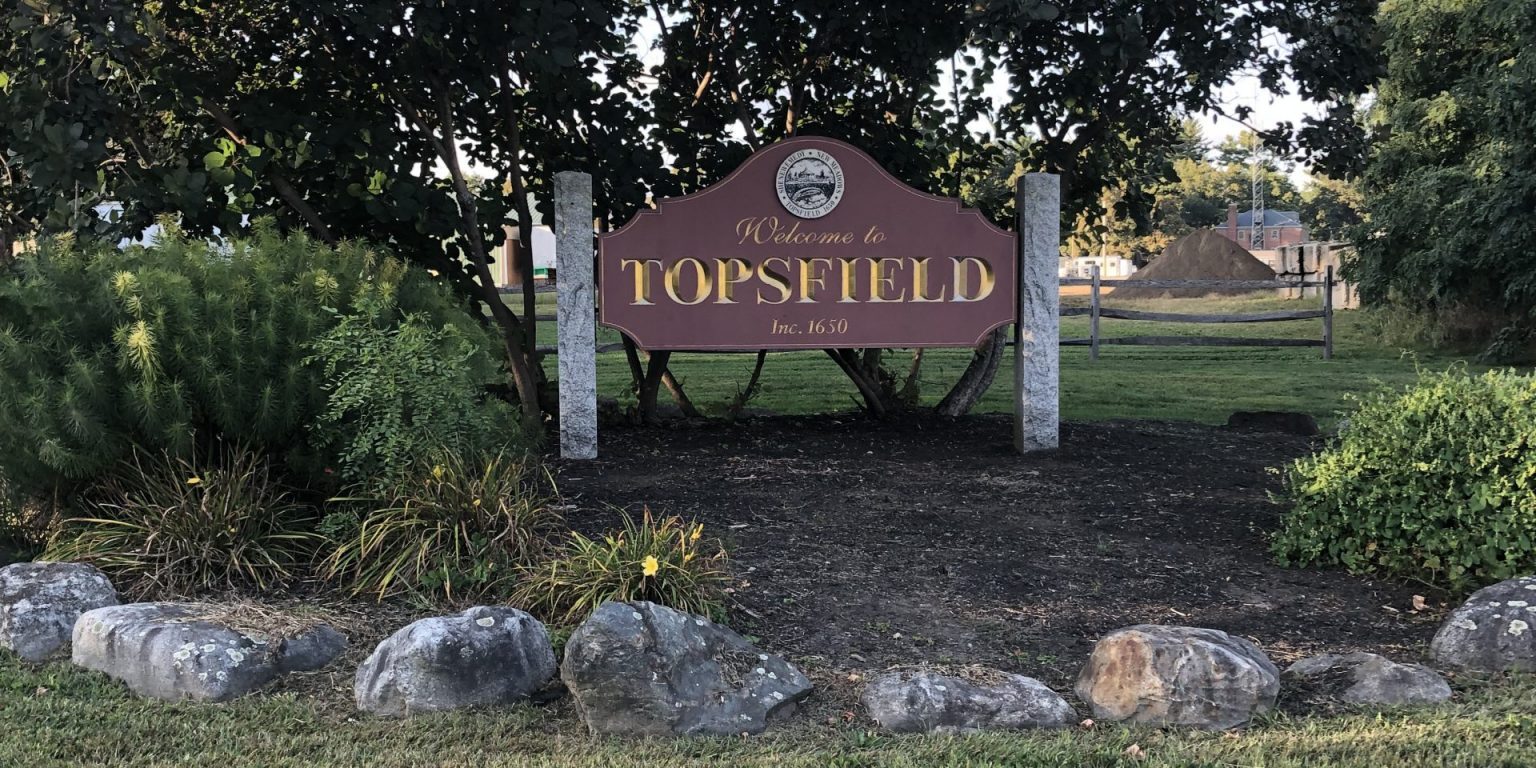
IMG_0424
Topsfield Downtown Revitalization Plan

December 2019

Topsfield Downtown Revitalization Plan

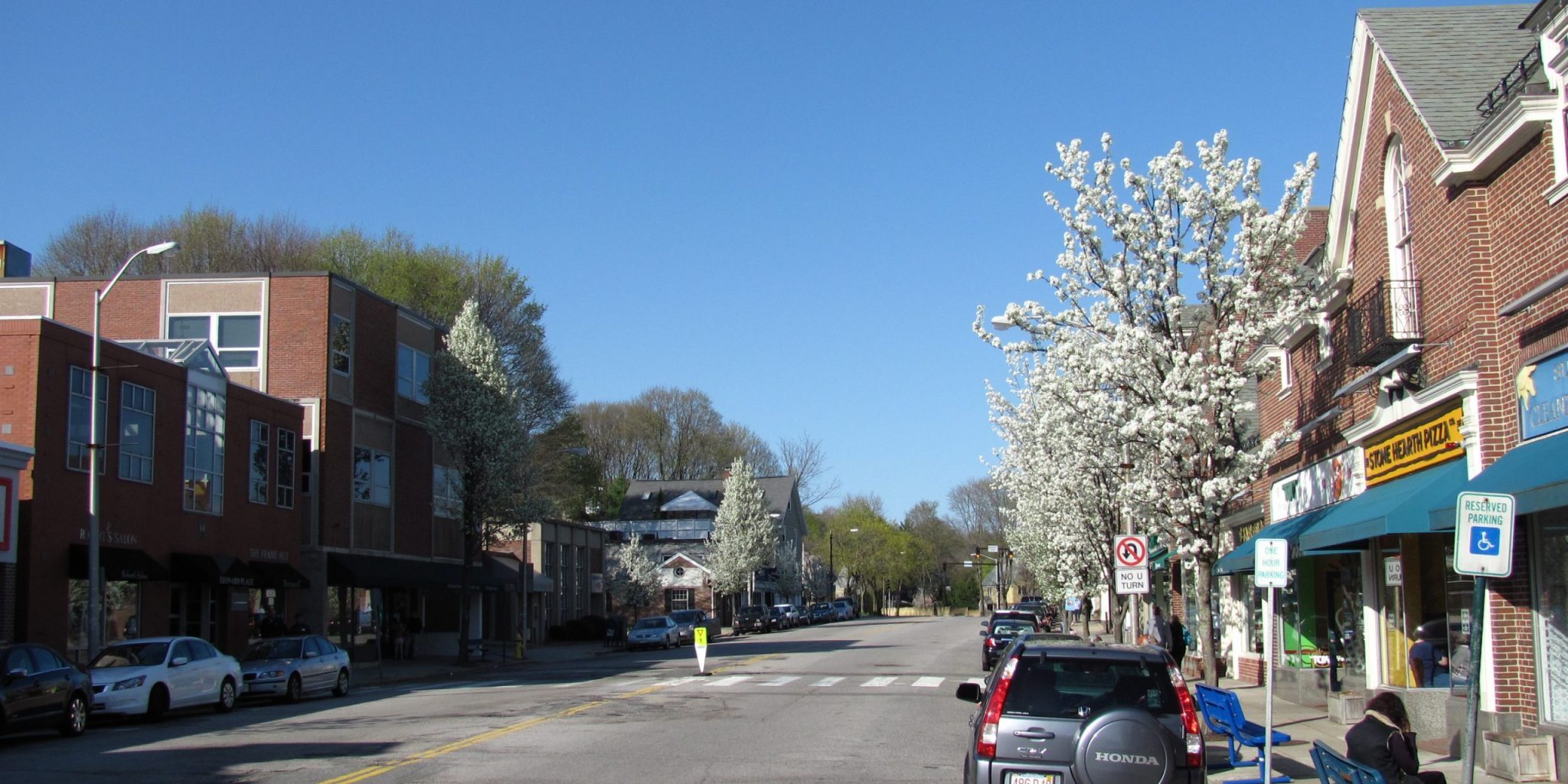
The Topsfield Downtown Revitalization Plan is a three- to five-year plan to revitalize downtown Topsfield into a welcoming downtown village where Topsfield residents and visitors of all ages can live, work, gather, and shop.

Goals:

  • Attract new businesses to the district to respond to the needs of Topsfield residents
  • Increase the customer base in the district to support downtown business by adding housing and marketing the village to residents and visitors
  • Enhance the look, feel, and safety of the district to maintain a vibrant and walkable downtown and create a sense of place where all can gather
  • Increase community-building events in the district to create an energetic downtown with a strong sense of community
  • Expand Town capabilities and resources to achieve these goals
Continue reading...

Lynn Union Hospital Re-Use Planning Study

IMG_0424
Lynn Union Hospital Re-Use Planning Study

December 2019

Topsfield Downtown Revitalization Plan

The Topsfield Downtown Revitalization Plan is a three- to five-year plan to revitalize downtown Topsfield into a welcoming downtown village where Topsfield residents and visitors of all ages can live, work, gather, and shop.

Goals:

  • Attract new businesses to the district to respond to the needs of Topsfield residents
  • Increase the customer base in the district to support downtown business by adding housing and marketing the village to residents and visitors
  • Enhance the look, feel, and safety of the district to maintain a vibrant and walkable downtown and create a sense of place where all can gather
  • Increase community-building events in the district to create an energetic downtown with a strong sense of community
  • Expand Town capabilities and resources to achieve these goals
Continue reading...

Red Line Life Science Study

Lynn Union Hospital
Red Line Life Science Study

December 2018

City of Lynn Union Hospital Re-Use Planning Study

On the current Union Hospital campus, North Shore Medical Center will build a medical village facility that will include urgent care, lab and radiology services, outpatient psychiatry and a primary care and specialty care practice. The medical village will occupy about 1/4 of the 20-acre campus. Partners HealthCare plans to sell the remainder of the property.

Anticipating the consolidation of North Shore Medical Center hospital facilities and property sale, the City of Lynn has commissioned this study to consider the future of the Union Hospital property. The City of Lynn Economic Development Industrial Corporation (EDIC) engaged the Metropolitan Area Planning Council (MAPC) to facilitate a transparent and community-based process to consider the potential for new future uses and investment at the Union Hospital property. MAPC prepared information and analyses of the property and presented and invited community feedback at two community meetings as part of this re-use planning study.

Community goals for the property include:

  • Encouraging development that is sensitive to the surrounding context of single family residential neighborhoods and the Lynn Woods conservation area,
  • Supporting new economic opportunities for the re-use of the Union Hospital property to encourage investment in the neighborhood,
  • Creating new housing opportunities while limiting the impacts on schools,
  • Creating new job opportunities to counteract job losses associated with the hospital consolidation,
  • Encouraging uses that would contribute to the City of Lynn’s tax base.

Key zoning recommendations include:

  • Create a new Medical Village (MVD) underlying zoning district to include the entirety of the Union Hospital site
  • The new underlying zoning district is recommended to include two subdistricts (MVD-1 and MVD-2) with complementary provisions that respect the distinct characteristics and opportunities of the Lynnfield Street and Woodland Avenue North parcels
  • The subdistrict at Lynnfield Street, MVD-1, is recommended to allow the following uses by right: assisted living facility, senior living row house, senior living multifamily (less than 100 units), public parks/open space, and general offices, clinic, and medical village. The MVD-1 is recommended to allow the following uses by Special Permit: senior living multifamily (100 units or more), and senior living mixed-use (commercial/retail/restaurant and residential).
  • The subdistrict at Woodland Avenue North, MVD-2, is recommended to allow the following uses by right: senior living one family detached house (standard lot – 10,000 square feet), senior living one family detached house (clustered lot), public parks/open space. The MVD-2 is recommended to allow the
    following uses by Special Permit: assisted living facility, senior living row house, and accessory uses to MVD-1, including parking.
  • Dimensional requirements are compatible with the existing uses and abutting residential areas
  • Some uses currently allowed or available by special permit in the R-1 would not be allowed in the new zone to avoid land use conflicts
  • Existing Parking Requirements are maintained
Continue reading...

Norwell Economic Growth Plan

Photo via Flickr user Voluntary Amputation
Norwell Economic Growth Plan

April 2019

Red Line Life Science Study

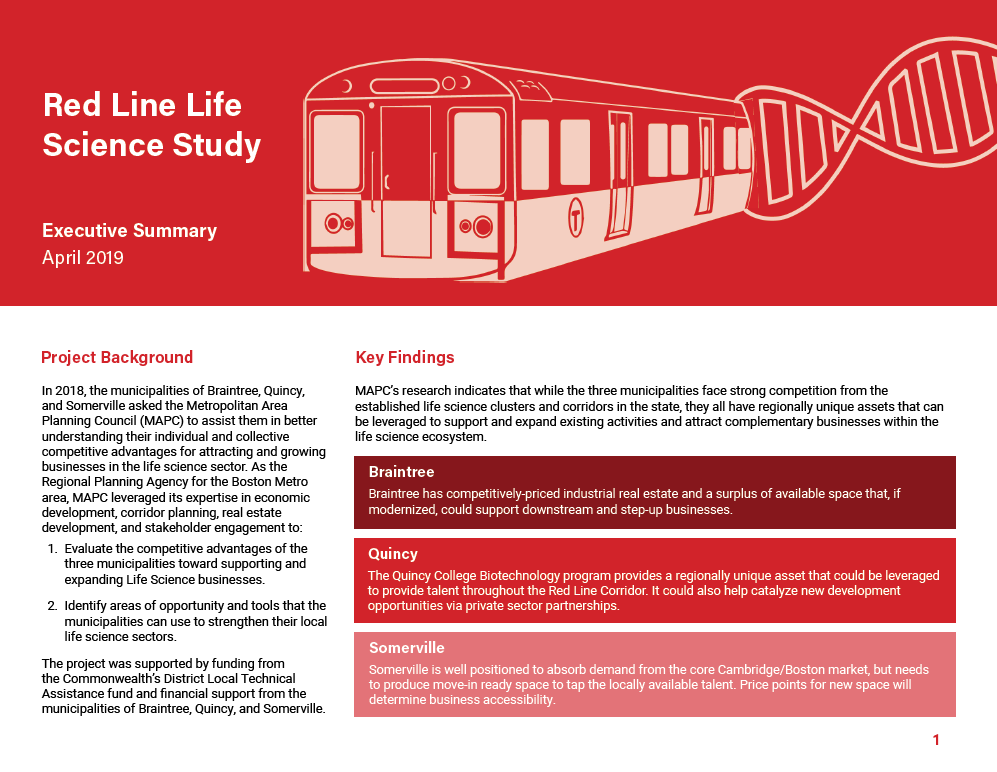
The Red Line Life Science Study examines the individual and collective advantages that Braintree, Quincy, and Somerville have for attracting and growing businesses in the life science sector.

MAPC evaluated the competitive advantages the three municipalities have to support and attract life science businesses and identified areas of opportunity and tools that the municipalities can use to strengthen their local life science sectors.

The project was supported by funding from the Commonwealth’s District Local Technical Assistance fund and financial support from the municipalities of Braintree, Quincy, and Somerville.

Key Findings

MAPC’s research indicates that while the three municipalities face strong competition from the established life science clusters and corridors in the state, they all have regionally unique assets that can be leveraged to support and expand existing activities and attract complementary businesses within the life science ecosystem.

  • Braintree has competitively-priced industrial real estate and a surplus of available space that, if modernized, could support downstream and step-up businesses
  • The Quincy College Biotechnology program provides a regionally unique asset that could be leveraged to provide talent throughout the Red Line Corridor. It could also help catalyze new development opportunities via private sector partnerships.
  • Somerville is well positioned to absorb demand from the core Cambridge/Boston market, but needs to produce move-in ready space to tap the locally available talent. Price points for new space will determine business accessibility.
Continue reading...

Holbrook Town Center Economic Development Study

Norwell
Holbrook Town Center Economic Development Study

2018

Norwell Economic Growth Plan

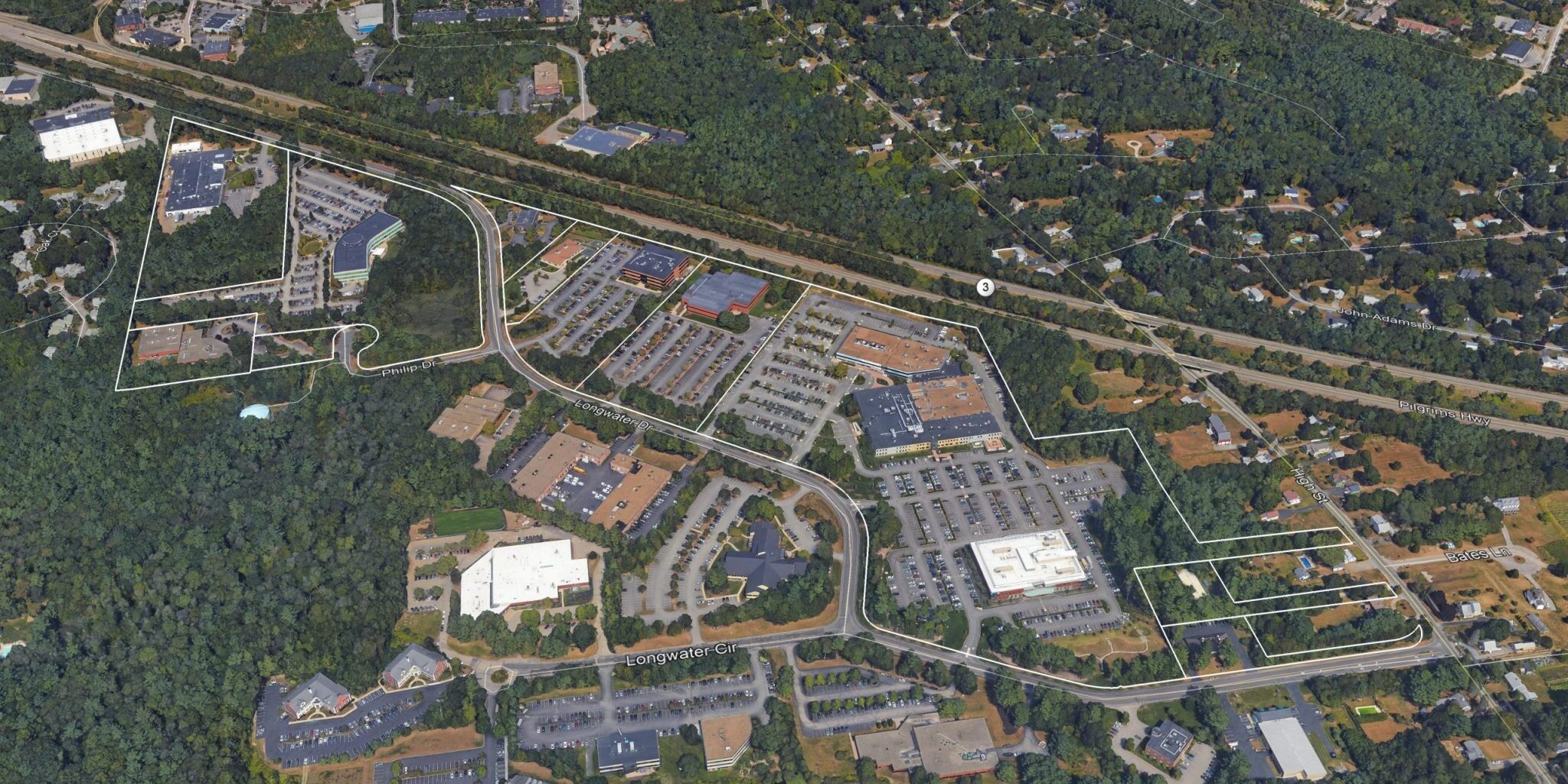
The Norwell Economic Growth plan explores opportunities to expand the town’s commercial/industrial tax base, accommodate new housing and mixed-use development, and address infrastructure related development constraints. This strategy builds upon prior planning efforts, including the 2005 Master Plan which identified the Assinippi and Accord industrial parks as strategic locations for encouraging growth. At the direction of town staff and officials, MAPC focused on these geographies as targeted growth areas.

The strategies focus largely on interventions in the Accord Park area due to both the strategic opportunity for growth as well as its physical remove from residential abutters.

Those strategies are:

  1. Adjust town zoning bylaws to allow for existing uses to expand and incentive the development of underutilized office buildings
  2. Designate strategic development sites as 43D
  3. Support a mixed-use housing/commercial district development at Queen Anne’s Plaza
Continue reading...

Belmont Business Strategy

Public domain
Belmont Business Strategy

June 2018

Holbrook Town Center Economic Development Study

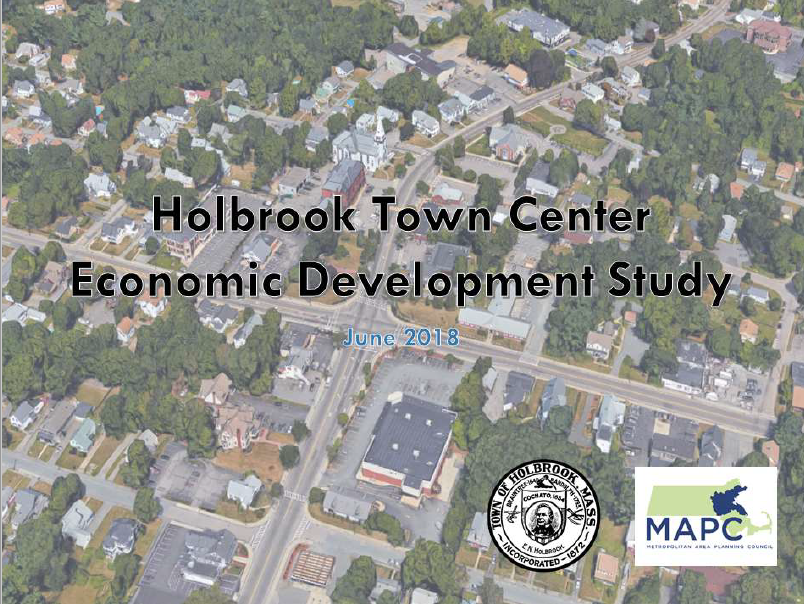
A town’s livability and distinctiveness is greatly influenced by its economic activities. For Holbrook, this consists of the Downtown, located on the intersection of Routes 37 and 139. Holbrook’s Town Center has witnessed a transformation within the past few decades. Downtown Holbrook is positioned to be the vibrant center of activity as the historic center of town. The goals and recommendations identified in this economic development study aim to activate a revitalized city center that provides a mix of living, working, and dining.

Study goals:

  • Create a single identity for the town center by physically and visually uniting the east and west sides.
  • Encourage mixed use vibrancy with culture, retail, office and housing.
  • Enhance connections between Town Hall, the retail area, the surrounding neighborhoods, and regional open space.
  • Develop the pedestrian character of Downtown by balancing transportation modes and improving connectivity.
  • Achieve a higher and better use of the land and create value for real estate.
Continue reading...

Bellingham Economic Development Study

Looking_north_on_Leonard_Street,_Belmont_Center_MA

MAPC

Promoting Smart Growth & Regional Planning

August 2019

Belmont Business Strategy

The Belmont Business Strategy is an economic development strategy that identifies demographic and economic trends within Belmont and the region so that the Town can set a strategic course to grow its economic base to improve fiscal stability while building on and respecting the existing strengths and character of the community.

Belmont’s Planning Principles

  • Belmont is committed to strengthening existing businesses and diversifying its business types.
    Planning will take into account a mix of uses, especially affordable housing for millennials, families and our aging population, live/work space, arts and culture destinations and retaining basic service businesses.
  • Public infrastructure to support development should be planned at the same time, especially public transit facilities, schools, complete streets and addition of open space.
  • Specific design and infrastructure need to activate the street, be designed for the future and environmentally friendly.

Next Steps and Priorities

  1. Form an economic development committee for the purpose of researching and implementing ideas to bring about economic growth within town and to further support the efforts of the commercial community.
  2. The Town should create a position to serve as an Economic Development Coordinator between the Belmont EDC, Town departments, and local businesses.
  3. Review zoning and permitting procedures as well as regulatory laws and identify mechanisms to streamline business regulation and expedite permitting to provide regionally competitive and responsive services in a way that does not compromise quality development.
  4. Further planning processes, incentives and marketing that could grow the town’s economy and promote the Town’s business friendliness.
  5. Create information guidelines to assist businesses in locating and expanding in Belmont.
  6. Create a visually attractive public realm, including wayfinding, beautification efforts, and local art.
  7. Further promote and expand upon special events and shopping experiences that encourage residents to shop local and develop support for the business community.
  8. Promote intermodal forms of transportation, especially to each business district.
  9. Improve the character of each of the commercial districts.
  10. Update the Town website to provide more detail about economic development.
  11. Establish a town regular newsletter focusing on recent, current, and future town activities, including economic development.
  12. Continue to implement the Town Business Survey.


Continue reading...

Equity Forward Uphams Corner

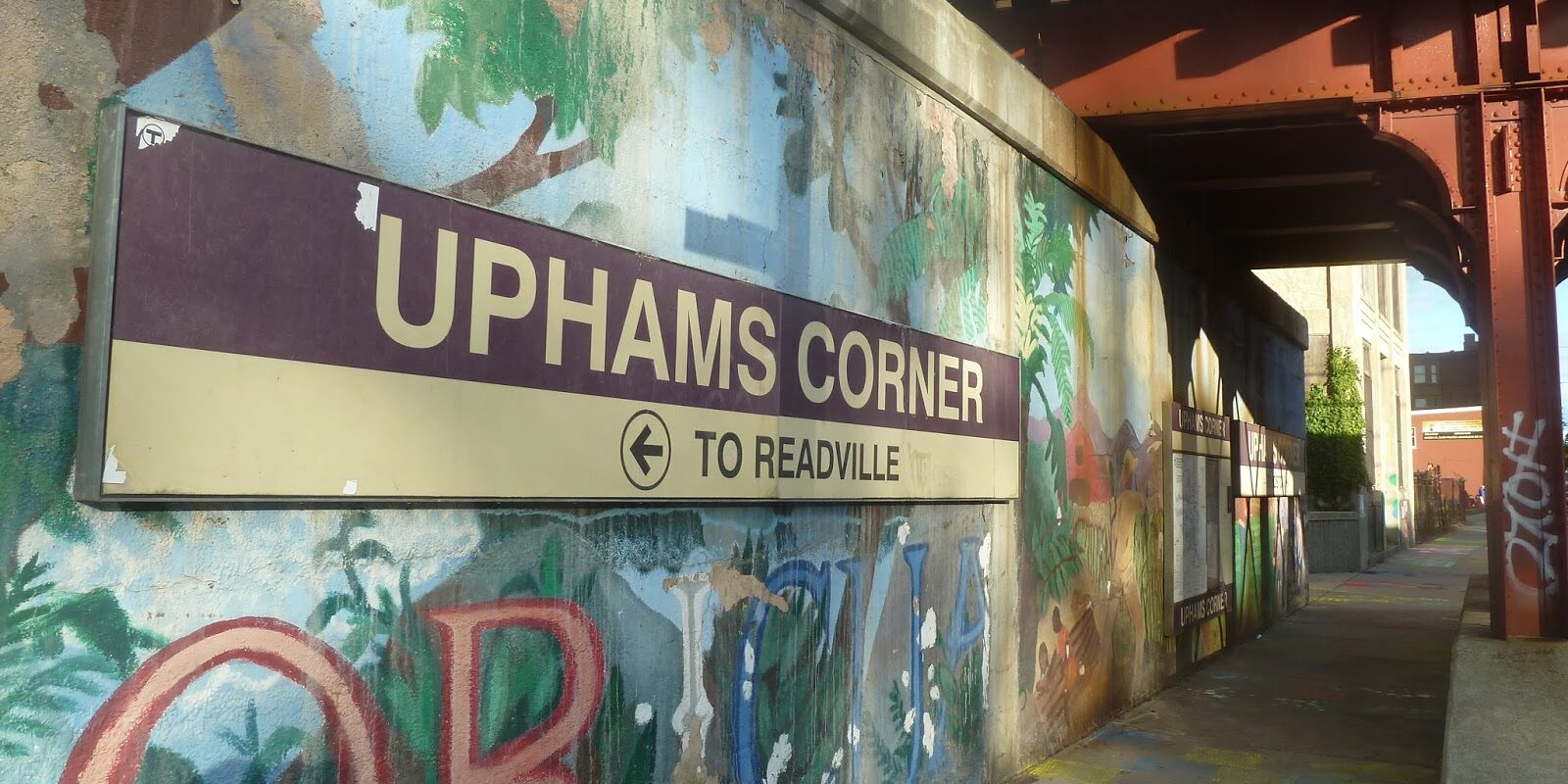
MBTA Uphams Corner Commuter Rail Sign

SEPTEMBER 2019

Equity Forward Uphams Corner

Equity Forward Uphams

After decades of disinvestment, Uphams Corner has been named an Arts & Innovation District by the City and faces rapid change as real estate investors continue the march of development out of Boston’s South End and into Dorchester. The sale of several City-owned parcels has further catalyzed an interest in the neighborhood, and residents and businesses are concerned about the possibility of displacement.

Proposals to protect tenants, stabilize rents, and support small businesses are making their way through government networks. Meanwhile, there is a need for capital deployment at the ground level to prevent the immediate impacts of displacement and to create a path to an equitable vision of Uphams Corner.

As a response to the need for this capital strategy, the Equitable Uphams Collaborative (EUC), a coalition of Boston-based economic development, health, and housing organizations, came together with the aim of developing a community investment strategy that prioritizes, streamlines, and accelerates investment in Uphams Corner with a focus on the residents most vulnerable to displacement and homelessness.

Equitable Uphams Collaborative Members

  • Dorchester Bay Economic Development Corporation (DBEDC)
  • BlueHub Capital
  • Corporation for Supportive Housing (CSH)
  • Boston Medical Center (BMC)
  • Community Economic Development Assistance Corporation (CEDAC)

The group engaged MAPC to do extensive research and analysis on how to achieve an equity-forward approach to economic development in Uphams Corner.

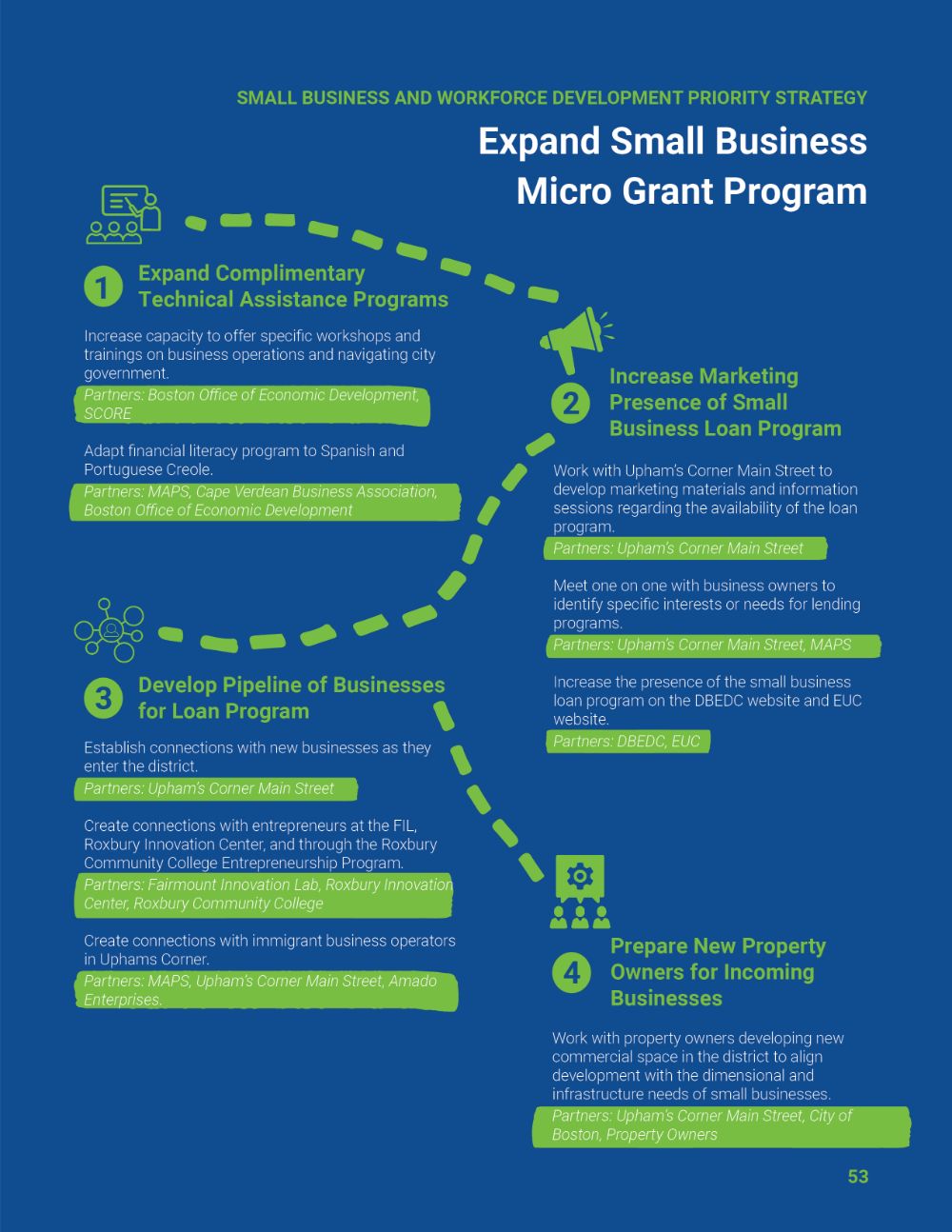
Facilitated by a planning grant from the JPMorgan Chase & Co. PRO Neighborhoods program, the group identified three specific topic areas to focus their efforts on: supportive housing, neighborhood affordability, and small business assistance and workforce development. MAPC identified strategies to advance equity in each of the three categories and worked with the Equitable Uphams Collaborative to identify three priority equitable economic development strategies.

Data Snapshots

Priority Strategies

Continue reading...

First Miles: Examining 18 Months of Dockless Bike share in Metro Boston

Continue reading...

Potential Impacts of Ride-Hailing on the Brockton Area Transit Authority (BAT)

Close-up shot of a man using a smartphone to order a ride

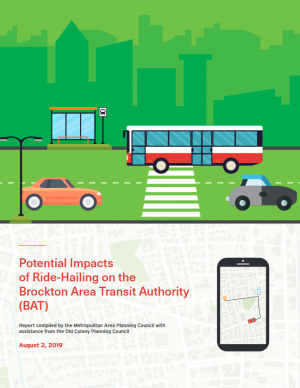
Potential Impacts of Ride-Hailing on the Brockton Area Transit Authority (BAT)

August 2019

The Brockton Area Transit Authority (BAT) commissioned this study to evaluate whether BAT’s declining ridership in recent years is due to the growth in ride-hailing services or to other factors.

Brockton’s recent decline in transit ridership reflects statewide and national trends that correlate with the explosive growth in ride-hailing. While studies have found that Uber and Lyft riders have switched some transit trips for ride-hailing, other studies suggest that other factors have had a greater impact.

This study explored whether a growth in ride-hailing is having an impact on BAT ridership, whether changes in services might address the decline in transit ridership, and what potential partnerships with ride-hailing providers BAT should consider to boost the overall performance and coverage of transit.

Continue reading...