Top

Equity of Wealth and Health

Government Affairs
Equity of Wealth
and Health

Equity of Wealth and Health

Equity of Wealth and Health

About

We imagine a future that enables wealth creation and intergenerational wealth, and a decline in the rate of chronic diseases, particularly among populations experiencing health inequities.

MetroCommon 2050 Policy Recommendations

  • Enable wealth creation and intergenerational wealth transfer.
  • Improve the quality of life and reverse the rising rate of chronic diseases, particularly among populations experiencing health inequities.
  • Expand and promote the resiliency of small businesses, particularly those owned by people of color, and encourage large employers to invest in local economies and advance equity.
  • Improve the accessibility and efficacy of of the Commonwealth’s workforce development infrastructure.
  • Ensure all residents are provided equal protection and support by law enforcement agencies and within the justice system.

Read the Full Brief

Equity of Wealth and Health

2025 Highlighted Legislative Priorities

An Act to Protect Massachusetts Public Health from PFAS

Bill Number (Sponsors):
H.2450 (Representative Hogan)
SD.1504 (Senator Cyr)


Summary of Bill:
Creates a fund to help with Per- and polyfluoroalkyl substances (PFAS) remediation in drinking water, groundwater, soil, sediment, surface water, wastewater, and other sources. The bill also sets a schedule to phase out products with intentionally added PFAS over a period of time.  

An Act Helping Overdosing Persons in Emergencies (HOPE Act)

Bill Number (Sponsors):
S.1410 (Senator Lovely)


Summary of Bill:
Requires first responders to carry naloxone and other opioid antagonists and to provide them to others. It also permits individuals to use fentanyl testing strips and other paraphernalia for public safety reasons without having to worry about being charged or prosecuted for possession of a controlled substance. 
Continue reading...

Climate Change, Resiliency

Government Affairs
Climate Change,
Resiliency

Climate Change, Resiliency

Climate Change, Resiliency

About

We imagine a Metro Boston that is prepared for the extremes of climate change. This includes a future where Environmental Justice (EJ) communities and other vulnerable populations can live safely.

MetroCommon 2050 Policy Recommendations

  • Prepare for and respond to the threats of climate change.
  • Accelerate the transition to a clean energy future.
  • Address regional water challenges.
  • Decarbonize the building and transportation sectors.

Read the Full Brief

Climate Change, Resiliency

2025 Highlighted Legislative Priorities

An Act Enhancing Homebuyer Awareness by Providing Notice to Persons Purchasing Property in a Flood Zone

Bill Number (Sponsors):
H.1345 (Representative Walsh)
S.753 (Senator Fernandes)


Brief Summary of Bill:
Requires brokers and landlords to disclose whether a property experiences flooding, whether it is in a FEMA Flood Zone, or if the owner is required to purchase flood insurance at the point of sale or when a lease is being signed. 

MAPC Fact Sheet

An Act Relative to Building Energy and Decarbonization

Bill Number (Sponsors):
H.3529 (Representative Meschino)
S.2294 (Senator Lewis)


Brief Summary of Bill:
Building on the large building emissions reporting requirement that is going into affect this year based on legislation passed in 2022, this bill requires DOER to establish building emissions standards for the largest buildings and empowers municipal leadership by creating a new tier of the Green Communities program. 

An Act Establishing a Zero Carbon Renovation Fund

Bill Number (Sponsors):

H.3577 (Representatives Vargas and Cruz)
S.2286 (Senator Gomez)


Brief Summary of Bill:
Allocates $300 million to building decarbonization through a fund administered by the Massachusetts Clean Energy Center. The bill would prioritize retrofits in public housing, low-to-moderate income housing, minority and women-owned businesses, and municipal buildings, including schools, to ensure that the most vulnerable populations are not left behind in our transition to clean energy.  

LISC Massachusetts Fact Sheet

An Act Relative to Ratepayer Protections

Bill Number (Sponsors):

H.3534 (Representative Moran, Attorney General Campbell, Mayor Wu)
S.2255 (Senator Crighton, Attorney General Campbell)


Brief Summary of Bill:
The bill bars competitive electricity suppliers from contracting with residents after 2025. It would not impact existing contracts, municipal aggregation, or a company’s ability to contract with government or private sector entities.  

Continue reading...

Dynamic and Representative Government

Government Affairs
Dynamic and Representative

Government

Dynamic and Representative Government

Dynamic and Representative Government

About

We imagine a future where all governments are forward-looking, collaborative, able to adapt to changing circumstances, and inclusive.

MetroCommon 2050 Policy Recommendations

  • Make government more participatory and inclusive.
  • Improve regional coordination and partnerships for infrastructure and services.
  • Expand and improve the way we finance local and regional government.
  • Improve local government capacity and service delivery.

Read the Full Brief

Dynamic and Representative Government

2025 Highlighted Legislative Priorities

An Act to Modernize Municipal Meetings, Town Meetings, and Local Elections

Bill Number (Sponsors):
H.3342 (Representative Gregoire)
S.2197 (Senator Oliveira)


Brief Summary of Bill:
The ability for towns to meet in a hybrid setting expires on March 31, 2025.  These temporary provisions were first implemented in March 2020 and subsequently extended several times by the Legislature. Without action all selectboard, planning board, cemetery commission meetings, and more will need to be held in person. This will reduce participation and potentially increase costs for municipalities. 


An Act Relative to Legal Advertisements in Online-only Newspapers

Bill Number (Sponsors):
H.2243 (Representative DeRosa)
S.1279 (Senator Velis)


Brief Summary of Bill:
This bill would update the current statute to allow legal advertisements to be posted exclusively online if local publications are not published in print. Currently legal notices must be posted in 3 different public locations: a newspaper’s print publication, on the newspaper’s website, and on a statewide website.      

An Act Relative to Language Access and Inclusion

Bill Number (Sponsors):
H.3384 (Representatives Madaro and González)
S.2125 (Senator DiDomenico)


Brief Summary of Bill:
This bill would require state agencies to provide equal access to services, programs, and activities serving limited English proficient (LEP) people in a reasonable timeframe. Massachusetts is a diverse state with over 40 languages spoken and is home to over 850,000 limited-English-proficiency residents over the age of 5.     

An Act Facilitating Site Plan Review

Bill Number (Sponsors):
H.2298 (Representative Kassner)


Brief Summary of Bill:
Currently, site plan review is not defined in statute. This bill would allow communities to outline requirements of a plan for development and required criteria.    

Continue reading...

Minuteman Advisory Group on Interlocal Coordination (MAGIC)

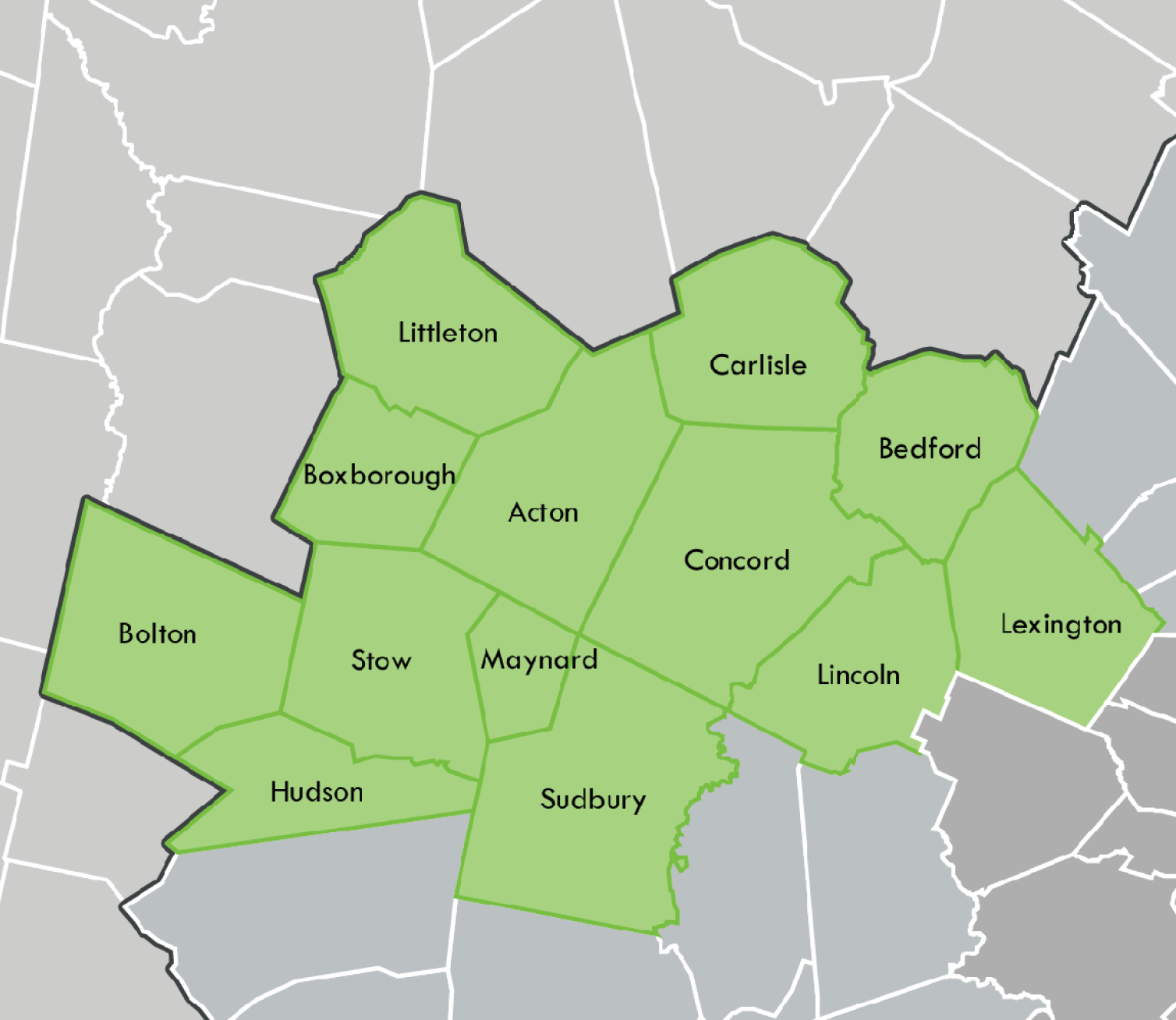
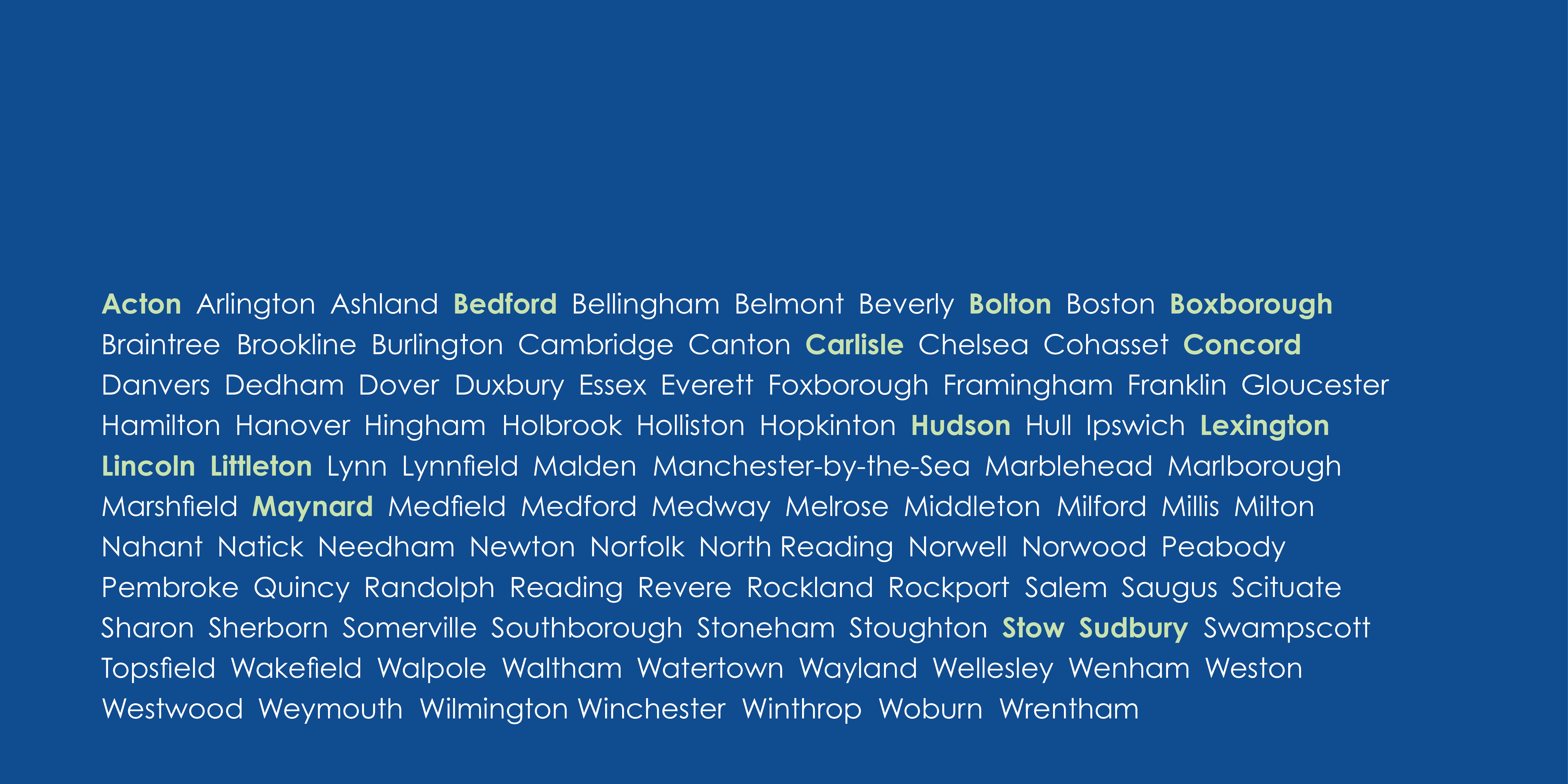
Names of the cities in towns in Greater Boston written in white over a blue background. The cities and towns in the Minuteman Advisory Group on Interlocal Coordination subregion are written in green.
Minuteman Advisory Group on Interlocal Coordination (MAGIC)

Minuteman Advisory Group on Interlocal Coordination (MAGIC)

The Minuteman Advisory Group on Interlocal Coordination (MAGIC) is a Greater Boston subregion of thirteen (13) communities: Acton, Bedford, Bolton, Boxborough, Carlisle, Concord, Hudson, Lexington, Lincoln, Littleton, Maynard, Stow, and Sudbury, working collaboratively on regional issues.

Established as a growth management committee in 1984, MAGIC has become a respected voice in regional decision-making. MAGIC consists of planning and select board representatives from all 13 communities.

The group focuses on transportation, the environment, energy, open space, affordable housing, economic and community development, legislative advocacy, and more.


Your Subregional Coordinators:
Sarai Zelada ([email protected])
Rodoshi Sinha ([email protected])

MAGIC Executive Board

Chair: Elected Chair coming soon

Vice-chair: Elected Vice-chair coming soon

MAGIC | About

Our Focus

MAGIC provides leadership on planning issues vital to the region’s future by:

  • Pursuing grants and in-depth studies on topics of local and regional interest.
  • Hosting annual meetings with legislators.
  • Organizing forums, workshops, and trainings on local and regional planning issues.
  • Providing a forum for member communities to exchange ideas and provide updates on developments, challenges, and solutions in their towns.

MAGIC | Meetings and Events

Meeting and Events Archive

Upcoming Meetings and Events


April 7, 2026 | 9:00 – 10:30 a.m.
MAGIC Subregional Meeting
Remote Via Zoom:
https://us06web.zoom.us/j/87261545373?pwd=7iTmngpr4m5yF3FsrTF4WFckpEBCXC.1#success

MAGIC Subregional Meeting Agenda


MAGIC | Communities

MAGIC | Projects

MAGIC Trails
This project is working with municipalities in the MAGIC region to identify trails connections, highlight wayfinding opportunities, and host an in-person trails event in 2025. This project will connect with ongoing trails work in the MetroWest and North Suburban Planning Council Regions.  

MAGIC Noise Ordinance Research
This project is a collaboration between MAPC’s arts and culture and public health teams who are engaging in a field scan of existing noise policies and noise ordinance best practices. The deliverable of this project will be a noise ordinance toolkit and recommendations for local and statewide noise policies.

MAGIC 3A/MBTA Communities Research
MAPC is providing ongoing support to the MAGIC subregion to assist with navigating the new MBTA Communities regulations. MAGIC communities indicated a strong interest in communications support as they seek to review the regulations and implement new zoning districts in their towns. 

MAGIC | Photo Gallery

Continue reading...

Accessory Dwelling Units (ADUs) in the Commonwealth

Accessory Dwelling Units (ADUs)

Now Allowed By Right in Massachusetts

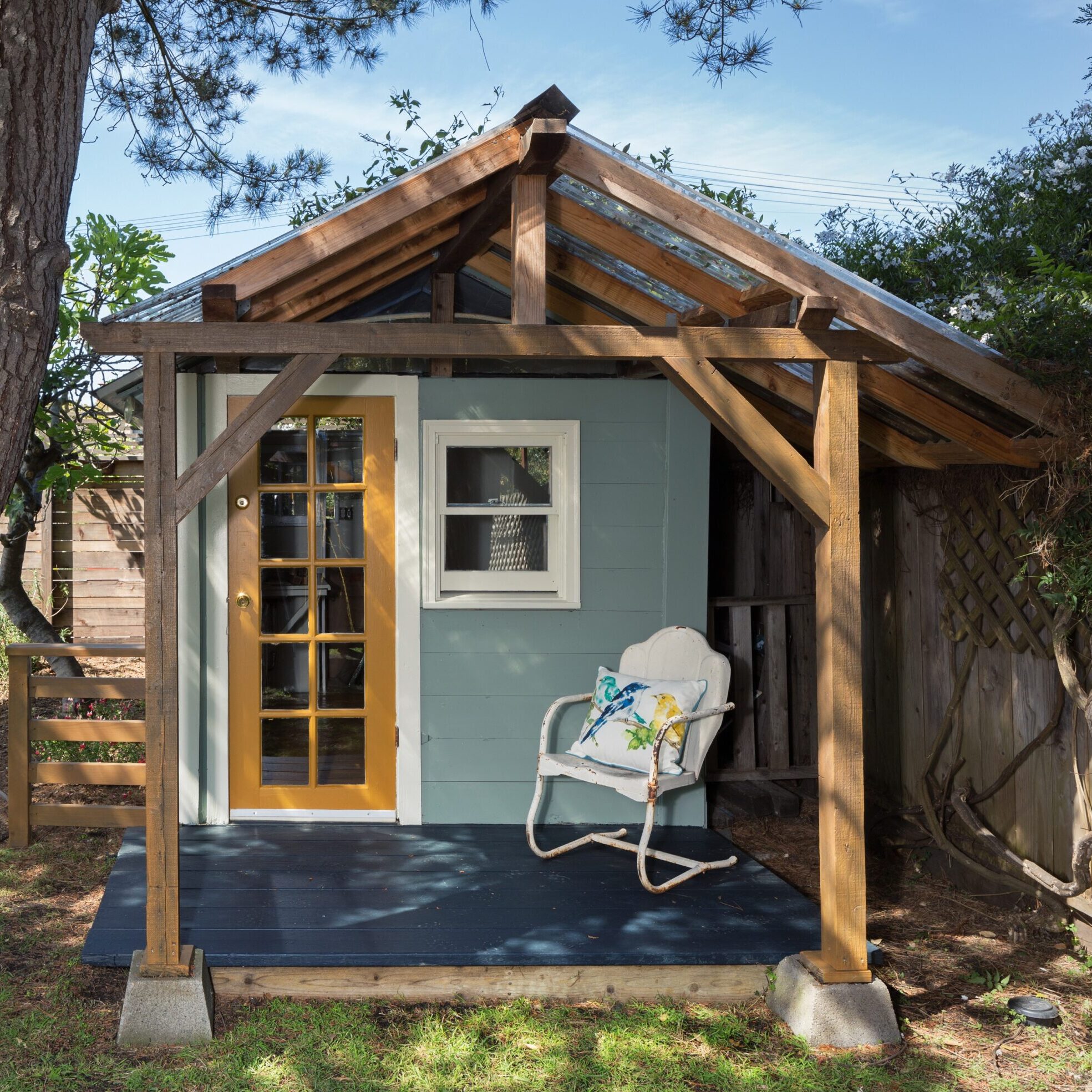
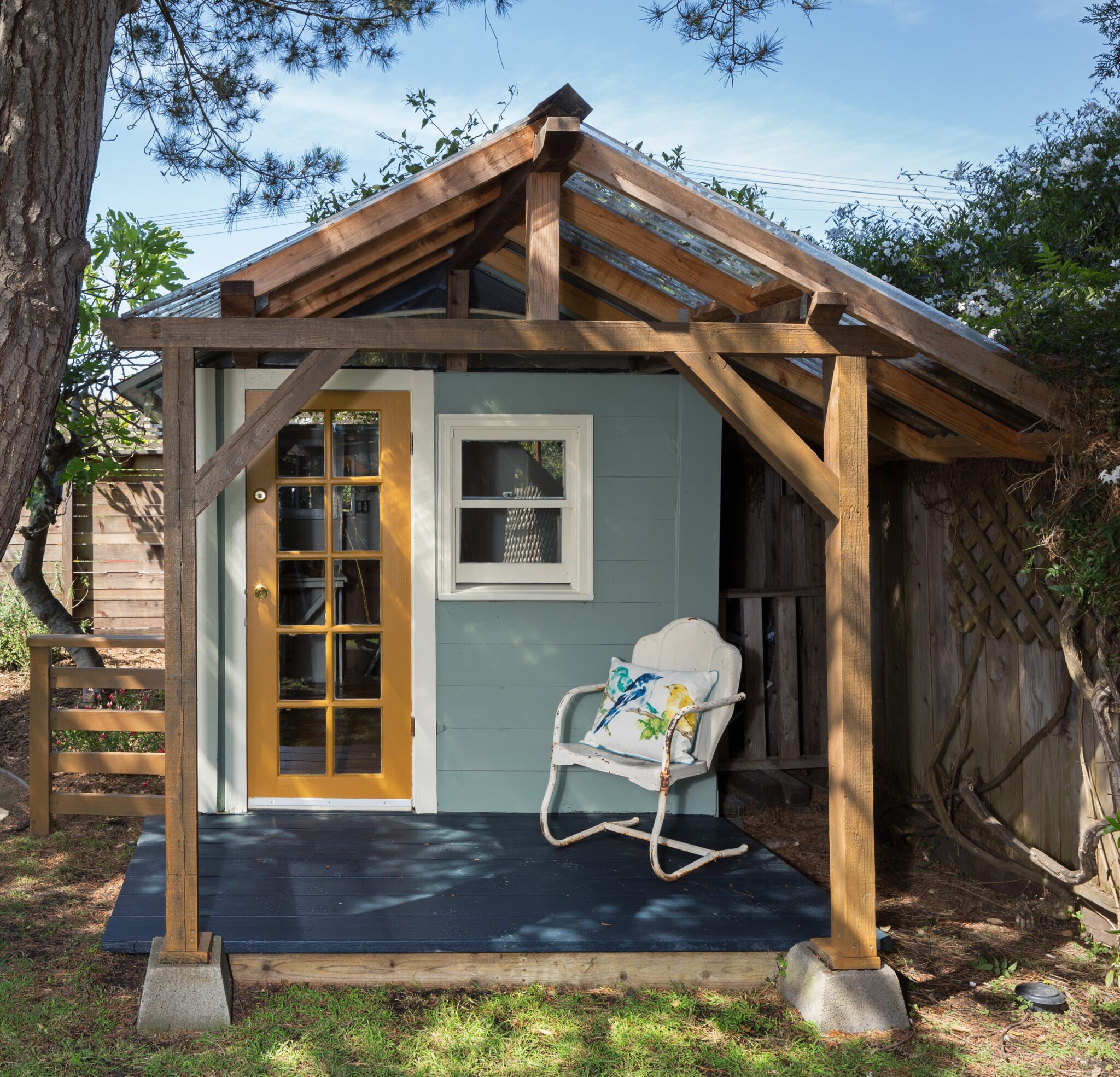
Small guest house in light blue with a white trimmed window, a wooden front door with mini windows, a wood awning, and a blue floored front porch with a white chair with a flowered pillow siting on the front porch.

Photo Credit: AdobeStock_145314013

Accessory Dwelling Units (ADUs) in the Commonwealth

ADUs are an important tool in addressing local housing needs – they provide smaller, more affordable housing choices.

In August 2024, Massachusetts passed the Affordable Homes Act, which, among other things, legalized Accessory Dwelling Units (ADUs) by right in the entire state.

This legislation went into effect on February 2, 2025. 

ADUs can support intergenerational living, residents with caregiver needs, young people, aging residents, and so many more. 

Questions? Please contact:
Gwendolyn Hellen-Sands
Regional Housing Planner II
[email protected]

Emma Battaglia 
Senior Housing and Land Use Planner 
[email protected]  


What Does the New State Law Say?

The law establishes limits on how ADUs can be regulated, including requiring by-right approval for the first ADU on a property; prohibiting occupancy requirements; and limiting parking requirements. The law does allow communities to regulate whether ADUs are used as short-term rentals (vacation homes).  

The ADU law went into effect on February 2, 2025 (read the final regulations), and zoning provisions that are inconsistent with MGL c. 40A Section 3 may now be unenforceable. An application for an ADU in a single-family zoning district that is consistent with MGL 40A definition and requirements should be accepted and acted on consistent with state statuteMunicipalities are encouraged to review their zoning and identify provisions that are not consistent with the law. (Source: EOHLC ADU FAQs: Accessory Dwelling Units (ADUs) – FAQs | Mass.gov)

What Does This Mean for Cities and Towns?

The newly passed state legislation requires that all cities and towns allow ADUs by-right in single-family residential zoning districts.

What are ADUs?

Accessory Dwelling Units (ADUs) are small homes inside or attached to a single-family home or in a detached structure, such as a garage or carriage house. Sometimes known as granny flats, in-law apartments, or secondary dwelling units, they include a kitchen, bath, usually at least one bedroom and a separate entrance.  

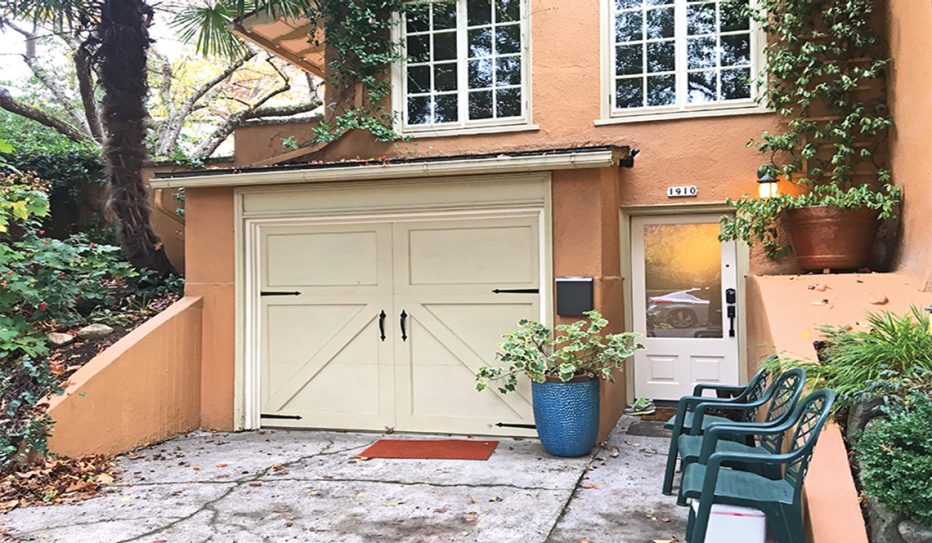
A lower level ADU. A peach stucco house with white window trim and doors. Bottom level of the home has vanilla colored garage doors that open from the front. There are three green patio chairs on the driveway, and plants and greenery surrounding the house.

Lower Level ADU

Photo Credit: Melissa Stanton, take from AARP’s website

A lower level ADU. A peach stucco house with white window trim and doors. Bottom level of the home has vanilla colored garage doors that open from the front. There are three green patio chairs on the driveway, and plants and greenery surrounding the house.
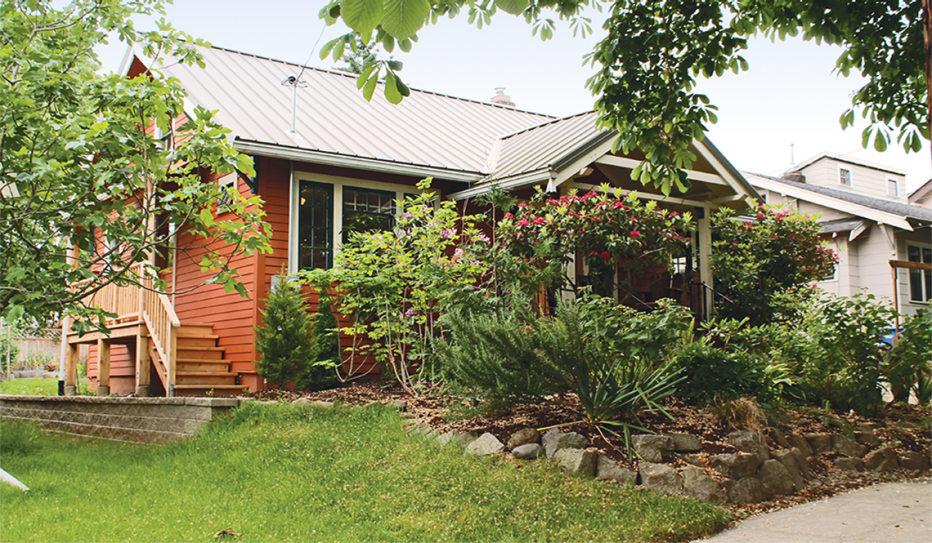
Internal ADU. An orange one level home. Stairs on the side of the home lead into the studio apartment. Stairs in the center of the home lead to the main entrance of the main home. There are rocks, plants, and grass surrounding the house.

Internal ADU

Photo Credit: Photo courtesy of Billy Ulmer, take from AARP’s website

Internal ADU. An orange one level home. Stairs on the side of the home lead into the studio apartment. Stairs in the center of the home lead to the main entrance of the main home. There are rocks, plants, and grass surrounding the house.
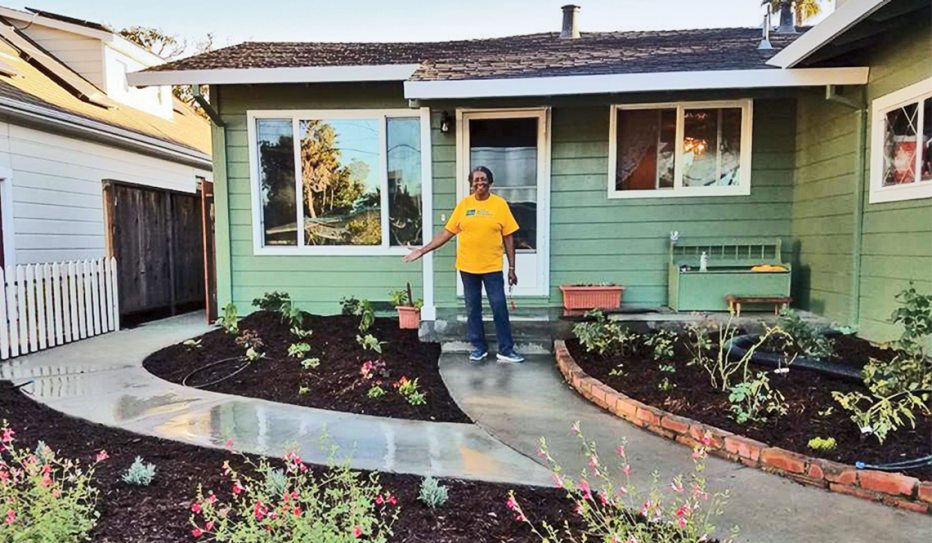
ADU House. A green one-level house with a sidewalk coming from the main entrance, and a sidewalk going to a side entrance of an ADU. There are plants in front of the house.

Attached ADU

Photo Credit: Michael Daniel, taken from AARP’s website

ADU House. A green one-level house with a sidewalk coming from the main entrance, and a sidewalk going to a side entrance of an ADU. There are plants in front of the house.
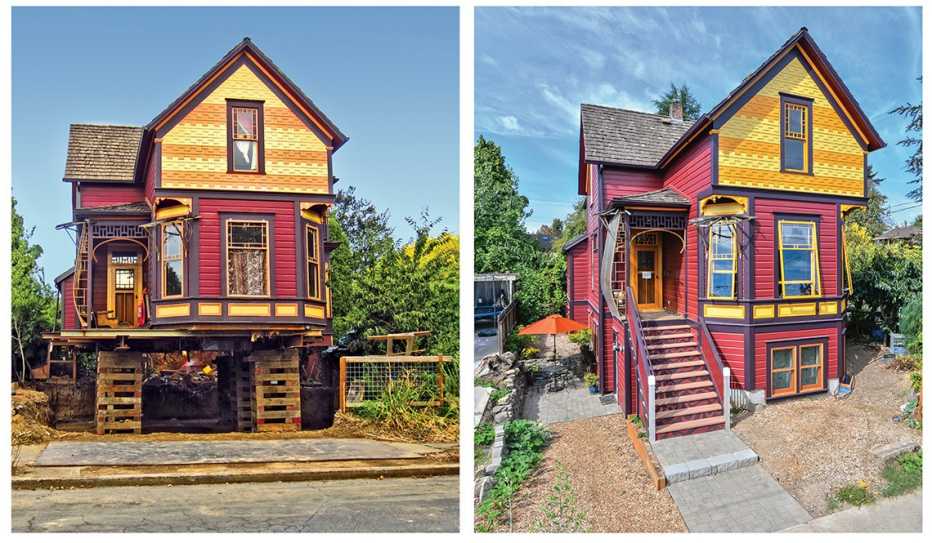
Two photos side by side. The photo on the left is of a multi-colored house under construction. There are lifts under the home to bring it up a level. The photo on the right is of the completed constructed house with the lower level that was added completely done. There are trees, some plants, and grey sidewalks and direct surrounding the house.

Basement ADU

Photo Credit: Communitecture and Chris Nascimento, taken from AARP’s website

Two photos side by side. The photo on the left is of a multi-colored house under construction. There are lifts under the home to bring it up a level. The photo on the right is of the completed constructed house with the lower level that was added completely done. There are trees, some plants, and grey sidewalks and direct surrounding the house.
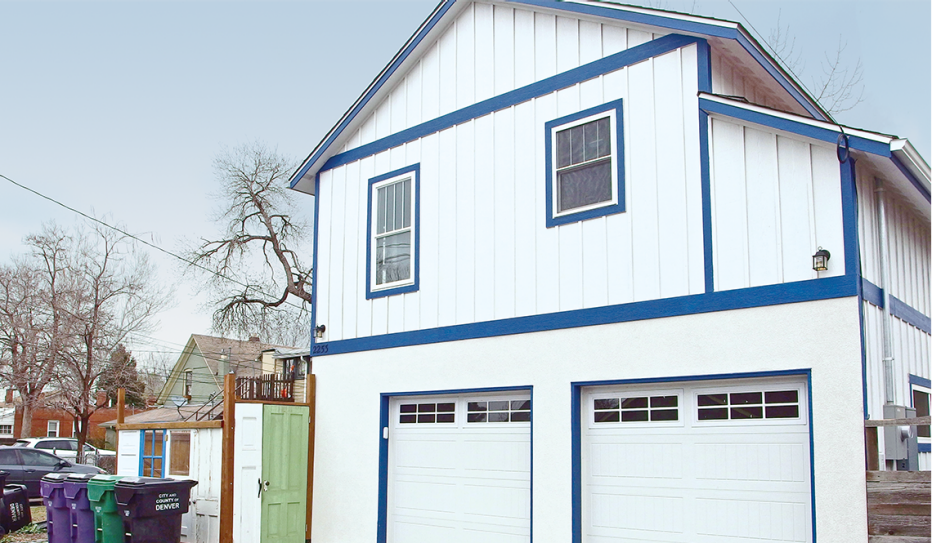
ADU of a separate house dwelling with a separate outside entrance over two garages. The house is white, two-story, with blue trim.

Garage Apartment ADU

Photo Credit: Mara Owen, taken from AARP’s website

ADU of a separate house dwelling with a separate outside entrance over two garages. The house is white, two-story, with blue trim.
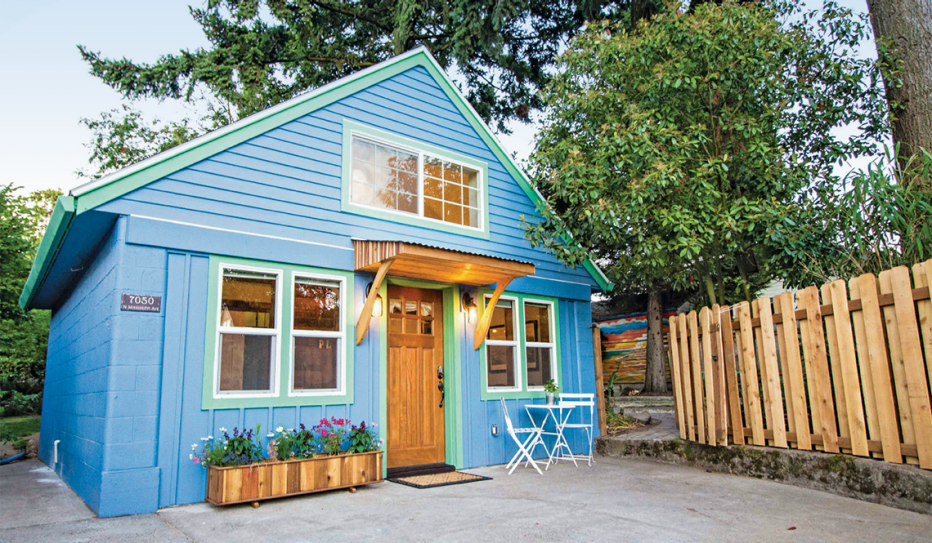
A small, blue, detached ADU. It has an orange front door, numerous windows, small planters in the front. It has trees and a wood fence in the background.

Detached ADU

Photo Credit: AccessoryDwellings.org, taken from AARP’s website

A small, blue, detached ADU. It has an orange front door, numerous windows, small planters in the front. It has trees and a wood fence in the background.

Why Does Greater Boston Need More ADUs?

Housing is unaffordable and in short supply across Greater Boston, and we are particularly lacking in smaller housing choices.

ADUs are a low-impact way to diversify housing options in all communities, provide more affordable homes for young families or older adults, and help current homeowners with additional income through rent. Accessory homes are so unobtrusive that they usually can’t be seen from the streetADUs can:

Icon of two blue homes - a larger and smaller one. Over the top of each house in a dark green colored bubble are light green money symbols.

Provide Less Expensive Housing Choices

  • Cost less than a new single-family home on a separate lot, thus provide options for low- and moderate-income residents 
  • Help seniors stay in their community and “age in place” by renting out their ADU or downsizing and living in it themselves
  • Provide a smaller housing option to meet the growing needs of empty nesters, smaller families, and young adults 

Note: ADUs offer lower-cost rental options, often serving as naturally occurring affordable housing (NOAH). ADUs are not subsidized affordable housing, which is restricted for the exclusive use of lower income households. It is possible to apply deed restrictions to ADUs to create more affordable housing.

Icon of four blue different sized and structured homes. In front of each home are tiny dark green figures representing people.

Provide Homeowners with More Options to:

  • Downsize while staying on their property and live in the ADU 
  • House a caretaker on their property 
  • House their children or parents 
  • Generate supplemental income (from renting the ADU) to help homeowners afford to stay in their primary home
Icon of six different transparent boxes outlined in blue. In each box are different sized and shaped blue boxes and rectangles. In four of the six, there are also green different shaped boxes, circles, and rectangles. Some of the green figures are close to or covering part of the blue boxes. One is far away from the blue box.

Have a Low Impact on the Environment and Neighborhood

  • More compact, infill development promotes more walkable, compact neighborhoods and reduces development pressures on open space
  • Minimal construction impacts due to scale of ADUs
  • Leverages existing infrastructure, saving municipal funds potentially
  • Gentle density designed and maintained by homeowners 

Increasing Affordable Housing through ADUs

Greater Boston needs more housing generally, but deed-restricted Affordable Housing is even more critical as the number of cost-burdened renters is staggeringly high (over 50% of renters pay more than 30% of their income on housing). Cities, towns, and nonprofits are all finding ways to leverage ADUs to increase the share of Affordable Housing in communities. 

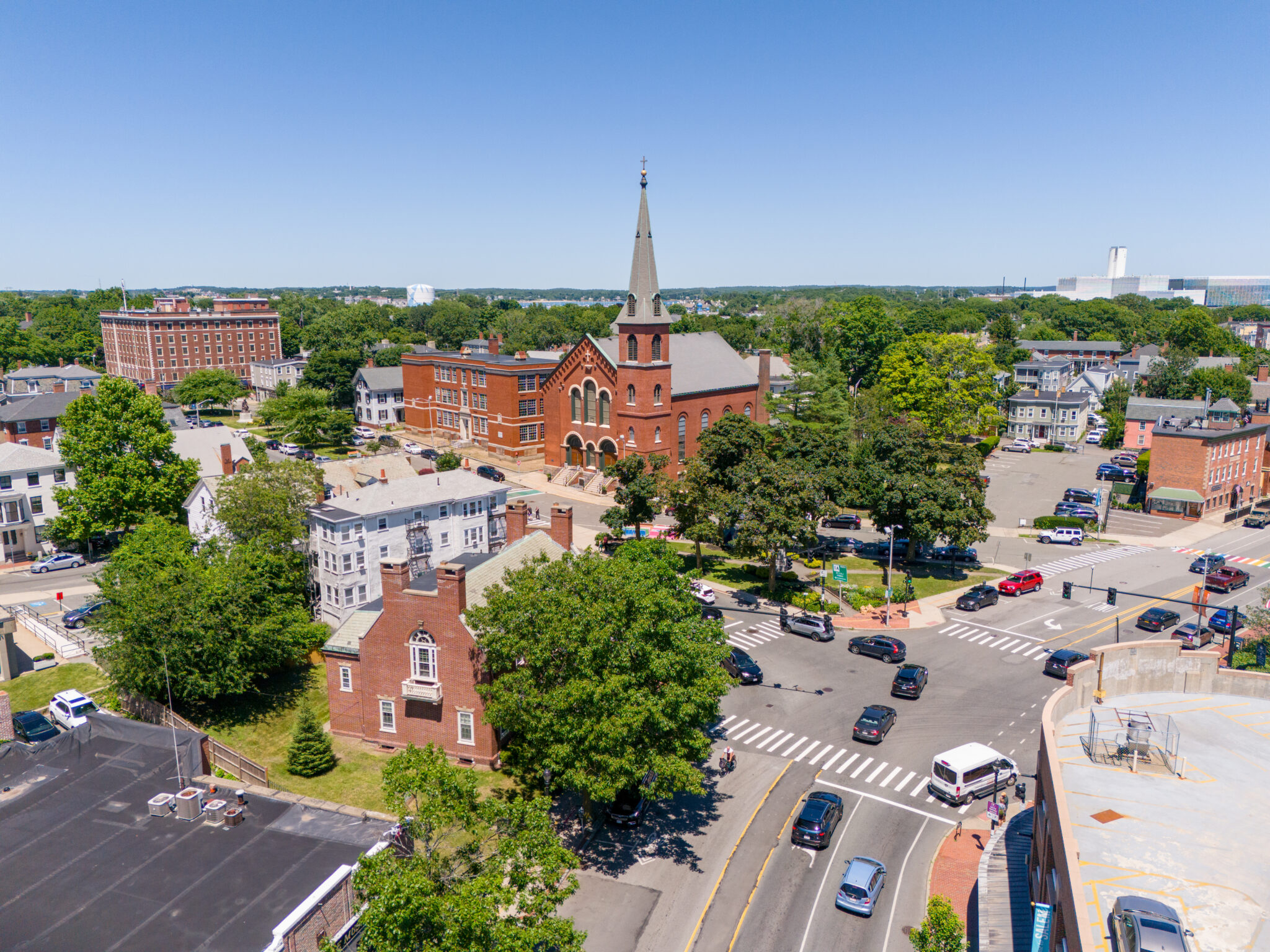
Aerial photo of Salem, Massachusetts. Numerous roads with cars on them, a church, other buildings, and trees.
Photo Credit: AdobeStock_880938010

Salem, MA | Photo Credit: AdobeStock_880938010

Best Practice: Salem
The City of Salem allows affordable accessory dwelling units by right The City achieves this through ensuring that ADUs are allowed by right, but they are required to be rented at or below 70% of the fair market rent limit.

Homeowners in Salem who have an ADU on their property and are renting it at or below the 70% rate are eligible for a tax incentive that exempts the value of the ADU from their property taxes. This incentive encourages the creation and rental of affordable ADUs throughout the city. Note that aspects of the City’s ADU policy may need to be amended to be consistent with the state law. 

Learn more about Salem’s ADU policies:
Facts about Accessory Dwelling Units (ADUs) | salemma 

Small guest house in light blue with a white trimmed window, a wooden front door with mini windows, a wood awning, and a blue floored front porch with a white chair with a flowered pillow siting on the front porch.
Cozy country style guest house

Photo Credit: AdobeStock_145314013

Research: Opportunities for Nonprofits
A study published in September of 2024 by Haewon Wa with support from the Joint Center for Housing Studies at Harvard University and Neighborworks America explored the role that non-profits can play in the creation of affordable accessory dwelling units. 

The study focuses on four case study programs that supported ADU creation in various states and for diverse resident populations. Non-profits were found to be helpful in two main areas of ADU creation: supporting homeowners to construct new or renovate existing ADUs on their property and advocating for policies that allow informal ADUs to be formalized.  

Access the Study: Nonprofit Accessory Dwelling Unit (ADU) Programs as Affordable Housing Strategies 


Resources for Municipalities

Several cities and towns in the MAPC region have existing ADU ordinances or bylaws that may need to be amended to be consistent with the new state law. Others may not have any existing ADU regulations but will want to create them to better administer the new law. MAPC is working on updated guidance to help communities amend or create new bylaws/ordinances. Existing ADU resources and examples from other MA communities that may be helpful are linked below.

More comprehensive guidance is forthcoming! 

EOHLC ADU Office Hours
The Executive Office of Housing and Livable Communities (EOHLC) is offering office hours to help municipal planners understand the Accessory Dwelling Unit (ADU) law and regulations, that became effective on February 2, 2025. 

The office ours will be once a month on every second Wednesday, 3:00 – 4:30 p.m. Registration for any of the office hours is required.

Upcoming Office Hour Dates:
August 13, September 10, October 8, and November 12.

To learn more about the office hours, the office hour dates, and to register, please visit the registration page.

Model Zoning for Accessory Dwelling Units (ADUs)

On March 11, 2025, MAPC, the Executive Office of Housing and Livable Communities (EOHLC), and the Massachusetts Housing Partnership (MHP), hosted a webinar to provide guidance on regulating Accessory Dwelling Units (ADUs) in accordance with Section 3 of the Zoning Act. The webinar discussed different approaches to tailor zoning language to an individual community’s needs and local conditions.

Access the Model Zoning for Accessory Dwelling Units document
View the Model Zoning for Accessory Dwelling Units presentation slides
Visit the EOHLC’s ADUs webpage

Tips for Implementing Accessory Dwelling Units (ADUs) Legislation in Your Community Webinar

On December 9, 2024, MAPC hosted a virtual opportunity for communities to learn tips for implementing the new Accessory Dwelling Units (ADU) State Law.

This webinar highlighted two examples of local ADU regulatory updates in response to changes in state law, provided by:

  • Erin Wortman, Stoneham Director of Planning and Community Development
  • Kristina Johnson, Hudson Director of Planning and Community Development

MAPC also shared best practices and considerations for crafting strong local ADU regulations.

Homeowner and Property Owner Resources

Continue reading...

SouthWest Advisory Planning Committee (SWAP)

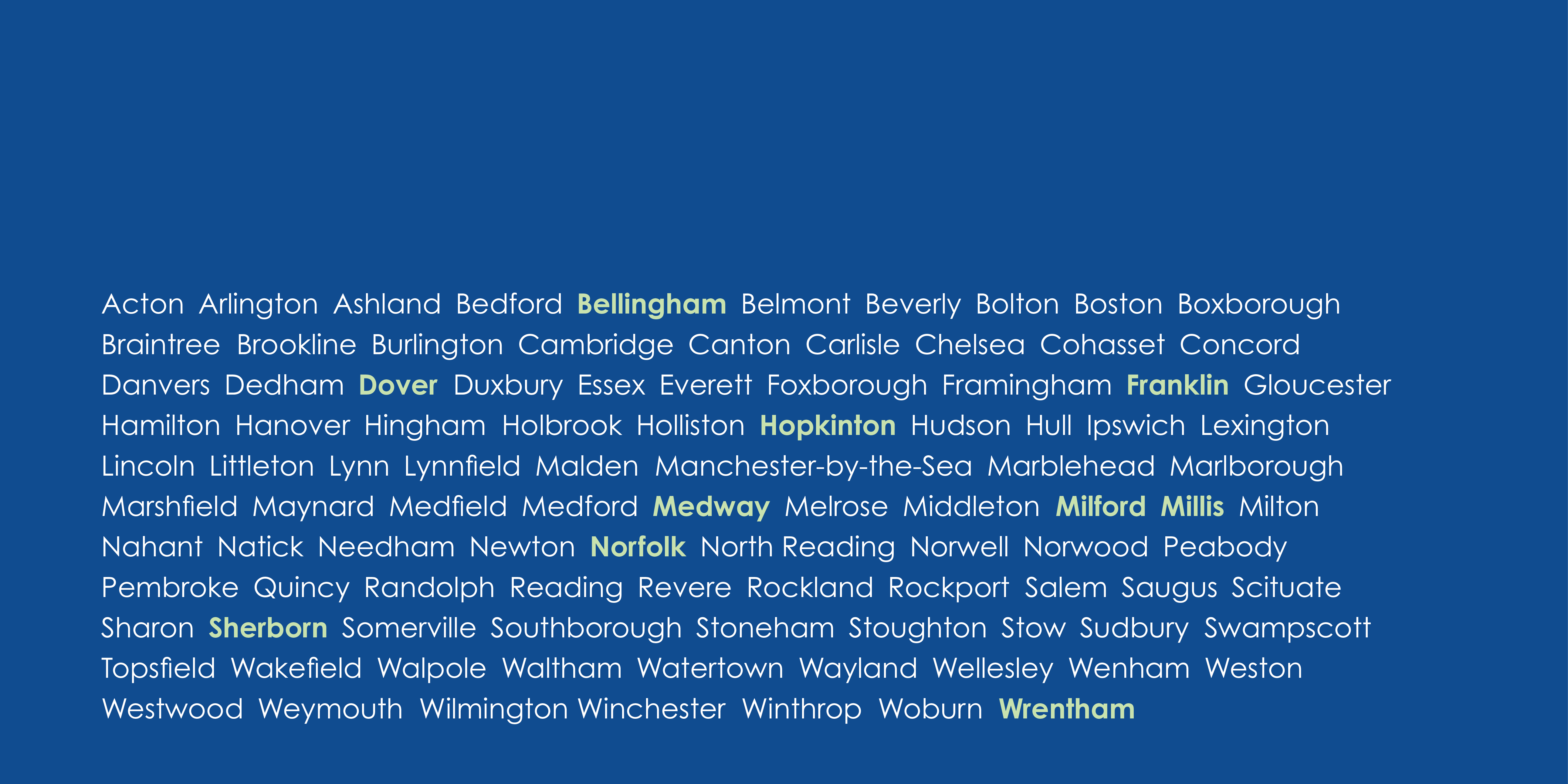
Names of the cities in towns in Greater Boston written in white over a blue background. The cities and towns in the SouthWest Advisory Planning Committee subregion are written in green.
SouthWest Advisory Planning Committee (SWAP)

SouthWest Advisory Planning Committee (SWAP)

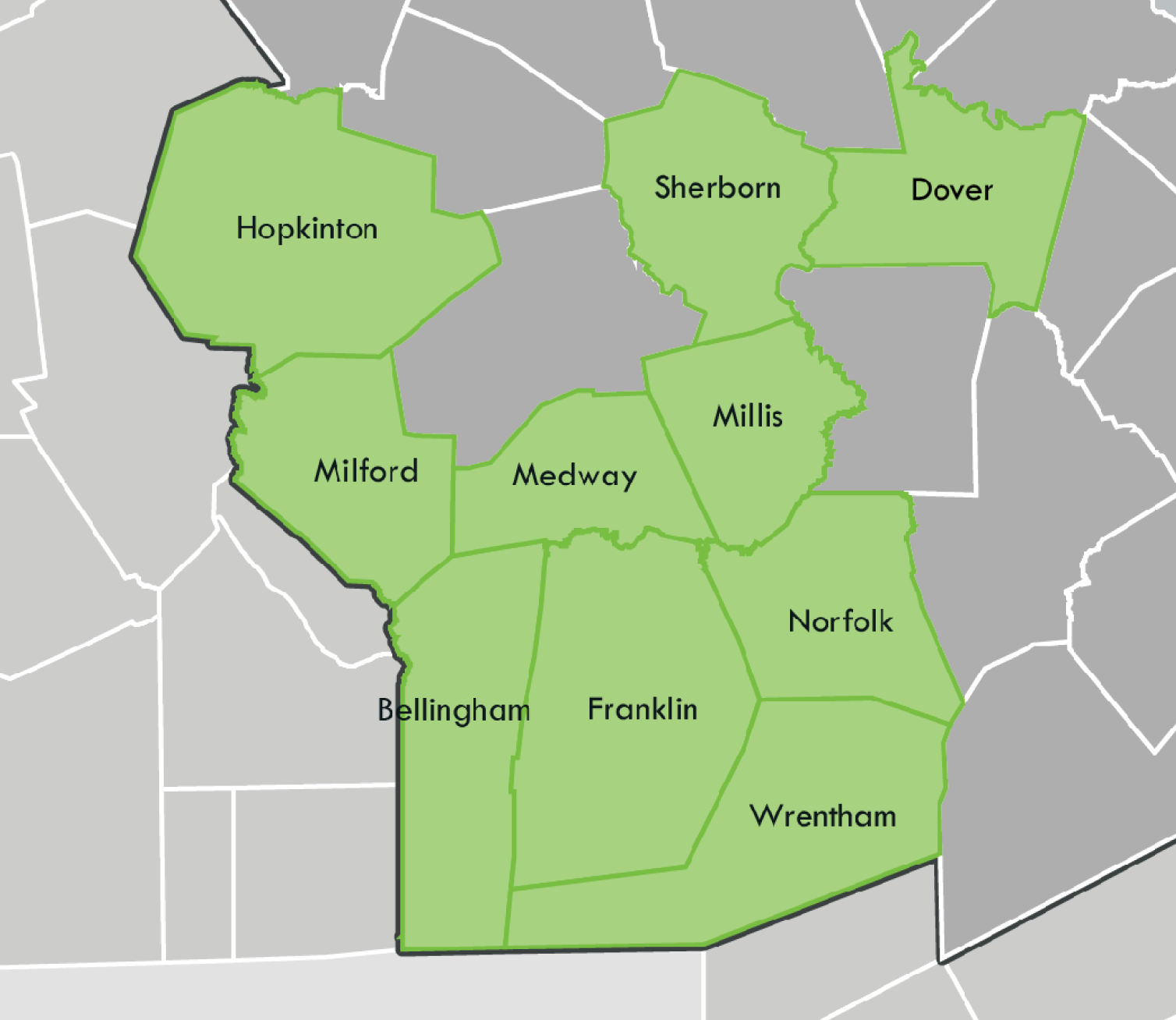
The SouthWest Advisory Planning Committee (SWAP) is a Greater Boston subregion of ten (10) communities: Bellingham, Dover, Franklin, Hopkinton, Medway, Milford, Millis, Norfolk, Sherborn, and Wrentham, working collaboratively on regional issues.

The South West Advisory Planning Committee (SWAP) is comprised of up to twenty members representing ten communities southwest of Boston.

The SWAP subregion is located southwest of Boston between Interstates 495 and 95 and is bisected by Route 109. The region’s proximity to these major transportation corridors has led to increasing development pressure and demands on environmental resources.

The purpose of SWAP is to foster joint and cooperative action concerning transportation, land use, economic development, housing, historic preservation, water resources and the environment. Informed and active cooperation among neighboring communities helps to serve the needs of residents, businesses, commuters, and local governments.


Your Subregional Coordinators:
Nina Miscioscia ([email protected]) and Eric Hove ([email protected])

SWAP Leadership

Co-chair: Richard McCarthyNorfolk

Co-chair: Robert Lussier, Bellingham

SWAP| About

Work Plans

Bylaws

Bylaws (Amended 2016)

Our Purpose

The purpose of SWAP is to foster joint and cooperative action concerning transportation, land use, economic development, housing, historic preservation, water resources and the environment. Informed and active cooperation among neighboring communities helps to serve the needs of residents, businesses, commuters, and local governments.

SWAP | Meetings and Events

Meeting and Events Archive

Upcoming Meetings and Events

March 27, 2026 | 9:00 – 11:00 a.m.
MWRC and SWAP 2026 Joint Legislative Breakfast
Holliston Town Hall, 703 Washington Street, Holliston, MA
Register to Join Us

SWAP | Communities

SWAP | Projects/Priorities

SWAP Priorities

  • Regional Transportation Planning and Infrastructure
  • Transportation Demand Management (TDM) & Transportation Management Area (TMA) Proposals
  • Affordable Housing
  • Hazardous Waste Management
  • Population Growth Trends
  • Open Space, Cultural, and Environmental Resource Planning
  • DEP Stormwater Phase II Standards
  • Comprehensive Economic Development Strategy

SWAP Projects

Living Little
The Living Little project investigates small housing typologies for the South West Advisory Planning Committee (SWAP) and Three Rivers Interlocal Council (TRIC) subregions. Like many other communities, municipalities in these subregions are experiencing increased housing demand, particularly from seniors and younger householders. This project profiles three different housing typologies– detached accessory dwelling units, cottage developments, and tiny houses– that can help foster housing diversity. Read the Report

Transit Study
The SouthWest Advisory Planning Committee (SWAP) requested that the Metropolitan Area Planning Council (MAPC) and Central Transportation Planning Staff (CTPS) jointly analyze the existing public transit network in the subregion. The purpose of this evaluation was to identify opportunities to increase ridership and provide better connections to housing, employment, and commercial centers in the SWAP communities. Read the Study

SWAP | Photo Gallery

Continue reading...

Inner Core Committee (ICC)

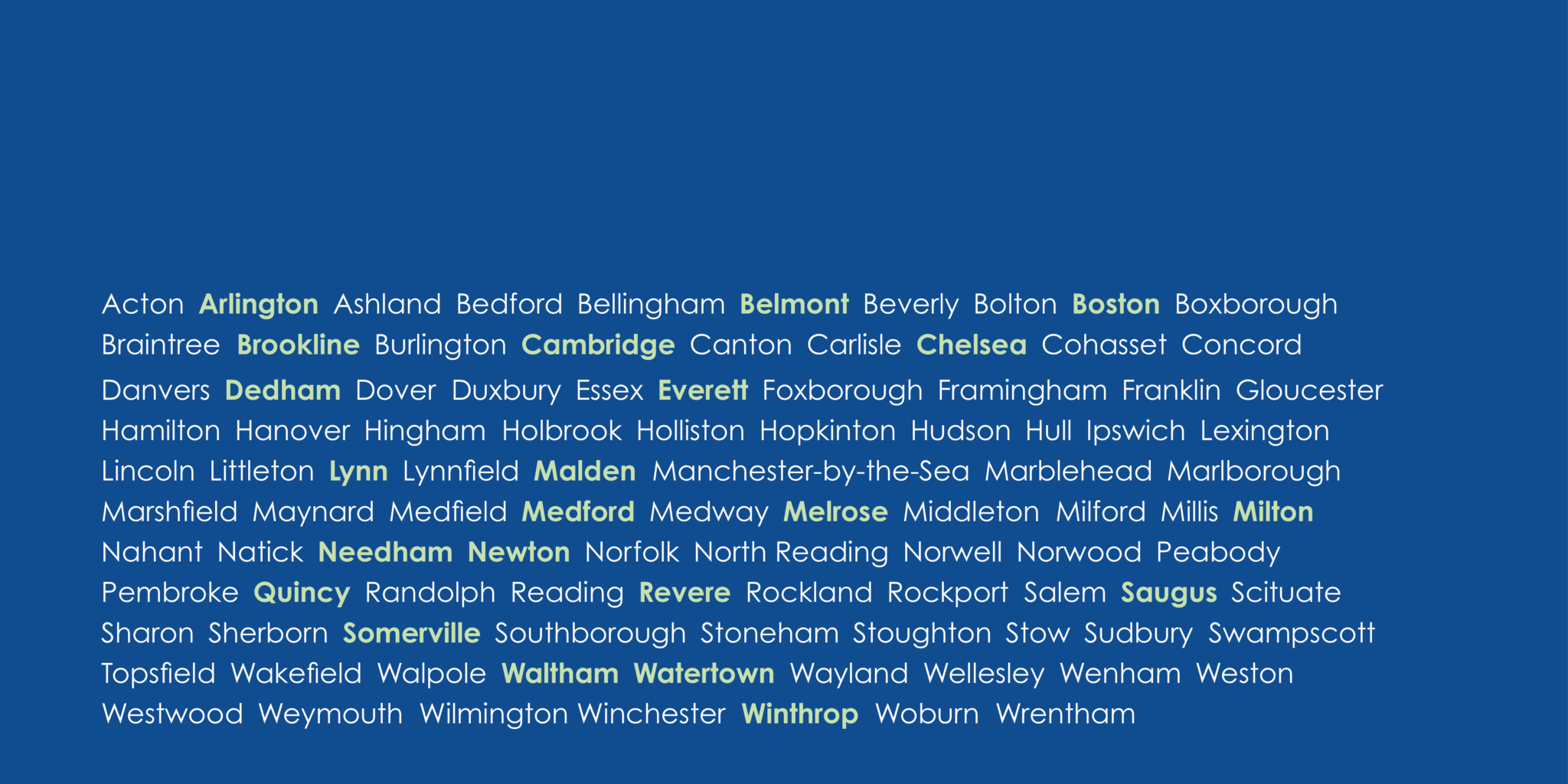
The names of the Greater Boston 101 cities and towns over a blue background, with those in the ICC subregion in bold text.
Inner Core Committee (ICC)

Inner Core Committee (ICC)

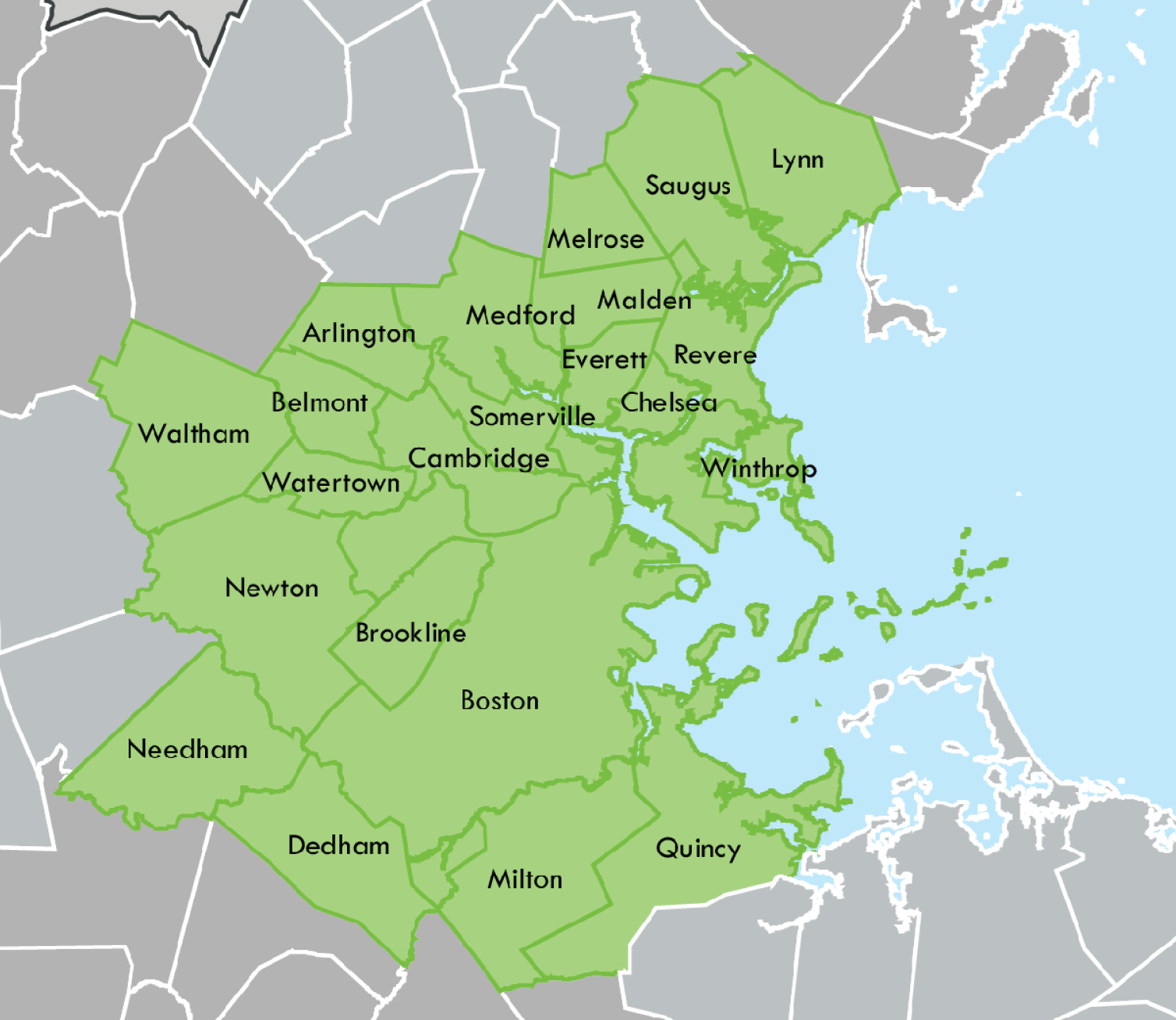
The Inner Core Committee (ICC) is a Greater Boston subregion of twenty-two (22) communities: Arlington, Belmont, Boston, Brookline, Cambridge, Chelsea, Dedham, Everett, Lynn, Malden, Medford, Melrose, Milton, Needham, Newton, Quincy, Revere, Saugus, Somerville, Waltham, Watertown, and Winthrop, working collaboratively on regional issues.

The ICC is MAPC’s largest subregion, representing the largest number of municipalities of any subregion: about 51 percent of the MAPC region’s population – over 1.6 million residents.

As some of the most urban and populous communities within the MAPC planning area, ICC cities and towns deal with a host of unique challenges, such as finite developable land, issues of neighborhood change and gentrification, limited affordability, congestion, and public transit capacity limitations, to name a few.

The ICC meets regularly to discuss these and other topics, share best planning practices, and explore opportunities for regional collaboration.


Your Subregional Coordinators:
Casey Williams ([email protected])
Zoe Iacovino ([email protected])

ICC Executive Board

Co-chair: John DePriest, Chelsea Director of Planning and Development

Co-chair: Dan Bartman, Somerville Senior Planner

ICC | About

Work Plans

Bylaws

Bylaws
(Last updated May 2017)

Our Purpose

The Committee was formed to foster joint and cooperative action within the Inner Core subregion of the Metropolitan Area Planning Council (MAPC) and to provide a forum to explore issues which are a concern of the subregion but not necessarily of the same concern to the MAPC region as a whole.

ICC | Meetings and Events

Meeting and Events Archive

Upcoming Meetings and Events

January 21, 2026 | 9:00 – 11:00 a.m.
In-person, more information to come

March 18, 2026 | 9:00 – 11:00 a.m.
In-person, more information to come (subject to change for the Legislative Breakfast)

April 9, 2026 | 10:00 – 11:30 a.m.
Spring Legislative Breakfast, State House – Room 428, Boston
Register to Join Us

May 20, 2026 | 9:00 – 11:00 a.m.
In-person, more information to come

ICC | Communities

ICC| Photo Gallery

Continue reading...

North Shore Task Force (NSTF)

Names of the cities in towns in the Greater Boston region written in white over a blue background. The cities and towns in the NSTF subregion are written in green.
North Shore Task Force (NSTF)

North Shore Task Force (NSTF)

The North Shore Task Force (NSTF) is a Greater Boston subregion of sixteen (16) communities: Beverly, Danvers, Essex, Gloucester, Ipswich, Hamilton, Manchester-by-the-Sea, Marblehead, Middleton, Nahant, Peabody, Rockport, Salem, Swampscott, Topsfield, and Wenham, working collaboratively on regional issues.

NSTF works to facilitate communication between communities through the participation of Town staff, local officials, and community stakeholders involved with planning issues, in concert with MAPC staff. 

We assist participating communities in setting an agenda for action on planning topics including issues of housing and land use, and other planning issues which, if thoughtfully addressed, will allow the region to retain its character and its desirability as a place to live and work. 


Your Subregional Coordinator:
Sarah Scott, [email protected]

NSTF | About

Our Goals

The current goals of the NSTF are: 

  • Create a space for peer support for planners and municipal staff
  • Provide a pathway for resource-sharing and information-gathering
  • Serve as a container for innovation and project development
  • Offer opportunities for leadership development

NSTF | Meetings and Events

Meeting and Events Archive

Upcoming Meetings and Events

April 9, 2026 | 9:30 – 11:00 a.m.

In-person – George Peabody House (205 Washington Street, Peabody)
Topic: Community Exchange and Workplan Discussion 

May 21, 2026 | 9:30 – 11:00 a.m.
In-person – location to be determined
Topic: Vision Zero and Safe Streets
Guest speakers: Ali Kleyman, Boston Region MPO; Travis Pollack, MAPC

June 18, 2026 | 9:30 – 11:00 a.m.
Remote – Zoom (email [email protected] for link)
Topic: DataCommon and Community Data Needs
Guest speakers: Alexa DeRosa and Stephen Larrick, MAPC

NSTF | Communities

NSTF | Projects

MAPC is currently working with communities on the following projects in the subregion: 

Beverly 

Danvers 

    • Regional Community Interpreter
    • Accessory Dwelling Unit (ADU) Bylaw
    • North Shore Cape Ann Public Health Coalition
    • North Shore Regional IT Collaborative 
    • Massachusetts Municipal DEI Coalition

Essex 

Gloucester 

Hamilton 

    • North Shore Cape Ann Public Health Coalition
    • North Shore Regional IT Collaborative 
    • Regional Mass Care and Sheltering Project

Ipswich 

    • Regional Mass Care and Sheltering Project

Manchester-by-the-Sea 

Marblehead 

Middleton 

    • North Shore Regional IT Collaborative
    • Regional Mass Care and Sheltering Project

Nahant 

    • North Shore Cape Ann Public Health Coalition

Peabody 

    • Health and Human Services Tracing Grant 
    • North Shore Cape Ann Public Health Coalition

Rockport

Salem 

    • Jefferson Avenue Corridor Plan
    • Digital Equity Plan
    • Bluebikes Bike Share Coordination 
    • Opioid Settlement Fund Disbursement Strategy 
    • Community Heat Resilience Pilot 
    • Residential Parking Utilization Analysis 
    • Massachusetts Municipal DEI Coalition 
    • North Shore Cape Ann Public Health Coalition

Swampscott 

    • Community Master Plan 
    • Hazard Mitigation Plan 
    • North Shore Cape Ann Public Health Coalition

Topsfield 

    • North Shore Regional IT Collaborative 
    • Regional Mass Care and Sheltering Project

Wenham 

    • North Shore Cape Ann Public Health Coalition
    • North Shore Regional IT Collaborative 
    • Regional Mass Care and Sheltering Project


NSTF | Photo Gallery

Continue reading...

South Shore Coalition (SSC)

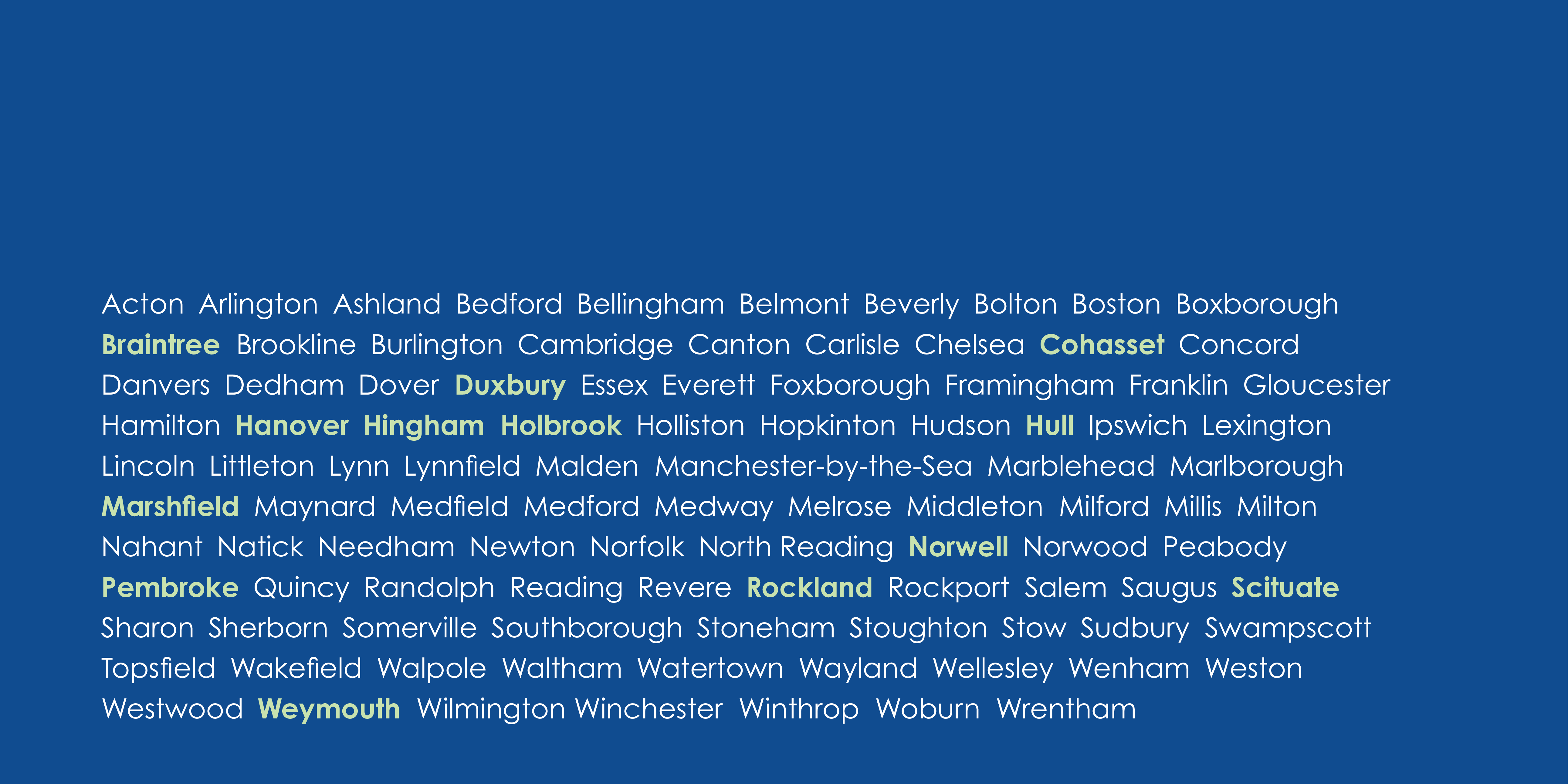
Names of the cities in towns in Greater Boston written in white over a blue background. The cities and towns in the South Shore Coalition subregion are written in green.
South Shore Coalition (SSC)

South Shore Coalition (SSC)

The South Shore Coalition (SSC) is a Greater Boston subregion of thirteen (13) communities: Braintree, Cohasset, Duxbury, Hanover, Hingham, Holbrook, Hull, Marshfield, Norwell, Pembroke, Rockland, Scituate and Weymouth, working collaboratively on regional issues.

The South Shore Coalition (SSC) promotes informed and active cooperation in planning for growth and preservation in 13 towns on the South Shore within the metropolitan Boston area.


Your Subregional Coordinator:
Sukanya Sharma ([email protected])

SSC Leadership

Chair: currently vacant

Vice Chair: currently vacant

SSC | About

Our Mission

Mission Statement:
The South Shore Coalition promotes informed and active cooperation in planning for growth and preservation.​

SSC| Meetings and Events

Meeting and Events Archive

Upcoming Meetings and Events

No upcoming meetings currently scheduled at this time. Please check back soon!


SSC generally meets monthly on the third Thursday of the month.

SSC | Communities

SSC | Resources

SSC | Photo Gallery

Continue reading...

Three Rivers Interlocal Council (TRIC)

The names of the 101 cities and towns in Greater Boston with those in the TRIC subregion in bold text.
Three Rivers Interlocal Council (TRIC)

Three Rivers Interlocal Council (TRIC)

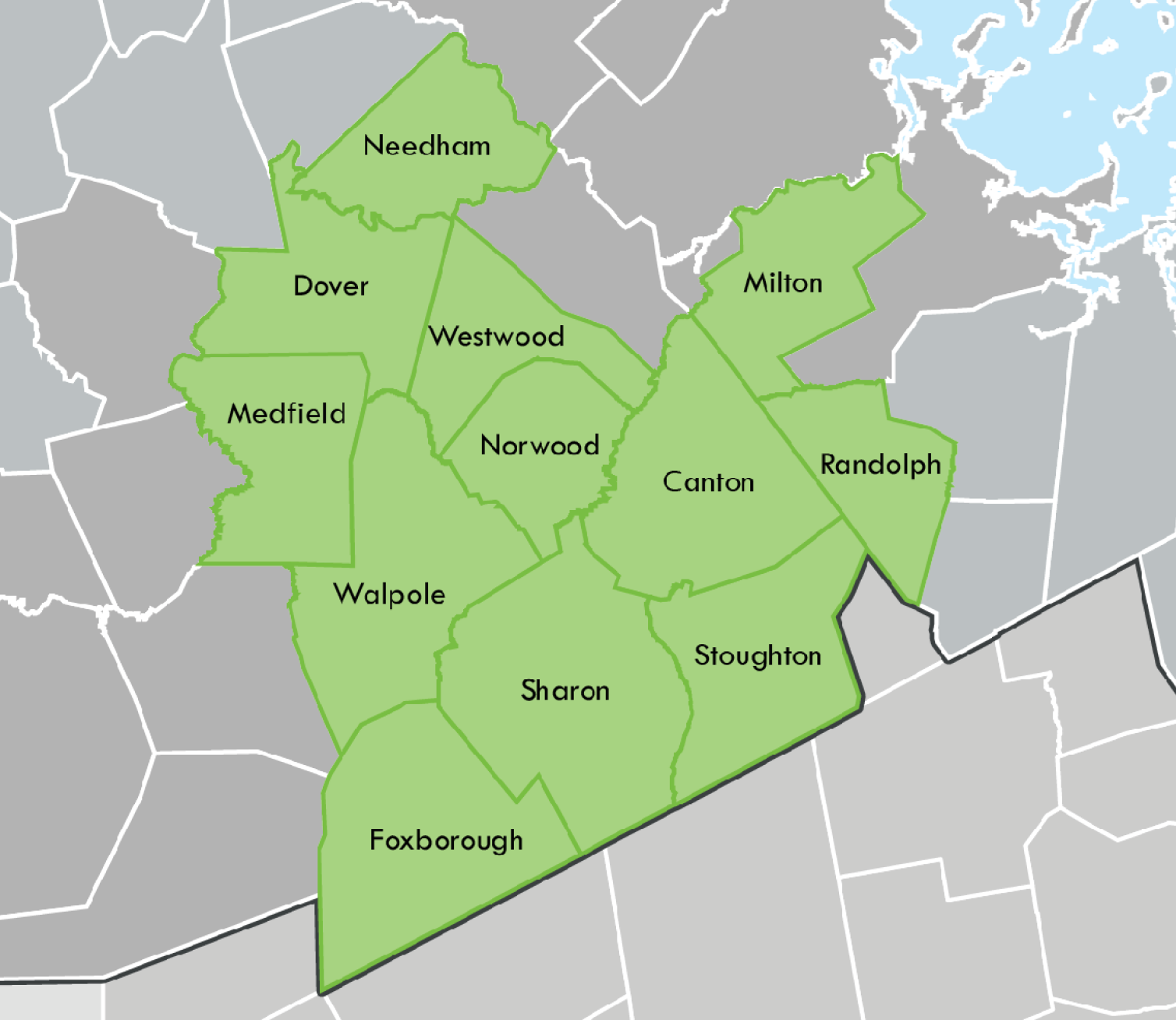
The Three Rivers Interlocal Council (TRIC) is a Greater Boston subregion of twelve (12) communities: Canton, Dover, Foxborough, Medford, Milton, Needham, Norwood, Randolph, Sharon, Stoughton, Walpole, and Westwood, working collaboratively on regional issues.

The Three Rivers Interlocal Council (TRIC) is located Southwest of Boston. TRIC gets its name from the three major rivers in the subregion: the Neponset, Charles, and Canoe River. TRIC meets monthly to review and discuss issues of inter-municipal significance. Participants at TRIC meetings can include Local Council Representatives, town planners, members of Boards of Selectmen and Planning Boards, Town Administrators, Chambers of Commerce, and interested citizen-planners.


Your Subregional Coordinator:
Gwendolyn Hellen-Sands ([email protected])

TRIC Leadership

Co-Chair: Patrick Deschenes, Town of Walpole

Co-Chair: Sarah Dixon, Norwood Community Development Director

TRIC | About

Our Mission

The mission of TRIC is to support cooperative municipal planning that links the impacts of growth and development in each town to aggregate impacts felt throughout the region.

TRIC | Meetings and Events

Meeting and Events Archive

Upcoming Meetings and Events

Tuesday September 16, 2025 | 9:00 – 10:30 a.m.
Location: In-Person Meeting, to be determined
Topic: FY26 Kick-Off
Agenda and additional details are forthcoming

Tuesday October 21, 2025 | 9:00 – 10:30 a.m. 
Location: Virtual Meeting
Topic: Legislative Update and Housing Resources
Agenda and additional details are forthcoming 

Tuesday November 18, 2025 | 9:00 – 10:30 a.m. 
Location:  to be determined
Topic: Zoning for Transportation
Location and agenda are forthcoming 

Tuesday December 16, 2025 | 9 – 10:30 a.m. 
Location: Virtual
Topic: MPO and MBTA Follow Ups
Agenda and additional details are forthcoming 

TRIC | Communities

TRIC | Resources

More information coming soon.

TRIC | Photo Gallery

Continue reading...