Top

Climate Readiness Trainings and Liaison Resource Hub

Photo Credit: AdobeStock_821383409

Climate Readiness Trainings and Liaison Resource Hub

Climate Readiness Trainings and Liaison Resource Hub

The Community Liaison Role is a helpful engagement strategy that builds off existing relationships and community connections. A community liaison is ideally someone who already has strong community ties, especially to groups of interest.  

A climate community liaison is someone who has connections with climate vulnerable populations, such as environmental justice communities and other priority populations. The liaison does not need extensive climate background as organizations can provide technical background, but the experience of building connections is something unique to people embedded within their communities. 

How to Use this Resource Hub

This hub is intended to act as a resource for people interested in developing climate community liaison roles.

It provides a brief overview of the utility of climate community liaison roles and access to resources regarding developing and managing the climate community liaison position for various types of municipal-led projects or planning processes. The materials included, are meant to be adaptable both to fit your community context and as best practices continue to evolve. 

Role Descriptions

An overview of what a climate community liaison is and who is a good fit for this role.

When recruiting people well suited for the role of community liaison, clearly defining the characteristics of an ideal candidate will help clarify who is eligible.

This includes key information such as:

  • Qualifications necessary to be a community liaison,
  • Compensation opportunities, and
  • Contact information and expectations of the role.

Additional considerations based on community demographics might include:

Providing materials in other languages commonly spoken in your community, or clearly explaining what level of community involvement is required to be a liaison (such as having a child in the school district or working/volunteering in the area). 

Program Management Materials

An overview of key information to include in the marketing and application materials for the community liaison role.

The types of materials that are helpful for your project may vary depending on the desired outcomes of the project. To the right, are materials used with various community liaison program managers.

These documents may be helpful for planning the administrative and program management side of the project. 

Community Liaison Training

A brief overview of foundational information that can be useful when onboarding community liaisons.

For those interested in getting ready for the impacts of climate change, we have included Cambridge Community Corps (C3) climate readiness training materials in this section. These materials can serve as a guide for community liaison projects focused on issues other than climate readiness. 

The Climate Readiness Curriculum includes facilitation agendas, PowerPoints, activities, and evaluation forms related to the following topics:  

  • Climate justice
  • Emergency heat roundtable
  • Flooding
  • Heat health
  • Vector borne diseases
  • Wildfires

Liaison Led Engagement Materials

A brief overview of the types of activities that community liaisons might do.

Community liaison engagement materials will vary based on the type of work you are asking your liaison to do.

To the right are some examples of what the process and the work of the community liaison led to. 

Continue reading...

Electric School Bus Roadmap

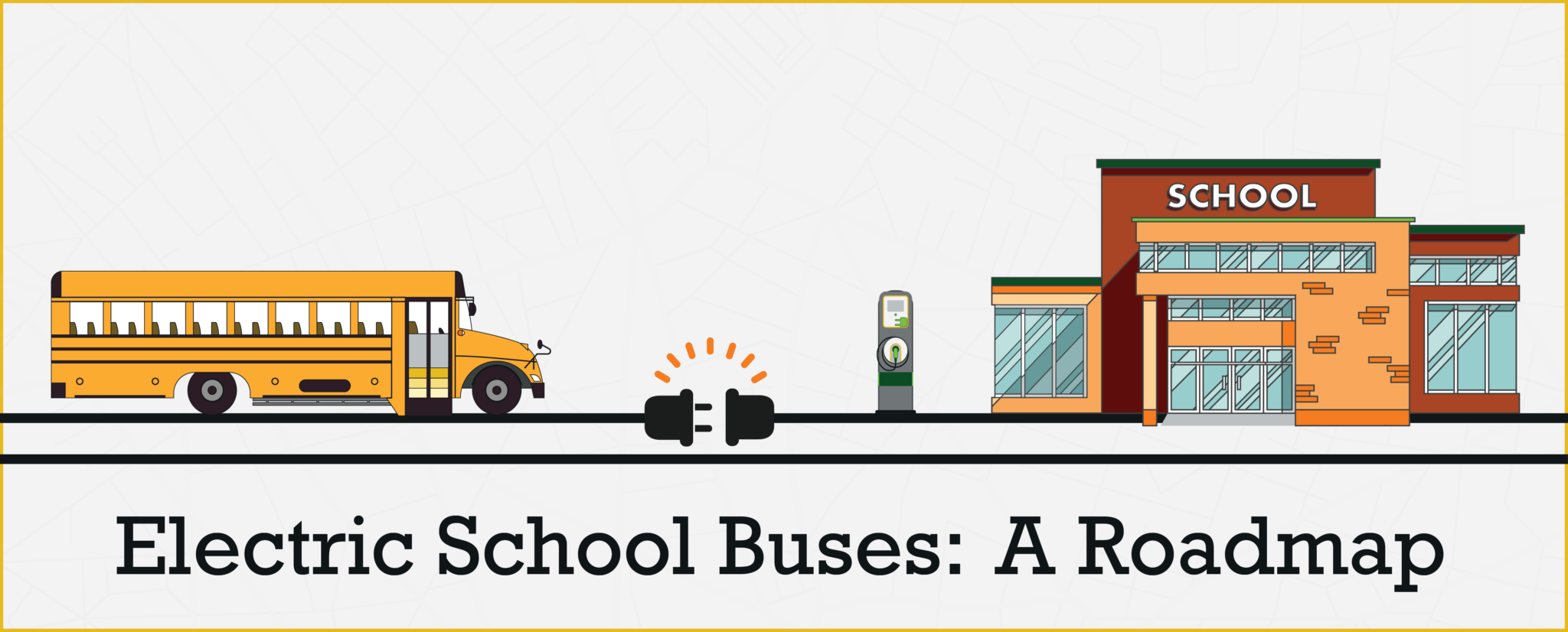
Illustration of a school bus from the side, facing to the right where there is a small EV charging station next to a brick school building. Under the illustrations are two electric plugs facing each other. Under that in black text, it says, "Electric School Buses: A Roadmap".
Electric School Bus Roadmap

Electric school buses (ESBs) present an opportunity for school districts and municipalities to reduce greenhouse gas (GHG) emissions and improve health and learning outcomes for students.

Schools across Massachusetts are already making the transition to electric school buses with the support from numerous technical assistance and funding programs. Though electric school buses have many benefits, the transition has key challenges, including higher upfront costs, infrastructure needs, ownership and operation models, stakeholder coordination, and unfamiliarity with electric school bus operations.  

Electric School Bus (ESB) Roadmap
This roadmap is intended to be a guide for school districts and municipalities to start planning for an effective and efficient transition to electric school buses. It highlights the key steps that school districts should take and includes many additional links for decision-makers to learn more and connect to existing resources. 

Fleet electrification requires involvement from a variety of stakeholders across an organization. Engaging a project team with wide representation, early on and often, is essential for successful ESB deployment. Below is a list of key stakeholders who should be involved in early stages of planning:

  • Mayor’s Office or City/Town Manager
  • Municipal Finance Office or School District Finance Office  
  • School Committee
  • School District Manager
  • School District Superintendent
  • Sustainability Office or Energy Office  
  • City Solicitor or Town Counsel  
  • Municipal Procurement Manager or Purchasing Agent  
  • Local Electric Utility
  • School Transportation Department

Acknowledgements

Why Electric School Buses?

A black cloud. Electric School Buses Reduce Greenhouse Gas Emissions

Diesel engines directly emit greenhouse gases (GHGs). Transitioning away from diesel buses is key to achieving Massachusetts’ climate goals.

A black heart with a white heartbeat line going through it. Electric School Buses are Healthier for Students and Drivers

In addition to emitting GHGs, diesel buses also emit harmful pollutants, which increase the risk of health conditions, such as asthma and other respiratory diseases, heart disease, and cancer. Diesel exhaust can also negatively impact learning and memory abilities.

A black megaphone symbol with a black “x” to the right of it. Electric School Buses are Quieter

Consistent and long-term exposure to the levels of noise pollution generated by diesel buses can put students and drivers at risk of hearing loss.

A full battery from a horizontal view. Electric Buses Can Support Grid Resiliency

The batteries in electric buses can be utilized to provide power to the grid during peak demand periods or as backup power during emergencies.

Two stacks of black coins. Electric School Buses May Reduce Operations and Maintenance Costs

ESBs have fewer moving components and do not require diesel aftertreatment systems. Additionally, ESBs use regenerative breaking, which greatly reduces the wear of the braking system and can extend battery range.

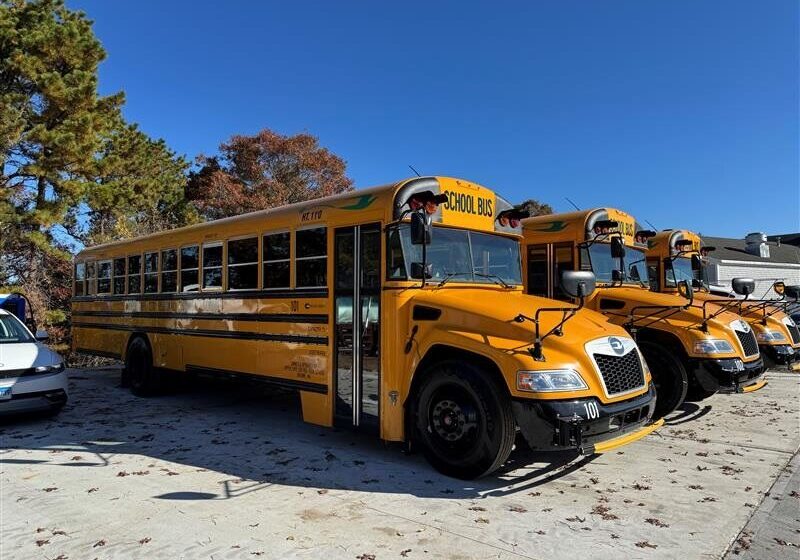
Three school buses lined up and parked horizontally. To the left of them is a small white vehicle. Behind them are some autumn colored trees, and some leaves are scattered on the ground around the buses.

Newly constructed electric school bus parking with fully commissioned EVSE.
Photo Credit: MassCEC.

In Massachusetts, more than 400,000 students ride the bus to school

The vast majority, over 95%, of these buses are powered by diesel.

Transitioning from diesel buses to electric school buses (ESBs) can lead to many health benefits for students, schools, and communities, and is key to achieving Massachusetts’ climate goals.

Additional Resources

Why We Need to Transition to Electric School Buses
World Resources Institute
 

This article highlights the benefits and opportunities of transitioning to electric school buses. 


The Transition to Electric School Buses Must Center Equity. Here’s Why
World Resource Institute 

This article discusses the existing inequities in school commutes and identifies opportunities to embed equity in the transition to electric school buses. 


Electric Bus Basics and Key Challenges
Clean Cities and Communities 

This webinar introduces electric school buses and addresses the key challenges and opportunities of fleet electrification.  


Electric School Bus Familiarization: Bus Technology Overview
Joint Office of Energy and Transportation
 

This technical webinar reviews the fundamentals of electric school bus technologies, electric bus maintenance, vehicle-to-grid technologies, and energy storage systems.  


Driving Change: A State Playbook for Equitable Electric School Bus Policy
World Resources Institute
 

This guide offers recommendations, best practices, and real-world examples for state lawmakers, regulators, agencies, utilities, and advocates working to equitably electrify their state’s school bus fleet. 

Electric School Bus Ownership and Operation Models

About 9,000 buses are registered in Massachusetts. Approximately 75% of buses are large buses (capacity of greater than 30 people) and 25% are small buses and vans (capacity of 30 people or fewer).

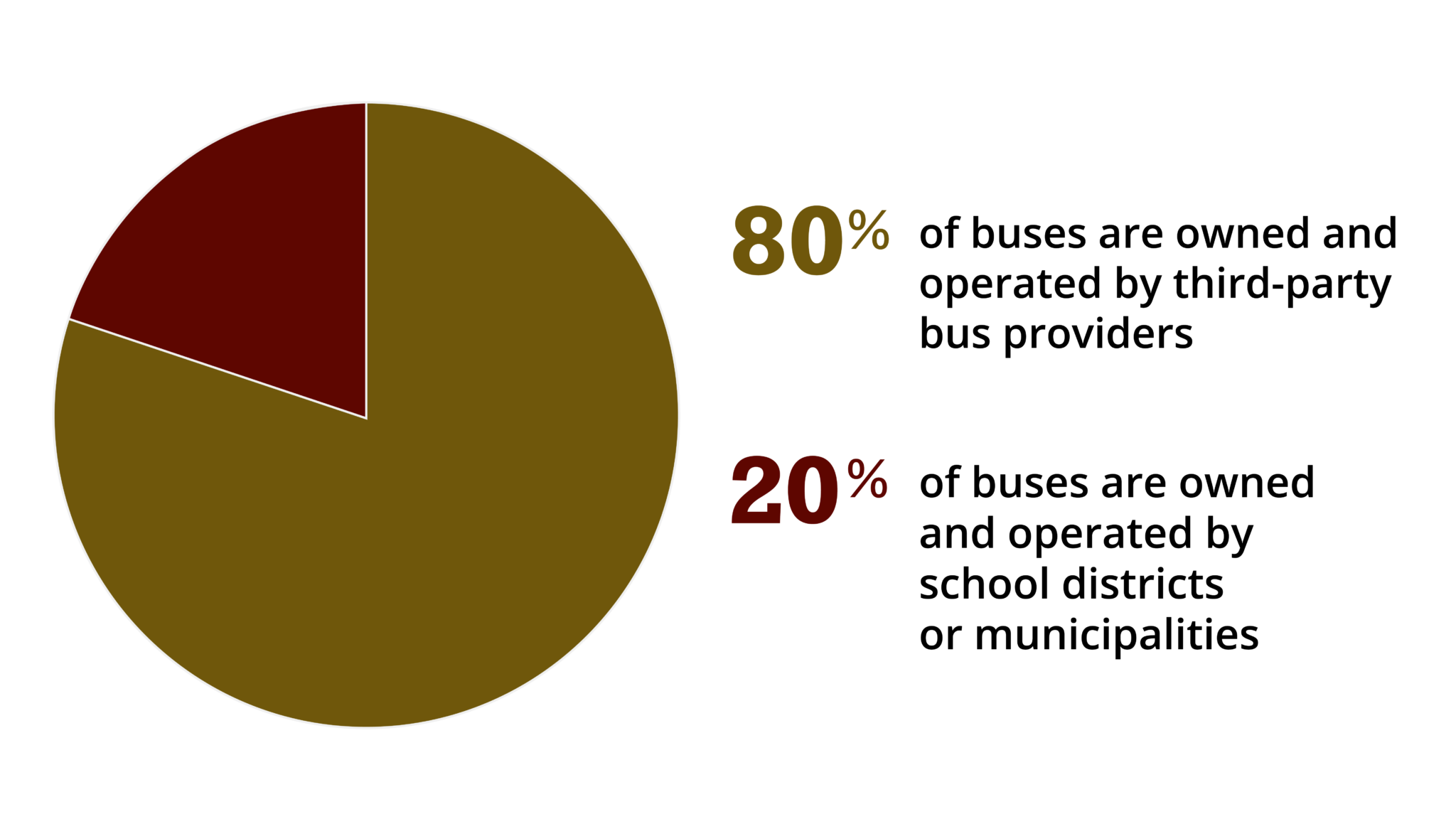
Of the more than 6,000 large buses in Massachusetts, almost 80% are owned by third-party bus providers, around 20% are owned and operated by school districts or municipalities, and a small number are leased and operated by school districts.

Transitioning to Electric School Buses (ESBs) looks different for each ownership model. The transition may also prompt school districts to select a different model, as ESBs introduce new operational roles and have different costs compared to traditional buses.

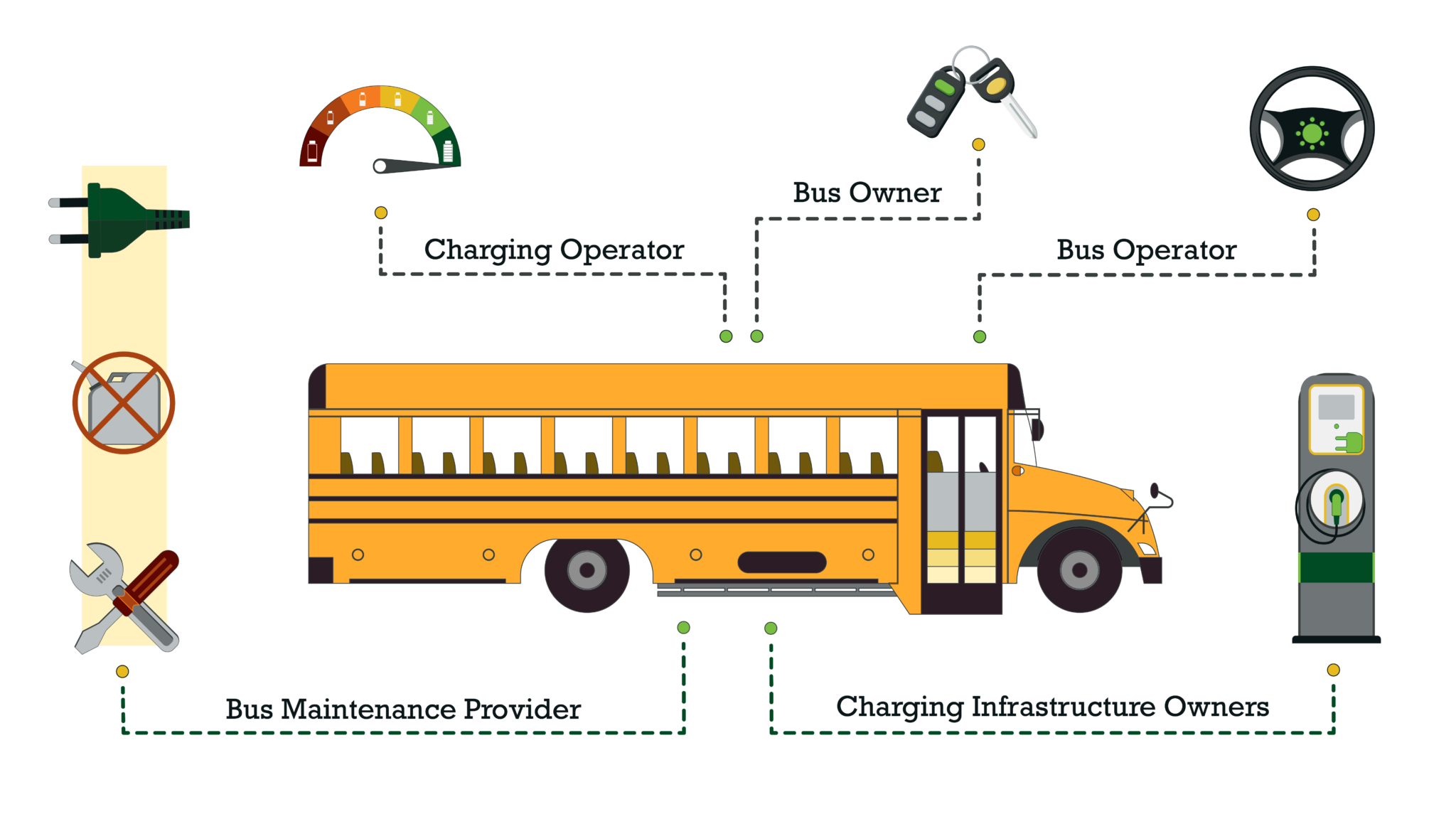
Traditionally, school bus ownership and operations are divided into three roles: Bus Owner, Bus Maintenance Provider, and Bus Operator. ESBs introduce new roles related to charging: Charging Infrastructure Owner and Charging Operator.

A pie chart illustrating the difference between the number of school buses owned and operated by third-parties versus by school districts. 80 percent are owned and operated by third-party providers. 20 percent are owned and operated by school districts or municipalities.

Pie Chart illustrating that 80% of school buses are owned and operated by third-party bus providers versus 20% of school buses that are owned and operated by school districts or municipalities.

Illustration of the new and standard electric school bus roles. A yellow school bus with dotted lines going out to different icons with text to describe those roles. To the left is an illustration showing an electric plug, a crossed out gas can, and a wrench and screwdriver.

This illustration describes the traditional and new roles for electric school buses. The bus maintenance provider (illustrated by a wrench and screwdriver). Charging infrastructure owners (illustrated by an electric charging station instead of gas). Bus operator (illustrated by a steering wheel). Bus owner (illustrated by a set of vehicle keys). Charging operator (illustrated by a charging icon).

Currently, school districts or municipalities either hold all three traditional roles or contract them out to a third party. School districts or municipalities that currently own and operate their buses may choose to also own and operate the charging equipment.

Similarly, school districts or municipalities that currently contract out all ownership and operations may choose to add the charging ownership and operations to the contract. However, there are also new “hybrid” models, in which multiple entities are responsible for the various roles.

The most common ESB ownership and operations models include: 

Own Buses

School district or municipality owns, maintains, and operates the buses and chargers. 

Lease Buses

School district or municipality leases the buses and operates the buses; school district or municipality owns, maintains, and operates the chargers.

Charging-as-a-Service

School district or municipality owns, maintains, and operates the buses and contracts with a third-party for charger ownership, maintenance, and operations. 

Transportation-as-a-Service

School district or municipality contracts with a third-party to own, maintain, and operate the buses and chargers.

Turnkey Service

School district or municipality contracts with a third-party to own and maintain both the buses and chargers and the school district operates the buses.

School districts or municipalities that contract with third parties to own and operate the buses may also consider an option in which the charging equipment is owned by and located on the property of the school or municipality but is operated by a third party. This could be a good option to consider where the school buses are currently stored on school or municipal property.  

The procurement process will be different for each of these models. You can learn more in the Procurement section.

Examples of Electric School Bus Ownership & Operation Models in Massachusetts: 

School District purchases and operates new ESBs and charging infrastructure

Concord Public Schools owns and operates all their buses. Concord was one of the nation’s first adopters of ESBs. They purchased their first ESB and began operating it in 2017. As of 2024, Concord is operating 3 ESBs and is gradually transitioning the remainder of the fleet to ESBs. 

School District’s current third-party bus provider electrifies fleet

Lawrence Public Schools has contracted with NRT bus for over 25 years. NRT Bus is purchasing 35 ESBs and building a charging depot for the buses with at least 2 fast chargers. Lawrence received $9.9M from the EPA Clean School Bus Program and $2M from the MassCEC ACT School Bus Fleet Deployment Program.

School district contracts with Transportation-as-a-Service provider

Cohasset Public Schools currently leases and operates their buses. Cohasset is partnering with Enel through their e-Bus-as-a-service model to pilot one turnkey electric bus. The demonstration will help Cohasset plan for the transition of the remaining fleet. 

Additional Resources

All About Electric School Bus Business Models
World Resources Institute
 

This article provides a high-level overview of school transportation business models and the opportunities that electric school buses present to rethink business models. 


Electric School Bus Business Model Guide
World Resource Institute 

This guide helps school districts identify appropriate business models to support fleet electrification, details the various roles, and shares examples of different business models in action. 

Conducting a Fleet Assessment

Conducting a fleet assessment is one of the first steps school districts should take to plan for transitioning to ESBs. A fleet assessment provides school districts and school bus companies with a plan and pathway toward electrification. Fleet assessment providers often also provide ongoing technical assistance and support to pursue additional funding sources.  

Data is collected through data collection templates, meetings and informational interviews, and on-the-ground assessments. Data requests can be sent to third-party providers to provide information about the buses and operations.

Examples of data collected and the outputs of a fleet  assessment include: 

Fleet Assessment Programs

In Massachusetts there are several options for school districts to get no- or low-cost school fleet assessments: 

MassCEC’s ACT School Bus Advisory Services Program

Provides no-cost electrification planning support for school districts and third-party bus providers.

Eversource

Offers a no-cost Fleet Assessment and Guidance for publicly owned fleets in their territory, including school buses.

National Grid

Offers a no-cost fleet assessment program for school districts and third-party bus providers with two report options.

The Clean Bus Planning Awards Program

Funded by the Joint Office of Energy and Transportation and managed by the National Renewable Energy Laboratory (NREL), this program connects school bus fleet owners and private operators with technical experts to plan for electrification.

“Do It Yourself” Fleet Assessment Tools and Resources

For school districts and municipalities that are not yet ready to participate in a fleet assessment program or wish to conduct the assessment themselves, there are no-cost “DIY” tools and resources available.

A fleet assessment typically includes some or all of the following:

  • Vehicle and charging infrastructure analysis 
  • Site feasibility studies and designs  
  • Fueling Cost, Total Cost of Ownership (TCO), and emissions analyses  
  • Preparing for and applying for future funding opportunities  
  • Vehicle and charging station procurement plans  
  • Stakeholder analysis  
  • Workforce considerations  
  • Educational materials  
  • Ongoing assistance and technical support 
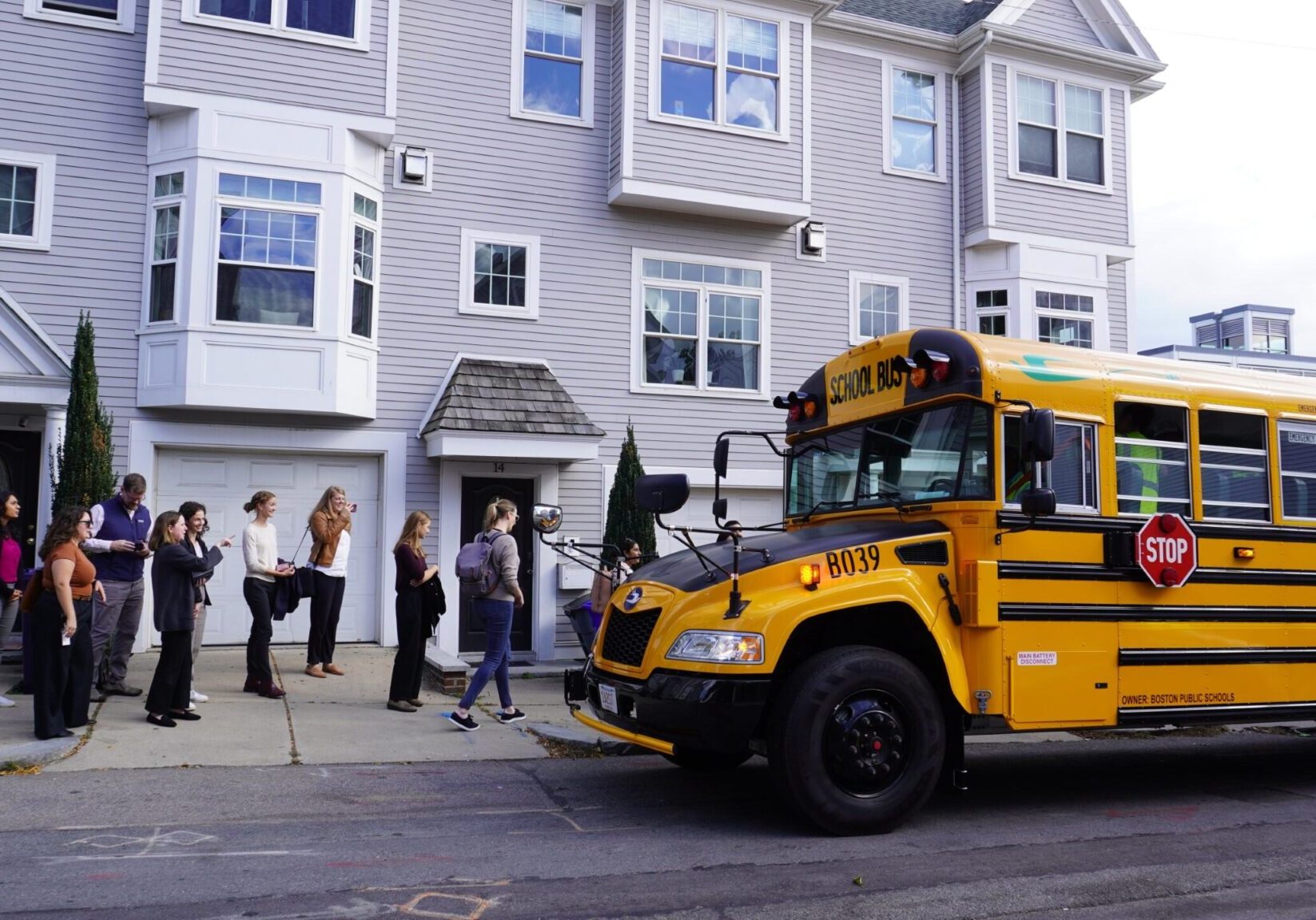
MassCEC staff board an electric school bus on the way to attend an infrastructure focused depot tour. They are standing on a sidewalk and there is a large gray apartment or condo building behind them.

MassCEC staff board an electric school bus on the way to attend an infrastructure focused depot tour. Photo Credit: MassCEC.

Working with Utilities

Electrifying a school bus fleet requires a strong partnership with utilities

Early involvement and ongoing communication are essential throughout the transition. Utilities play a key role in installing chargers and equipment, assessing a site’s electrical needs, and offering utility EV programs and funding to help offset capital and operational costs. However, these assessments and infrastructure deployment often have long lead times.

Reaching out to utilities early and often in the planning phase is crucial

Doing so allows them to evaluate existing infrastructure and capacity. This helps school districts and municipalities to better understand their needs. Utilities may also be able to assist with planning for fleet growth beyond the initial bus procurement without oversizing equipment or incurring excessive capital costs. They may be able to work with school districts and municipalities to install infrastructure that supports future expansion as a school bus fleet grows. 

A key part of the pre-planning process is understanding whether there is available electric capacity to serve the ESB charging site. School districts in National Grid and Eversource territory can use the Utility System Data Portals to evaluate whether there is sufficient electrical capacity available to serve the site. These online interactive maps provide visibility into the electric grid distribution system, including information about feeder loading and available hosting capacity, feeder locations, substation source, planning area, and voltage information.  

School districts served by Municipal Light Plants should reach out to their utility contact to discuss plans for ESBs.

If a site does not or may not have the capacity readily available, the utilities can perform detailed analyses (for a fee).   

Eversource customers should contact their community relations contact and National Grid customers can contact [email protected]. 

Additional Resources

Power Planner for Electric School Bus Deployment
World Resources Institute
 

The Power Planner is a tool designed to help prepare for and facilitate discussions with electric utilities regarding the electrification of school bus fleets. This resource focuses on nine essential steps to guide the planning process for transitioning school bus fleets to electric. 


Working with Your Utility to Electrify Your School Bus Fleet
World Resource Institute 

This guide outlines the importance of working with utilities for school fleet electrification, explaining how, when, and why to involve them in the process


Coordinating with Electric Utility Partners
Environmental Protection Agency

This resource aims to assist school districts and municipalities in preparing to work with their electric utility. 


Working with Electric Utilities
Clean Cities Coalition’s Flipping the Switch Series

This 10-minute video discusses working with your utility when assessing power needs. 

Selecting Charging Infrastructure

Selecting charging infrastructure for electric school buses requires an approach that ensures both efficiency and sustainability.

This involves choosing appropriate charger types, transformers, and distribution panels. Ensuring a sufficient power supply to a site may require grid upgrades.

Additionally, software for managing charging schedules and energy use is essential to lowering both the fueling cost and the electric grid upgrade costs

To ensure the correct charging infrastructure equipment is installed, school districts should plan for both the vehicles and the charging infrastructure in tandem. Ideally, the charging infrastructure should be installed and operational before electric school buses are delivered. Doing so will prevent situations where school buses arrive but cannot be used because the charging infrastructure is not yet ready.   

There are two types of electric school bus chargers: Level 2 and Level 3/Direct Current Fast Charging (DCFC). Level 2 chargers (sometimes referred to as Alternating Current or AC) provide slower charging speeds at a moderate cost. DCFC chargers provide significantly faster charging, though they are considerably more expensive and may require additional grid upgrades. The following table compares the specifications of Level 2 and DCFC chargers.

Source: NYSERDA – Electric School Bus Guidebook, Guide 3: Charger Purchasing
https://www.nyserda.ny.gov/All-Programs/Electric-School-Buses/Electric-School-Bus-Guidebook 

 
Category Level 2 Level 3
Voltage 208V / 240V 480V
Charger Speed Up to 19 kW 30 kW to 125 kW
Charger Time for a 150 kWh Battery 6 – 11 Hours 1 – 5 Hours

Resource: NYSERDA, New York State Electric School Bus Roadmap, Final Report, September 2023
NYSERDA – Electric School Bus Guidebook, Guide 3: Charger Purchasing https://www.nyserda.ny.gov/All-Programs/Electric-School-Buses/Electric-School-Bus-Guidebook  

In general, Level 2 chargers are well-suited for overnight charging and usually provide sufficient power to fully charge buses during these off-peak hours. On the other hand, DCFC charging is advantageous for bus fleets with long routes, particularly if the routes include challenging conditions (such as steep hills), run during extended cold weather, or require midday charging between morning and afternoon routes. School fleets may use a mix of Level 2 and DCFC chargers to lower costs. 

During the fleet assessment, the charging needs of a fleet will be analyzed to determine what speed of charging is needed, referred to as “right sizing” the infrastructure. Many factors influence the choice between Level 2 and DCFC charging, including bus operating schedules, budget, infrastructure capacity, and the vehicle itself. 

As site and grid upgrades may be required before either Level 2 or DCFC chargers can be installed, school districts should work with the utility provider in advance to determine whether upgrades are necessary. Additionally, it is crucial to work with the electric school bus dealer and charger manufacturer to ensure that the electric school buses are compatible with the chargers themselves. 

Vehicle-to-Everything (V2X) and Vehicle-to-Grid (V2G)

Vehicle to everything (V2X) is a collective term used to describe the different “bidirectional” functions that electric school batteries can support. These functions can include vehicle-to-grid (V2G), vehicle-to-building (V2B), and vehicle-to-vehicle (V2V). Additionally, given their predictable schedules and large battery capacities, electric school buses can serve as mobile backup power sources during grid outages caused by extreme weather or other emergencies, enhancing infrastructure resilience. 

Vehicle-to-Grid (V2G) technology, also referred to as “bidirectional charging” for electric school buses refers to a system where vehicles both consume and supply electricity into the grid. When not in use, the energy stored in their batteries can be discharged back into the grid. V2G can lower energy costs for school fleet operations by pulling energy from the grid when electricity prices are lower and using the stored energy during times when electricity prices are higher. This bi-directional energy flow can help reduce energy costs and potentially generate revenue for municipalities and school districts.  

V2G is a relatively new technology and has challenges, including high equipment costs, complicated interconnection processes, additional coordination with utilities, and the need for load impact studies. Several school districts are now piloting this technology, and the insights from these early adopters will help improve the technology and processes for future adopters to realize the benefits of V2G.  

Sources: NYSERDA – Electric School Bus Guidebook – Guide 3: Charger Purchasing 
https://www.nyserda.ny.gov/All-Programs/Electric-School-Buses/Electric-School-Bus-Guidebook 

NYSERDA, New York State Electric School Bus Roadmap, Final Report, September 2023 

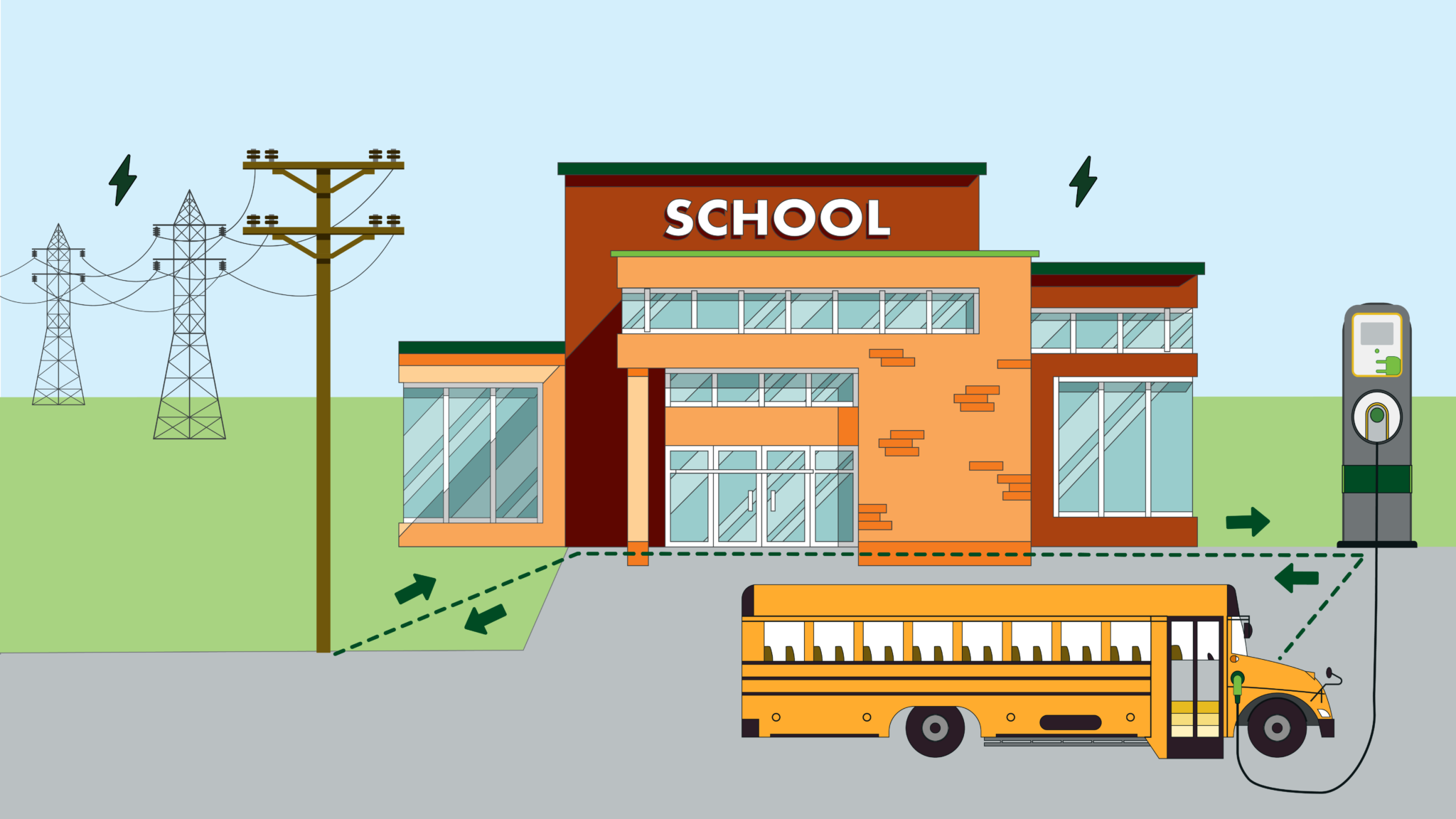
Illustration of a yellow school bus parked outside of a school building and plugged into an EV charger.

Illustration represents a school bus parked outside of a school building, plugged into an EV charging station being charged.

Additional Resources

Electric School Bus Charging 101
World Resources Institute
 

This four-page summary provides a high-level overview of the various types of charging options for school buses.


All About Charging Infrastructure
World Resource Institute 

This five-part video series covers the basics of charging infrastructure. The short videos cover topics such as electric utility connections, site power connections, service meters, circuit breaker panels, site optimization, and important factors to consider for charging infrastructure.


Determining Charging Needs and Selecting a Charger
Clean Cities Coalition’s Flipping the Switch Series 

This 9-minute video provides an overview of charging infrastructure, determining charging needs, and selecting chargers.  


Interconnection Challenges and Solutions
Clean Cities Coalition’s Flipping the Switch Series  

This 7-minute video provides an overview of interconnection challenges and solutions.  


Charging Best Practices, Incorporating Charge Management, Solar, Battery Storage, and Vehicle-to-Grid
Environmental Protection Agency

This webinar addresses best practices for charging and covers incorporating charge management, solar, battery storage, and vehicle-to-grid (V2G) technologies into electric school bus projects. Video Recording and Slide Deck  


Equipment Overview, Future Proofing, EVSE RFPs, and Best Practices 
Environmental Protection Agency

This May 2024 webinar, hosted by the US EPA, provides an overview of equipment, future proofing, EVSE RFPs, and best practices for electric school bus projects. Video Recording and Slide Deck 


Vehicle-to-Grid Overview, Barriers, Opportunities
Department of Energy

This 7-minute video provides a summary of Vehicle-to-Grid technologies and highlights both opportunities and barriers as they pertain to electric school buses. Module 


Charging Best Practices, Incorporating Charge Management, Solar, Battery Storage, and Vehicle-to-Grid
Environmental Protection Agency

This webinar addresses best practices for charging and covers incorporating charge management, solar, battery storage, and vehicle-to-grid (V2G) technologies into electric school bus projects. Video Recording and Slide Deck 


Advancing Vehicle-to-Grid Technology Adoption
SAFE and Electrification Coalition

This report addresses the necessity of V2G technology, how it can be utilized, what benefits are provided, as well as barriers that limit the scope and scale of deployment. The report also includes policy recommendations that expedite the deployment of both V2G technology and EVs. 


V2X Implementation Guide: Implementation Guide and Mutual Aid Agreement Template for Using Vehicle-to-Everything-Enabled Electric School Buses as Mobile Power Unites to Enhance Resilience During Emergencies
SAFE and Electrification Coalition

This guide describes the potential to use V2X-enabled electric school buses as alternative emergency backup power sources during outages.  


World Resources Institute

This catalog includes information on known compatible chargers for many ESB types and models.
 

Site Selection and Planning

Choosing a school bus depot site is critical and requires evaluating factors such as proximity to minimize additional travel and operational costs, as well as ensuring the location has adequate electrical grid capacity to limit the need for major upgrades (see Working with Utilities).

The location should also provide enough physical space for school bus parking, installation of charging infrastructure (e.g., charging units, transformers, and distribution panels), and room for potential future expansion. School districts should also consider whether the municipality or a third party owns the property, and account for lease lengths when making long-term infrastructure plans. The fleet ownership model is also an important factor in this decision (see Electric School Bus Ownership and Operation Models). 

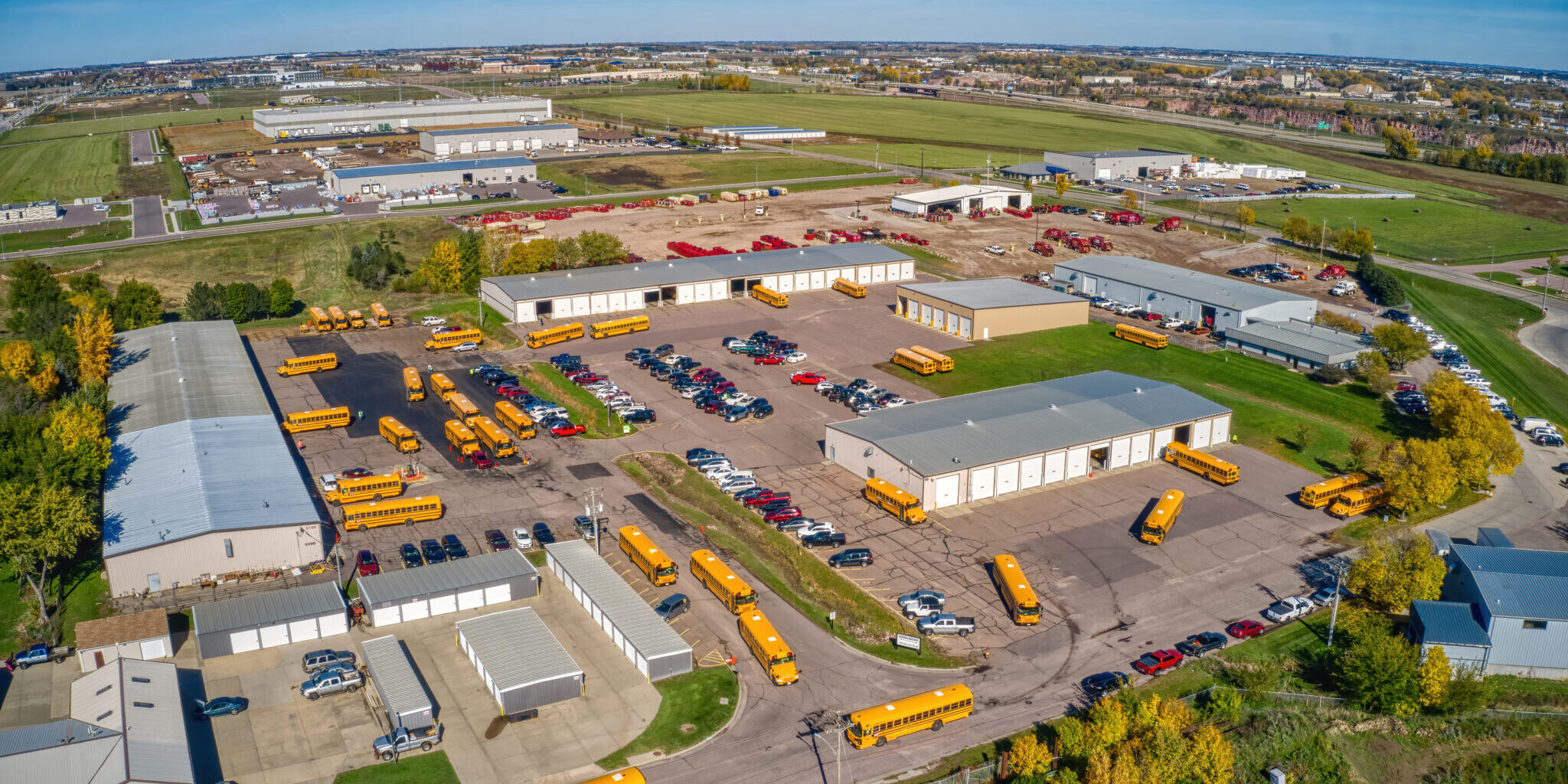
Aerial View of a School Bus Yard during Departure Time
Photo Credit: AdobeStock_46385634

Additional Resources

Electric School Bus Facility Assessment Guide
World Resources Institute
 

The Electric School Bus Facility Assessment Guide is a toolkit featuring worksheets for school districts and municipalities to perform facility assessments. 


Electric School Bus Guidebook – Guide 6: Site Planning,
NYSERDA

This section of the Guidebook identifies important factors to address when planning the electrification of a site for school bus charging. 

Workforce Training

Incorporating workforce training is crucial for successfully transitioning to school bus fleets, as the transition requires specialized knowledge in maintenance and operations. Workforce training will ensure safety and compliance, while also advancing efficient and reliable fleet management. Ongoing training will ensure that the workforce stays informed about the latest advancements in this field. 

Electric School Bus Training Standards

Electric School Bus Training Standards
World Resources Institute
 

The Electric School Bus Workforce

Behind the Wheel and Behind the Scenes: The Electric School Bus Workforce
Alliance for Electric School Buses and World Resources Institute

Training (Driver and Technician)

Training (Driver and Technician)
Clean Cities Coalition’s Flipping the Switch Series
 

Training Plan and Certification

How to Develop a Training Plan and Where to get Certified Training
United States Environmental Protection Agency (EPA)

Prioritizing Workers

Training and Development Guidebook

Electric School Bus Guidebook – Workforce Training and Development
New York State Energy Research and Development Authority

Close up of a school bus driver wearing a green and orange safety vest sitting in the drivers seat driving.

Photo Credit: AdobeStock_591649264

Case Study: Worcester Public Schools

Worcester Public Schools started operating all its own school buses in the 2022-23 school year, ending its previous dependence on a third-party provider.

This shift to in-house transportation operations has resulted in major efficiencies that benefit students and families, resulting in an annual cost savings of $5 million. Improvements include better on-time performance, staffing, optimized routing, and ensuring students get to school safely.

By taking busing in-house, Worcester Public Schools can guarantee drivers 30 hours of work per week, allowing them to qualify as full-time city employees, with access to insurance benefits and the city’s pension program. 

Worcester Public Schools plans to add 15 electric school buses to its fleet, funded by a grant from the U.S. Environmental Protection Agency (EPA). These buses are anticipated to be operational by 2026, following the construction of electric vehicle charging stations and related infrastructure at the Transportation Yard. 

Worcester Public Schools – Transportation 

Worcester starts year three of in-house busing sporting savings and fully-staffed drivers
Telegram & Gazette, August 22, 2024 

Operations, Maintenance, and Safety

Operations A crank shift wheel.

Maintenance Two tools in black crossing over one another.

Safety Considerations A black clipboard with a white check mark on it.

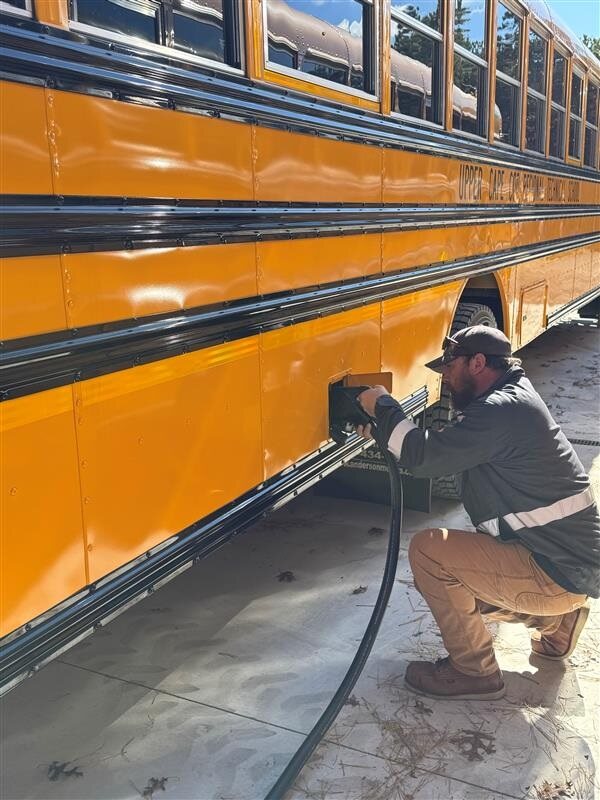
A person wearing construction type clothes kneels in front of the side of a school bus, holding and putting into the bus, an electric charging cable.

EVSE service technician completes the charger commissioning process at a Massachusetts technical school.
Photo Credit: MassCEC

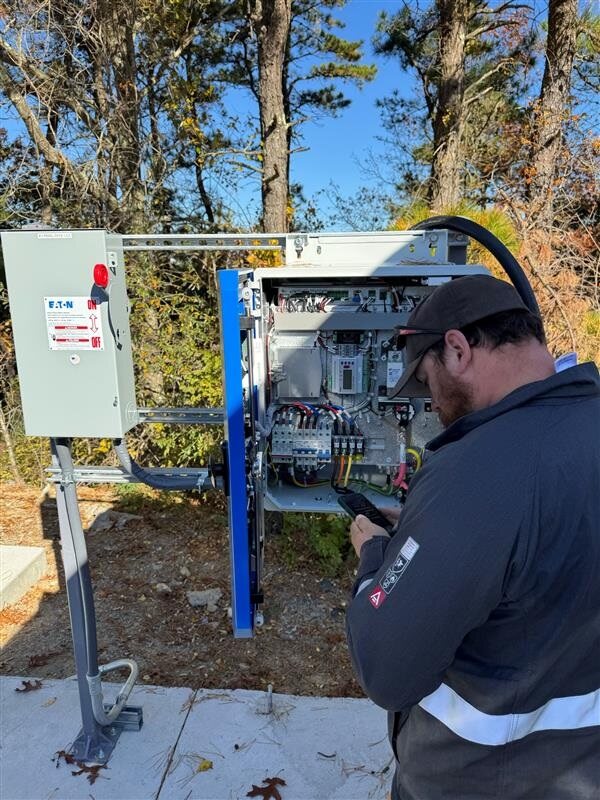
A person wearing green pants and a dark jacket with a beard and dark short hair, stands in front of an EV cable box, working on it.

EVSE service technician completes final step in charger commissioning checklist, verifying successful charge sessions.
Photo Credit: MassCEC

Total Cost of Ownership

Electric school buses currently have higher initial costs compared to other types of school buses. However, this cost difference is anticipated to decrease in the coming years as battery costs decline and the electric vehicle market matures. Additionally, electric school buses typically have lower maintenance and fuel expenses over their lifespan, which can help lower the Total Cost of Ownership (TCO) of ESBs.  

 Over the next few years, the TCO of ESBs is expected to reach parity with that of diesel-powered school buses. TCO analyses all current and future capital and operating expenses related to owning an electric school bus. These expenses include the purchase, operation, and maintenance of the bus. Evaluating TCO is a crucial factor when considering the purchase of a new school bus. 

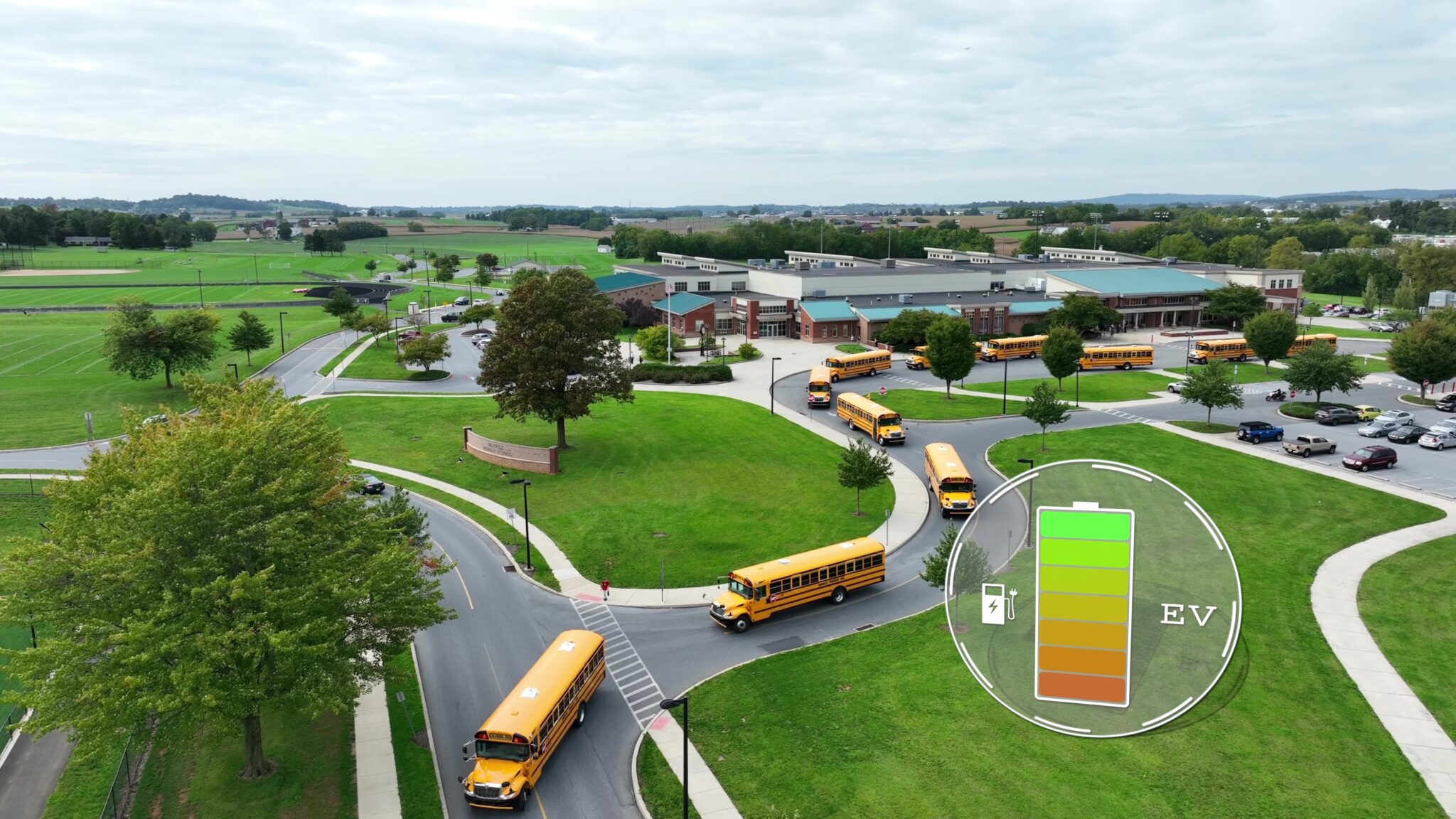
Electric buses with battery status icon. Aerial of eco-friendly public transport of students in USA. EV graphic charging icon with yellow buses leaving a school parking lot.
Photo Credit: AdobeStock_723781139

Additional Resources

Building the Case for Electric School Buses, Total Cost of Ownership (TCO), Emissions, and Tools 
U.S. EPA
 

This August 2024 webinar discusses total cost of ownership and emissions calculators to build a case for electric school buses. Video Recording and Slide Deck 


All About Total Cost of Ownership (TCO) for Electric School Buses
Electric School Bus Initiative

This resource gives an overview of electric school bus TCO considerations and assumptions, presents example TCO scenarios, and provides tools for TCO analysis.


Total Cost of Ownership Calculator for Electric School Buses
World Resources Institute

This calculator allows users to input details about potential electric buses and operations and compare the TCO to that of a comparable diesel bus. 

Funding and Financing

There are several grants and programs available to defray the upfront and ongoing costs of deploying electric school buses. School districts should consider all available sources to reduce the costs of electric school buses and charging infrastructure.

Several of these grants and programs are tailored toward or provide additional incentives for disadvantaged communities. Some programs and funding sources can be used together, or “stacked”, while others cannot. Applicants must review the specific program criteria to determine the feasibility of stacking program funding. Users of this resource should validate that the information provided here is still current.  

This section is structured according to the key steps in the fleet customer journey: Planning, Utility Infrastructure, Electric Vehicle Supply Equipment (EVSE), Electric School Buses (ESB), Federal Tax Credits for EVSE and ESB, and Operating Costs. 

Planning An open book in black.

MassCEC, Eversource, and National Grid all offer no-cost fleet assessment programs. For more detailed information on these programs, refer to Fleet Assessment Programs in the Conducting a Fleet Assessment section. 

The Massachusetts Clean Energy Center’s (MassCEC) Accelerating Clean Transportation (ACT) School Bus program includes two programs: Advisory Services and Fleet Deployment (see under the Electric School Buses section below). 

Utility Infrastructure A factory building in black with white windows.

Electric Vehicle Supply Equipment (EVSE) Icon of a black EV charging station. It has a white lightening bolt on it, and an electric plug coming out of it.

Electric School Buses (ESBs) – State and Federal Funding Front of a school bus in black with white lights and windows.

As of February 2025, information on Federal grants is accurate. However, the federal landscape is rapidly changing. Users of this information are advised to check whether these grants remain available. Users are welcome to contact MAPC at [email protected] for updated information.

Federal Tax Credits for EVSE and ESB Two stacks of three coins in black.

Municipalities and school districts can utilize federal tax credits to offset electric school bus costs. Federal incentives, such as the Inflation Reduction Act’s (IRA) Qualified Commercial Clean Vehicle Credit (45W) and the Alternative Fuel Vehicle Refueling Property Credit (30C), can help lower the costs of purchasing a new electric school bus and installing charging infrastructure. State and local entities can take advantage of these incentives through the IRA’s Elective Pay (also referred to as Direct Pay) mechanism, which allows tax-exempt entities to access these tax credits. As of February 2025, information on Federal grants is accurate. However, the federal landscape is rapidly changing. Users of this information are advised to check whether these grants remain available. Users are welcome to contact MAPC at [email protected] for updated information. 

Operating Costs Icon of a bill of money.

Procurement

Municipalities or school districts who directly own or lease their school buses can procure school buses, electric vehicle charging equipment, or enter into an agreement with a turnkey, transportation-as-a-service, or charging-as-a service provider. 

Municipalities or school districts who directly own or lease their school buses can procure school buses, electric vehicle charging equipment, or enter into an agreement with a turnkey, transportation-as-a-service, or charging-as-a service provider. 

Municipalities and school districts who contract with third-party providers for school bus services can collaborate with their provider to electrify their fleets. Municipalities and school districts should initiate conversations with third-party providers early to plan for electrification. Many third-party providers are interested in and excited about electrification, and early collaboration can help all parties plan for new costs and operational changes, ensuring a smooth and financially feasible transition.      

Municipalities and school districts may also explore the options of either contracting with a different third-party provider or elect to forgo contracting with a third-party provider and instead directly own their buses and/or charging equipment. 

Procurement through Operational Services Division (OSD) Contracts

Municipalities and school districts can procure electric vehicles, including school buses, and charging infrastructure through the following Operational Services Division (OSD) contracts. OSD can now procure services and infrastructure in a single procurement under MGL c. 7, section 4, subsections 22P (a) and (b).

Combined Procurement of Electric School Buses and Charging Stations

Chapter 239 of the Acts of 2024 were signed into law through the  March 2024 Supplemental Budget (Chapter 206) contains a provision (Section 4) which  updated the municipal procurement statute, MGL c. 30B, by adding a new section 23. This new section enables municipalities to procure electric school buses and charging infrastructure together.

Template Request for Proposals and Guidance Document for the Procurement of a Turnkey Electric School Bus Service

MAPC developed a template request for proposals (RFP) and Guidance Document for the procurement of a turnkey electric school bus service.

School Bus Model Types, Specifications, and Costs

The 2024 Electric School Bus Market Study offers a detailed overview of the electric school bus market and the Buyer’s Guide lists the electric school bus models currently available, along with detailed specifications. These resources aim to provide a comprehensive understanding of the electric school bus market and the available offerings.

Connecting with Peers and Experts

Connect with other school districts who have worked or are currently working to electrify their school fleets through the Electric School Bus Forum, organized by the National Renewable Energy Laboratory (NREL) and the Joint Office of Energy and Transportation.

Join the Electric School Bus Network’s bi-monthly forums to gain insights, receive updates, and connect with other districts passionately electrifying their school bus fleets.

Speak with an expert from the World Resources Institute’s (WRI) Electric School Bus Initiative to get technical assistance and guidance for electrifying your school fleet.

MetroWest School Fleet Electrification Study

MAPC’s Transportation and Clean Energy Departments conducted a MetroWest School Fleet Electrification Study, which explored pathways for electrifying school bus fleets in 22 school districts, primarily in MetroWest.

MAPC collected school bus data from the 22 school districts in September-October 2023 by administering a survey. The summary of the survey findings includes data on general characteristics of the school districts and current bus fleets, ownership models, bus depots, electric school bus programs, and interest in regional collaboration.

This initiative supported these school districts in planning their transition to electric buses and identified available funding opportunities. As part of this study, MAPC held a series of monthly workshops between January and June 2024 for the participating school districts.

These workshops covered various topics that included ownership models, fleet assessments, charging infrastructure and site selection, funding and financing, and procurement. Speakers included representatives from local municipalities who shared their experiences with adopting electric school buses, along with speakers from National Grid, school bus vendors, the Massachusetts Clean Energy Center, and the World Resources Institute.

Workshop Topics and Presentation Slides:

The School Districts:

Acton/Boxborough
Ashland
Concord
Dedham
Dover-Sherborn
Framingham
Harvard
Holliston
Hopkinton
Lexington
Lincoln
Marlborough
Medfield
Millis
Natick
Needham
Northborough-Southborough
Wayland
Wellesley
Westborough
Weston
Westwood

Future Considerations for Electric School Buses

Prioritize Electrifying School Buses that Transport METCO Students
METCO (Metropolitan Council for Educational Opportunity) is a school integration program that enrolls Boston students in grades K-10 in participating suburban public schools to help reduce racial isolation. Approximately 3,150 students attend 190 schools across 33 school districts in Massachusetts. METCO does not manage contracts for school bus services; this responsibility belongs to the individual school district or municipality. MAPC recommends that municipalities and school districts participating in METCO prioritize electrifying the school buses that transport these students as part of their school fleet electrification plans. Since these buses travel longer distances, using electric school buses for these routes can significantly reduce air pollution and lessen adverse health impacts on the students.  

Establish State Policy Commitments and Dedicated Funding for School Bus Electrification
In 2021, Massachusetts adopted California’s Advanced Clean Trucks (ACT) rule, which mandates that manufacturers sell an increasing percentage of zero-emission vehicles starting with model year 2025. Under this rule, 75% of sales for class 4-8 straight truck sales, which includes school buses, will need to be zero-emission by model year 2035.  

Several states that have adopted California’s ACT rule have set requirements or targets for transitioning to electric school buses, including California, Colorado, Maryland, New York, and Washington. Furthermore, other states, such as Colorado, Connecticut, Maryland, New Jersey, and New York, have dedicated funding for electric school buses. 

To accelerate the transition to electric school buses, it is crucial to have policy commitments that specify requirements or targets for electrification, along with dedicated funding. Both commitments can facilitate the adoption process and provide municipalities, school districts, and manufacturers with clear guidance on the market’s direction.  

Sources:
Massachusetts Low Emission Vehicle (LEV) Program
Electric School Bus US Market Study, World Resources Institute, August 2024. 
Electric School Buses Win Big in US State Legislative Sessions, World Resources Institute, January 26, 2022. 

MAPC developed this School Bus Electrification Roadmap as part of this study to share learnings and resources with all Massachusetts municipalities and school districts.  

The School Bus Electrification Roadmap aligns with the recommendations adopted in the regional plan MetroCommon 2050, including accelerating the transition to a clean energy future and decarbonizing the building and transportation sectors.   


Acknowledgements 
We would like to express our gratitude and acknowledgment to the following organizations for their contributions to the development of this resource: Eversource, Green Energy Consumers Alliance, Highland Electric Fleets, Massachusetts Clean Energy Center (MassCEC), National Grid, Operational Services Division (OSD), and the World Resources Institute.

Continue reading...

MBTA Communities Show Your Support Toolkit

MBTA Communities Show Your Support Toolkit

Tools for a Successful Adoption

Photo Credit: AdobeStock_417255100

MBTA Communities Show Your Support Toolkit

In January 2021, the Massachusetts Legislature adopted an Economic Development Bond Bill (H5250) that made long-overdue changes to the state’s Zoning Act (MGL Chapter 40A). The “Housing Choices” sections of the bill made it easier for municipalities to adopt pro-housing zoning changes, discourage meritless anti-housing lawsuits, and require each of the 177 communities in the MBTA service district to zone for multifamily housing by right near transit and other smart growth locations.

The law created a new section of the Zoning Act—Section 3A—and authorized the Executive Office of Housing & Livable Communities (EOHLC) to develop guidelines for implementation of the requirements. It requires all MBTA Communities to have at least one zoning district of reasonable size that allows multifamily housing development without a discretionary permitting process.

In 2024, more than 100 communities will be taking zoning changes to Town and Council Meetings for affirmative votes to comply with the law. MAPC has collected and produced a variety of resources to support these local adoption processes.

Visit www.mapc.org/mbta-multifamily-zoning to access MAPC’s interactive District Suitability Analysis Tool, learn how MAPC is helping municipalities comply with Section 3A, find opportunities for technical assistance, read through FAQs about Section 3A, and more!

Get in Touch

If you have any questions, please contact:

Emma Battaglia
Senior Housing & Land Use Planner

Andrea Harris-Long
Manager of Housing & Neighborhood Development

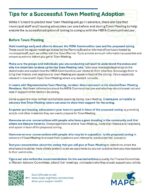
How to Use this Toolkit

This toolkit aims to help educate community members and municipal stakeholders about the housing crisis impacting Massachusetts cities and towns and why it is critical to update zoning to allow for increased housing production. The toolkit connects the dots between housing and other community goals like open space preservation, climate change resiliency, economic viability, and other aspects of community development. It also provides tips and best practices for successful community outreach and guidance on navigating the local adoption process.

Toolkit Contents

Messaging Guide

This guide provides an overview of the MBTA Communities Law (Section 3A), how it can be used to create positive impacts on the affected municipalities, and why it is vital to help solve serious problems and meet the needs of our communities.

Community Outreach Planning

This guide provides an overview of the steps to a successful engagement process, including connecting with stakeholders, empowering through information and knowledge-sharing, and creating a robust local adoption process that brings in a diverse range of voters who may not have been involved in past municipal processes.

Navigating Town Meetings

Town meeting is a strong channel for community-led change and decision-making. In order to strengthen this practice, it is important to raise awareness and understanding of the process to all community members, new and old. These resources provide a general overview of the Town Meeting process and aim to help community members to feel confident about voicing their opinions to shape their communities.

Downloadable Materials

MAPC has prepared a number of materials that you can utilize in your local adoption outreach, including informational fliers and a template presentation for a Show Your Support Training. The PowerPoint materials are downloadable and easily editable so that you can customize them for your locality (e.g., adding your municipality’s or organization’s logo).

Messaging Guide

This section provides an overview of the MBTA Communities Law. It goes over what the law is, why it was passed, and how it can help municipalities. It offers ways to discuss Section 3A through a variety of different lenses depending on community priorities.

Explaining the Housing Crisis

There is a nationwide housing crisis occurring across the United States. While it shows up in different ways in different places, it affects communities of all sizes, demographics, geographies, and income status. Greater Boston is one of the regions in the country where the housing crisis is especially apparent. There are a variety of factors that contribute to the housing crisis, including:

  • A housing shortage: There is just not enough housing supply to meet demand.
  • High cost of living: Residents are housing cost-burdened, particularly renters.
  • Wage stagnation: Wages have not kept up with the rate of inflation and the cost of living.

Discussing 3A Through Different Lenses

You may want to tailor your messaging about the MBTA Communities Law in a way that highlights the connections between the law and other priorities for your community. We have provided ways you can discuss Section 3A through a variety of different lenses, including:

  • Racial equity and public health
  • Climate change and conservation
  • Community stability
  • Economic development
  • Aging populations and livable communities

Community Outreach Planning

A successful community outreach process to enable local compliance with the MBTA Communities Law involves two primary stages:

  • Connecting with community stakeholders so they know about your municipality’s proposal for compliance and can get involved with the local adoption process
  • Holding effective community meetings and conversations in order to empower stakeholders through information and knowledge-sharing, respond effectively to resident concerns, and result in a successful local adoption process

Navigating Town Meetings

Congratulations! You have proposed bylaw or ordinance language and you are ready for Town Meeting. Now it’s time to map out your road to local adoption. This section describes the Open Town Meeting and Representative Town Meeting processes in Massachusetts and suggests tips for success that municipal staff and advocates can use. It is important to note that each town has its own way of running its Town Meeting, depending on its charter and bylaws.

Downloadable Materials

Continue reading...

Language Access Guide

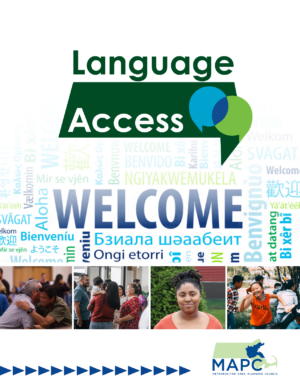
A sign that has the word "Welcome" on it in different languages. Words to the right of the sign say, "Language Access". The background color of the entire image is a light blue.

Welcome to the Language Access Guide!

We have put this collection of ideas, tools*, and resources together to offer a central starting point from which to build your Language Access work. Whether you’re just starting to think about Language Access, or you’re a seasoned expert, we hope that this guide can be a resource to you.

*While MAPC may use apps and tools mentioned in the Language Access Guide, references to their uses are not endorsements of the products.

What is Language Access?

Language is fundamental to our connection with one another. Communication is key to taking part in society and in public processes. Language Access at its core is working with the person across from you to understand each other. 

Language Access is the practice of designing public process, services and communication that:  

  • Are offered in plain language; 
  • Include multiple languages (translation, interpretation or in-language facilitation, multiple modes of access etc.); 
  • Meet people’s access needs (closed captions, sign language interpretation, etc.); 
  • Honor and celebrate people’s cultures. 

MAPC defines Language Access within a Language Justice Framework.  

We consider Language Justice to mean:  

  • Every person can meaningfully take part in all aspects of daily life.  
  • Our systems and processes consistently adapt to people’s needs.  
  • Every person can not only act but lead in their community in the language and format that works best for them.

We recognize that Language Access is constantly evolving. The information in this guide is by no means finite, and we always welcome additional input. We are also hoping this can be a living document that grows as we continue to learn about Language Access! To share about work that you are doing on language access, your challenges, successes or tools, reach out to Sasha Parodi ([email protected]).  

We see this guide as a reference for various practices, strategies or considerations within Language Access. It is not meant to be directive, but rather an offering of prompts and tools to support you in establishing your Language Access practices. We encourage you to collaborate with folks in your community and in the region who are doing this work.

Design Credit: David McDonald, MAPC

Stay in the Know

Subscribe to MAPC’s Language Access email list to say updated on tools, resources, and much more.

To connect with other municipal Language Access practitioners and/or participate in ongoing discussions about Language Access, join the MA Municipal Language Access Network. This Network meets monthly to discuss language access questions, learn from each other and work through challenges together.

Looking to discuss Language Access in your community? MAPC’s Community Engagement Team is available to connect with you to discuss how you can bring Language Access to your community. You can reach out to us at [email protected].

This project would not have been possible without the collaboration of the following project partners:  

The seal of the Town of Arlington.

Town of Arlington:

Jillian Harvey
Diversity, Equity & Inclusion Director

Teresa Marzilli
Community Outreach & Engagement Coordinator

The seal of the City of Beverly.

City of Beverly:  

Joscelyn Ruelle-Kersker
Chief of Staff to Mayor Cahill

Wangari Fahari
Diversity, Equity & Inclusion Director

The seal of the Town of Milton.

Town of Milton:  

Caroline Kinsella
Health Director 

Karolyn Ho
Health Agent

The seal of the Town of Randolph.

Town of Randolph

Michelle Tyler
Planning Director 

The Blue Hills Communiy Health Alliance logo in blue.

Blue Hills Community Health Alliance: 

Ashley Stockwell
Program Director

Language Access Glossary

In addition to the Language Access Guide, we’ve also put together a Language Access Glossary, which includes a collection of commonly used phrases and words in the following languages:  

  • Spanish 
  • Haitian Creole  
  • Arabic 
  • Brazilian Portuguese 
  • Simplified Chinese 
  • Vietnamese 

We hope that this can be a tool to support you in your translation procurement. This resource should be used to advance current language access (translations) on current and future projects. By having this resource, we hope that you can spend budget to expand your services.

If you would like to add terms to this Glossary, please email Najee Nunnally ([email protected]) and Sasha Parodi ([email protected]).

Launch of the Language Access Guide

On Wednesday, February 28, 2024, MAPC hosted a virtual launch event to introduce the Language Access Guide for Municipalities to the public. You can watch the event in its entirety in the video to the left.

Thank you to everyone who joined us for this event!

Funding for this Project

The Language Access project and work is funded by the Blue Hills Community Health Alliance, the District Local Technical Assistance (DLTA) program, and the Planning for MetroCommon 2050 Technical Assistance (PMTA) program.

Continue reading...

How to Do Business in Acton

How to Do Business in Acton: A Guide for Acton Business Owners

Acton Town Hall aerial view in 472 Main Street in historic town center of Acton, Massachusetts MA, USA.
Acton Town Hall | Photo Credit: AdobeStock_585978301
How to Do Business in Acton

Owners of businesses of all sizes are often stretched for time. This reality can lead to owner missteps in opening or expanding a business, permitting delays or, worse yet, acquiring a site before learning if the business type and location represents an allowable activity or meets local health, safety, and environmental standards.

September 2023
To remedy this, MAPC partnered with the Town to create the How to Do Business in Acton Guide, a helpful resource for business owners seeking to launch, expand or enhance their operations in Acton. It provides a one-stop shop for how to meet various requirements with accessible forms and key contacts, equipping the owner to take the steps in obtaining, expanding, or changing their business premises.

MAPC’s Economic Development Division helped the town understand the needs of businesses in their community, and infused their comments and concerns into the toolkit’s development.   

Questions?

If you have questions or would like to work with MAPC on an economic development engagement, please contact:
Angela Brown, Chief of Economic Development
[email protected] 

Project Funding

How to Do Business in Acton was funded by a Commonwealth Community Cabinet Best Practices grant  

Continue reading...

Immigration Resources

Immigration & Migration Resources

Photo Credit: AdobeStock_289765077

Immigration Resources

Background

Massachusetts has a large immigrant population with a diverse set of experiences, skills, and goals in the Commonwealth. Communities have a role to play in supporting these residents and helping people navigate the immigration system and other social services. Learn more about current laws, regulations, and best practices to support immigrants in Massachusetts through the resources below.    

For Municipalities

Municipal staff interested in connecting with other municipalities supporting migrants and immigrant communities, are invited to join MAPC’s Municipal Immigration Support Network (MISN) meetings hosted monthly.
If you are interested in joining this group, please contact Georgia Barlow at [email protected] to learn more. 

Trusted Immigration Resources

Massachusetts Office of the Attorney General Immigration Resources

The Massachusetts Office of the Attorney General is working to provide updated information for immigrants and communities across the Commonwealth.  

Check their page for information including but not limited to: 

  • Know your Rights guides
  • Service and healthcare provider guidance 
  • Worker and employer guidance
  • School and education guidance
  • Finding lawyers 

Massachusetts Immigrant and Refugee Advocacy Coalition (MIRA)

The MIRA Coalition is a statewide immigrant advocacy organization.

Check their page for information including but not limited to:

  • Know Your Rights Guides
  • Family Preparedness Planning Information
  • Immigration Hotline 
  • Trainings 

Municipal Best Practices for Welcoming and Protecting Immigrant Communities Webinar

January 28, 2025 | MAPC and MIRA Coalition

Resources for Municipal Planning

Continue reading...

SUD: Solutions-Focused Resources

Substance Use in Massachusetts:

Resources for Regional Pathways to Prevention, Harm Reduction, and Recovery

SUD: Solutions-Focused Resources

It takes all of us working together on a regional approach to make a difference.

Approximately 9% of Massachusetts population over the age of 12 has a substance use disorder
(
SAMHSA). Substance use disorders occur when the recurrent use of alcohol and/or drugs causes clinically significant impairment, including health problems, disability, and failure to meet major responsibilities at work, school, or home (SAMHSA). 

MAPC knows that each municipality in the region is (and has been) doing the work on the front lines of this substance use crisis, every single day, working to save lives. COVID-19 didn’t help. According to statistics from the Massachusetts Department of Public Health, opioid-related overdose deaths increased by 9% between 2020 and 2021.

An all-out regional approach is needed. Be a part of the effort to address this important challenge and find collaborative solutions towards a region/state in which individuals have access to the care and support they need.

Our goal for the creation of this resources page is that it will support the ongoing regional prevention, harm reduction, and recovery work. This is your page and it’s fluid. If you are looking for a resource, and it isn’t here, let us know. We will consistently be adding to and updating this page. 

For Watching
Below you will find recordings from MAPC about municipal approaches to substance use in the Commonwealth.

How You Can Get Involved

MAPC, in partnership with the RIZE Foundation, hosts round table discussions for municipal staff working on a variety of Substance Use Disorder programs. If you are interested in joining these virtual conversations, please contact Claire Hoffman, [email protected].

Update

In early December, Governor Healey signed a FY23 closeout supplemental budget. This budget included policy changes to make it easier for cities and towns to receive and spend opioid settlement funds. Many municipalities were facing challenges with these dedicated funds that can be used for prevention, harm reduction, treatment, and recovery. New language clarifies that cities and towns that have received, or will receive, funds from opioid settlement agreements may place the funds into a special revenue fund. This special revenue fund can be expended at the direction of the chief executive officer. Additionally, if a community has already received these funds, there are new consolidation measures to support the municipality creation of a special revenue fund.


If you have questions, please contact:
Georgia Barlow
[email protected]

Claire Hoffman
[email protected]

Substance Use in Massachusetts: Regional Pathways to Prevention and Recovery Webinar Series

In early 2023, MAPC hosted a three-part webinar series focused on creating regional solutions to the Commonwealth’s substance use epidemic. One of the goals for the series was to bring municipalities together to address the substance use challenge and find collaborative solutions towards a region/state in which individuals have access to the care and support they need.

Webinar One
Webinar One: Understanding the Substance Use Landscape

Experts in the field talk about their work to create prevention and recovery solutions on this continuing crisis.
c

Webinar Presentation Slides

[Video is embedded from YouTube, still photo includes the MAPC logo, a headshot of Claire Hoffman from MAPC, and the text: Webinar Understanding the Substance Use Landscape, Claire Hoffman, MPH]

Webinar Two
Webinar Two: Shared Challenges and Best Practices

Municipal, health care, and social service providers discussed ways that municipalities can provide services and supports for substance use disorder through regional and collaborative approaches. 

No presentation slides for this webinar

[Video is embedded from YouTube, still photo includes the MAPC logo, a screenshot of one of the panelists speaking, and the text: Webinar: Substance Use… and includes the date of the recording]

Webinar Three
Solutions and Funding: Where Do We Go From Here?

The focus of the third and final webinar was on funding and policy for implementing sustainable, long-term solutions.

Webinar Presentation Slides

[Video is embedded from YouTube, still photo includes the MAPC logo, a headshot of Claire Hoffman of MAPC speaking, and the text: Solutions and Funding:…Principles for Use of Funds]
c

The Opioid Epidemic: A Mother’s Reckoning

In 2020, MAPC Artist-in-Residence Hortense Gerardo, along with The Boom House Productions, set out to create a short video (“video-let”) sharing the story of a family who lost their son/brother to the opioid epidemic, and how The Opioid Project helped them.

Learn more here

[Video is embedded from YouTube, includes the MAPC logo, and a still photo of a woman talking. Text on the screen: The Opioid Epidemic: A Mother’s Reckoning. Robyn Houston-Bean, Nick’s Mother]

Additional Resources

The following are resources provided by the Commonwealth of Massachusetts, community organizations, some of our partner organizations, and more.
We encourage you to take advantage of connecting with these entities who are also doing this work. 

State Level Resources

Federal Level Resources

Municipal Level Resources

Intervention Repositories

Partner with MAPC

This work takes all of us working together in collaboration as a region.

Is your municipality interested in partnering with MAPC for a prevention, harm reduction, and/or recovery project your community is working on? Let’s talk!

Claire Hoffman
Public Health Planner II
[email protected]

Continue reading...

Winter Energy Price Spike Communications Resources

A thermometer is sticking out of a blanket of white snow.
AdobeStock_193606723
Winter Energy Price Spike Communications Resources

Winter Energy Price Spike Communications Toolkit

A communications and social media toolkit for municipalities.

Energy prices in Massachusetts typically increase in the winter due to the combination of regional gas supply constraints and most of our electricity generation and heating for homes and businesses relying on gas.

Winter 2025-26 is no different. Overall energy price increases continue to impact affordability for millions of residents across the Commonwealth already burdened by the high inflation of the past few years. Assistance programs for heating bills and discounts on electricity and gas bills are available for many residents but hundreds of thousands of residents are expected to not be enrolled. 

Resources to Help You Inform Your Residents. This toolkit aims to support the communication with your community about the assistance resources available to them for heating, electric, and gas bills.

Go to section:

How to Use this Toolkit | Resources for Residents in Your Community | Social Media |
Social Media – Graphics | Social Media – Sample Social PostsAdditional Resources

Get in Touch

If you have any questions, please contact the MAPC Clean Energy Department at [email protected]


Press Contacts:

Amanda Linehan
Communications Director
617-388-1556
[email protected]

Tim Viall
Media Relations Manager
[email protected]

How to Use this Toolkit

This toolkit includes information from utilities, state agencies, and others, as well as template social media content you can tailor for your use in communicating with your residents. 

Toolkit Objective
This guide provides easy-to-use communications resources to inform consumers, residents, and small businesses about the increase in energy costs and near-term solutions. This guide includes: 

  • Resources for residents in your community 
  • Social media language and images 
  • Utility assistance fliers in 8 languages (English, Arabic, Cape Verdean Creole, Haitian Creole, Khmer, Portuguese, Spanish, and Vietnamese)
  • Links to additional resources 

Heat Pump Discount Rates for MA Customers

If your electric utility company is Eversource, National Grid, or Unitil, and you have a heat pump installed, you could be eligible for new discount rates this winter
(November 1, 2025 through April 30, 2026).

To learn more and find out if you qualify, please visit your utility company information webpage, provided at the links below.

Eversource: mapc.ma/EversourceHeatPumps
National Grid: mapc.ma/NationalGridHeatPumps


Municipal Leaders:
In the Social Media – Graphics section on this page, you will find graphics you can use to inform your community about the new heat pump discount. 

A heat pump attached to a brick home. There is snow on the ground and around.
AdobeStock_579396208

Resources for Residents in Your Community

Note: Massachusetts residents are protected from utility shut offs if they or someone in their household is seriously ill, have an infant under 12 months, or is an adult 65+ years old plus have a minor living with them (the utility must get approval from DPU in this case). Everyone is protected from electricity and gas shut-offs during the coldest months between November 15 and March 15. However, during this time a utility customer will continue to accrue debt if bills are unpaid and may be at risk of shut-off when the winter moratorium ends in March.

Social Media

Best Practices

Know Your Audience: Who are you posting this information to? Residents? Create your social posts with that audience in mind.


Know the Platform: The social media platform you are using to post on should inform how and what you’re posting. For example, posting on X (formerly Twitter) is for more immediate, word-limited posts. LinkedIn is for professional audiences, and there isn’t a word limit.  Facebook is for more causal postings. Instagram is for more visual posts. You can use the same post across platforms but we recommend changing it up a bit based on the platform!


Accessibility: Ensure your social posts are accessible to all by making sure to use alt text, and if you use hashtags, capitalize every first letter of each word in the hashtag. Learn about ways to make your social postings accessible.


Interactive: Amplify other sources on social media, such as official sources, agencies, and experts, by re-sharing or retweeting their posts.

Make Your Posts Stand Out

Example Hashtags
Capitalize the first leader of each word in the hashtag to make them more accessible.

#EnergyCosts | #UtilityAssistance |
#EnergyBills | #EnergyEfficiency |
#SaveOnEnergyCosts | #HeatPumps |
#ReduceEnergyCosts


Tag Us!
Tag MAPC in your social posts to reach a larger audience, and you can also
re-share any of our posts!

X (formerly Twitter):
mapcmetroboston

Instagram:
mapcmetroboston

LinkedIn:
metro-area-planning-council

Facebook:
metro-area-planning-council


Social Media – Graphics

Right-click on the images below and choose “save image as” to save to your computer. Then, compose your own social media post or use some of the sample language further below. The social graphics should work well on X (formerly Twitter), Facebook, Instagram, and LinkedIn.

Text says Do you use a heat pump to heat your home? New discount heat pump rates are available starting in November. For Eversource information visit the link below to learn how to enroll: mapc.ma/EversourceHeatPumps
Text says Do you use a heat pump to heat your home? New discount heat pump rates are available starting in November. For National Grid information visit the link below to learn how to enroll: mapc.ma/NationalGridHeatPumps
Text says An energy assessment is a great way to find out how to make your home more energy efficient which can help you save money. Visit masssave.com/HEA, call 866-527-SAVE, or contact your Community Action Agency. Do so as soon as possible because demand is high and wait times are getting longer!
Text says If you're a renter and your utility bills are too high, talk to your landlord about Mass Save or visit the website to learn about ways to save:mapc.ma/EnergySavingsforRenters
Text says Did You know your local Community Action Agency may be able to assist you with fuel assistance this winter? Learn more here: mapc.ma/HelpWithHeatingCosts.
Text says Are you struggling with your energy bills this winter? Contact your utility provider about discounted rates, payment plans, and other ways that they can help. Learn more about energy programs with Eversource: mapc.ma/EversourceBillHelp.
Text says Are you struggling with your energy bills this winter? Contact your utility provider about discounted rates, payment plans, and other ways that they can help. Learn more about energy programs with National Grid: mapc.ma/NationalGridBillHelp.
Text says Are you struggling with your energy bills this winter? Contact your utility provider about discounted rates, payment plans, and other ways that they can help. Learn more about energy programs with Eversource: mapc.ma/EversourceBillHelp.
Text says Are you struggling with your energy bills this winter? Contact your utility provider about discounted rates, payment plans, and other ways that they can help. Learn more about energy programs with National Grid: mapc.ma/NationalGridBillHelp.

Social Media – Sample Social Posts

You are welcome to copy, paste, and add to or change the sample social posts below. You can use them in conjunction with the social graphics above, or by themselves. 

Did you know that between November 1, 2025 and April 30, 2026 you may qualify for electricity rate discounts if you have a heat pump? Learn more on your utility’s website. mapc.ma/EversourceHeatPumps or mapc.ma/NationalGridHeatPumps #HeatPump #Energy Discount


You can get help with paying your heating bills this winter. Contact your utility company to learn about payment programs and other ways they can help. mapc.ma/EversourceBillHelp or mapc.ma/NationalGridBillHelp #EnergyBillHelp


An energy assessment is a great way to find out how to make your home more energy efficient, which can help you save money. Call Mass Save (866-527-SAVE) and/or contact your Community Action Agency (mapc.ma/HelpWithHeatingCosts) to learn more. Do so as soon as possible because demand is high and wait times are getting longer! #EnergyEfficiency


If you’re a renter and your utility bills are too high, talk to your landlord about Mass Save or visit their website to learn about ways to save: mapc.ma/EnergySavingsforRenters. 

Additional Resources

Home Energy Assistance Program (HEAP)
A free statewide program from the State of Massachusetts to help eligible households pay a portion of their heating bills.
Go to the HEAP webpage


Massachusetts Home Heating Fuel Prices
In-season and off-season home heating fuel prices data.
Go to the Heating Fuel Prices webpage


Reduce Energy Assumption and Get Heating Bill Assistance
A page of resources to both help residents learn how to reduce their energy use and also information on where to get assistance paying for heating bills.
Go to the Assumption and Assistance webpage


Mass Save Income-Based Assistance
Find information on eligibility for getting receiving no-cost or reduced cost energy efficiency services through Mass Save.
Go to the Assistance webpage

If you have other resources, you’d like to share that aren’t listed in this toolkit please send to [email protected]

Continue reading...

Climate Resilient Land Use Strategies

Climate Resilient Land Use Strategies_pano
Climate Resilient Land Use Strategies

Land use regulations can be a powerful tool to provide climate resilience.  From floodplain and wetlands restrictions, to tree protection and water conservation, to design standards and zoning, communities are using their regulatory authority to address the growing impacts of rainstorms, sea level rise, heat, and drought. 

Regulatory language and policies specifically crafted to address climate risk are still relatively uncommon. But many communities have adopted language that reduces vulnerability to climate impacts.

With this resource, we highlight regulatory language and policy examples from MAPC’s 101 communities and beyond. Use the links below to find language for your community, background on resilient land use, and additional resources.

Do you know of language that should be included here? Do you have suggestions for additional topics? Let us know by contacting [email protected].

The resources and language at the links above do not constitute legal advice. Municipalities should consult their legal counsel when adopting new bylaws, ordinances, and policies.

Did we miss something?  Do you have regulations or policies that should be added to this website? Do you need assistance? For additions, corrections, or questions please contact [email protected].

The information and resources on this webpage were funded by generous support from the Barr Foundation and the Office of Energy and the Environmental Affairs’ (EEA) Planning Assistance and Municipal Vulnerability Preparedness (MVP) Action Grants. MAPC will add to this resources as new resources are developed and become available.

Continue reading...

Hybrid Engagement Hub

Hybrid Engagement Hub: Navigating Together

Shared practices, tools, and policies

Hybrid Engagement Hub

Remote Meetings – Make Your Voice Heard!

The current re-authorization to allow public bodies to host remote meetings is set to expire on March 31, 2025. We urge you to contact your legislators today to ask them to extend the current remote meeting regulations! You can do so by using our email template (button to the right). Learn more about this legislative priority.

Purely a decorative element for the webpage that has nothing relevant to the information on the page. It's a eal long band with three hybrid related icons over it.

This project hub is designed to be a central source of information to support you as you develop your approach to hybrid meetings, investigate tools, and design public participation at the local level. 

In the summer of 2021, the Metropolitan Area Planning Council (MAPC) launched an initiative focused on identifying the needs of municipalities and their staff around hybrid engagement during the second year of the COVID-19 pandemic. Through this process, three municipal teams from Randolph, Framingham, and Dedham, alongside the community engagement staff at MAPC, convened hundreds of people across our region and the nation to develop shared practices and tools for hosting meetings that bridge remote and in-person participation. We explored meeting facilitation and design, technology needs, and current state law and policy debates that impact municipal meeting policies. The recommendations included here are the culmination of that work.  

Although the team has been meeting since July 2021, there is still a lot of work to be done. The Community Engagement Division is committed to supporting our municipal partners with the journey of virtual, in-person, and hybrid engagement. With the continuous and ever-changing needs of our communities, we know we must have virtual, in-person and hybrid engagement tools and experience to support our constituents. We see hybrid, synchronous, and asynchronous engagement as the future of our work together.  

Our goal is to make sure there is a multi-layered approach to our work and to push forward diverse ways to engage our community members. Ultimately, we want to see equitable outcomes for residents in the region.

If you want to partner with us on your next project, contact [email protected]. 

Timeline

From July to December 2021, the hybrid engagement project team hosted multiple meetings, focus groups, and workshops.

Click here to download the full timeline (JPEG).

Quick Definitions

Asynchronous Hybrid Engagement:
Virtual and in-person engagement activities occur at separate times, so participants do not have to gather for a live session. Instead, in-person and virtual meetings could happen at separate times, or participants can access previously recorded content on their own schedule.
 

Synchronous Hybrid Engagement:
Attendees participate live at a specified date and time, either remotely or in-person. The facilitator(s) may also be in-person and/or virtual and there is two-way communication between the presenters and audiences.
 

Venn diagram showing in-person engagement in one circle and virtual engagment in the other. In the overlapping section is hybrid engagement, with two categories: synchronous and asynchronous

On this webpage, most of our framing focuses on events that include in-person and remote components simultaneously (synchronous engagement), with the in-person venue as the primary operating space. Some recommendations may be applicable to other types of hybrid engagement as well.

What to Keep in Mind When Planning for Hybrid Engagement

There is a lot of information in this hub, and we know you may have many questions. Hybrid engagement continues to be an emerging area of practice and with that we encourage you to keep an adaptable mindset to this work. We also recognize that implementing hybrid meetings and events requires extensive staff, technology, and monetary resources. If you are not currently equipped with the budget and resources, hybrid may not be the best fit for you at the moment and that’s okay.

You can always reach out to the MAPC Community Engagement team at [email protected].

From your feedback, we have developed tools and tips to support you in the development of hybrid engagement in your own work. As you read through them all, we invite you to keep the following in mind:

Choosing Your Meeting Type

Hybrid engagement is a powerful emerging practice with many applications. However, it does not have to be the default. Before you go down the road of coordinating a hybrid event, consider whether this is the best route for you, your team and, most importantly, the audience you will be engaging with. There are many reasons you may not want to do hybrid engagement: perhaps your audience has limited technological access (in which case in person may work better), perhaps there has been a spike in cases and folks would feel safer gathering completely remotely, perhaps the event includes too many moving pieces and would be easier to coordinate via one platform.

As you determine whether to go with hybrid, consider the following tools. Only you can decide whether hybrid is the right engagement approach for your meeting or event, but we hope these frames of reference help you make the decision.

Photo is a dark-skinned woman smiling and posing sticky notes up on the wall.

Facilitation and Planning

When thinking about meeting design and facilitation there can be so much to consider. It’s not just about content, but how you deliver that content and setting up an environment that is conducive to participant engagement.

As you make decisions for your event, we invite you to use this Facilitation Guide Template. View this guide as an adjustable template. Feel free to download it and fill in the blanks on your specific event or use it as a reference for your own agenda.

For more information on Hybrid Meeting Design you can also view a recording of our Hybrid Meeting Design workshop here.

Technology and Tools

Hybrid Meeting Technology FAQs

We heard many questions about how to use technology to create great event and meeting experiences. Below, we answer common questions regarding technology usage, resources, and security.

A woman with dark brown hair and who is wearing a pink sweater sits in front of a computer screen on a virtual call.

Preparation and Set UP

What are some basic things I should check about my technology set-up prior to a hybrid meeting?

Always have a prep meeting before the event to run through as much as the technology as possible. Make sure all of your microphones, speakers, projectors, screens, etc. are in working condition and connect to each other properly. Try to have all those who will be staffing the meeting attend. You might ask your colleague to step out of the room, so they can help you test the virtual and in-person audio and video set-ups.

Prior to the event, be sure to also check that all your software is up to date (i.e., you have updated to the latest version of Zoom).

These days with the COVID public health crisis, plans can often change at the last minute. Prepare a technology back-up plan for staff who may have to join virtually. For example, consider who you need to make a co-host on Zoom (or any other virtual meeting platform you are using), how to structure break out rooms, which staff roles can be done remotely and require being in-person.

Finally, double check that the link to access your meeting is correct and clearly communicated, whether via social media, email, or event platforms like Eventbrite.

See the Hybrid Meeting Facilitation Guide for more guidance and tips on preparing for a hybrid meeting.

Where can I find the recording of my meeting?
How can I ensure that both virtual and in-person attendees feel engaged?
How should I set up the hybrid meeting space?
How do you share material such as presentations and video recordings?
How do I avoid audio feedback?
What do you recommend for municipalities that are working on very low budgets?

Staffing and Resources

How many support staff do you need to manage the technology for a hybrid meeting?

Ideally, hybrid meetings should have at least one staff member dedicated to supporting the virtual portion of the event and one person dedicated to the in-person portion. Depending on the size of your meeting, you may want a third support staff acting as the liaison between in-person and virtual.

The virtual support staff member should be responsible for turning on recording, going live on social media, making sure the appropriate cables are hooked up, set up any cameras, manage online registration, and answer questions in chat. This person would ideally be physically present at the meeting, but they may sit in a separate, adjacent room to avoid audio interference.

There should also be facilitators lined up and ready to discuss the content of the meeting for sections of the agenda that might require break out rooms or discussion.

For more on the various roles required in a virtual meeting, see the Hybrid Meeting Facilitation Guide.

Which departments in my municipality could I go to for support with setting up and running hybrid meetings?
I don’t have sufficient resources and funding to run hybrid meetings. Can you recommend sources of funding for acquiring the hybrid meeting technology I need?
What kinds of infrastructure investments should a municipality make to enable hybrid meetings?

Technology Security and Access

What is the best way to address “Zoom-bombing”?

The virtual technology point-person for your meeting should be vigilant for “Zoom-bombers” and remove them from the meeting as soon as they are identified. While the term has become known as “Zoom-bombing,” we do want to note that it is possible to do this on other remote platforms as well.

How should I address people’s requests to remain anonymous on hybrid meetings?
What is the best way to make meetings accessible to people who were not able to attend?

Hybrid Meeting and Event Engagement Technology

We have compiled a list of tools and technologies that our partners across the region have found to be useful in their hybrid events and meetings. This list is organized by level of technological preparedness, so you can find the cameras, microphones, or digital platforms that will best fit your needs based on where you are now.

  • “Level 1” is for anyone looking to make an initial investment into hybrid meeting technology.
  • “Level 2” is for those with some basic technology and are looking to level-up.
  • “Level 3” includes options for major technology investments for a holistic hybrid meeting experience.

You can search by “Features” that you are looking for, such as video conferencing technology or live streaming tools. The “Requirements” column allows you to easily check what components or connections you will need to be able to use the technology.

MAPC has not tested many of these products and do not endorse any particular product or brand: we are providing this list to help our partners, municipal leaders, IT professionals, cable access leaders, and others to get started on their hybrid meeting research and procurement processes. Also, note that MAPC will aim to keep this list up to date, but technology changes rapidly so please be sure to do your own research to make sure you are using the most updated versions of these tools. To download as a CSV click on the three dots in the top bar and click ‘Download CSV’.

Emerging Practices and Ideas from our Region

  • Use gaming technology to facilitate virtual and hybrid meetings.
  • Check out how museums have been dealing with hybrid.
  • Create customized backpacks with all the technology and resources needed to run hybrid meetings. If you need to travel for a meeting, the kit will be light and easy to carry.
  • Don’t neglect outreach! With all the additional planning that goes into a hybrid meeting, outreach can easily fall on the wayside. Consider involving students in your community to conduct in-person and online outreach to increase awareness of the meeting.
  • Consistency is key. Stick to the same virtual meeting platform, send reminder emails from the same account, try not to make any changes at the last minute.

Policy and Advocacy Toolkit

Implementing hybrid or remote meetings for the public will require updates to state policies. In individual cities and towns, ensuring quality meetings for the public will require adopting consistent and clear policies across municipal departments. Doing this will help you standardize how to host hybrid meetings, delegate responsibility clearly and among staff, identify unmet needs, and prioritize looking for funding to best adapt to the new normal. In doing this work, remember to consult with the Attorney General’s Office.

Many of these policies can be funded through newly created sourced like the American Rescue Plan Act, the CARES Act, and the recently passed federal Infrastructure bill. We highly recommend that you consider using these funding sources to address any immediate needs implicated by these policy recommendations.

Municipal Policies

Successfully incorporating hybrid engagement formats into your practice will require adapting and creating policies that support hybrid engagement. The most important takeaway from these recommendations is the benefit of consistency for both staff and members of the public. Below is a list of key policies to consider implementing hybrid engagement at the municipal level.

Image is a a map of the region MAPC serves, broken out into subregion.
Develop a consistent policy

Choose between hybrid, in-person, or virtual meetings and events. We recommend that you adopt a consistent approach with a decision protocol for when to host a hybrid, in-person, or virtual meeting. Refer to the Meeting Design Decisions Cycle, the Benefits and Challenges Chart, Technology FAQ, and Facilitation Guide to understand what considerations to make when creating this policy:

  • Do you have staff capacity?
  • Do you have the right technology?
  • Under what circumstances should you change from one kind of meeting to another?
  • What accessibility needs to your participants have?

We want to remind you that a hybrid event is not the default. If you do not have enough staffing or resources to successfully hold a hybrid event, there are asynchronous forms of engagement (I.e., a remote meeting and an in-person meeting at separate times on the same topic) that can be considered as well.

Require registration for hybrid meetings and events
Ensure the privacy of members of the public who participate
Develop formal collaboration with local cable access stations
Develop personnel and staffing policies/guidelines
Hire a remote meeting manager
Partner with local community organizations, educational institutions, etc.
Require multiple ways for the public to access information
Expand community access to technology, information, and services
Require staff trainings on and familiarity with hybrid technology and virtual meeting platforms
Use group agreements in public meetings
Upgrade technology and meeting spaces

State Policies

The current re-authorization put in place by Governor Baker to allow public bodies to host remote meetings is set to expire on March 31, 2023. We urge you to contact your legislators today to ask them to extend the current remote meeting regulations.

Permanent remote meeting policy is one of MAPC’s 2023 Legislative Priorities. MAPC supports a permanent extension to the remote meeting provisions, which would provide flexibility and maximize public participation.

As of right now, for this legislative session there is An Act relative to remote meeting access for public bodies and town meetings that has been filed by Representative Driscoll (HD.911and Senator Gobi (SD.1247). 

Photo is a somewhat aerial shot of one side of the Massachusetts State House with the sun setting or rising behind it.

How You Can Help

Contact your legislators today and urge them to support making remote meetings a permanent option! You can use the email template we have created to do so. Access it now!

Our Workshops

In the summer of 2021, the MAPC launched this initiative with a webinar series exploring meeting facilitation and design, technology needs, and current state law and policy debates that impact municipal meeting policies. MAPC staff attended subregional meetings to discuss hybrid meetings with municipal representatives.

See resources and recordings from these events at the links below.

Photo is of three people sitting behind a long table with a screen with information on it behind them. Each person is wearing a face mask.
Continue reading...